Astellas Showcases Robust Solid Tumor Pipeline at ASCO 2024 with Enfortumab Vedotin, Zolbetuximab, and Enzalutamide
Astellas
Pharmaceutical R&D Manufacturer

//
As a globally renowned oncology event, the American Society of Clinical Oncology (ASCO) Annual Meeting was held in Chicago from May 31 to June 4. Many innovative drugs made a brilliant debut with significant results, sparking high-level discussions. Astellas, staying true to its original mission, focuses on areas with limited treatment options and refractory tumors, actively researching targeted therapies and continuously developing diverse, innovative drug pipelines and product portfolios to benefit more cancer patients worldwide. During the ASCO 2024 conference, Astellas will showcase both investigational treatments and marketed products.16 itemsLatest research results, including4 oral presentations, 9 poster presentations, 3 online abstracts, products involveEnfortumab Vedotin (EV), Zolbetuximab, and Enzalutamide, covering urothelial carcinoma, gastric/gastroesophageal junction adenocarcinoma, and prostate cancerIn multiple solid tumor fields such as ...
Multiple Benefits, EV Sets New Standard for la/mUC First-Line Treatment
EV is a direct-acting agent targeting Nectin-4 (a cell adhesion molecule located on the cell surface, highly expressed in multiple solid tumors, including urothelial carcinoma).First-in-class Antibody-Drug Conjugate (ADC)The anti-tumor activity of EV is due to its binding to tumor cells expressing the Nectin-4 protein, followed by the internalization and release of the anti-tumor agent monomethyl auristatin E (MMAE) into the cells, leading to cell cycle arrest and programmed cell death.
The EV-302 study is an open-label, randomized, controlled Phase 3 trial designed to evaluate the efficacy of EV in combination with pembrolizumab versus chemotherapy in patients with previously untreated locally advanced or metastatic urothelial carcinoma (la/mUC).1The EV-302 study was first presented at the 2023 European Society for Medical Oncology (ESMO) Congress.Overall survival (OS; median OS 31.5 months vs 16.1 months) and progression-free survival (PFS; median PFS 12.5 months vs 6.3 months) nearly doubled, earning rounds of applause at the scene.More than a month after the data was released, the U.S. Food and Drug Administration (FDA) approved the corresponding indications, and several international authoritative guidelines, such as EAU and NCCN, have updated recommendations for first-line treatment of mUC. The combination of EV and pembrolizumab has become the new standard for first-line treatment of la/mUC. Based on the breakthrough results of the previous EV-203 and EV-302 studies, the Center for Drug Evaluation (CDE) of the China National Medical Products Administration has accepted the marketing applications for both EV monotherapy and the combination of EV with pembrolizumab for the first-line treatment of adult patients with previously untreated la/mUC in China. The single-agent indication is expected to be approved domestically within this year.This conference announced continuous progress of EV in the la/mUC field in multiple studies.。
Title: Enfortumab vedotin (EV) with pembrolizumab (P) versus chemotherapy (chemo) in previously untreated locally advanced or metastatic urothelial carcinoma (la/mUC): Analysis of cisplatin (cis)-eligible population from EV-302/KEYNOTE-A39
Type: Poster Presentation, Abstract #4562
Main Author: J. Bedke
Report Time: June 2, 2024; 9:00 AM-12:00 PM CDT
Title: Enfortumab vedotin (EV) with pembrolizumab (P) versus chemotherapy (chemo) in previously untreated locally advanced or metastatic urothelial carcinoma (la/mUC): Analysis of the cisplatin (cis)-ineligible population from EV-302/KEYNOTE-A39
Type: Poster Presentation, Abstract #4563
Main Author: M. Van Der Heijden
Report Time: June 2, 2024; 9:00 AM-12:00 PM CDT
Abs45622And Abs45633Further analysis of the EV-302 study showed the efficacy and safety data of EV in combination with pembrolizumab in cisplatin-eligible and cisplatin-ineligible populations. The results demonstrated that, compared with chemotherapy, EV in combination with pembrolizumab improved clinical outcomes in previously untreated cisplatin-eligible la/mUC patients (median PFS: 14.6 months vs 6.5 months; median OS: 31.5 months vs 18.4 months), reducing the risk of patient death.47%(HR 0.53, 95% CI 0.39-0.72); Similar results were observed in the cisplatin-ineligible population (median PFS: 10.6 months vs 6.1 months; median OS: NR vs 12.7 months), with a reduction in patient mortality risk.57%(HR 0.43, 95% CI 0.31-0.59), the overall results were consistent with the total population, with no new safety events reported. These results further support the use of EV in combination with pembrolizumab as the standard first-line treatment regimen for la/mUC.
Title: Patient-reported outcomes (PROs) from a randomized, phase 3 trial of enfortumab vedotin plus pembrolizumab (EV+P) versus platinum-based chemotherapy (PBC) in previously untreated locally advanced or metastatic urothelial cancer (la/mUC)
Type: Oral Presentation, Abstract #4502
Main Author: S. Gupta
Report Time: June 3, 2024; 8:00-11:00 AM CDT
In addition, at the ASCO 2024 conference, the EV-302 study also announced patient-reported outcome (PROs) data.4, further enriching the evidence-based data for EV. Research shows,EV in combination with pembrolizumab effectively improves patient survival benefits without compromising quality of life.: Compared with the chemotherapy group, the median time to pain progression (TTPP; 14.2 months vs 10.0 months) and the time to confirmed deterioration (TTCD; 5.9 months vs 3.2 months) assessed by the European Organisation for Research and Treatment of Cancer Quality of Life Core Questionnaire (EORTC QLQ-C30) for global health status/quality of life (GHS/QoL) were both longer in the EV combination therapy group.
Title: Impact of exposure on outcomes with enfortumab vedotin in patients with locally advanced or metastatic urothelial cancer
Type: Oral Presentation, Abstract #4503
Main Author: D. Petrylak
Report Time: June 3, 2024; 8:00-11:00 AM CDT
Abs4503 5The analysis examined the association between EV plasma exposure and efficacy and safety outcomes. The results showed that, compared with the chemotherapy group, the EV group had OS and PFS benefits across all quartiles of plasma exposure in the EV-301 study; higher EV exposure during the first two cycles was associated with a higher objective response rate (ORR). Lower EV exposure was associated with reduced risks of EV-related grade 3 rash/skin reactions, grade 2 peripheral neuropathy, and grade 3 hyperglycemia (p<0.0001). These data suggest that timely dose adjustments are an effective strategy for managing EV-related adverse events (AEs) and further confirm the therapeutic value of EV in the la/mUC setting.
Title: Neoadjuvant treatment with enfortumab vedotin monotherapy in cisplatin-ineligible patients with muscle invasive bladder cancer (MIBC): 2-year event-free survival and safety data for Cohort H
Type: Poster Presentation, Abstract #4564
Main Author: D. Petrylak
Report Time: June 3, 2024; 8:00-11:00 AM CDT
Abs45646Validation of EV monotherapy as a neoadjuvant treatment in a cohort of patients with muscle-invasive bladder cancer (MIBC) not eligible for cisplatin demonstrated favorable antitumor activity (pathological complete response [pCR] rate of 36.4%, 95% CI 17.2%-59.3%), with a 2-year event-free survival rate of 62.0% (95% CI 38.2%-78.9%), and overall controllable safety. These data further support the ongoing phase 3 studies evaluating EV in combination with pembrolizumab (KN-905/EV-303, KN-B15/EV-304).
Showing Promise: EV Demonstrates Efficacy in Challenging Multiple Refractory Solid Tumors
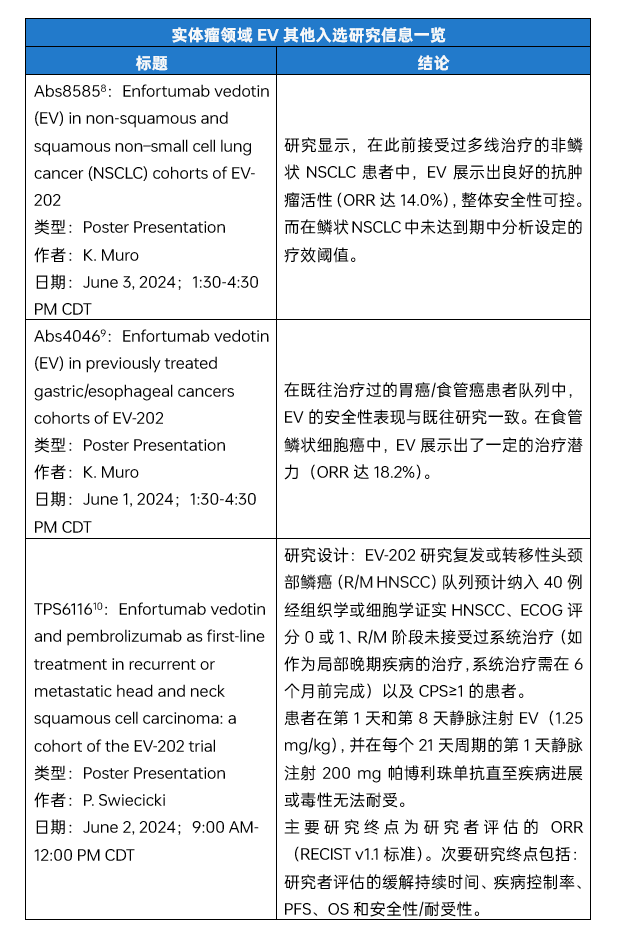
In addition to achieving remarkable results in the UC field, the EV-202 study also explored the efficacy of EV monotherapy in patients with various advanced solid tumors who had previously received treatment. At this conference, the EV-202 study announced the research results of patient cohorts with breast cancer, esophageal cancer, lung cancer, and other solid tumors, showing initial success in EV's exploration within the solid tumor field.
Title: Enfortumab vedotin (EV) in triple-negative breast cancer (TNBC) and HR+/HER2- breast cancer (BC) cohorts of EV-202
Type: Oral Presentation, Abstract #1005
Main Author: A. Giordano
Report Time: June 1, 2024; 3:00-6:00 PM CDT
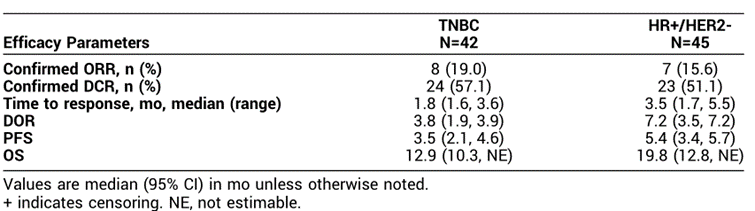
EV-202 is an open-label, multi-cohort, phase 2 study that explored the efficacy of EV monotherapy in patients with previously treated advanced solid tumors, with ORR as the primary endpoint. At this conference, EV-202 presented data from the triple-negative breast cancer (TNBC) and HR+/HER- breast cancer cohorts.7The results showed that in the TNBC cohort (n=42), the ORR was 19.0%; in the HR+/HER- breast cancer cohort, the ORR was 15.6%.EV still demonstrated certain antitumor activity in the TNBC cohort that had previously received multiple lines of treatment.The overall safety of the two cohorts was controllable and consistent with previous reports.
Table 1 Efficacy Data of the TNBC Cohort and HR+/HER- Breast Cancer Cohort
Forge Ahead with Determination, Achieve New Success in Solid Tumors Field
Astellas has been diligently working in the field of solid tumors, continuously exploring the depth and breadth of applications for its product pipeline. At this conference, in addition to EV, Zolbetuximab and Enzalutamide also delivered satisfactory results.

Zolbetuximab
Title: Final Overall Survival Results from Phase 3 SPOTLIGHT Study Evaluating Zolbetuximab + mFOLFOX6 as First-Line (1L) Treatment for Patients (Pts) with Claudin 18 Isoform 2 (CLDN18.2)+, HER2−, Locally Advanced (LA) Unresectable or Metastatic Gastric or Gastroesophageal Junction (mG/GEJ) Adenocarcinoma
Type: Poster Presentation, Abstract #4036
Main Author: K. Shitara
Report Time: June 1, 2024; 1:30-4:30 PM CDT
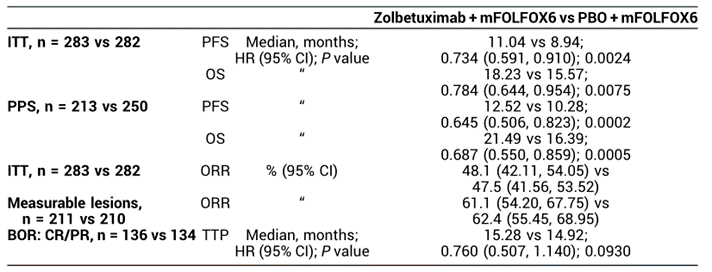
Zolbetuximab is a monoclonal antibody targeting Claudin 18.2 (CLDN18.2) approved by Japan's Ministry of Health, Labour and Welfare for the treatment of patients with CLDN18.2-positive, unresectable, advanced or recurrent gastric cancer.Is currently the world's only and first approved CLDN18.2-targeted therapyThe success of the SPOTLIGHT and GLOW studies confirms the potential of CLDN18.2-targeted therapy in the field of gastric cancer, broadening the options for first-line treatment of advanced gastric cancer. At the ASCO 2024 conference, the SPOTLIGHT study released its final survival data, demonstrating the continued progress of Zolbetuximab in the first-line treatment of locally advanced or metastatic gastric/gastroesophageal junction adenocarcinoma. The study results show that, compared with the placebo,Zolbetuximab+mFOLFOX6 provided patients with significant and clinically meaningful PFS (11.04 months vs 8.94 months, p=0.0024) and OS (18.23 months vs 15.57 months, p=0.0075) benefits., and no new safety or tolerability events occurred.11。
Table 2 Final Survival Data from the SPOTLIGHT Study

Enzalutamide
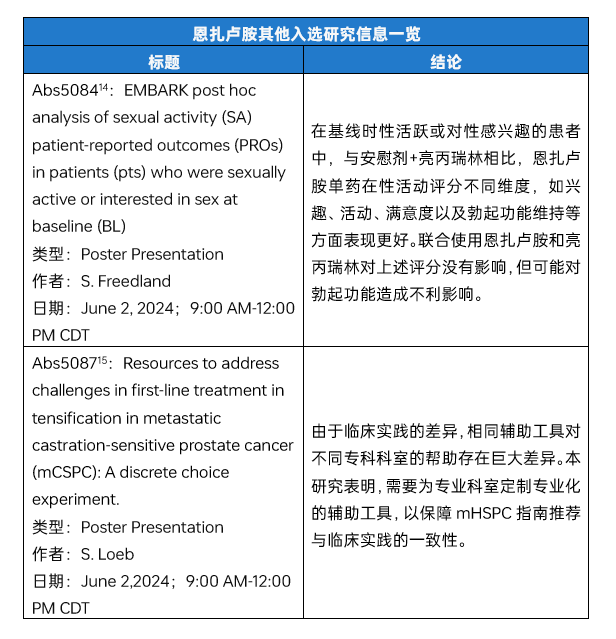
Title: EMBARK post hoc analysis of impact of treatment suspension (TxS) on health-related quality of life (HRQoL)
Type: Oral Presentation, Abstract #5005
Main Author: S. Freedland
Report Time: June 1, 2024; 3:00-6:00PM CDT
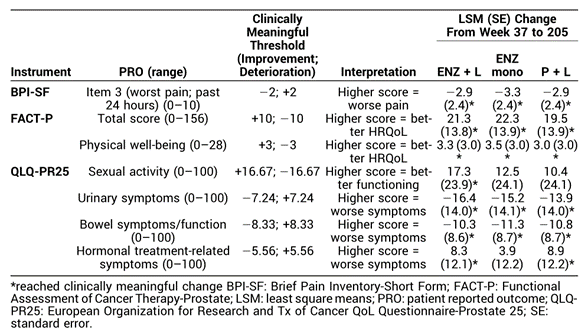
EMBARK Study Shows that Enzalutamide Combined with Leuprolide Significantly Improves Metastasis-Free Survival (MFS) and Maintains High Health-Related Quality of Life (HRQoL) in High-Risk Biochemically Relapsed Non-Metastatic Hormone-Sensitive Prostate Cancer (nmHSPC) Patients12, which is of great value to the clinical practice for patients with biochemically recurrent prostate cancer. At this conference, the EMBARK study presented the HRQoL outcomes after treatment interruption (defined as: treatment interruption at week 37 if prostate-specific antigen [PSA] <0.2 ng/ml).13The results showed that after the treatment was paused, the HRQoL of patients in all three groups exhibited a numerical trend of improvement, mostly reaching a clinically significant threshold by week 205. During the assessment from weeks 49 to 97, all three groups demonstrated clinically meaningful improvements in hormonal therapy-related side effects, followed by a gradual deterioration. By week 205, compared to week 37, patients in both the enzalutamide plus leuprolide group and the placebo plus leuprolide group experienced a clinically significant worsening in hormonal therapy-related side effects; however, there was no statistically significant difference between the two treatment groups.
Table 4 EMBARK Study Patient HRQoL Data
Approval Number: MAT-CN-MTA-2024-00003
Editor: Rudolf
Reviewed by: Kristen
Typesetting: KIKI
Execution: Squid
This platform aims to provide more medical information to healthcare professionals. The content published on this platform cannot replace professional medical guidance in any way and should not be considered as diagnostic or treatment advice. If such information is used for purposes other than understanding medical information, this platform assumes no related responsibility. The platform does not endorse the descriptions and opinions in the published content. If there are any copyright issues, we kindly request the rights holder to contact us, and we will address the matter promptly.