Disclaimer: Due to limited expertise, errors are inevitable, and some information may not be the most up-to-date. Feel free to point out in the comments. This article only introduces drugs related to healthcare and is not a recommendation of treatment plans (if involved); it does not constitute any investment advice.
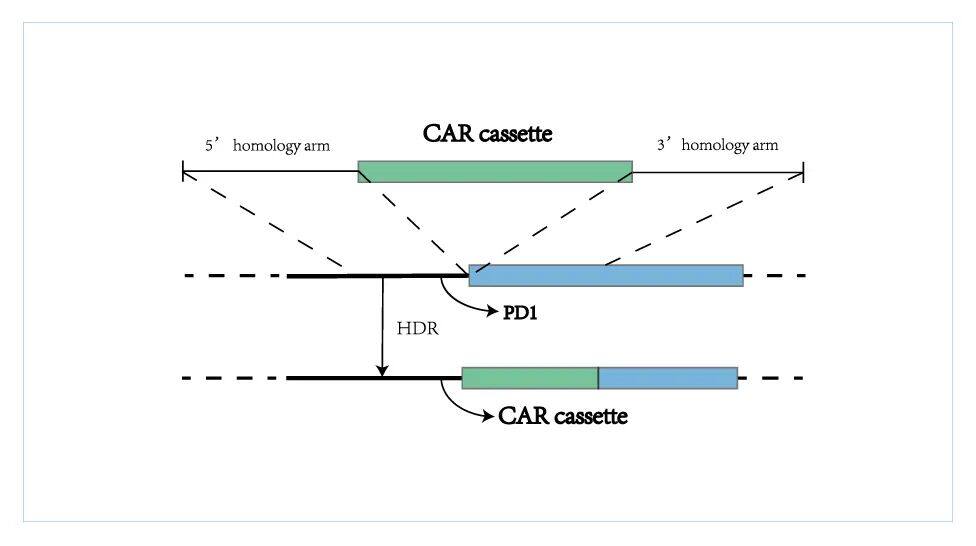
Recently, BRL Medicine announced that the research results of its "Targeted CD19 Non-viral PD1 Site-specific Integration CAR-T Cell Injection" (Pipeline Code: BRL-201) will be presented for the first time in2024 ASCO ConferencePublic debut.BRL-201 was independently developed by BRL Medicine.The non-viral site-specific integration CAR-T platform (Quikin CART® platform) developed CAR-T product, alsoWorld's First Targeted CD19 Non-Viral PD1-CAR-T Product,Indications: Relapsed/Refractory B-cellNon-Hodgkin's Lymphoma(R/R B-NHL)。Non-viral targeted integration CAR-T platform (Quikin CART) uses CRISPR gene editing technology to achieve gene knockout and targeted stable integration of CAR components.Quikin CAR-T has the advantages of simple process, short preparation time, and high product uniformity, and also avoids the tumorigenic risk caused by random integration.The PD1-CD19-CART product developed by this platform contains the PD1 gene.Dual Advantages of Knockout and CAR Homogeneous Stable Expression;This platform can also be used for the preparation of multiple immune checkpoint knockout-enhanced CAR-T cells, rapid production of universal CAR-T cells, and development of dynamically regulated safe CAR-T products, providing strong technical support for future CAR-T cell modifications.
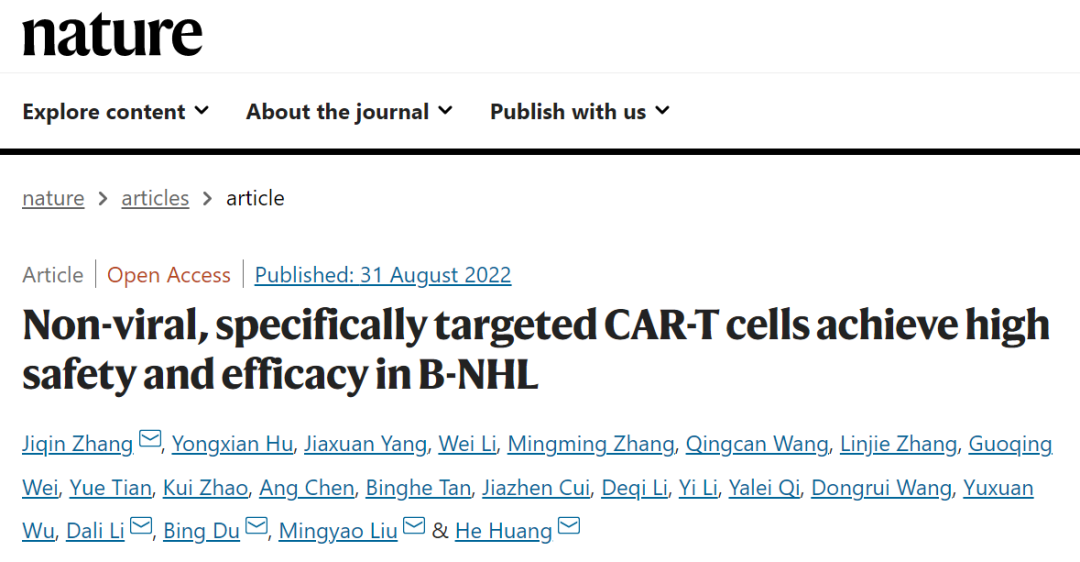
▲ Quikin CART® Platform MechanismTo be announced at this year's ASCO is BRL-201 fromIITThe latest clinical data in the study. The results show that a total of 21 patients received BRL-201 treatment, with an objective response rate (ORR) as high as100%, Complete Response Rate (CR) reached85.7%。While achieving significant efficacy,Not caused in any patientCytokine release syndrome or neurotoxicity above grade 2. To date, the world's first patient to receive BRL-201 treatment from BRL Medicine has been cancer-free for over three years. This study demonstrates the excellent clinical safety and efficacy of the BRL-201 product, which can be said to beSo far, globallyHigh Remission Rate and Low Toxicity in CAR-T Cell Therapy for Refractory and Relapsed LymphomaBest Clinical Outcomes。Moreover, the research findings of this product were published on August 31, 2022, in a top international academic journal.NaturePublished on.01 Low cost, can benefit more patients
BRL-201 utilizes the 2020 Nobel Prize-winning CRISPR/Cas9 gene editing technology to precisely edit the PD1 site in T lymphocytes and insert a CAR molecule targeting CD19 in tumor cells, without the use of viral vectors. The non-viral production process can significantly reduce the high costs associated with using viral vectors and simplify the complex production process.02 Fast preparation, suitable for patients with rapid progressionPatient
BRL-201 is produced using a non-viral method, with a simple process that requires only one step to simultaneously achieve sustained CAR expression and regulation of endogenous genes in T cells. This significantly shortens the entire CAR-T production time, with a minimum of 3 days required for completion, greatly enhancing production capacity and enabling timely treatment for patients with rapidly progressing tumors.03 Safer, ensuring product uniformity
Non-viral targeted integration allows each CAR sequence to be precisely inserted into a specific site of the genome, avoiding the risk of tumorigenicity caused by random insertion, and maximizing the safety and efficacy of CAR-T products.04 MoreEffective, Break the Shackles of Recurrence and Refractoriness
Clinical Research Results of BRL-201 Demonstrate Outstanding Clinical Efficacy, Representing the Best Clinical Outcomes with High Remission Rates and Low Toxicity in Global CAR-T Cell Therapy for Refractory and Relapsed Lymphoma to Date. The Objective Response Rate (ORR) Reached 100%, and the Complete Response Rate (CR) Achieved 85.7%. Patients Showed Significantly Greater Long-Term Benefits Compared to Existing Similar Viral CAR-T Products. As of January 10, 2024, the Median Progression-Free Survival (mPFS) Reached 19.5 Months. Single-Cell Sequencing Results Indicate a High Proportion of Memory T Cells in the BRL-201 Cell Product, Exhibiting Stronger Anti-Tumor Immune Function, and the Infused CAR-T Cells Possess Long-Term Persistence.Source of the article:BRL Medicine Laboratory