

Reshaping Hypertension Management: Life Transformed by RDN

Medtronic
Medical Device Manufacturer
Medtronic's second-generation RDN system uses a radiofrequency energy platform, marking a leap in hypertension treatment from a purely drug-based approach to minimally invasive surgical intervention.
Hypertension is one of the most common chronic diseases. Since the majority of patients often experience no discomfort, it is also known as the "silent killer." As the blood vessel walls are subjected to pressure higher than normal levels over a long period, cumulative damage to the vessel walls occurs, leading to harm in vital organs such as the heart, brain, and kidneys.
According to data from the National Center for Cardiovascular Diseases, the prevalence of hypertension among residents aged 18 and above in China is 27.5%, meaning approximately one in four adults is a hypertension patient, with about 245 million people affected. With the improvement of living standards and the intensification of an aging society, this number continues to grow. Although the detection rate of hypertension has improved, the overall control rate remains low. According to data from the Chinese Hypertension Prevention and Treatment Guidelines, only about 16.9% of hypertension patients are able to effectively control their blood pressure.
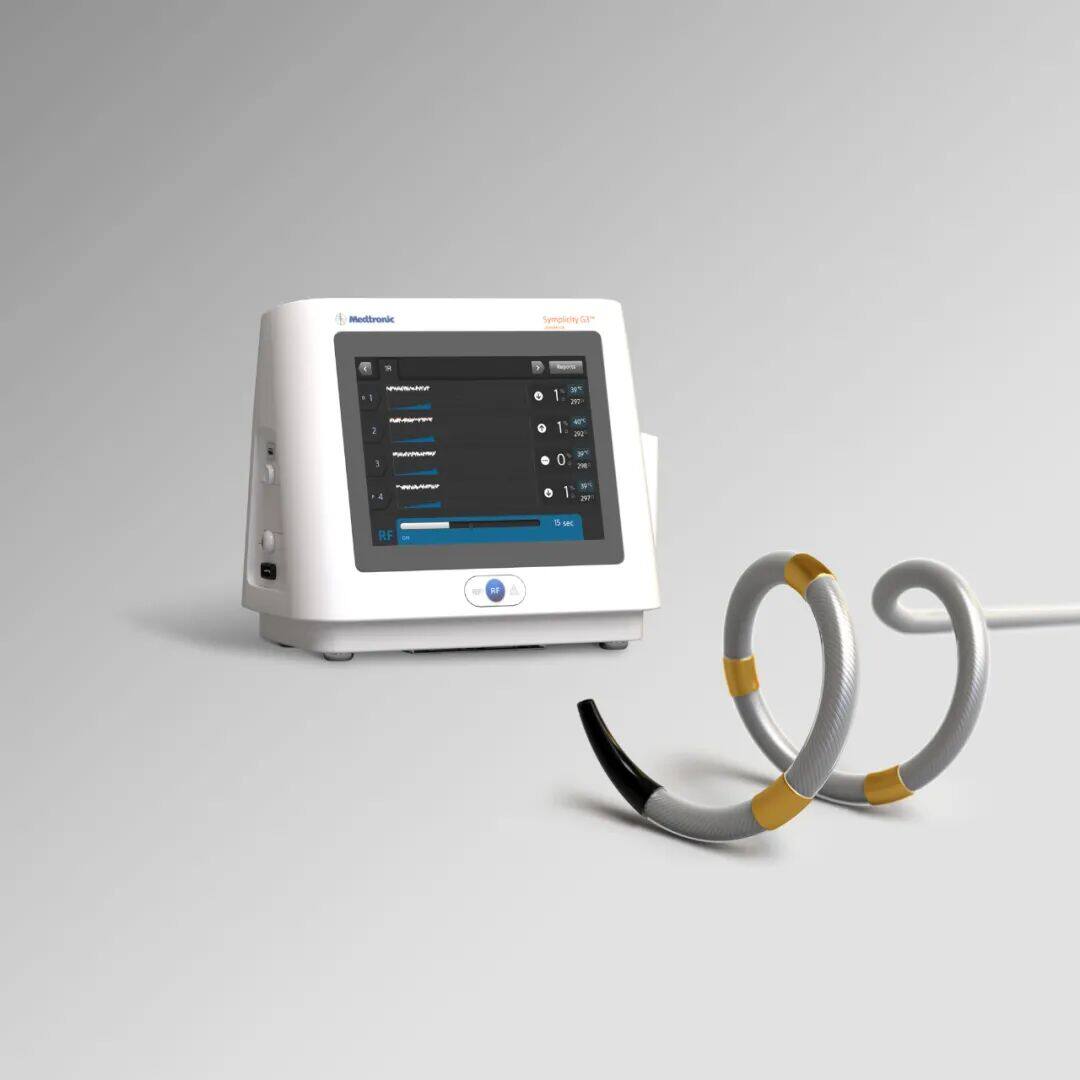
RDN, as a hotspot in the field of hypertension in recent years, is a minimally invasive treatment method that "removes" (ablates) renal sympathetic nerves through vascular intervention to modulate the overactive sympathetic nerve signals between the kidneys and the central nervous system, thereby reducing renal and systemic sympathetic activity to control hypertension. It was developed by Medtronic.Symplicity Spyral™ RDN System consists of the Symplicity Spyral™ multi-electrode renal denervation catheter and the Symplicity G3™ renal denervation generator.Composition. The system adoptsRadiofrequency Energy Platform, is Medtronic's second-generation RDN system, marking a leap in hypertension treatment from a purely drug-based approach to minimally invasive surgical intervention.
Tackling the Complex Challenges of Hypertension
In the field of hypertension diagnosis and treatment, the current pain pointsTong Sun, Market Director of Coronary and Renal Denervation Business at Medtronic ChinaMany patients with hypertension lack sufficient understanding of the condition and are unaware of the need for long-term management and treatment, resulting in low patient compliance, which in turn affects treatment outcomes. Precise diagnosis and personalized treatment for complex cases of hypertension are not yet widespread or mature. Existing drug therapies are insufficient for some patients with hypertension, a condition known as resistant hypertension, which requires more personalized and comprehensive treatment strategies. Many patients fail to achieve long-term blood pressure control due to reasons such as drug intolerance, irregular medication use, and difficulties in lifestyle adjustments.
"Hypertension treatment drugs may cause side effects such as cough, edema, and electrolyte imbalance, which could lead to patients stopping or changing medications, thereby affecting treatment outcomes. Hypertension is also a significant cause of cardiovascular and cerebrovascular events, imposing a heavy burden on both society and families. There is an urgent need for emerging treatment methods in the field of hypertension to address the gaps outside of lifestyle improvements and drug therapy," said Sun Tong.
Renal Artery Sympathetic Radiofrequency Ablation (RDN) began in the early 21st century and is a method to achieve blood pressure reduction by interrupting sympathetic nerves through minimally invasive interventional surgery. The first clinical trial was launched in 2009, following early prospective, multi-center safety and feasibility studies, as well as research on the anatomy of renal artery sympathetic nerves and the first-generation catheter, Symplicity Flex™InClinical feedback during use prompts Medtronic to continuously improve, collect, and analyze clinical usage data, applying it to the next-generation product, Symplicity Spyral.l™TheAbove design, providing better, safer, and more effective treatment options for patients and doctors.
According to Sun Tong, through the improvement of the radiofrequency catheter,The second-generation Symplicity Spyral™ catheter can access secondary or tertiary branches of renal arteries with a diameter greater than 3mm for ablation., which can improve the precision and efficiency of ablation, making the treatment more effective. The updated catheter is easier to operate, allowing the doctor performing the ablation to complete the surgery more accurately and quickly. The rapid development of medical technology has provided new materials, designs, and manufacturing processes, enabling the updated products to have better performance and functionality than the first generation.
The emergence of the second-generation RDN system represents progress in the medical industry in the clinical treatment of hypertension. It holds significant importance and value in improving individual patient health, driving innovation in medical technology, reducing overall healthcare costs, and enhancing public health awareness.
Launch the "Hypertension Full-Process Management 2.0 Era"
Like every groundbreaking product across eras, Medtronic faced numerous challenges during the innovative development of the second-generation RDN system. For instance, during the follow-up period of the HTN ON-MED trial, due to the global pandemic, effectively managing patients to adhere to the trial design without擅自调整用药and minimizing interference factors with the results presented a significant challenge for Medtronic's global clinical trial team. In addition to trial design and execution, the market acceptance of innovative therapies and economic considerations also posed challenges.
Facing diverse challenges, Medtronic has demonstrated extraordinary perseverance and dedication in the R&D of RDN products. At the same time, Medtronic has chosen to connect with the world and engage in interdisciplinary collaboration, transforming "going it alone" into "collaborative win-win."
Sun Tong stated that the development of the RDN system often requires interdisciplinary collaboration, including cooperation among medical device manufacturers, doctors, health insurance companies, and government agencies. Such collaboration can enhance the synergy of the entire healthcare industry. Meanwhile, with the promotion and application of the second-generation RDN system, public attention to hypertension and other cardiovascular diseases will increase, thereby encouraging the public to adopt healthier lifestyles and improve awareness of disease prevention.
"We believe that collaborating with universities and research institutes on renal denervation projects can bring many potential benefits to Chinese patients. Medtronic will explore opportunities to enhance the integration of industry, academia, and research to benefit more Chinese hypertension patients." Regarding the collaboration between industry, academia, and research, Sun Tong further added.
Sun Tong believed that participating in BIO-FORUM this time is an annual international academic event in the field of biotechnology and medicine in Shanghai, which provides enterprises with an international platform for communication and sharing within the industry. It helps project teams broaden their industry perspectives, enhance professional capabilities, stimulate innovative inspiration, gain a deeper understanding of market trends, and thus better adjust strategies to meet the needs of patients in China.
Today, the successful global launch and promotion of Medtronic's RDN program has reached more than 70 countries and regions worldwide, benefiting approximately 25,000 patients globally. This demonstrates that the company’s efforts in market planning and achievement transformation have paid off. For instance, Medtronic is rapidly iterating its products based on market feedback and the latest scientific research achievements, while implementing rigorous clinical trials, such as the aforementioned Symplicity HTN series and Spyral HTN series trials, providing robust evidence-based data for product safety and efficacy. After receiving regulatory approval for the RDN product, Medtronic actively initiated academic collaborations with medical associations or organizations to enhance surgeons' proficiency in performing RDN procedures and improve patient management. These strategies and efforts not only help Medtronic maintain a leading position in the market but also offer patients more treatment options, supporting the enhancement of healthcare system capabilities and the improvement of public health standards.
Looking to the future, Sun Tong stated that as an innovative surgical therapy,The NMPA approval of Medtronic's Symplicity hypertension treatment, representative of RDN therapy, will join lifestyle interventions and medication as one of the three key drivers to improve hypertension control in China., laying an important foundation for the joint construction and sharing of a Healthy China. Medtronic will work with professionals to establish a training system, convey standardized operational procedures, and create a comprehensive management mechanism to promote the standardized implementation and development of RDN therapy in China. At the same time, Medtronic will collaborate with partners in the broader health field to build new models and ecosystems, ushering in the "Hypertension Comprehensive Management 2.0 Era."
Article reprinted from East China Technology, Reporter: Yu Lingqi