Eli Lilly Inks $622M Deal for First-in-Class ASO Therapy QRL-204 Targeting UNC13A in ALS and FTD

QurAlis
Developer of New Therapies for Amyotrophic Lateral Sclerosis (ALS)

On June 3, QurAlis announced that it had reached an exclusive licensing agreement with Eli Lilly. QurAlis granted Eli Lilly global rights to develop and commercialize QRL-204, a potential first-in-class splice-switching compound.Antisense Oligonucleotide (ASO), aiming to restore UNC13A function in amyotrophic lateral sclerosis (ALS), frontotemporal dementia (FTD), and other neurodegenerative diseases.
Under the terms of the agreement, QurAlis grants Eli Lilly exclusive global rights to develop and commercialize QRL-204 and other UNC13A-targeted compounds. In exchange, QurAlis will receive a $45 million upfront payment and additional equity investment. Furthermore, QurAlis is eligible to receive up to $577 million in milestone payments and royalty-sharing.
The agreement includes a research and development collaboration leveraging QurAlis' proprietary FlexASO™ Splice Modulator Platform to identify and develop additional candidate drugs targeting UNC13A. Splice-switching ASOs developed using the FlexASO™ Splice Modulator Platform exhibit enhanced potency. The ASO therapies developed by QurAlis can correct UNC13A mis-splicing, restore the production of UNC13A protein, and reduce cryptic exons that may contribute to disease progression.
Amyotrophic lateral sclerosis is a progressive neurodegenerative disease characterized by the loss of neurons in the spinal cord, brainstem, and brain. A defining feature of both sporadic and familial disease is the cytoplasmic mislocalization of TAR DNA-binding protein 43 (TDP-43). Approximately 90% of ALS cases and about 50% of FTD cases involve TDP-43 pathology.
UNC13A is a key regulator of synaptic neurotransmitter release and one of several pre-mRNAs that undergo mis-splicing due to the loss of nuclear TDP-43 in disease. Mis-splicing of UNC13A leads to the loss of UNC13A protein function.
Recently published preclinical data show that QurAlis' splice-switching ASO therapy can modulate UNC13A splicing and restore normal synaptic activity in ALS and FTD. In addition, QurAlis' ASO therapy prevents the inclusion of a cryptic exon in the UNC13A transcript, increases UNC13A protein levels, and normalizes the synaptic localization of UNC13A protein.
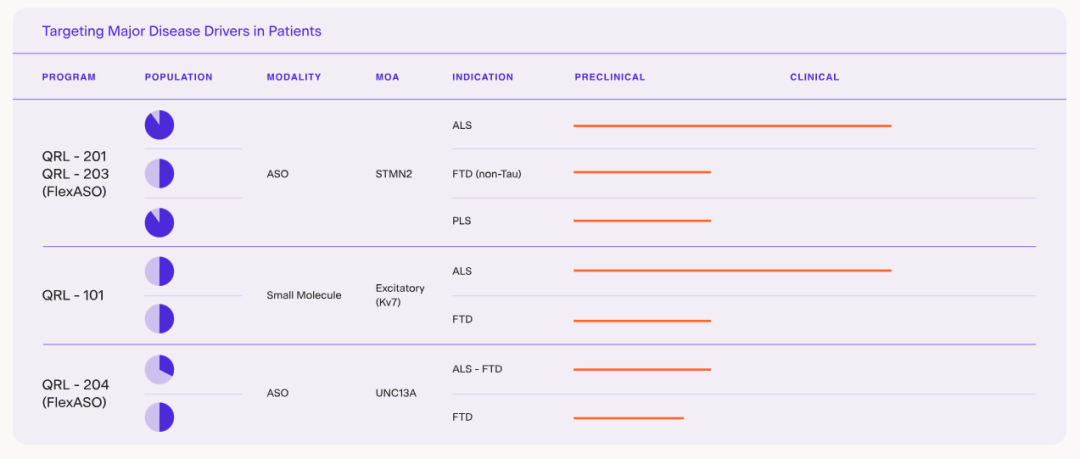
QurAlis was founded in 2016 by neurodegenerative biologists from Harvard Medical School and Harvard University. It has previously completed over $130 million in financing and is currently advancing multiple pipelines for the treatment of ALS and FTD, with two projects already entering the clinical stage.
"Precision medicines that target specific genes, like QRL-204, have the potential to make significant progress in treating a range of neurodegenerative diseases, including ALS and FTD," said Andrew Adams, Senior Vice President of Neurodegeneration Research and Director of the Lilly Gene Medicine Institute.
References:
[1]https://www.quralis.com/news/quralis-grants-lilly-exclusive-global-license-for-qrl-204-a-potentially-first-in-class-precision-therapy-that-restores-unc13a-function-in-als-and-ftd/
[2]https://endpts.com/eli-lilly-licenses-preclinical-antisense-program-designed-to-treat-als-dementia/
[3]https://mp.weixin.qq.com/s/-zXrpdYKYXJBo-ihsasoDQ
Recommended Reading