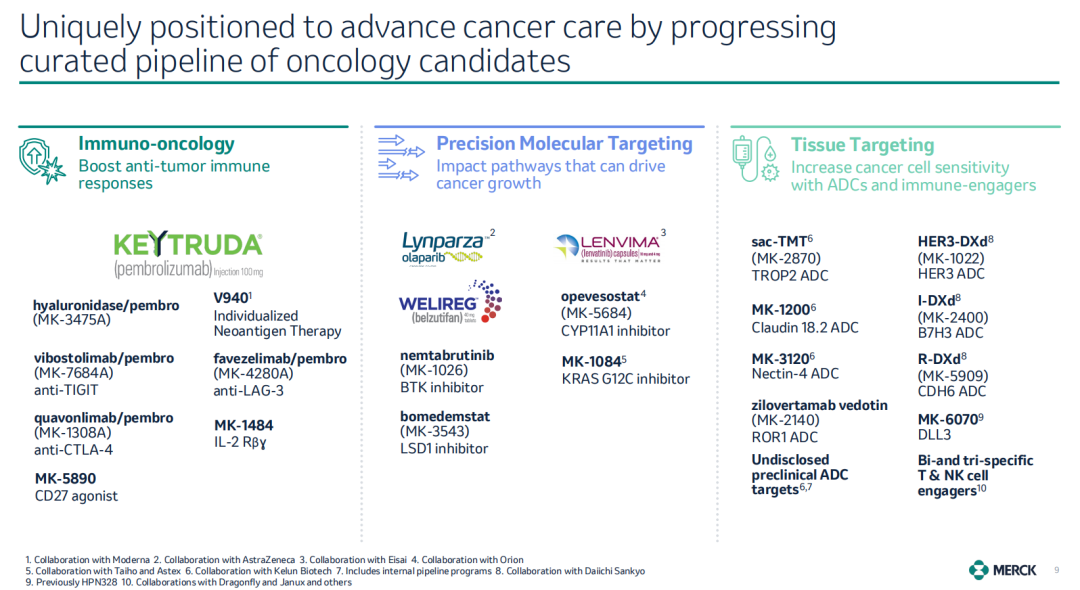
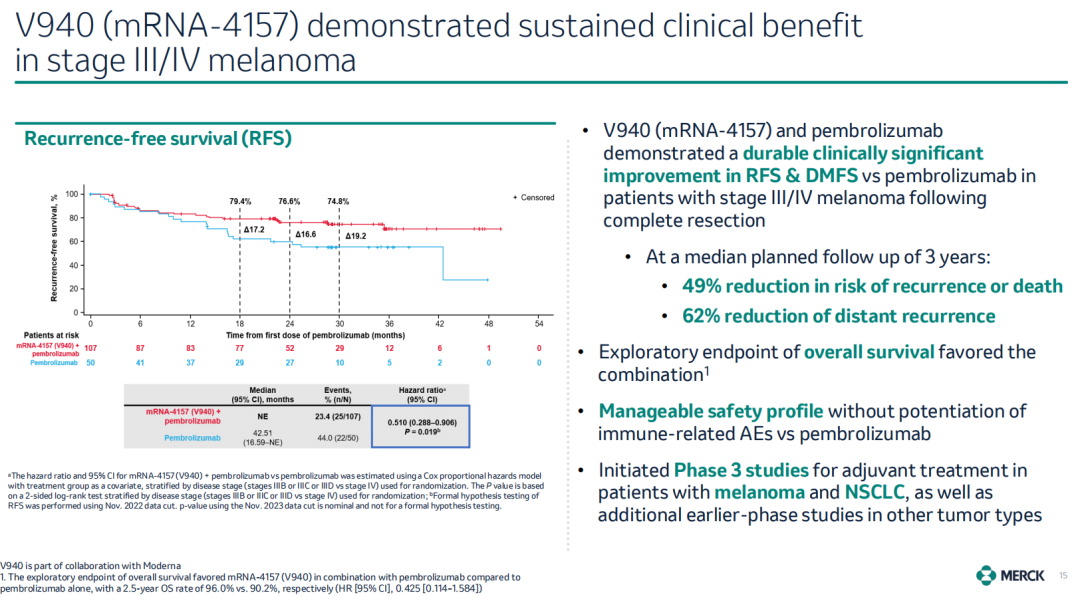
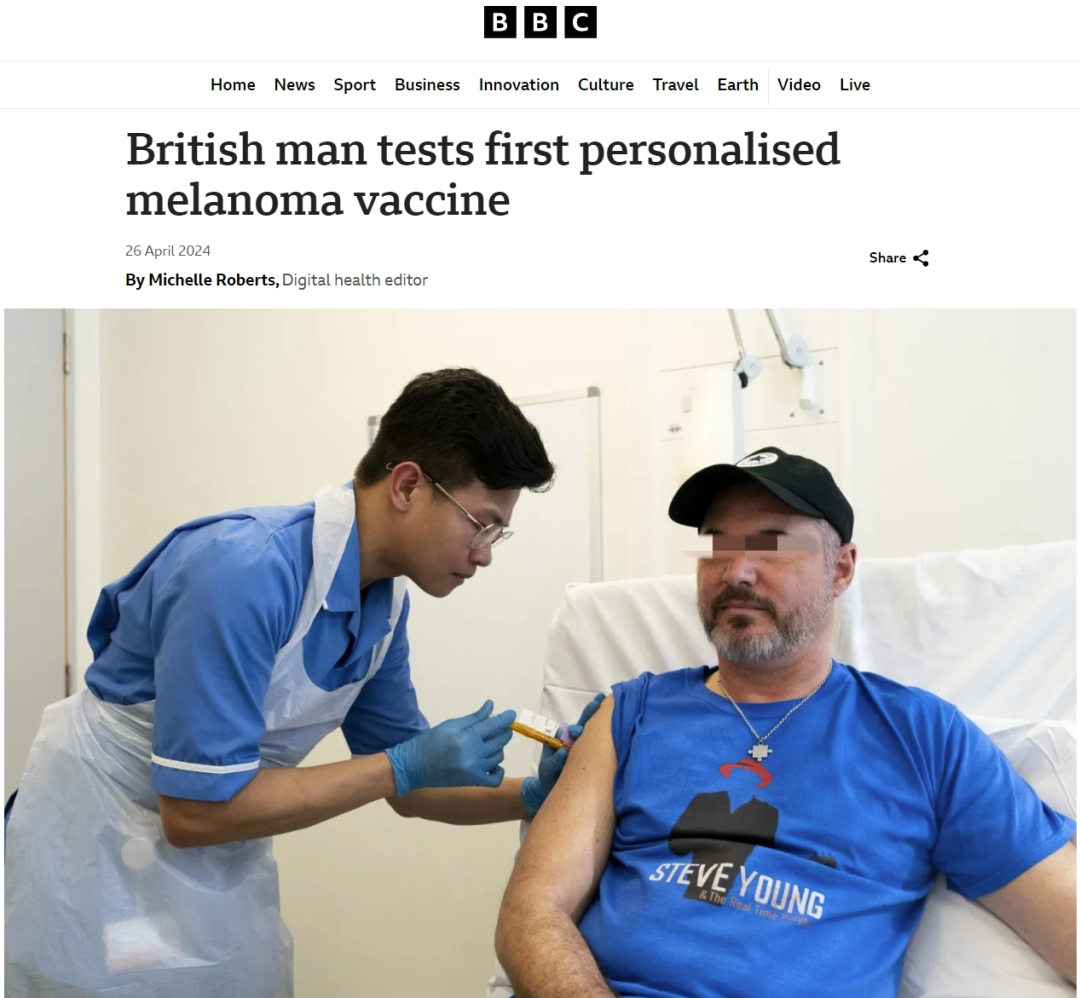
With KeytrudaWith the 2028 patent cliff approaching, MSD alsoUpdated its oncology R&D strategy, focusing on three key pillars in the future——Enhance Anti-Tumor Immune Response、Chemotherapy and Other Anti-Cancer Therapies for Tumors, andPrecision Targeted Therapy, that is, drugs designed to target specific mutations that drive the growth of tumor cells.MSDEliav Barr, M.D., Senior Vice President of Global Clinical Development and Chief Medical Officer, at this year's American Society of Clinical Oncology (ASCO) Annual Meeting in ChicagoRepresentation, "We are undergoing a rather significant transformation,Shifting the strategy from focusing on the development of Keytruda to a more diversified, multi-modal R&D pipeline,TheThe pipeline can be divided into three major pillars.”According to Dr. Barr, the first pillar is to enhance the immune response to cancer, wherein,The cancer vaccine mRNA-4157 co-developed by MSD and Moderna is precisely the star product of this pillar..ProductCombined with Keytruda, leveraging the ability of anti-PD-1 to "stimulate the immune system." "In the past, cancer vaccines were just a graveyard for drug development, everyone would run away screaming."。"But now, the world has changed dramatically. I think this represents a new era."mRNA-4157(V940)It is a novel individualized neoantigen therapy (INT) based on mRNA, designed and manufactured according to the unique mutational signature of the patient’s tumor DNA sequence. It consists of synthetic mRNA (encoding 34 neoantigens). Once injected into the body, it triggers specific T-cell responses, training and activating an anti-tumor immune response to recognize and attack specific cancer cells, ultimately aiming to prevent and treat melanoma.At the 2024 ASCO Annual Meeting, MSDand Moderna publicly displayedThree-Year Data from Phase 2b Trial of Combination Cancer Vaccine for Resected Melanoma. These data come from the KEYNOTE-942 trial, which evaluated the effect of personalized neoantigen therapy (INT) combined with Keytruda on 157 high-risk melanoma (stage 3/4) patients after complete resection.Data cut-off date was November 3, 2023, with a median follow-up time of 34.9 [25.1-51.0] months. Combination therapy versus monotherapyKeytrudaThe advantage in recurrence-free survival (RFS) continues to be maintained.The risk of recurrence and/or death was reduced by 49%.(HR [95% CI], 0.510 [0.288-0.906]; two-sided nominal p-value is 0.019).Combination Therapy vs. MonotherapyKeytrudaThe 2.5-year RFS rates were 74.8% and 55.6%, respectively.。"These data are very important because they provide patients with powerful and long-lasting efficacy data," Barr said. "It is a therapy designed to achieve immune reset, aiming to create a strong anti-tumor immune response for long-term tumor control."Barr stated that when evaluating long-term efficacy, the key is to pay attention to any possible late recurrence. Recurrence indicates that the initial benefits of the vaccine stop or dissipate over time. However,In the KEYNOTE-942 trial, mRNA-4157 did not exhibit this situation.。"If any, what we see is"Patients continue to benefit," Bar said. "So, I find these results very encouraging,This gives us reason to expect,In patients with a good immune response, the likelihood of recurrence will be relatively low.。”Compared with using Keytruda alone, the incidence of adverse events (AE) was slightly higher in the vaccine-Keytruda combination group, where37.5% of patients on combination therapy and 36% of patients using Keytruda alone experienced immune-related adverse events.The most common adverse events with the combination of mRNA-4157 and Keytruda were fatigue (60.6%) and injection site pain (56.7%), with most events classified as Grade 1 or 2.“This drug is relatively well-tolerated.", Chief Marketing Officer (CMO) of MSD""I think the adverse experience profile we're seeing with this drug doesn't necessitate any restriction on the patient population that might benefit. The rate of adverse events for this individualized neoantigen therapy (INT) is comparable to that of a typical vaccine, as they use the same materials."Barr said, MSDAnd Moderna is currently "ahead" in recruitmentPatientConduct a Phase 3 trial to evaluate the efficacy of the vaccine in combination with Keytruda in high-risk melanoma.AndAccording to BBCOn April 26thReport,The Phase 3 clinical trial of mRNA-4157 in combination with Keytruda for the treatment of high-risk resected Stage IIB to IV melanoma has recruited the first patients at University College London (UCL) Hospitals.. This trial is expected to recruit 1,089 patients, with the primary completion date set for October 2029.When asked about the potential biologics license application, Barr emphasized that cancer vaccines represent a new form of intervention. "Regulatory agencies will carefully reviewThis type of drug, because this is"First-in-class, first application model, and also the first time that a cancer vaccine has truly worked," Barr said. "I think what they are most willing to accept is based on Phase 3."The submitted test results"Application."Barr stated that in February 2023, mRNA-4157 received Breakthrough Therapy Designation, which benefits Merck & Co., Inc.And Moderna can communicate more with the FDAInteraction, thereby gaining a better understanding of the content that the agency may focus on in new drug applications.References:[1]ASCO: After Keytruda, Merck builds 3-pronged cancer strategy starring Moderna-partnered vaccine.By Gabrielle Masson.Jun 3, 2024 8:00am.[2] Risk of death reduced by 62%! mRNA cancer vaccine enters phase 3 clinical trials, first successful vaccinations administered, primarily targeting melanoma, pancreatic cancer, gastric cancer, etc. Global Oncology News. 2024-05-25.[3] 【ASCO 2024】Breakthrough Abstracts in Melanoma. Melanoma. 2024-06-04.[4]MSD ASCO2024 Investor Event PPT.Scan the WeChat QR code to add.Pharma Time and SpaceEditor Please indicate: Name + Research Direction!