Abbott's Next-Generation Epic Plus and Epic Plus Supra Bioprosthetic Heart Valves Receive NMPA Approval in China

Abbott
Diagnostic and pharmaceutical product manufacturers
Recently, there is news showingAbbott's New Generation Bioprosthetic Valves Epic Plus and Epic Plus Supra Have Received NMPA Approval for Marketing in China.

The Epic Plus valve is the "next generation" of the Epic valve, which has been implanted in more than 250,000 patients since 2008.
In September 2021, Epic Plus and Epic Plus Supra received FDA approval for patients requiring replacement of diseased, damaged, or malfunctioning native mitral valves, as well as for replacing previously implanted artificial mitral valves.
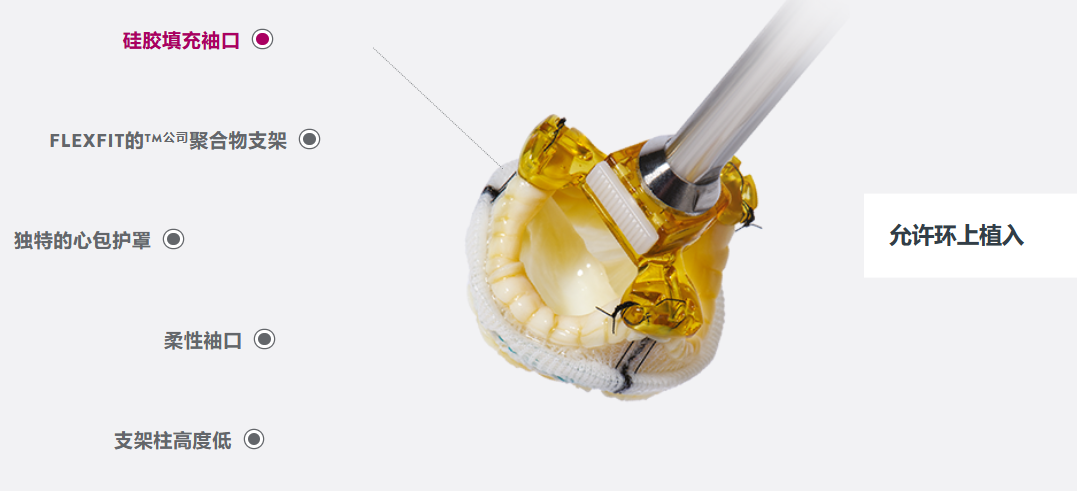
Epic Plus is a bioprosthetic valve that does not require long-term use of blood thinner medications, making it a recommended choice for individuals who cannot take blood thinners or those aged 70 and above (populations at increased risk of bleeding from such drugs). The platform features the lowest ventricular protrusion across all valve sizes, a flexible polymer stent, individually selected porcine leaflets to ensure optimal coaptation, and a flexible sewing cuff that minimizes suture resistance during implantation and paravalvular leakage post-implantation. The Epic™ Plus valve is less prone to crimping, which can reduce LVOT obstruction.
It is reported that the Epic Plus valve is designed to accommodate valve-in-valve therapy, allowing patients to benefit from tissue valves without undergoing a second open-heart surgery.
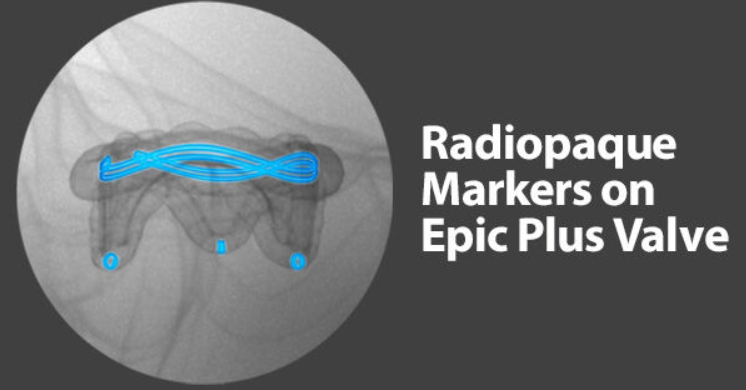
One of the new features of the Epic Plus tissue valve isRadiopaque markers. The radiopaque markers enable the medical team to better visualize and position the transcatheter valve during valve-in-valve procedures via X-ray.
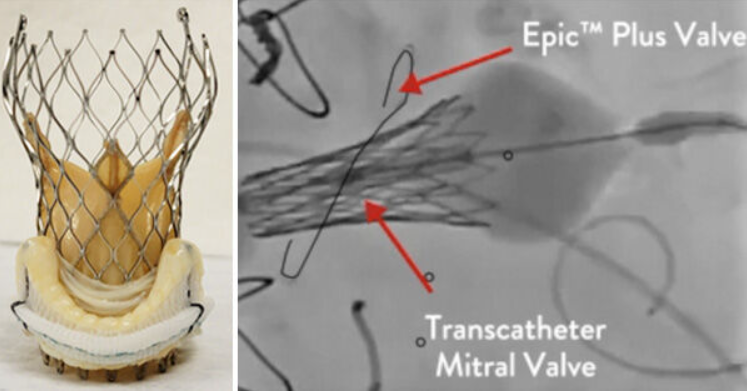
Valve-in-Valve Procedure
Another new feature is the ability to "fracture" a valve during valve-in-valve procedures. Physicians can open the Epic Plus valve so that a larger valve can be implanted within the Epic Plus valve to prevent it from being too narrow for proper flow.
To improve durability, the Epic Plus valve also applies an anti-calcification treatment to the valve tissue to reduce calcium buildup, based on Abbott's unique Linx AC anti-calcification technology, which may extend the valve's lifespan by 10 to 15 years, or even longer.
Biological valves refer to artificial heart valves made from materials sourced from other animals' bodies and processed accordingly. Their greatest advantage is that, approximately 3 to 6 months after implantation in the human body, the surface of the valve leaflets will be covered by deposited fibrin and vascular endothelial tissue. The valve leaflet material no longer comes into contact with the patient's blood, avoiding the activation of the blood coagulation reaction. Therefore, anticoagulation therapy is no longer needed after 3 to 6 months.
But the downside is that bioprosthetic valves are prone to calcification, which significantly alters the elasticity, toughness, and mechanical strength of the valve material. This limits the lifespan of bioprosthetic valves. As life expectancy increases, an increasing number of patients who have undergone valve replacement face the challenge of a second valve replacement.
A large-scale clinical dataset (non-randomized study) encompassing 1,199 U.S. medical institutions compared the follow-up outcomes from 1991 to 2003 of 111,151 patients with aortic bioprosthetic valves and 195,903 patients with aortic mechanical valve replacements.The results showed that the rates of death, re-intervention due to bleeding, stroke or embolism, and surgery-related mortality were all lower for bioprosthetic valve replacement than for mechanical valve replacement, but the proportion of reoperation due to valve degeneration was higher.
Currently, new surgical bioprosthetic valves have also been adjusted to meet the potential future need for reoperation. In the past, surgical valves often featured a complete metallic annular support structure, which posed a risk of being unable to accommodate a subsequent TAVR procedure if the valve size was small. New surgical bioprosthetic valves can be designed with an opening in the original complete annular stent, allowing it to be expanded through dilation. This creates more space, facilitating secondary valve implantation and ensuring sufficient transvalvular blood flow in the long term, leading to better patient outcomes.
Moreover, as research continues to advance, polymeric material valves, which combine the advantages of both mechanical and bioprosthetic valves, are gradually emerging in clinical practice due to their excellent fatigue resistance and superior blood compatibility. The future innovations in the field of heart valves are worth our anticipation and attention.
More exciting content
Welcome to follow WeChat Video Channel


Orthopedic Market Leader Acquires Competitor
Why is the "Father of Valves" Selling its Key Business for 30 Billion?
Shorten R&D Cycle, Enhance Product Testing Efficiency! YHJY (Resmed China) Obtains UL Witness Testing Laboratory Certification
Medical Device Giant Restructures with Major Layoffs
Medical Device Family: Top 10 Cardiovascular Innovations of 2024
Industry Giant Acquires 52 Medical Institutions
$23.5 Billion, Medtronic's Choice
Johnson & Johnson, Major Personnel Changes
United Imaging Healthcare, Entering the "First Imaging Service Stock"
Johnson & Johnson Officially Announces: Completion of $94.8 Billion Acquisition


BusinessBusiness cooperation email: qxzj@landianyiliao.com