

Gilead's Investigational First-in-Class PPARδ Agonist Seladelpar Shows Sustained Improvement in Multiple Liver Biomarkers and Pruritus in Long-Term Phase 3 ASSURE Study for Primary Biliary Cholangitis

Gilead Sciences
Antiviral Drug Developer
▎WuXiEdited by Kant Content Team
Gilead Sciences today announced the two-year interim results of the ongoing ASSURE study. The analysis shows,AcceptIts R&D drugsSeladelpar Treatment for Moderate to SeverePrimary Biliary Cholangitis (PBC)In adult patients, patient-reported itching rapidly and persistently decreased.Subgroup analysis of subjects with compensated cirrhosis showed clinically meaningful improvements in markers of cholestasis and liver injury in these patients.The U.S. FDA has accepted the new drug application for seladelpar for the treatment of PBC patients and granted it priority review status.Including those for the treatment of pruritus symptoms and adult patients with non-cirrhotic or compensated cirrhotic conditions who have an inadequate response to or are intolerant of ursodeoxycholic acid (UDCA).The FDA is expected to announce the review results by August 14, 2024.In addition, the UK Medicines and Healthcare products Regulatory Agency (MHRA) and the European Medicines Agency (EMA) have also accepted the marketing review of seladelpar.
Primary Biliary Cholangitis is a potentially life-threatening autoimmune liver disease.Due to the immune system continuously attacking the bile ducts, bile flow is obstructed and accumulates, causing toxic bile acids to remain in the liver, which can progress to liver fibrosis, cirrhosis, and liver failure.Other clinical symptoms include fatigue and itching.In40One in a thousand women over the age of havePBC。Currently,PBCThere is no cure.Although lifelong medication can slow down liver damage and prevent its progression, approximately40%PatientDo not respond to currently approved therapies。Many patients are receivingLiver function tests remain abnormal after the current treatment regimen, and theseTherapyUnableImprove PatientsItching, which affectsPBCPatient Quality of LifeTheOne of the main persistent symptoms.
ASSURE is an open-label, long-term Phase 3 study designed to evaluate the safety and efficacy of seladelpar in adult patients with PBC. ASSURE enrolled adult patients with PBC who had previously participated in seladelpar studies, with key eligibility criteria including inadequate response to or intolerance of UDCA. Subjects in the ASSURE study took 10 mg of seladelpar once daily for up to 155 weeks. This interim analysis, covering a two-year period (data cut-off date: January 31, 2024), includes data fromParticipated in any previous clinical studies related to seladelpar (traditional studies)of 179 subjects, and fromKey Phase 3The 158 subjects in the RESPONSE study.

Image Source: 123RF
Among the 99 subjects from conventional studies who completed 24 months of seladelpar treatment, 70% achieved the composite response endpoint.Including alkaline phosphatase (ALP) levels below 1.67 times the upper limit of normal (ULN), a reduction in ALP levels of at least 15%, and total bilirubin (TB) levels equal to or below the ULN. In addition, 42% of the subjects achieved ALP normalization at 24 months.ALPIs a sign of liver disease progression.Of the 164 subjects who completed 12 months of seladelpar treatment from the traditional study, 73% achieved a clinically meaningful composite response endpoint, and 42% of ALP returned to normal.Among those who completed the 12-month RESPONSE study after being randomly assigned to receive seladelpar treatment and continued to receive a total of 18 months of ongoing seladelpar treatment (n=102), 62% achieved the composite response endpoint, and 33% achieved ALP normalization.
Throughout the ASSURE study, patient-reported itching was also collected using a numerical rating scale (NRS; 0-10).In subjects with a baseline NRS score ≥4, sustained improvement in pruritus was observed. In the ASSURE study, subjects experienced an average reduction of 3.8 points at 12 months and 3.1 points at 24 months.

PartCompensated cirrhosis participants in the studyRESPONSEClinical3PeriodAfter Research,Accepted the second yearseladelparTreatment.Consistent with the analysis results of the RESPONSE trial, subjects achieved clinically meaningful improvements in markers of cholestasis and liver injury.
In all ASSURE subjects, the drug showed good safety and tolerability with long-term use, and researchers found no serious adverse events related to the treatment.
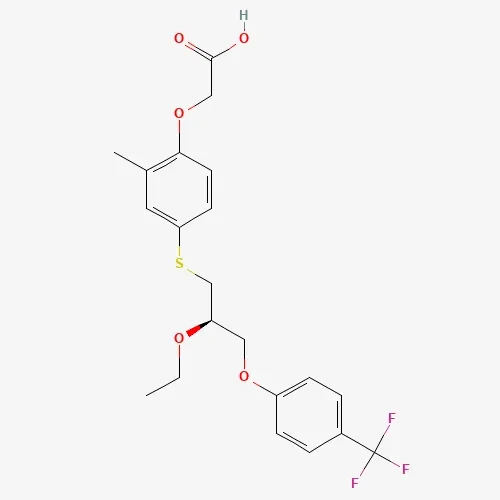
▲Seladelpar Molecular Formula (Image Source: PubChem)
Seladelpar is an investigational, oral, potent, and potentially "first-in-class" selective peroxisome proliferator-activated receptor δ (PPARδ) agonist.PPARδ is expressed in various cell types in the liver. Preclinical data indicate that it regulates multiple genes involved in bile acid synthesis, inflammation, and fibrosis processes. The drug received Breakthrough Therapy Designation from the U.S. FDA in February 2019 for the treatment of PBC. Originally developed by CymaBay, Gilead Sciences reached a deal worth up to $4.3 billion with the company in February 2024.Acquisition Agreement, and thereby secure this therapeutic option.

▲To learn more about the application of cutting-edge technologies in the biopharmaceutical industry, please long-press and scan the QR code above to access "WuXi Live Studio" and watch live discussions and exciting replays on related topics.


Share,PointLike,In View, Focusing on Global Biomedical Health Innovation