

Shanghai Cellular Therapy Group Unveils Z15-0-2, a Bispecific PD-1/CTLA-4 Nanobody with Enhanced Antitumor Efficacy via LNP-mRNA Delivery

Shanghai Cell Therapy Group
Cell Health Medical Products and Service Provider
T cells infiltrating tumors can be suppressed by co-inhibitory signals from PD-1 and CTLA-4. For instance, in clinical trials of metastatic melanoma, the combination of anti-PD-1 and anti-CTLA-4 demonstrated the potential to increase response rates by 60%. However, this treatment is often accompanied by significant side effects, making it intolerable for some patients.
Recently, researchers from Shanghai Cell Therapy Group Co., Ltd. published a research paper titled "Antitumor activity of Z15-0-2, a bispecific nanobody targeting PD-1 and CTLA-4" in the Nature sub-journal Oncogene.ResearchDevelopment of a bispecific nanobody Z15-0 that precisely targets PD-1 and CTLA-4. It exhibits bioactivity and functionality in vitro. Further optimization of the mRNA sequence encoding Z15-0 resulted in Z15-0-2, which utilizes an LNP delivery system (LNP mRNA) to enhance the expression of the nanobody both in vitro and in vivo, while demonstrating improved anti-tumor activity, offering a new approach for cancer treatment.
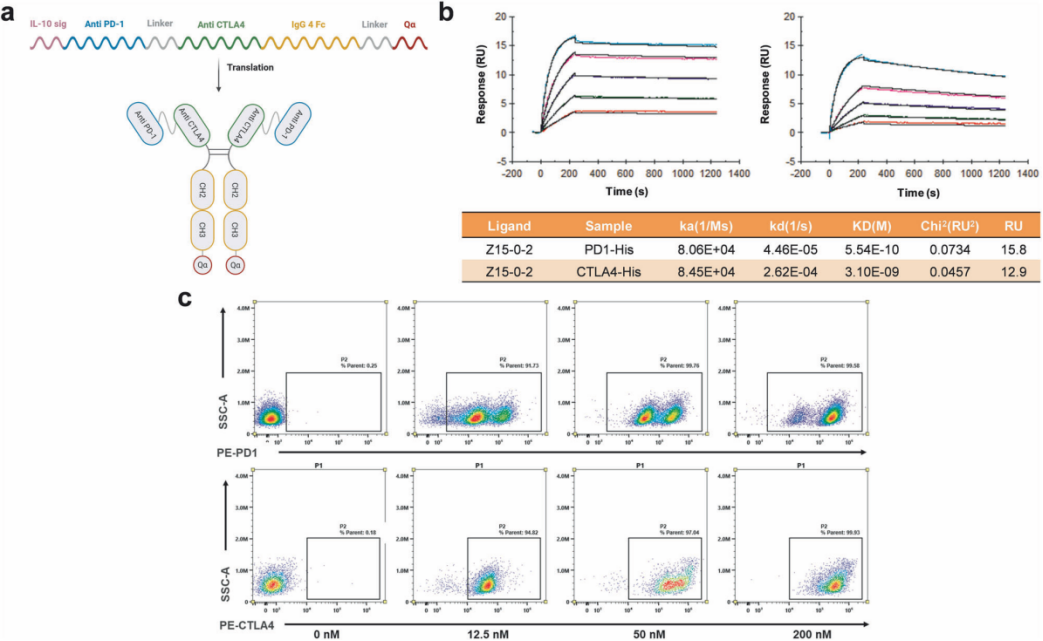
Development of a nano-bispecific antibody simultaneously targeting PD-1 and CTLA-4, which can effectively bind to PD-1 and CTLA-4 in vitro and on cells.Immediately afterward, Exin21 (encoding heptapeptide Qα) was incorporated into the C-terminus of the Z15-0 sequence, thereby forming Z15-0-2. The Exin21 sequence encoding heptapeptide Qα can enhance mRNA stability to promote protein synthesis.
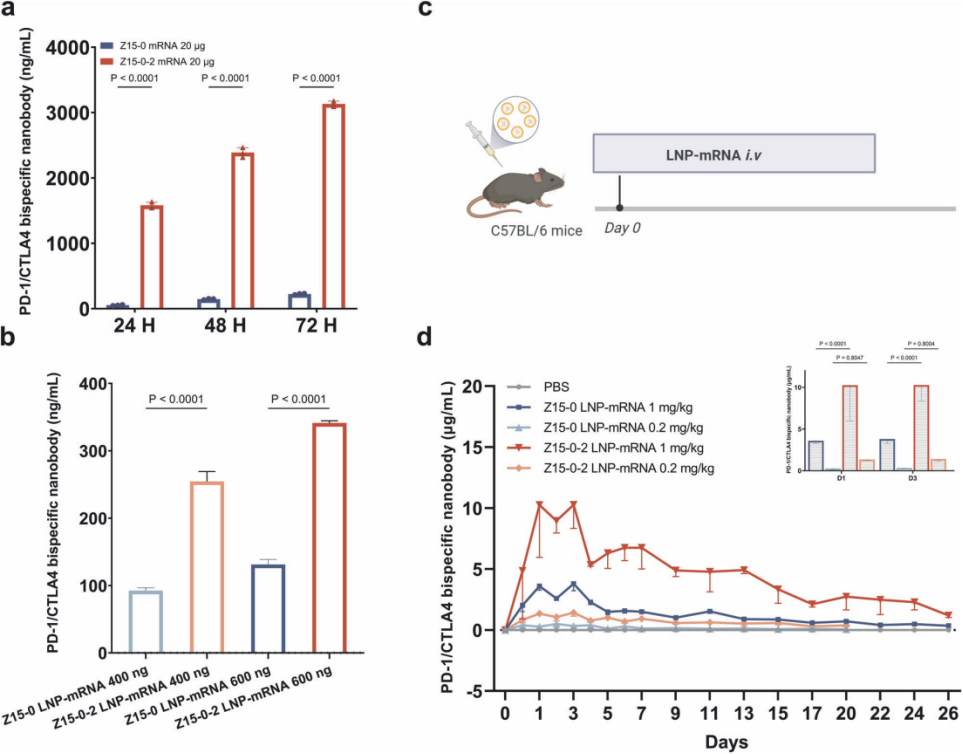
Meanwhile, by using LNP to encapsulate the mRNA of Z15-0-2, a series of in vitro and in vivo experiments confirmed that the optimized Z15-0-2 mRNA sequence significantly increased the expression of the bispecific nanobody.
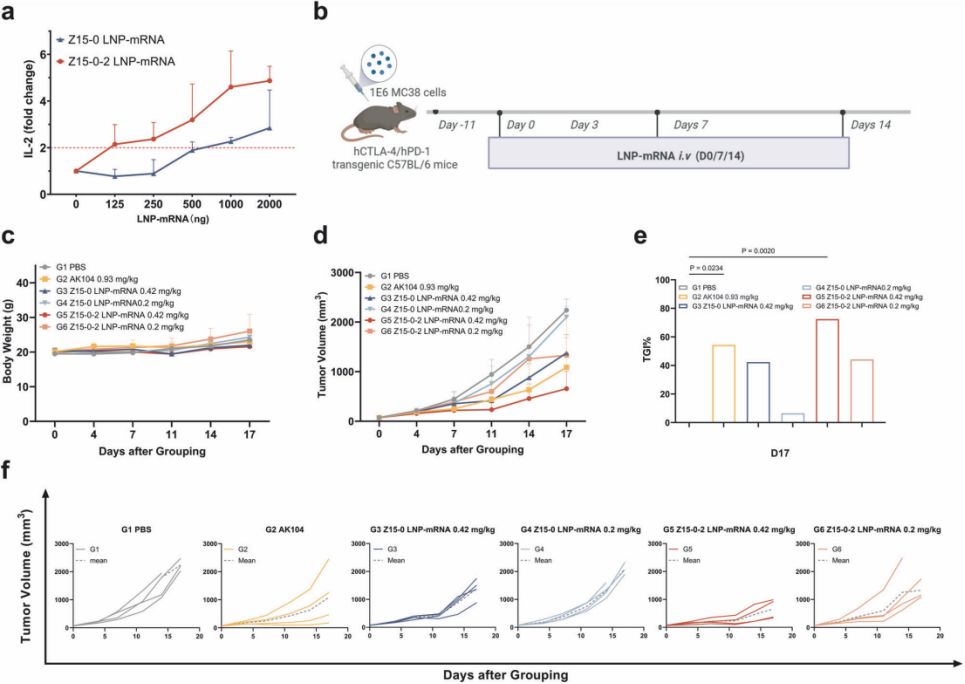
Compared with the control group, administration of Z15-0-2 mRNA to tumor-bearing mice resulted in greater inhibition of tumor growth. Mechanistic studies showed increased cytokine secretion, with both T cells and NK cells increased.Indicates that Z15-0-2 LNP mRNA exerts anti-tumor effects by modulating the cytokine content and composition of immune cell populations in the TME.
Research and development of a novel bispecific nanobody, which represents a new model of drug development.
Thinking
Introduces a newly discovered bispecific nanobody, Z15-0, specifically designed to simultaneously inhibit PD-1 and CTLA-4. Additionally, the mRNA sequence encoding this nanobody (referred to as Z15-0-2) has been successfully optimized to maximize its potential applications by utilizing efficient delivery methods such as LNP mRNA technology.
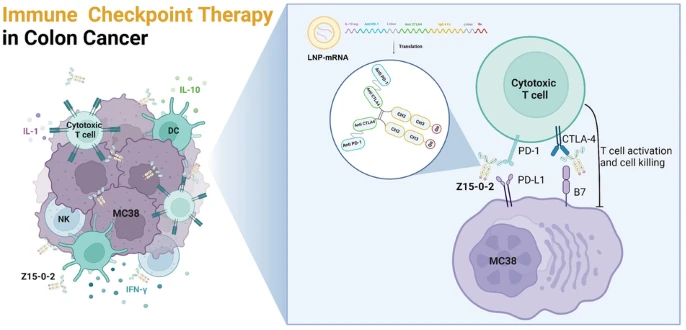
It is worth noting that,Z15-0-2AndLNP-mRNAThe delivery system is compatible and has shown significant efficacy in reducing tumor growth in a mouse model of colon cancer.Therefore,Z15-0-2Innovative bispecific nanobodies have considerable potential as applications in tumor immunotherapy.
Reference:Zeng, J., Fang, Y., Zhang, Z.et al. Antitumor activity of Z15-0-2, a bispecific nanobody targeting PD-1 and CTLA-4. Oncogene (2024). https://doi.org/10.1038/s41388-024-03066-5