Next-Generation DLL3 Bispecific and Trispecific Antibodies Emerge Following Tarlatamab's Approval

Amgen
Developer of Treatment Drugs for Serious Diseases

Zymeworks
Protein Therapy Developer

On May 17, 2024, Amgen announced that the FDA granted accelerated approval for its bispecific antibody tarlatamab targeting DLL3/CD3, for the treatment of adult patients with extensive-stage small cell lung cancer (ES-SCLC). The approval and market launch of tarlatamab marks a breakthrough in the application of T-cell engagers (TCE) bispecific antibodies in solid tumors, while also demonstrating the druggability of the DLL3 target. Meanwhile, next-generation DLL3 bispecific antibodies are already on the horizon.。
1
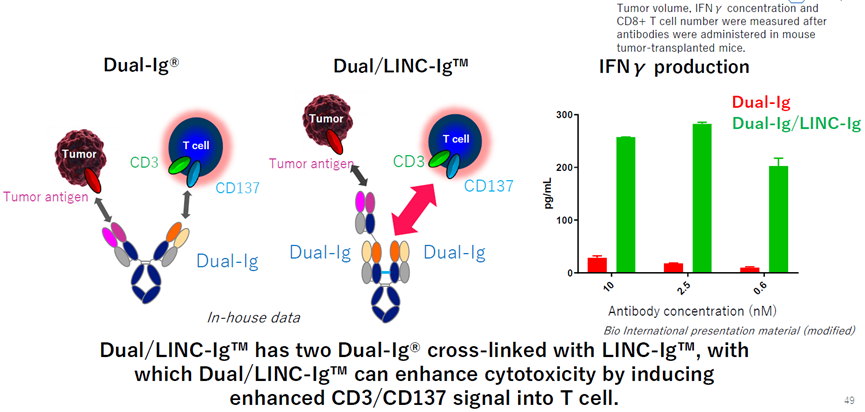
Recently, Chugai Pharmaceutical published an article at AACR introducing the mechanism of action and preclinical efficacy of its next-generation DLL3 trispecific antibody. This trispecific antibody targets DLL3/CD3/4-1BB, aiming to address the challenge of poor treatment outcomes in solid tumors with low T-cell infiltration. The development of this antibody is based on Chugai Pharmaceutical's next-generation bispecific antibody platform, Dual/LINC-Ig™. Dual/LINC-Ig™ contains two Fabs that bind to CD3/CD137, which are stabilized by disulfide bonds using the LINC-Ig technology (to be introduced in the next platform), thus further enhancing the activation of T cells by the antibody. In in vitro experiments, the amount of IFN-γ released after Dual/LINC-Ig™ administration was more than 10 times that of Dual-Ig.
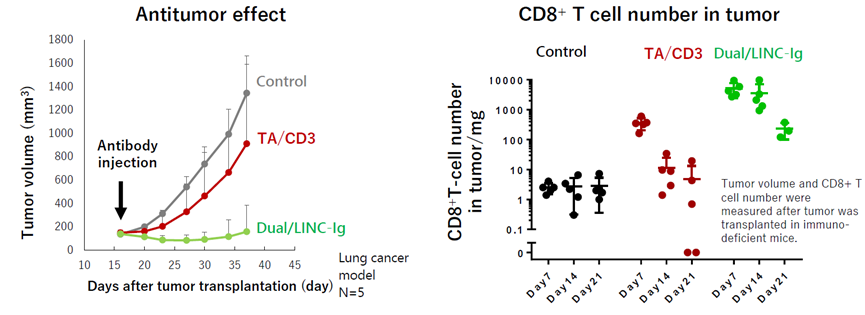
In mouse tumor models, conventional bispecific antibodies are basically ineffective against tumors with almost no T-cell infiltration; in terms of promoting T-cell infiltration, conventional bispecific antibodies can only limitedly promote T-cell entry into tumors. However, the Dual/LINC-Ig™ bispecific antibody platform is superior to both conventional bispecific antibodies and the first-generation Dual-Ig antibodies in terms of therapeutic effects and promotion of T-cell infiltration.
2
Following the same approach as Chugai Pharmaceuticals, and for the same purpose of further enhancing the efficacy of TCE bispecific antibodies, Zymeworks has adopted the same strategy as Regeneron, but with a focus on targeting the second activation signal, CD28. CD3 serves as the first signal to activate T-cell activity, while CD28 acts as the second signal to enhance and sustain T-cell activity. However, compared to other agonists, early medical incidents have hindered the development of CD28, which remained stagnant until recent studies by Regeneron led to a gradual increase in related therapeutic developments over the past two years.;
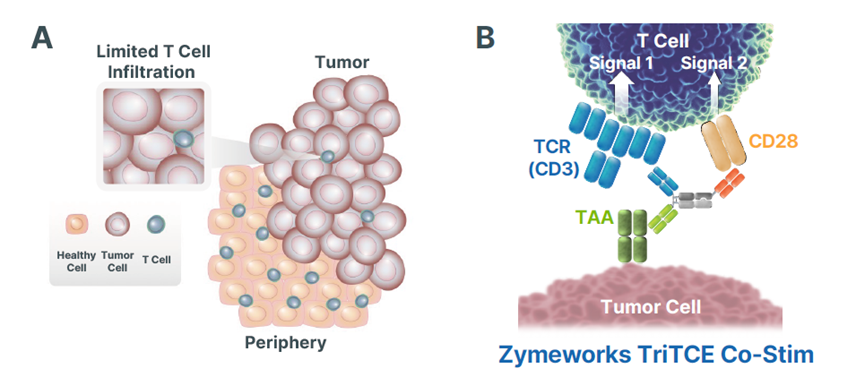
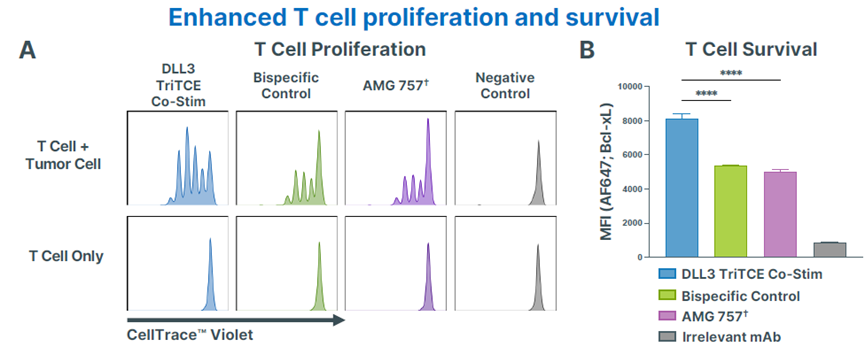
In vitro studies also largely align with the theory: CD28 not only enhances the tumor cell killing effect of relevant bispecific antibodies but also promotes T-cell expansion and survival.。
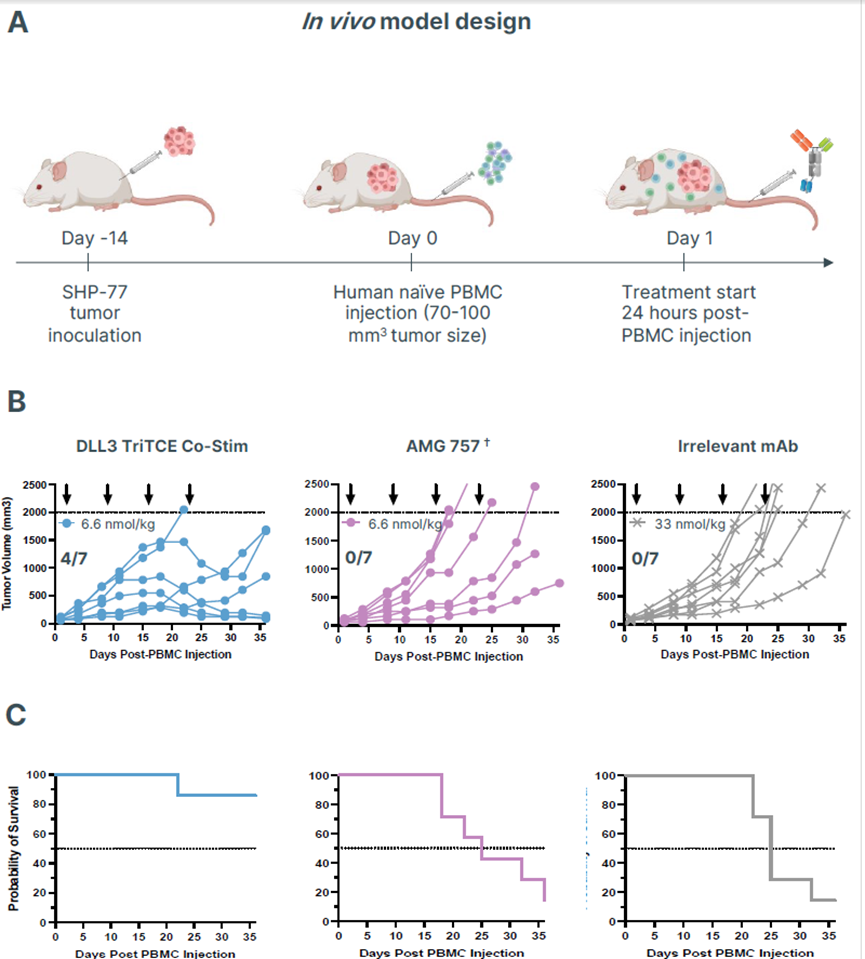
In in vivo studies, compared with Amgen's bispecific antibody, the trispecific antibody containing CD28 showed better efficacy at the same dose. However, at the same dose, Amgen's AMG757 had relatively poor efficacy, almost equivalent to the negative control group. After reviewing Amgen's article, it was noted that in the same model, the dosing of AMG757 was 3mg/kg, much higher than Zymeworks' dosing. No wonder it showed no efficacy. However, this indirectly proves that CD28 significantly enhances the efficacy of bispecific antibodies.。
3
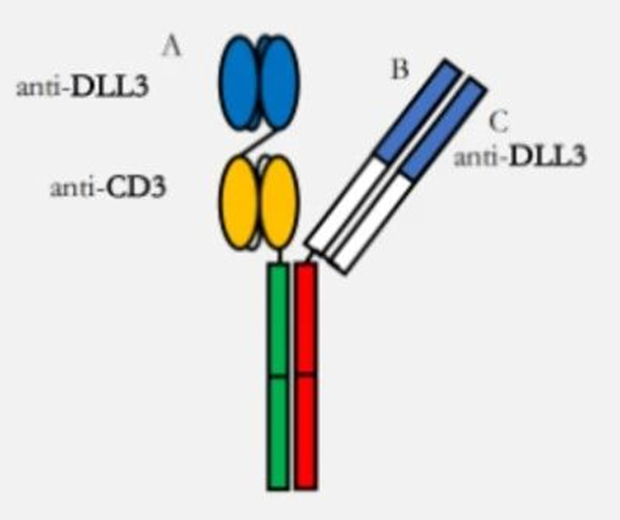
ZG006 (CD3×DLL3×DLL3) is a trispecific antibody drug targeting DLL3 developed by Zelgen, which targets CD3 and two different DLL3 epitopes. The anti-DLL3 end binds to different DLL3 epitopes on the surface of tumor cells, while the anti-CD3 end binds to T cells. By bridging tumor cells and T cells, it utilizes T cells to specifically kill tumor cells. What are the advantages of the 2+1 bispecific antibody structure? Roche previously published an article studying the efficacy of 1+1 and 2+1 bispecific antibodies. The research results demonstrated that the 2+1 bispecific antibody has a stronger binding ability to target cells. Moreover, for targets with low expression or high specificity, higher affinity can lead to more efficient killing. Zelgen's ZG006, which targets two epitopes of DLL3, may further enhance the antibody’s selectivity and binding to tumor cells. Additionally, in its published patent, the company explored combinations of different structures and agonists, including CD28 and 4-1BB. This drug has now entered clinical trials, and we look forward to its subsequent clinical results. (The image below is sourced from the internet; it may not represent the final structure but, considering the mechanism design, it is highly likely to resemble the structure shown below).
4
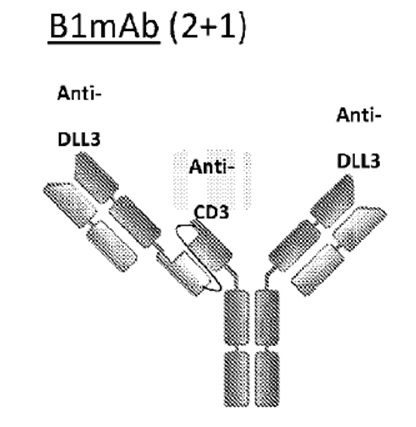
Amgen as the Leader in Bispecific AntibodiesPatientIn 2014, the first TCE bispecific antibody was introduced, but subsequent multiple products failed consecutively. The approval of the DLL3/CD3 bispecific antibody tarlatamab made us realize that the former leading player in the bispecific field still possesses profound capabilities. Tarlatamab applied for marketing authorization last year, and also in the same year, Amgen disclosed a patent for its 2+1 type bispecific antibody. The new generation of bispecific antibodies does not adopt Amgen's traditional structure but instead uses the Fab+scFv format. Compared with Amgen’s traditional bispecific antibodies, this type of antibody demonstrates superior drug-like properties, including expression levels, purity, stability, etc. Additionally, the patent explored not only the use of YTE mutations to extend half-life but also related research on subcutaneous administration.。
5
The approval and market launch of Tarlatamab broke the curse that TCE bispecific antibodies could not be developed into drugs for solid tumors, and also demonstrated the druggability of the DLL3 target. Therefore, how to better develop this target has become the direction of efforts for the next generation of bispecific antibodies. Currently, there are two main approaches: 1) Given the specificity of this target, increasing the binding of the antibody to the target to enhance the stronger killing effect on tumor cells. Both Amgen and Zelgen Pharmaceuticals are adopting this strategy; 2) By co-stimulatory signals, fully unleashing the activity of TCE antibodies. Chugai Pharmaceutical and Zymeworks are adopting this strategy, but the two companies differ in their agonist targets. Chugai Pharmaceutical uses 4-1BB to further activate T cells, while Zymeworks utilizes CD28.; The two strategies have their own advantages. Enhancing affinity can strengthen the binding of bispecific antibodies to target cells and mediate stronger killing, which is relatively safer but may lack persistence. On the other hand, co-stimulatory signals can more effectively unleash the activity of T cells, thereby continuously suppressing tumors, but with higher safety risks.。