

XTAL Tech Becomes First AI-Driven Drug Discovery Company Listed on HKEX
XtalPi
Computation-Driven Innovative Drug R&D Provider
The competition for the first AI-powered new drug development company to go public has finally been settled.
On June 13, 2024, XtalPi was listed on the Hong Kong Stock Exchange, becoming the first technology company in history to be listed under Rule 18C. Yesterday, XtalPi-P (02228.HK) closed at HK$5.39 in the gray market, up 2.08%, earning HK$110 per lot.
Eight years ago, XtalPi made a name for itself in a crystal form prediction blind test hosted by Pfizer. In the competition, this team of only 30 people not only achieved an astonishing 100% prediction success rate, surpassing many industry leaders, but also significantly reduced the time required for prediction.
With its extraordinary capabilities combined with the fiery concept of artificial intelligence at the time, XtalPi quickly rose to become the most anticipated rising star in the medical AI sector. In the following four years, XtalPi swiftly completed nearly $800 million in financing, reaching a valuation of $1.968 billion after its last round of funding—a staggering 1,650-fold increase from before the crystal structure prediction competition.
However, times have changed. The AI drug discovery boom has subsided from its 2022 peak, and XtalPi has reached a point where it needs to rely on revenue to make its case. Now entering the secondary market, can XtalPi maintain its market value and continue to soar?
Simply defining XtalPi by "AI drug discovery" seems somewhat narrow.
Splitting the pipeline, XtalPi's main business at this stage can be divided into two parts: drug discovery solutions and intelligent automation solutions, jointly supporting an innovative R&D platform that integrates quantum physics, artificial intelligence, and robotic technology.
XtalPi's longest-standing and core business is its drug discovery solutions. Unlike common artificial intelligence methods, their AI technology is based on the first principles of quantum physics (interactions between molecules and atoms) to accurately simulate and predict the physical, chemical properties, and biological behaviors of specific molecular structures, autonomously generating scalable data.
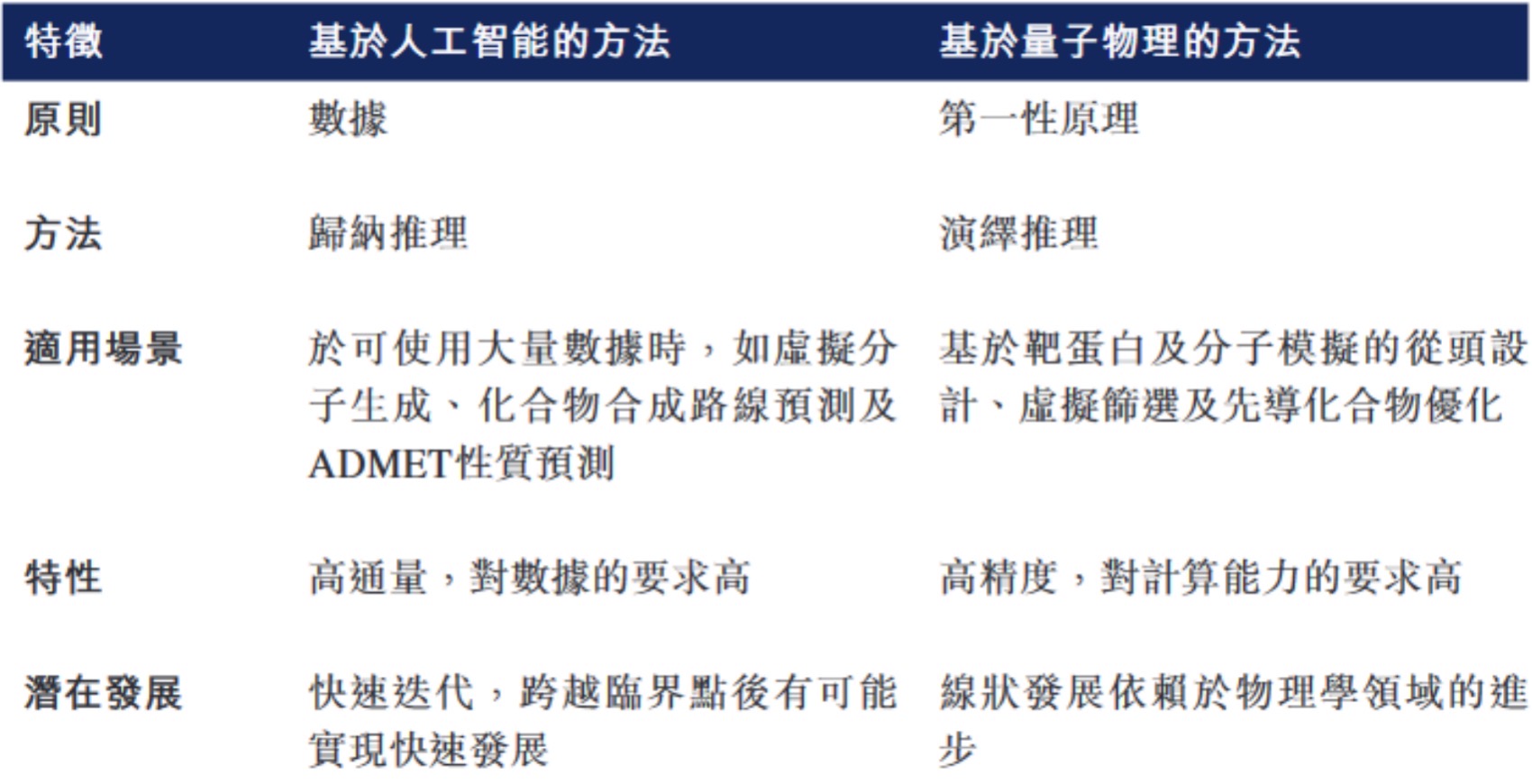
The Difference Between Artificial Intelligence Prediction and Quantum Physics Prediction
In this way, XtalPi not only overcomes the issues of data scarcity and quality deficiency in the early stages of AI-based drug discovery but also significantly improves prediction accuracy, providing more relevant models for chemical and biological entities and their interactions.
Moreover, quantum physics-based computing can calculate molecular features that surpass existing industry knowledge and data without any training set, thereby significantly improving early drug discovery. Related algorithms can also guide generative artificial intelligence to efficiently discover innovative candidate drugs on a large scale in a faster and more accurate manner.
In specific scenarios, XtalPi can use the aforementioned technologies to empower the entire process of drug discovery and research, including target validation, hit compound identification, and lead compound generation, thereby forming a CRO-like business model that uses AI technology to predict the drugs required by clients without bearing numerous risks in the R&D process.
Regarding intelligent automation solutions again, this business is divided into two parts: "Solid-state R&D" and "Automated R&D Laboratory," showing more stability and a stronger growth trend.
Traditional solid-state research and development methods cannot effectively predict the correct crystal structure that may form specific molecules based on past data and publications. They can only screen and evaluate a limited number of ligand determinations, making it difficult to identify the optimal salt form, cocrystal form, or polymorph. Additionally, they are unable to accurately determine crystal structures through manual analysis and can only rely on experimental analysis for solid-state testing and evaluation, which is insufficient for obtaining detailed characteristics of specific forms. Moreover, traditional solid-state R&D methods can only address problems in the crystallization process through trial and error, requiring significant time and cost.
In response to the aforementioned challenges, XtalPi integrates technologies such as quantum physics, artificial intelligence, and robotics into solid-state research and development. It optimizes and improves five key steps: crystal structure prediction for solid-state experiments, solid-state screening and evaluation, crystal structure determination, solid-state testing and analysis, and crystallization process development. This establishes a feedback loop between computational prediction and experimental validation, delivering higher efficiency and accuracy within a shorter timeframe while reducing costs for R&D teams.
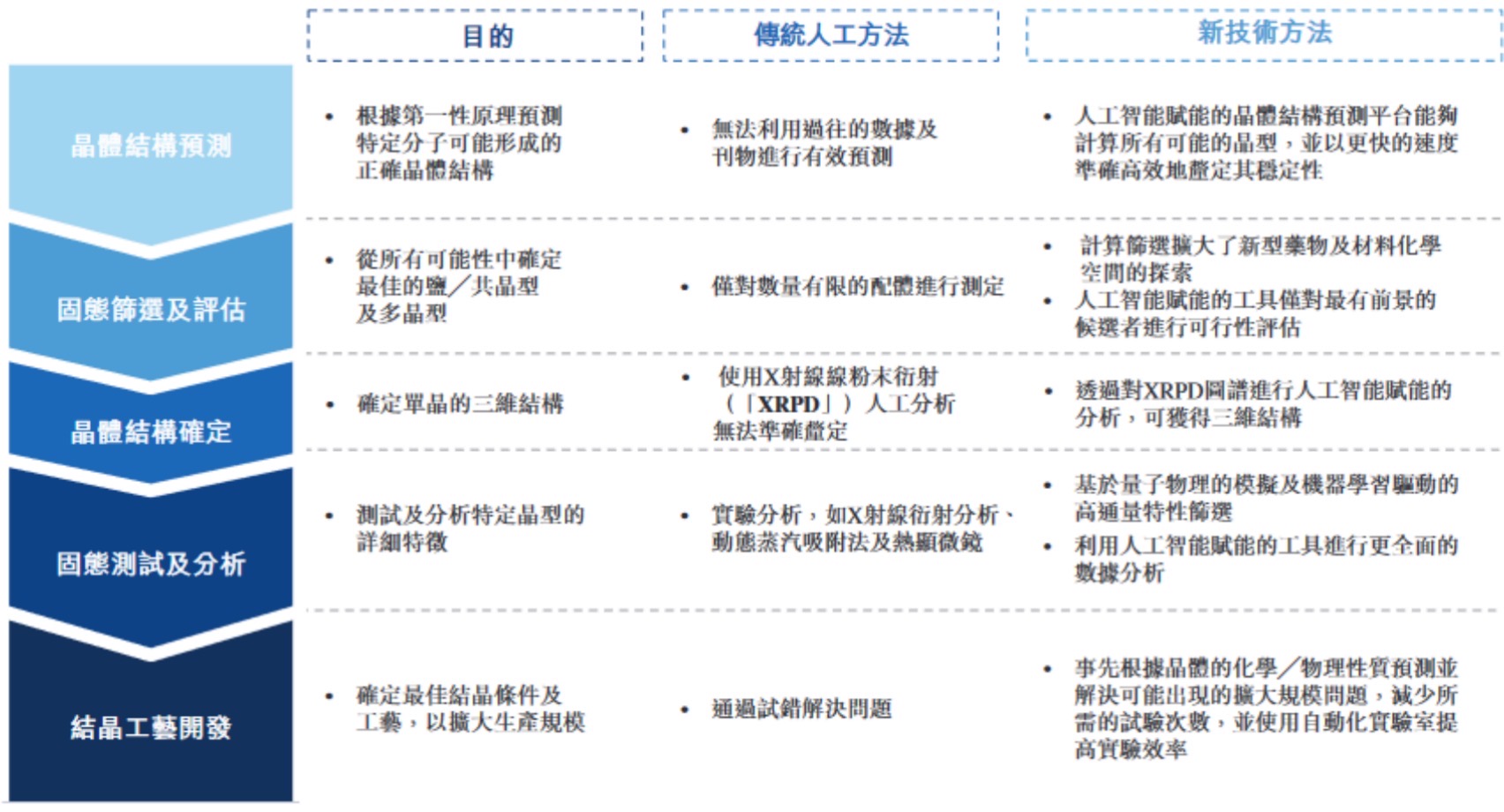
Comparison of Key Steps in Solid-State R&D: Traditional Methods vs. Automated Methods
The entry logic of XtalPi's automated R&D laboratory is similar to that of solid-state R&D, also integrating cutting-edge technologies such as AI and quantum mechanics to help the lab complete its digital and intelligent transformation, thereby improving quality and efficiency. However, compared to solid-state R&D, the existing solution providers in the market are powerful and have comprehensive layouts, so XtalPi may need more time to capture this market.
There are not many companies in the market that, like XtalPi, have a broad cross-scenario layout. Only the healthcare division of France's Dassault Systèmes has chosen a "pharmaceutical research + laboratory" layout. Even so, the latter has only applied AI capabilities to clinical trial scenarios, without extending deeply along the entire pharmaceutical research process.
However, from XtalPi's performance, the diversified layout has not excessively squeezed the company's R&D resources but has instead become an important means of risk diversification. After the rise of intelligent solutions, the number of XtalPi's customers increased significantly, and the revenue from the top five customers as a percentage of total annual income decreased from 61.8% in 2021 to 36.3% in 2023.
Currently, the revenue from intelligent solutions has surpassed that of drug discovery solutions in the first six months of 2023, and is expected to be on par with drug discovery solutions for the entire year of 2023, becoming XtalPi's most stable source of income.
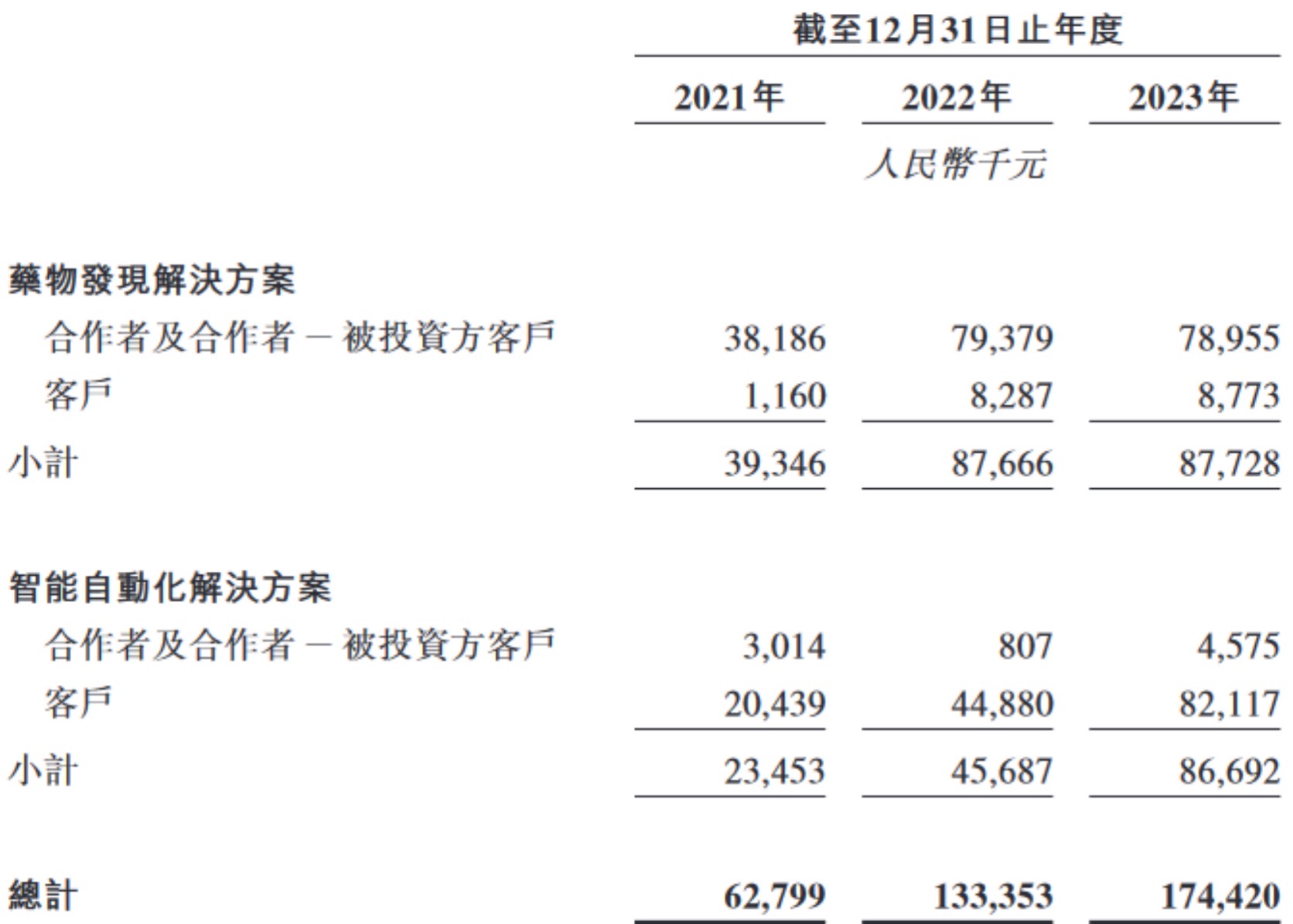
XtalPi's Intelligent Solution Revenue to Soon Surpass Drug Discovery Solutions
It should be noted that the reversal of the revenue proportions of the two main businesses may not be XtalPi's original intention.
In the founding of XtalPi and the subsequent years, capturing the market through the CRO model was indeed a viable growth path. Data disclosed by XtalPi shows that among the top 20 global biotechnology and pharmaceutical companies by revenue in 2022, 16 are currently or have previously collaborated with XtalPi. In 2020, 2021, 2022, and 2023, XtalPi’s customer retention rates were approximately 53.8%, 67.5%, 51.4%, and 64.9%, respectively, higher than the industry average.
Afterward, all of XtalPi's investment projects focused on AI-driven drug discovery. Data from the VCBeat database shows that between March 2020 and March 2023, XtalPi completed a total of nine venture capital investments, all within its domain. Eight of these were pre-Series A investments. The only mid-stage project was with PhoreMost, a UK-based target discovery company, in which XtalPi participated in a $46 million Series B financing round.
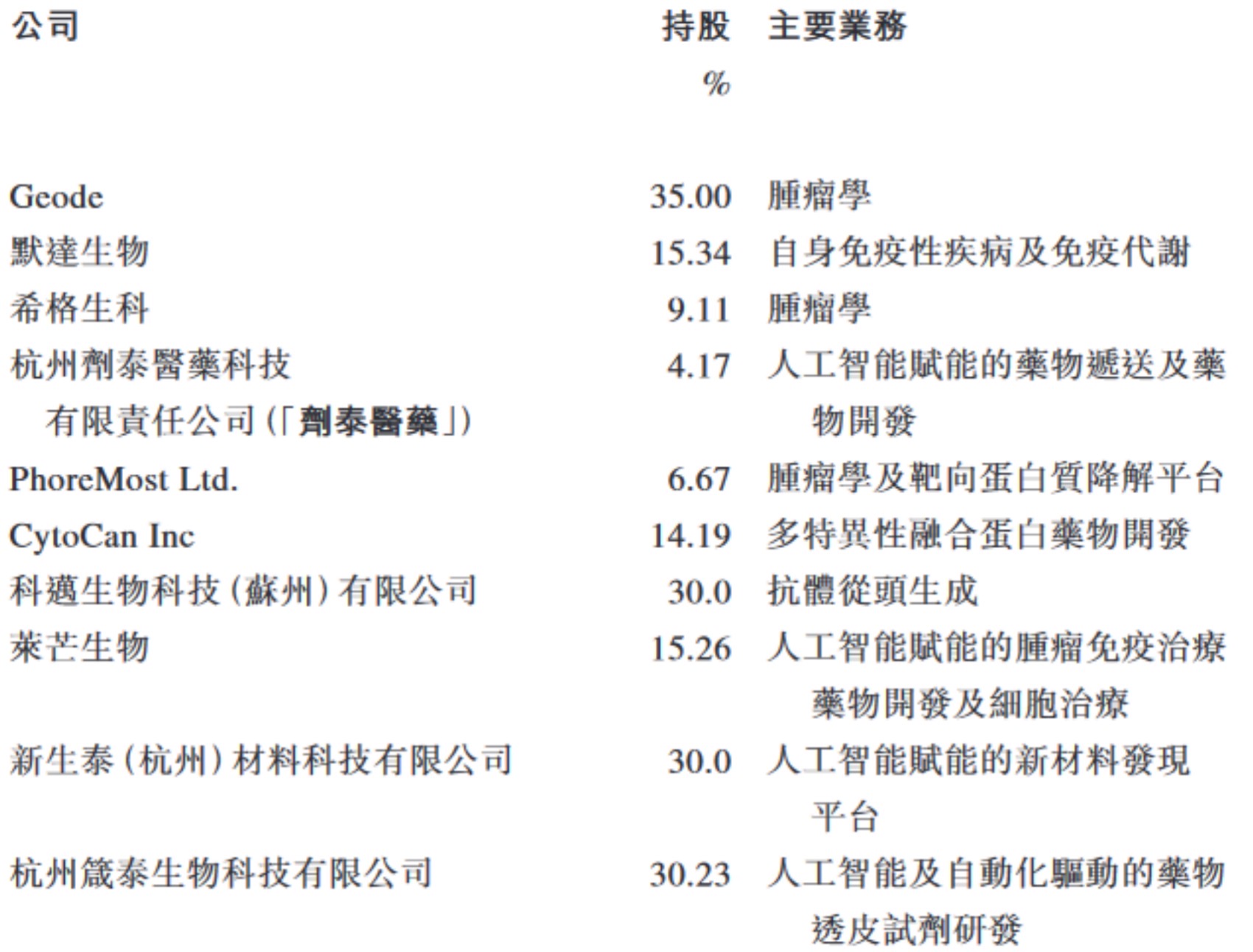
XtalPi's Equity in Collaborative Investments
Among these investments, XtalPi is particularly keen on internal incubation and collaboration with investment clients to enhance business complementarity. METiS Therapeutics, the first startup internally incubated by XtalPi, has completed four rounds of financing, with the latest Series A round raising an impressive $86 million.
Of course, in the short term, XtalPi's investment has not yet brought equivalent returns.
Currently, China's CRO industry is experiencing a cyclical downturn. Despite XtalPi's annual R&D investment of hundreds of millions of yuan, its drug discovery solutions have been impacted by the industry, resulting in a temporary stagnation in growth.
Overseas, the "Inflation Reduction Act of 2022" and the "Biosecurity Act" have cast a shadow over XtalPi's rapidly growing overseas CRO business.
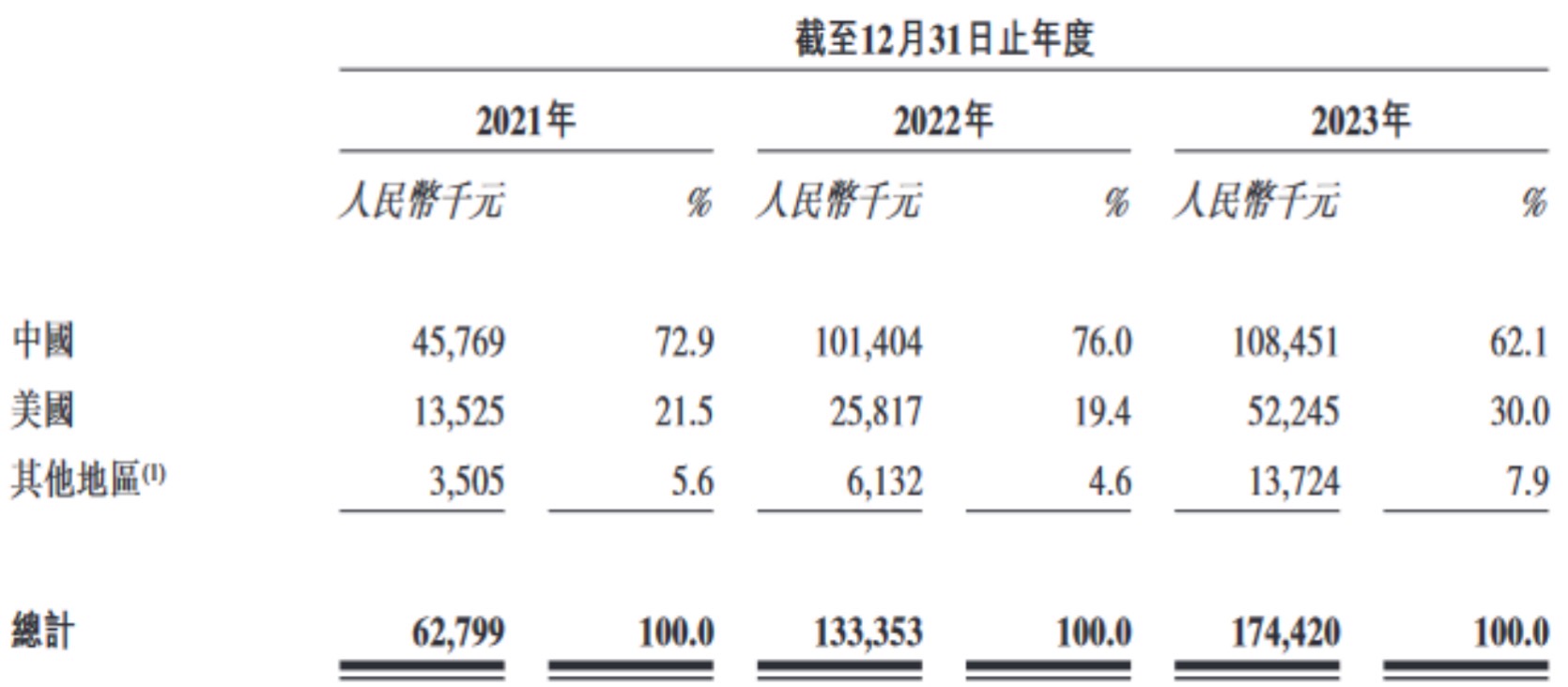
XtalPi's Overseas Business Revenue Scale and Proportion Grow Rapidly
Under the combined influence of macro policies and industry competition, XtalPi's average revenue per customer has significantly decreased. In 2023, the department handled a total of 81 revenue-generating projects for the entire year, nearly doubling from 2022. However, this part of the business totaled 87.73 million yuan in 2023, with an average revenue per project of approximately 1.1 million yuan, still lagging behind the average level of leading companies in the industry.
It is worth noting that the revenue proportion of "collaborators and collaborators — invested clients" in XtalPi's drug discovery solutions exceeds 90%, which is relatively high. This indicates that it is difficult for XtalPi's new drug R&D solutions to be sold independently, and project progress must be maintained through collaboration. If standardized delivery solutions cannot be formed, XtalPi will have to incur higher labor costs, further weakening the profitability of new drug R&D projects.
Under various obstacles, XtalPi still needs some time to win the market with its diversified CRO services. At this point, the complementary role of intelligent solutions has been fully utilized, effectively helping XtalPi alleviate financial pressure.
However, intelligent solutions have the limitation of a limited market.
In 2021, 2022, and 2023, XtalPi's revenue reached RMB 62.799 million, RMB 133 million, and RMB 174 million respectively, with net losses of RMB 2.137 billion, RMB 1.439 billion, and RMB 1.906 billion during the same periods. This means that in order to turn losses into profits, XtalPi still needs to return to new drug research and development to demonstrate the true value of AI technology.
So, how much time does XtalPi have?
XtalPi's listing document once calculated this issue. The data shows that XtalPi's average monthly cash burn rates in 2021, 2022, and 2023 were RMB 37.1 million, RMB 53.0 million, and RMB 62.2 million, respectively.
Assuming that the average cash burn rate in the future will be close to the level of the cash burn rate for the year ended December 31, 2023, and the net proceeds from this global offering (calculated based on the mid-point of the indicative offer price) reach 100%, XtalPi will be able to sustain its operations for nearly five years.
Currently, there is no AI-developed drug in the industry that has successfully reached the market. However, as long as one pipeline can complete the pharmaceutical process in the future and secure the subsequent astronomical milestone payments, AI for new drug development will be able to define and write its value.
In the first five years of the rise of new drug research and development, AI-driven drugs have advanced to Phase II clinical trials at the fastest pace. At this rate, XtalPi may indeed lead this industry and create miracles in the next five years.