

Founder's Third Venture Unveils World’s First Rivet-Free, Flexible-Integrated, Bioresorbable PFO Occluder System

WYTD
Developer of Cardiac Disease Diagnosis and Treatment Equipment
If life is a long journey, most of the time we move forward at a leisurely pace. But in the face of stroke, we must race against time to beat the death line, as every minute 1.9 million neurons die due to ischemia. According to the findings of GBD 2019, in 2019 there were 28.76 million stroke patients in China, including 24.18 million ischemic stroke patients, 4.36 million cerebral hemorrhage patients, and 1.58 million subarachnoid hemorrhage patients. Stroke has become one of the major diseases threatening the health of residents in China.
From a medical classification perspective, the majority of strokes are ischemic strokes, among which a portion are cryptogenic embolic strokes. Among the many causative factors of stroke, Patent Foramen Ovale (PFO), as a potential risk factor, has gradually drawn extensive attention from researchers and clinicians in recent years and is considered to be potentially closely associated with cryptogenic embolic stroke.
Every fetus requires a life channel to obtain oxygen and nutrients during development. This channel is not the pulmonary vasculature but the foramen ovale. The mother's umbilical venous blood, carrying oxygen and nutrients, passes through the foramen ovale into the fetus's left heart system and then distributes to all organs of the body, allowing the fetus to develop safely. After birth, the pressure in the right heart decreases, and the pressure in the left atrium becomes higher than that in the right atrium, causing the foramen ovale to gradually close. If the foramen ovale in a child older than three years has not yet closed, it is referred to as patent foramen ovale.
According to the "Chinese Expert Guidelines for the Prevention of PFO-Related Stroke," "Chinese Expert Consensus on the Prevention and Treatment of Non-Stroke Diseases Related to Patent Foramen Ovale (PFO)," and the "2024 Chinese Expert Consensus on Standardized Diagnosis and Treatment of Patent Foramen Ovale (PFO)," PFO is associated with symptoms such as cryptogenic stroke, migraine, and transient cerebral ischemia. Four international randomized controlled studies have shown that transcatheter PFO closure is superior to medical therapy alone in reducing the risk of recurrent stroke.
Patent Foramen Ovale (PFO) is a common cardiac structural abnormality in clinical practice. In recent years, various different occluders have successively entered the market. Based on their material characteristics, they can be divided into non-biodegradable occluders and biodegradable occluders, providing different options for PFO patients. According to the "Summary of the Report on Cardiovascular Health and Diseases in China 2019," the prevalence and mortality rates of cardiovascular diseases in China are still on the rise. It is estimated that there are currently 330 million people suffering from cardiovascular diseases, including 28.76 million stroke patients, of which 25% are ischemic stroke patients with cryptogenic stroke (ESUS). Among the ESUS population, the prevalence of PFO is as high as 49.3%. Currently, interventional treatment for PFO has risen to become the most common procedure among all structural heart diseases.
Amid a Surge in PFO Surgeries, VCBeat turns its attention to WYTD Medical Technology (Shenzhen) Co., Ltd. ("WYTD Medical"), an innovative company specializing in interventional treatments for heart disease, particularly structural heart disease. The company has independently developed ConBrella.TMThe bioabsorbable occluder system successfully won the 2024 VBEF Medical Health Industry Innovation Product Award in May. This list evaluates innovative products in the medical health field, aiming to discover and showcase medical health innovations and solutions that represent the global competitiveness and technological advancement of China's medical health industry, with high value for domestic substitution, addressing unmet clinical needs, and demonstrating significant industry leadership.
The Third Venture of a Medical Veteran: Driving PFO Surgeries from Thousands to Tens of Thousands
"The road that no one can help me walk, I must walk it myself." This is how Kang Libiao, the founder of WYTD, described the reason for establishing WYTD. In the medical field, Kang Libiao is undoubtedly a startup "veteran." Since 2006, Kang Libiao has been deeply involved in the medical industry, navigating through pharmaceutical sales, device agency, and founding innovative enterprises, as well as covering clinical, research and development, and marketing. It's fair to say he has experienced all the key aspects of the medical industry.
WYTD was founded in 2021. Before this venture, Kang Libiao had two other entrepreneurial experiences. "The first was from 2006 to 2014, during which we mainly acted as agents for antibiotics, achieving remarkable market success. However, the overuse of antibiotics in clinical settings was extremely severe. From a sales perspective, it was beneficial, but the consequences of drug abuse always troubled me," said Kang Libiao. Data shows that China is the largest producer and user of antibiotics. Recent statistics indicate that the comprehensive usage rate of antibiotics in Chinese hospitals exceeds 70%, far surpassing the 30% in-hospital usage rate recommended by the World Health Organization, reaching a level of serious overuse.
"But it wasn't until 2012 that I began to understand the consequences of antibiotic overuse, which can lead to decreased immune function, imbalance of microbial flora in the body, increased drug resistance among bacteria, and more adverse drug reactions. I started discussing with my then-partner about giving up the agency for antibiotics, but convincing them was very difficult." By the end of 2013, Kang Libiao had left this pharmaceutical agency company, determined to pursue work that could better improve patients' quality of life, thus entering the field of the medical device industry.
In 2014, Kang Libiao founded a medical device sales agency. By 2017, he had entered the PFO product field. In that same year, three randomized controlled trials simultaneously reported on the safety and efficacy of PFO closure following cryptogenic stroke, establishing that PFO closure combined with medical therapy was superior to medical therapy alone for patients with cryptogenic stroke attributed to PFO. From 2017 to 2019, Kang Libiao led his company in increasing the number of PFO interventional closures, an emerging procedure, from thousands to tens of thousands. Today, the Chinese market has surpassed nearly 100,000 cases, improving the quality of life for countless patients and transforming their clinical outcomes.
In recent years, Kang Libiao has been traveling between medical device companies and hospitals. He discovered some pain points in the current devices used to treat PFO. "The clinical benefits of PFO treatment are beyond question, but there are still some defects that can affect patients' long-term quality of life," Kang Libiao said. For a period of time afterward, Kang Libiao tried to provide feedback on these defects to medical device companies, but to no avail. To thoroughly address these pain points, Kang Libiao decided to establish his own team to solve the real clinical issues. Thus, in 2021, WYTD was founded in Shenzhen, with its core product line targeting PFO.
Degradation rate controllable, tightly fitting, rapid and complete endothelialization
Clinically, the complications of PFO closure are various, including pericardial effusion or cardiac tamponade, residual shunt, allergy to the occluder, arrhythmia, atrial septal dissection, thrombosis on the occluder, occluder displacement or detachment, infective endocarditis, and iatrogenic atrial septal defect, etc.
At the same time, after the PFO occluder is implanted, it mainly serves to block blood flow and act as a "temporary bridge," allowing tissue to grow along the occluder and eventually complete the endothelialization of the occluder, achieving closure of the defect. After full endothelialization, the human body no longer actually needs the occluder, but no matter how the metal occluder is improved, its basic composition is generally made of a nickel-titanium alloy frame and a polyester fiber blocking membrane, both of which are non-degradable materials. Once implanted, they remain in the body for life and may still pose long-term complication risks, and some patients may even experience psychological issues. Moreover, it can also affect other surgeries that require transseptal puncture, such as left atrial appendage occlusion, mitral valve clipping, and other interventional cardiac procedures.
According to the "Chinese Expert Consensus on Preventive Closure of Patent Foramen Ovale (PFO)," about 25% of adults in China have an incompletely closed foramen ovale, meaning nearly one in four people suffers from this condition, resulting in a large patient population. "From the perspective of domestic and international diagnosis and treatment guidelines, the applicable age group for PFO closure is restricted to 16-60 or 18-60 years old, and the surgery is only suitable after symptom onset. In other words, PFO is a relatively typical middle-aged disease. Once a metallic PFO occluder is used, the opportunity for future interventional surgery is lost, leaving open-heart surgery as the only option. Considering these potential risks, it is imperative to develop a more ideal and safer biodegradable PFO occluder," said Kang Libiao, founder of WYTD.
Currently, significant progress has been made in the development of bioabsorbable PFO occluders, with some products successfully approved and launched in the market, demonstrating unique clinical advantages. However, challenges remain due to issues such as imperfect shaping caused by the special properties of the materials, postoperative residual shunting, and even the formation of new thrombosis due to incomplete endothelialization, which may lead to embolic risks.
Based on this, WYTD has independently developed the world's first ConBrella with a rivet-free flexible connection integrated design.TMPFO Occluder System: Its unique advantages include simple operation, controllable degradation rate, tight fitting, and rapid and complete endothelialization. "In past PFO occlusion procedures, rivets assisted doctors in interventional surgery positioning. Through pre-installed integration, we minimize surgery time and effectively reduce radiation exposure for both the operator and patient, while adopting a rivet-free design to truly achieve full degradation, ensuring no residue remains in the patient’s body. Currently, WYTD's PFO occluder can achieve complete degradation within one year, minimizing the impact on patients' lives," introduced Kang Libiao.
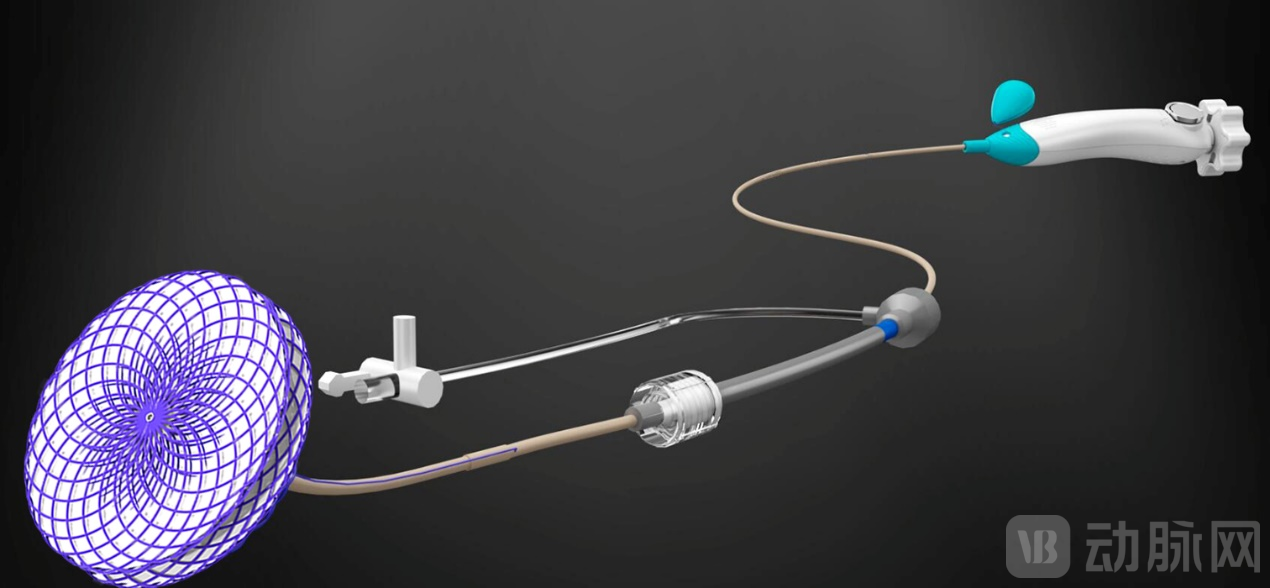 WYTD ConBrellaTM PFO Occluder System
In addition, WYTD adopts a waist-adjustable design, allowing for controllable occluder morphology to adapt to different anatomical structures of the foramen ovale. The flexible connection between the delivery device and the occluder enhances the safety of the instrument. Both the main body of the occluder and the flow-blocking membrane are made of synchronously degradable materials with controllable degradation rates, promoting endothelial repair and long-term closure. This helps reduce long-term complications such as thrombotic events and arrhythmias, thereby lowering the long-term treatment costs.
In terms of intellectual property, WYTD has more than 50 independent core patents in multiple directions such as product core principles, product structure design, material preparation, and product appearance.
Integrated Diagnosis and Treatment: PFO Occluder Completes Clinical Trial Enrollment
Centering on patent foramen ovale (PFO), in addition to the PFO occluder, WYTD has also developed five innovative products, including a fully automatic cardiac shunt diagnostic device and an ultra-compliant balloon, covering both active and passive products, providing a complete and comprehensive integrated solution for PFO diagnosis and treatment.
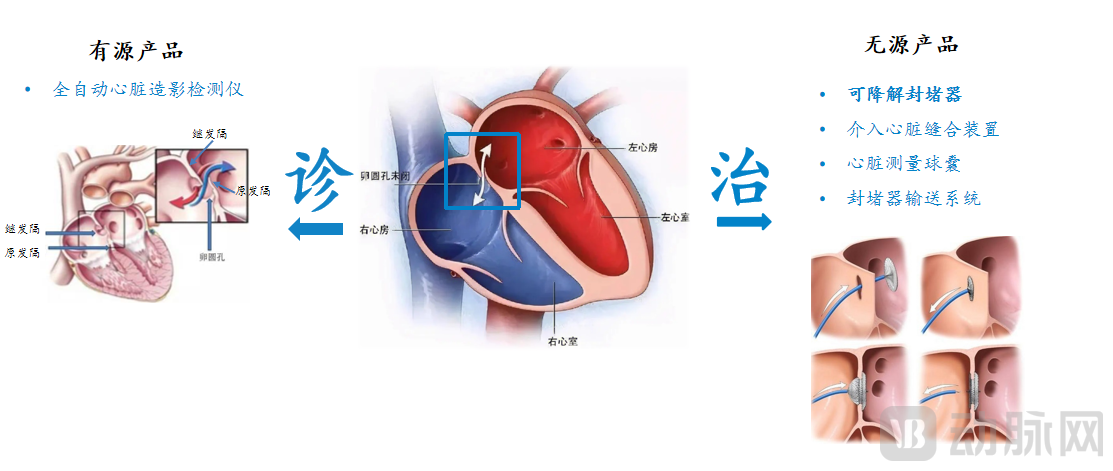
Currently, WYTD ConBrellaTM The clinical trial enrollment for the PFO occluder system has been successfully completed. This clinical trial was jointly led by Fuwai Hospital Shenzhen, Chinese Academy of Medical Sciences, and Zhongnan Hospital of Wuhan University, in collaboration with multiple top hospitals across China, including Fuwai Hospital, Chinese Academy of Medical Sciences, Guangdong Provincial People's Hospital, Xiangya Hospital of Central South University, The University of Hong Kong-Shenzhen Hospital, Wuhan Asia Heart Hospital, Sichuan Provincial People's Hospital, Yunnan Fuwai Cardiovascular Hospital, The First Hospital of Lanzhou University, Jiangsu Provincial People's Hospital, Xinjiang Autonomous Region People's Hospital, The First Hospital of Hebei Medical University, and Xiangyang Central Hospital (listed in no particular order). This trial is a prospective, multicenter, randomized controlled clinical trial designed to comprehensively evaluate ConBrella.TMThe system's excellent safety and effectiveness are expected to lead to the product's registration submission by the end of this year.
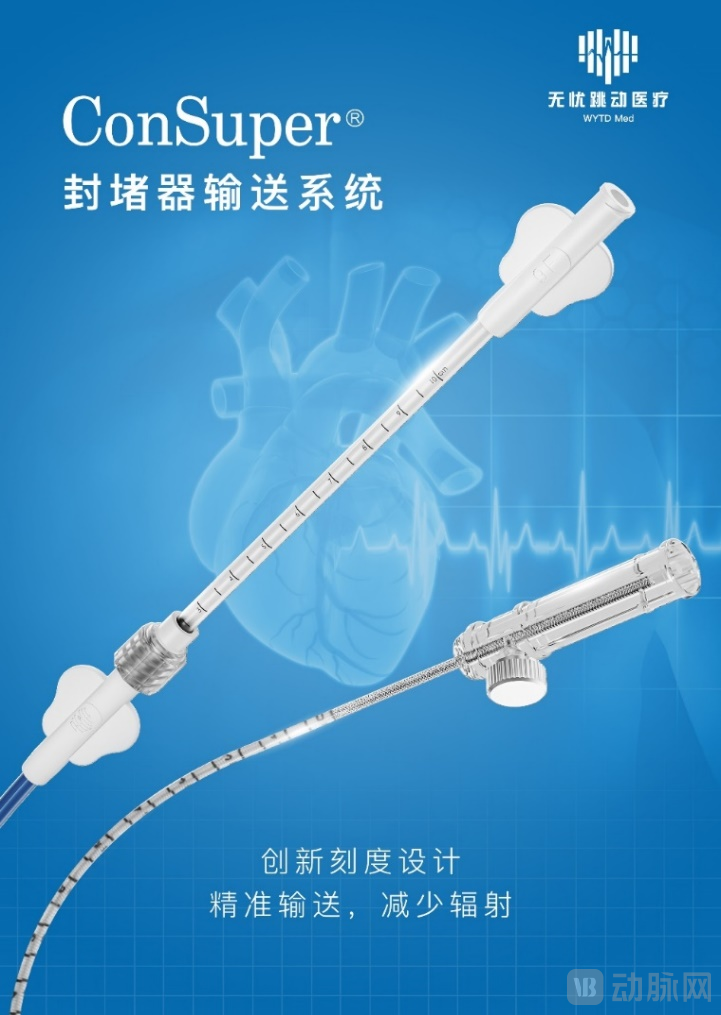
In addition, WYTD's ConSuperTMThe occluder delivery system (National Medical Device Registration No. 20243030961) has been approved for marketing, and other products will also be launched successively this year, meeting the clinical needs for integrated diagnosis and treatment of PFO. Relying on the founder Kang Libiao’s strong channel capabilities, the founding team's years of market experience, and extensive clinical expert resources, the products will achieve efficient hospital entry and rapid scale-up, with successful commercialization just around the corner.
Currently, WYTD has been recognized as a national high-tech enterprise, rated as a college student internship base, an internship base of Sichuan University, a high-growth enterprise in Pingshan District, and a technology-based small and medium-sized enterprise, among others. In the future, backed by a strong R&D expert team and leveraging transformation platforms from well-known universities and research institutes inside and outside the province, WYTD will continue to innovate in the field of heart disease, especially in interventional treatment for structural heart disease.