AbbVie Bets Big on TL1A with $1.5B Upfront Deal for Preclinical Candidate FG-M701 from Mingji Bio

AbbVie
Innovative Drug Developer
A drug that secures up to $1.71 billion (approximately RMB 12.4 billion) in payments just at the preclinical stage—what kind of miracle is this?
Recently, Mingji Biologics announced the global rights licensing of its preclinical TL1A antibody FG-M701 to AbbVie. AbbVie will pay $150 million as upfront and near-term milestone payments, up to $1.56 billion in milestone amounts, and double-digit percentage royalties on sales.
What is the fundamental purpose of AbbVie spending 12.4 billion yuan to acquire a preclinical candidate drug?
01
Acquired for 12.4 billion,
What is the TL1A target?
TL1A, whose full name is Tumor Necrosis Factor-Like Cytokine 1A, belongs to the tumor necrosis factor family. Among this family, the well-known target should be TNF-α. To mention a familiar example, the previous global top-selling drug—Adalimumab—targets TNF-α. Interestingly, the original research company of this drug is also AbbVie. Humira has been the world's best-selling drug for many years, and in 2022, during its last year at the top of the sales chart, its revenue reached $21.2 billion.
This move into the TL1A target can be seen as another "expansion" by AbbVie in the tumor necrosis factor target family.
TL1A is a type 2 transmembrane protein that can self-assemble into stable trimers through interaction with the TNF homology domain (THD). It is expressed in various immune cells, such as monocytes, macrophages, dendritic cells, and T cells, as well as in non-immune cells like synovial fibroblasts and endothelial cells.
And its most well-known signaling pathway is the TL1A/DR3 signaling pathway.
DR3 is a type I membrane protein. The DR3 protein is a transmembrane protein with a typical death domain and cytoplasmic domain. The death domain is the region where the DR3 protein binds to its ligand, while the cytoplasmic domain is involved in the signal transduction process. Additionally, the DR3 protein has multiple glycosylation sites, which facilitate its expression and functional performance on the cell membrane.
TL1A, as a ligand for the DR3 protein, can activate DR3 upon binding to it. Once activated, it preferentially induces pro-inflammatory pathways in lymphocytes. This pathway can trigger the production of inflammatory cytokines, thereby promoting the occurrence of inflammatory responses.
In addition, TL1A can also stimulate the TH1 and TH17 pathways, which are associated with the location and severity of intestinal inflammation and fibrosis. Finally, TL1A can activate fibroblasts, which are the main source of fibrosis. Therefore, TL1A is an important factor in regulating mucosal immunity and fibrosis.
And in view of its complex mechanism of action, most of its indications are concentrated in ulcerative colitis and inflammatory bowel disease.
02
Roche is the fastest progressing,
Global TL1A Drug Progress
In terms of enteritis, the level of TL1A is elevated in patients with inflammatory bowel disease. It can not only promote inflammatory responses by binding to DR3 but also synergistically promote the production of IL-4, IL-12, and IL-23, and increase the expression of DR3 through Th1, Th2, and Th17 cells.
The TL1A drug with the most advanced progress currently is Roche's RVT-3101. The frequent business development activities and acquisitions surrounding this drug pipeline also indirectly demonstrate its potential value. The original developer of this drug is Pfizer. In December 2022, Pfizer and Roivant Sciences announced the establishment of a new company, Telavant, aiming to enter the billions-of-dollars market for inflammatory bowel disease treatment. Pfizer holds 25% of the shares in the company, while the majority is held by Roivant.
Later, Roche stepped in. On October 23, 2023, Roche announced that it had reached a definitive agreement to acquire Telavant, with the main target being TL1A. The total payment for this acquisition amounted to $7.25 billion. Following the acquisition, Roche gained full rights to the drug's development and production. In terms of commercialization rights, Roche holds the rights to develop, produce, and commercialize RVT-3101 in the United States and Japan. Outside the United States and Japan, Pfizer retains the commercialization rights.
This drug may eventually achieve both BIC and FIC status, and it has currently entered the preparation stage for Phase III clinical trials. As for the sales peak prediction of this drug, according to analysts from the well-known American investment website The Motley Fool, RVT-3101, as a precision medicine for second-line IBD, can easily reach global annual sales of over 20 billion US dollars. With the continuous expansion of indications, it could even reach an annual peak exceeding 50 billion US dollars.
Other pipelines are also catching up, with Merck's MK-7240 emerging as a strong contender. In June 2023, Merck (MSD) completed the acquisition of Prometheus for a total of $10.8 billion, whose core product is MK-7240; its progress is roughly on par with RVT-3101. By September 2023, the Phase 3 clinical trial of MK-7240 was registered on Clinicaltrials.gov.
If there are no surprises, these two products will be launched one after another. The pharmaceutical industry will most likely witness a head-to-head competition on the commercialization path of the two products.
Sanofi's TEV-48574 also gained fame through a high-value BD deal. Originally developed by Teva, the drug was acquired by Sanofi last year for a $500 million upfront payment and $1 billion in milestone payments. It has now entered Phase II clinical trials.
03
China-produced autoimmune drugs go overseas,
The Highlight Moment of Mingji Biotech
As an unlisted biotech, Mingji Biotech’s ability to secure this substantial BD deal certainly speaks to its exceptional strengths.
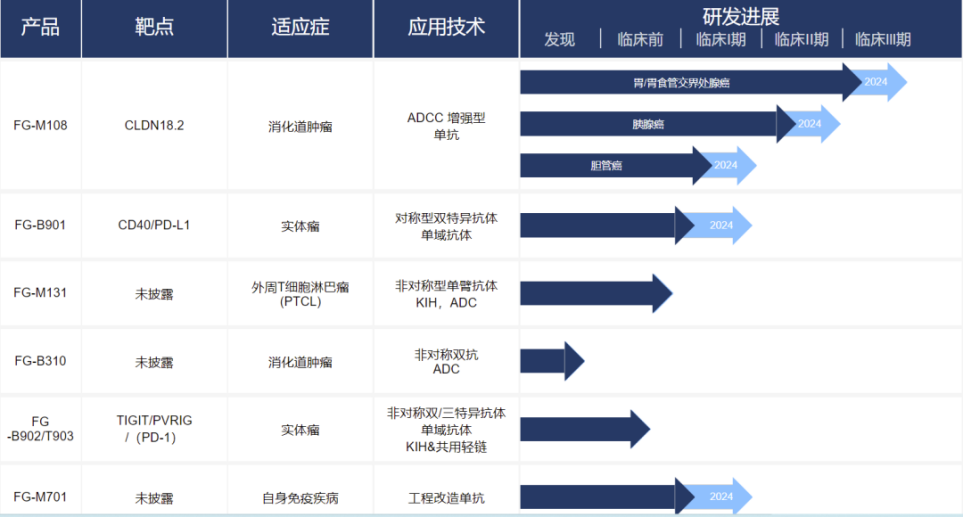
Image Source: Mingji Biotech Official Website
As a company specializing in antibodies, Mingji Biologics' current pipeline indications are mainly concentrated in oncology. Its core pipeline, FG-M108, is a monoclonal antibody specifically targeting gastrointestinal tumors. The popularity of the CLDN18.2 target in current gastrointestinal targets goes without saying, and this drug, relative to other CLDN18.2 monoclonal antibodies, features high selectivity and enhanced ADCC effects.
According to the results of early clinical trials, among 50 patients (limited to CLDN18.2 positive) treated with FG-M108 (300mg/m²) in combination with the CAPOX regimen, the objective response rate (ORR) was 66%, and the disease control rate (DCR) was 98%. Among the 35 patients with medium to high expression of CLDN18.2, the ORR was 71.4%.
Currently, the drug is undergoing Phase III clinical trials, making it the third CLDN18.2 monoclonal antibody to enter the Phase III stage in 2023.
FG-B901, as a currently highly discussed bispecific antibody product, is also expected to enter the clinical stage in 2024.
In addition, FG-M701 also has its differentiated features compared to other drugs. FG-M701 emerges as a next-generation antibody. Compared with the first-generation TL1A antibody, FG-M701 has undergone unique engineering modifications, with the potential to become the best-in-class in terms of functional characteristics. It aims to provide better efficacy for the treatment of inflammatory bowel disease and reduce the frequency of medication.
04
Conclusion
This BD represents a two-way collaboration between China-produced innovative drugs and MNCs. Due to the lack of TNF-type drugs to support its layout in this field, AbbVie chose to directly purchase the next-generation products from biotech, while biotech gained substantial funding to "reinvigorate," driving a recovery in the primary market.
The candlelight in the cold winter always appears warm.
Reference Source:
1. Mingji Biotech Official Website
2.E Pharm Manager
3.https://mp.weixin.qq.com/s/v5S2mXQePnGBtvgeYxOx3g
4.https://mp.weixin.qq.com/s/N6gUg6xhjvlY-ggwPnWMfg

Editor: Pea Shooter
Disclaimer: The views expressed in this article are solely those of the author and do not represent the position of Pharma Intelligence. We welcome discussions and additional insights in the comment section; for reprints, please be sure to credit the author and source. If there are any issues regarding the content, copyright, or other aspects of the work, please leave a message on this platform, and we will address it promptly.