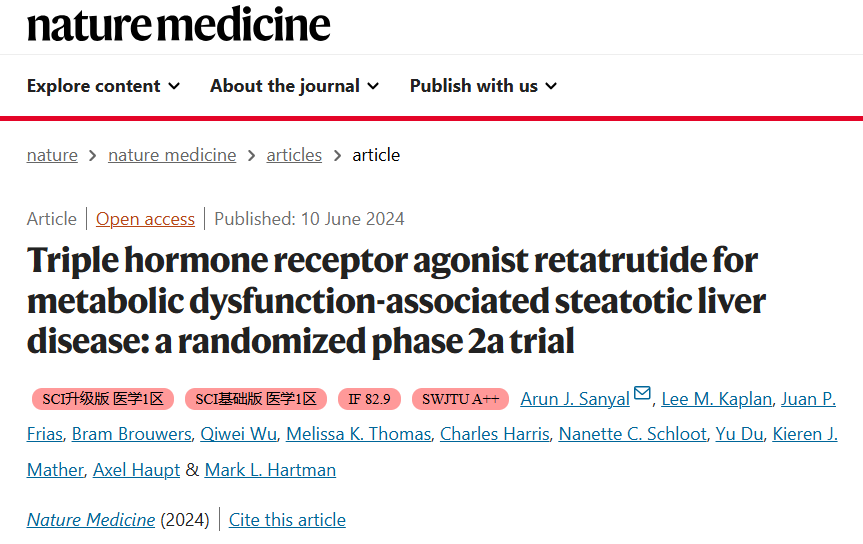
Recently, Eli Lilly published data from the Phase IIa study (NCT04881760) of GLP-1R/GCGR/GIPR agonist Retatrutide (LY3437943) for the treatment of Metabolic Dysfunction-Associated Steatotic Liver Disease (MASLD, formerly known as Nonalcoholic Steatotic Liver Disease (NASLD)) in the journal *Nature Medicine*. Overall,Retatrutide Shows Excellent Results in Reducing Liver Fat Content in MASLD Patients, with a Maximum Reduction of Up to 86%.From May 20, 2021, to November 22, 2022, a total of 338 patients were enrolled to receive Retatrutide (1/4/8/12mg, once weekly) or placebo treatment. Among them, 98 patients (29.1%) met the criterion of liver fat content ≥10% (assessed by magnetic resonance imaging proton density fat fraction [MRI-PDFF]) and were included in the MASLD substudy. The efficacy and safety analysis population for the substudy comprised these 98 patients, with a baseline mean.The liver fat content is 19.1%.The results showed that within 24 weeks, the liver fat content of most patients decreased significantly. After 24 weeks of treatment, compared with the placebo group, the relative liver fat content of patients in all Retatrutide dose groups decreased more significantly (P<0.001).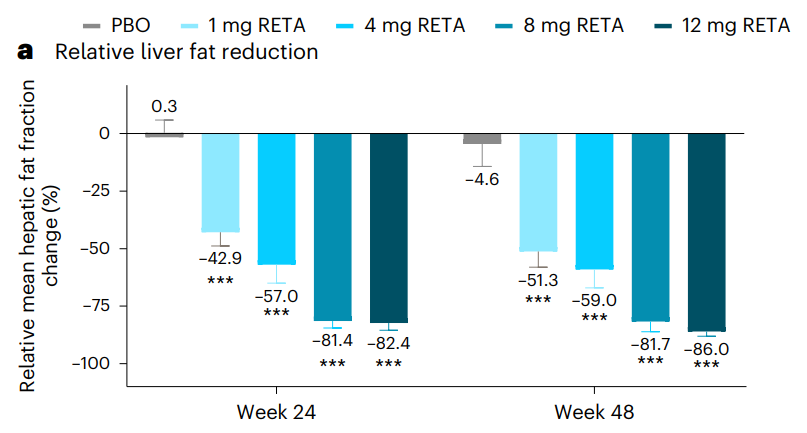
Source: *Nature Medicine*Treatment for 24 weeks, minimum dose(1mg)In the groups, 71%, 43%, and 22% of patients showed at least a 30%, 50%, and 70% reduction in liver fat content, respectively. In the highest dose (12mg) group, there were100%, 100%, and 80% of patients experienced a reduction in liver fat content of at least 30%, 50%, and 70%, respectively.。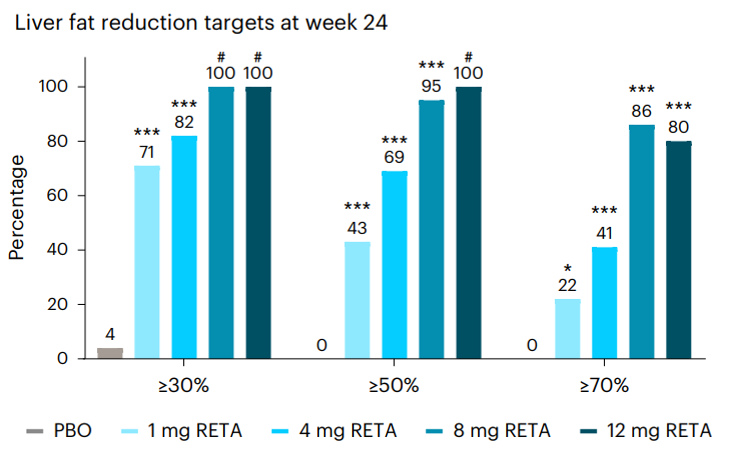
Source: *Nature Medicine*After 48 weeks of treatment, 82%, 65%, and 48% of patients in the lowest dose (1mg) group had at least a 30%, 50%, and 70% reduction in liver fat content, respectively. In the highest dose (12mg) group, 100%, 100%, and 93% of patients had at least a 30%, 50%, and 70% reduction in liver fat content, respectively.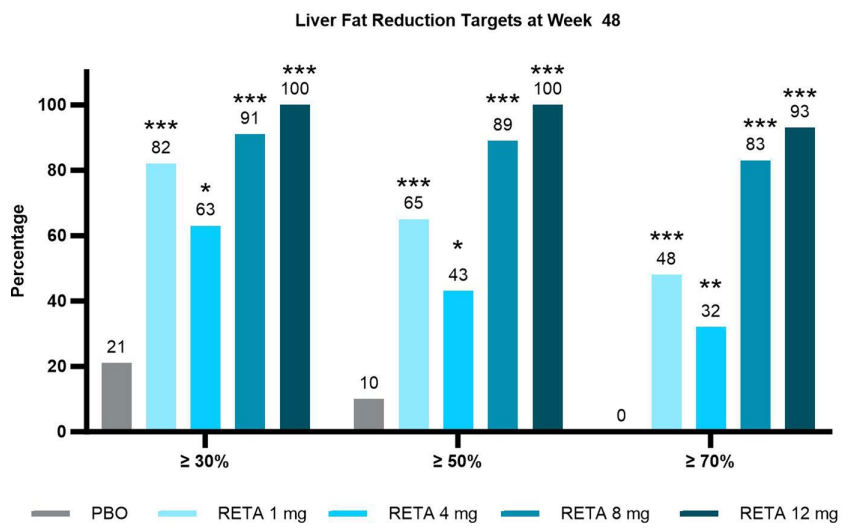
Source: *Nature Medicine*
After 24 weeks of treatment, the proportion of patients with liver fat content <5% in each dose group was 27%, 52%, 79%, and 86%, respectively; after 48 weeks of treatment, the proportion in the 1mg, 8mg, and 12mg dose groups was...The proportions increased to 57%, 89%, and 93%, respectively, while the proportion in the 4mg dose group decreased to 29%.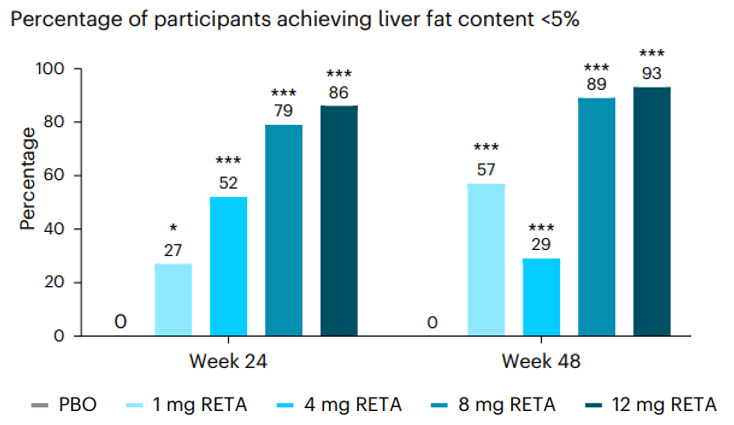
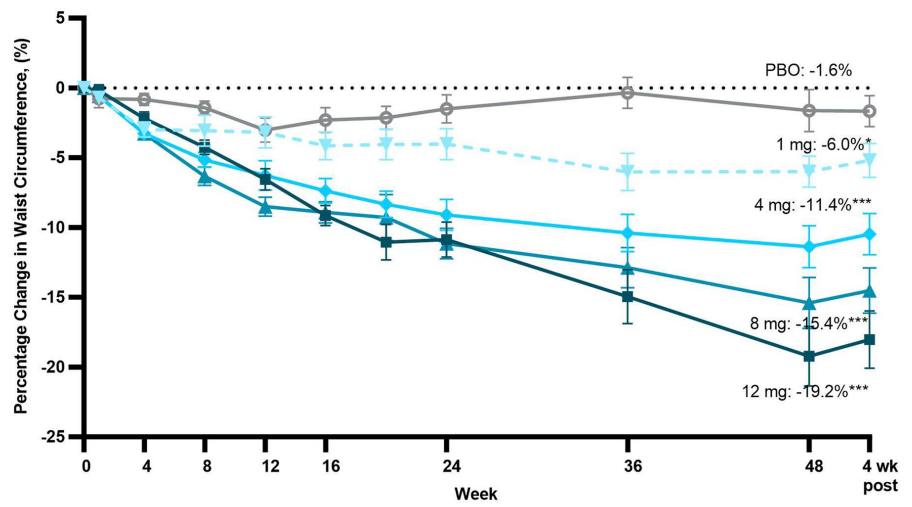
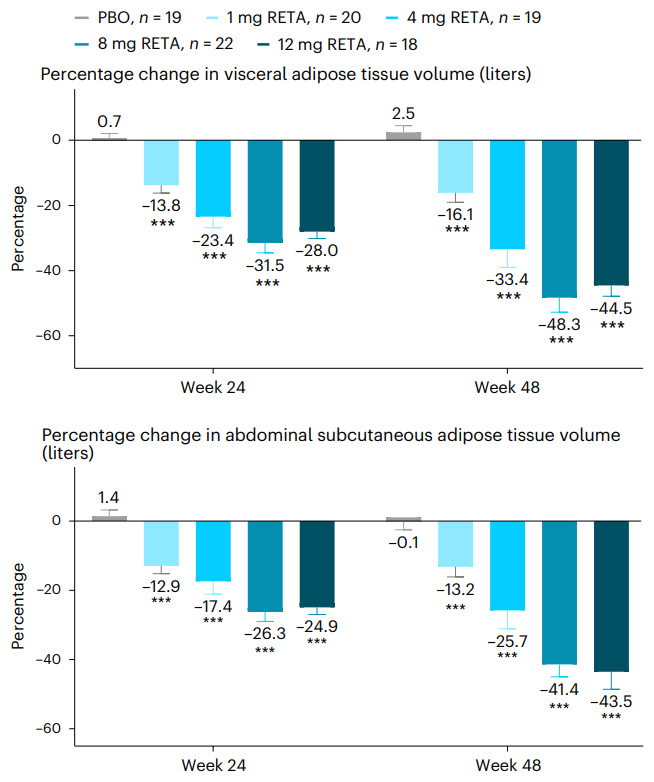
Source: *Nature Medicine*In addition to a significant reduction in liver fat content,Retatrutide GroupThe patient's weight, waist circumference, visceral adipose tissue (VAT) content in the abdomen, and abdominal subcutaneous adipose tissue (ASAT) content have also improved.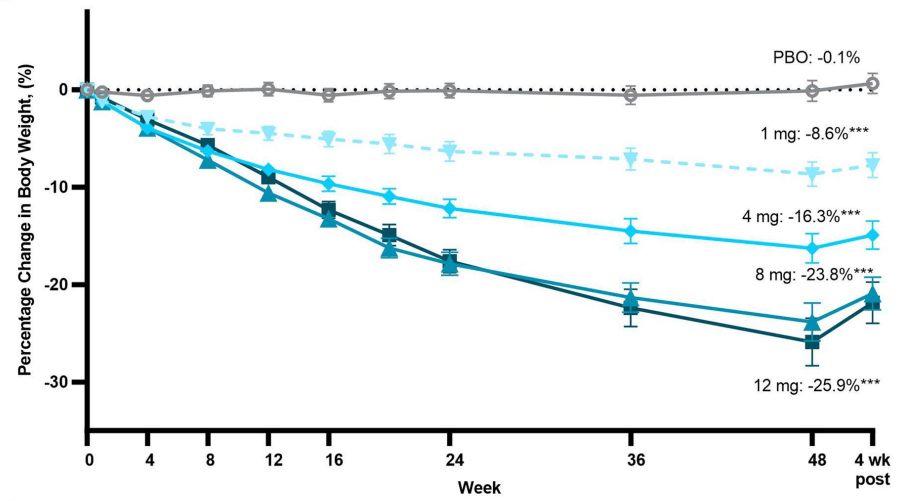
Source: *Nature Medicine*MASLD is one of the most common chronic liver diseases in the world, with a global prevalence rate reaching 38%. The further deterioration of MASLD can progress toMetabolic dysfunction-associated steatohepatitis (MASH, formerly known as nonalcoholic steatohepatitis (NASH)) leads to increased liver fibrosis in patients, eventually resulting in cirrhosis and potentially even liver cancer.After a long period of exploration, the MASH field has witnessed a treatment breakthrough, but positive progress in the MASLD field remains limited, with related clinical research data being scarce.Overview of the Efficacy of MASLD in Development
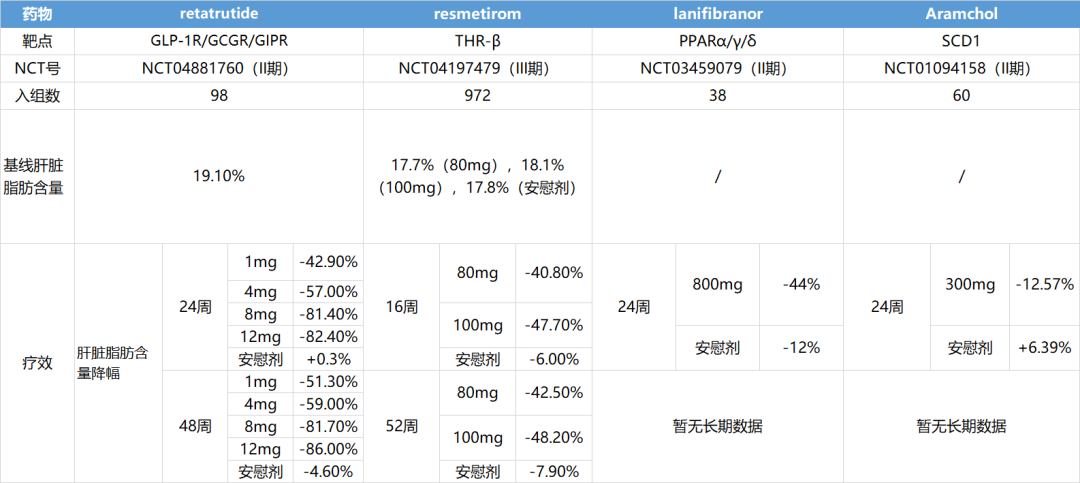
Note: Organized by PharmaCubeGLP-1 drugs have performed very well in the field of chronic liver disease in recent years, with both single-target and dual-target drugs making positive progress (see:Tirzepatide Advances Further in NASH Treatment). The positive results of Retatrutide in the Phase II study for MASLD have further brightened the prospects of the GLP-1 target in the treatment of chronic liver diseases.From the current data,Retatrutide can achieve a reduction in liver fat content comparable to other targeted drugs even at low doses, which will create a competitive advantage for it. Looking forwardThe Future Performance of Retatrutide.
References:
Triple hormone receptor agonist retatrutide for metabolic dysfunction-associated steatotic liver disease: a randomized phase 2a trial.Copyright © 2024 PHARMCUBE. All Rights Reserved.
Welcome to forward, share, and reasonably cite. When citing, please clearly indicate the source of the article in a prominent position;For reprint, please leave a message or send a message to the WeChat Official Account backend, and indicate the name and ID of the official account.
Disclaimer: The information in this WeChat article is for general reference only and should not be used directly as decision-making content. PharmaCube assumes no responsibility for any loss incurred by any party due to the use of the content herein.