Introduction:According to Grand View Research, the global AI market size in the field of drug discovery was $1.1 billion in 2022 and is expected to grow at a compound annual growth rate (CAGR) of 29.6% from 2023 to 2030. The increasing demand for the discovery and development of new drug therapies, along with improved manufacturing capabilities in the life sciences industry, is driving the demand for AI solutions in the drug discovery process.AI is causing a storm in the biotech industry, enabling companies to accelerate the drug discovery process while making it more cost-effective. With so many companies in the industry now adopting this technology, today we are sharing five top AI drug discovery companies, hoping it will be helpful to everyone.Atomwise is using artificial intelligence to try and revolutionize the discovery of small molecule drugs. The company aims to tackle the most challenging, seemingly impossible targets and streamline the drug discovery process, providing drug developers with more opportunities for in-depth development.Atomwise's drug discovery approach shifts the drug discovery paradigm from serendipitous discovery to structure-based search, making the drug discovery process more rational, effective, and efficient. The company’s AtomNet platform applies deep learning to structure-based drug design, enabling rapid, AI-driven screening of its proprietary library of over 3 trillion synthesizable compounds.In one of Atomwise's largest deals, the AI drug discovery company has signed a strategic multi-target research collaboration with pharmaceutical giant Sanofi. The collaboration will leverage its AtomNet platform for computational discovery and research on up to five drug targets.Recently, the company also announced the nomination of its first AI-driven development candidate, an orally bioavailable and allosteric TYK2 inhibitor. TYK2 is a key mediator in cytokine signaling pathways and is associated with various immune-mediated inflammatory diseases. By modulating the TYK2 pathway, this candidate drug has the potential to treat multiple autoimmune and autoinflammatory diseases, including inflammatory bowel disease, systemic lupus erythematosus, psoriasis, and psoriatic arthritis. Atomwise is now aiming to submit an IND in the second half of 2024.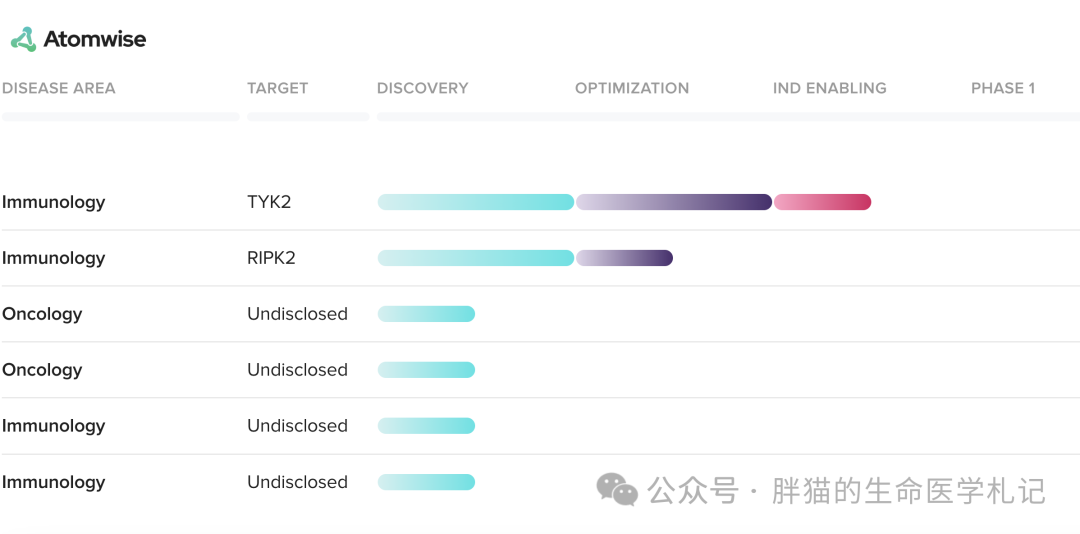
2、CradleDutch startup Cradle uses generative AI to help biologists design improved proteins and accelerate R&D, making it easier, faster, and more cost-effective to create bio-based products for human and planetary health. The company's AI model is trained on billions of protein sequences as well as data generated in Cradle's own lab.Over the past year, the company has collaborated with nine leading industry partners, including Janssen Research & Development, Novozymes, and Twist Bioscience. Currently, the company is conducting over 12 R&D projects focused on designing various protein patterns, including enzymes, vaccines, peptides, and antibodies, which possess a wide range of desired protein characteristics such as stability, expression, activity, binding affinity, and specificity.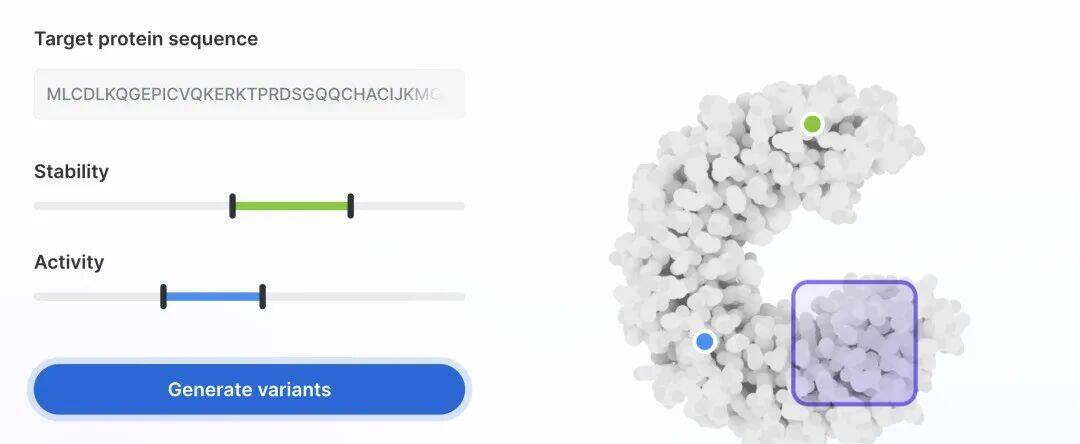
In November 2023, Cradle raised $24 million in Series A funding, led by Index Ventures with participation from Kindred Capital. This round of financing brings the total amount raised by the AI-driven drug discovery company to $33 million to date.Exscientia is considered a pioneer in the field of artificial intelligence within the biopharmaceutical industry. It is an AI-driven precision medicine company dedicated to leveraging its AI technology to discover, design, and develop the best drugs in the fastest and most efficient way possible. The company has developed the first functional precision oncology platform, which has successfully guided treatment selection and improved patient outcomes in prospective interventional clinical studies, and has advanced AI-designed small molecules into clinical settings.Exscientia's most advanced candidate drug is GTAEXS617, which is being tested in a phase 1/2 trial named ELUCIDATE for the treatment of advanced solid tumors, including head and neck cancer, breast cancer, non-small cell lung cancer, and other cancers.This AI drug discovery company has established partnerships with multiple collaborators, including deals with Sanofi and Merck. Exscientia's collaboration with Sanofi began in 2017, when the two companies entered into a $273 million licensing agreement focused on discovering bispecific small molecule drugs for metabolic diseases. More recently, in 2022, Exscientia and Sanofi also reached a research and licensing agreement to develop up to 15 small molecule candidates across oncology and immunology. Meanwhile, just last month, Exscientia announced a new $674 million agreement with Merck, focusing on discovering new small molecule candidates in the fields of oncology, neuroinflammation, and immunology.Paris-based Iktos is leveraging artificial intelligence technology for drug discovery and design, using it to rapidly identify small molecules that can become clinical candidates. By utilizing AI, Iktos aims to accelerate the drug discovery process while increasing the probability of success for candidates entering clinical development. Iktos has validated this approach through over 50 academic and industrial collaborations with pharmaceutical and biotechnology companies such as Janssen, Merck, Pfizer, and Servier.The company has four main products that can enhance the productivity of small molecule drug discovery. They are: DockAI (which combines docking with state-of-the-art active learning methods to improve efficiency); Makya (a de novo drug design platform based on ligand and structure); Spaya (synthesis planning software); and Spaya API (a high-throughput synthetic accessibility scoring tool for virtual molecular libraries).In March 2023, the company announced that it had completed a €15.5 million ($16.4 million) Series A financing round, enabling it to further develop its artificial intelligence and drug discovery capabilities, expand its existing SaaS software offerings, and launch Iktos Robotics – an end-to-end drug discovery platform that combines AI with automated chemical synthesis to significantly accelerate drug discovery timelines.Insilico Medicine is committed to applying artificial intelligence to every step of drug discovery, significantly reducing the time and cost required to deliver life-saving medicines to patients. To achieve this goal, the company uses next-generation AI systems to connect biology, chemistry, and clinical trial analysis. Its fully integrated drug discovery suite, Pharma.AI, includes PandaOmics (for discovering and prioritizing new targets), Chemistry42 (for generating new molecules), and InClinico (for designing and predicting clinical trials).In June 2023, Insilico Medicine's candidate drug INS018_055 (for the treatment of idiopathic pulmonary fibrosis) became the first fully AI-discovered and AI-designed drug to enter Phase II clinical trials, marking a significant milestone in the industry. This AI company also has two other drugs in clinical stages, which were partially AI-generated. One is for COVID-19, and the other is for solid tumors.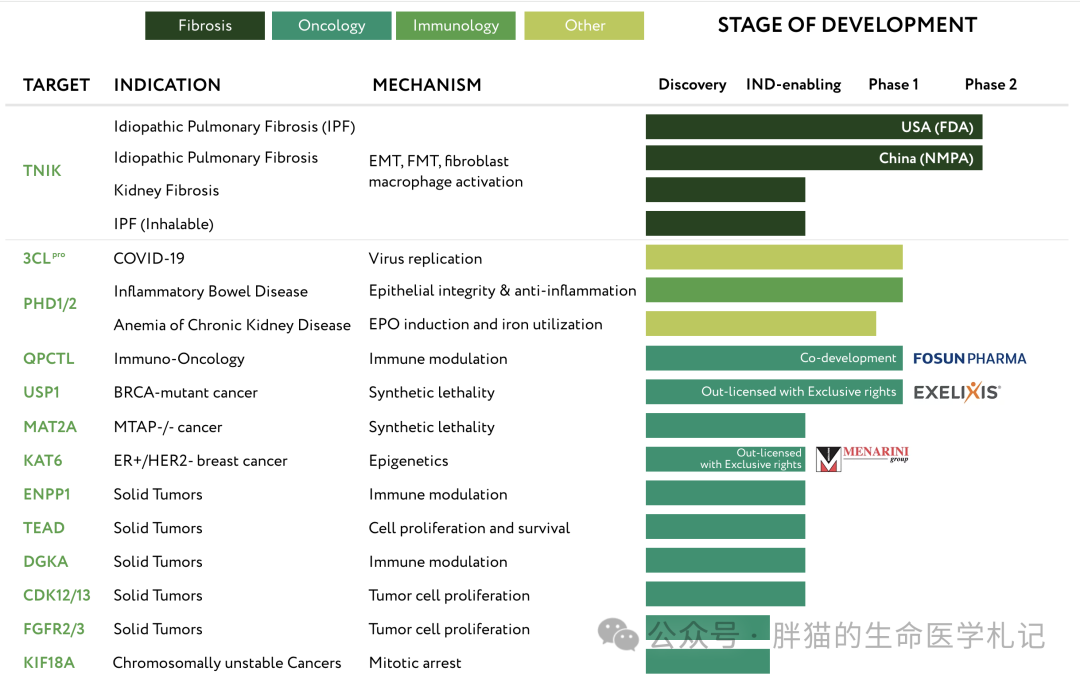
Notably, in November 2022, Insilico Medicine signed a significant collaboration agreement worth up to $1.2 billion with Sanofi. According to the agreement, Sanofi will utilize Insilico Medicine's Pharma.AI to identify disease targets, generate new molecular data, and predict clinical trial outcomes to advance candidate drugs for up to six new targets.
*This WeChat Official Account remains neutral on all original and reproduced content, statements, and viewpoint judgments. The shared content is for non-profit purposes only. If any reproduced works or images have incorrect author source markings or involve infringement, original authors are kindly reminded to contact the editor for removal.
*Editorial Responsibility| Mu Yang
*Reprint Authorization | Teacher Zhang 17551939537(WeChat same number))
*Business Cooperation | PartyTeacher13262726197(WeChat same number)