Tianwu Tech and GenSci Pharma Achieve Global First: AI-Designed Protein Successfully Scaled to 5,000-Liter Industrial Production

Matwings Technology
AI Protein Design Service Provider

GenSci
Gene Engineering Pharmaceutical and Growth Hormone Producer




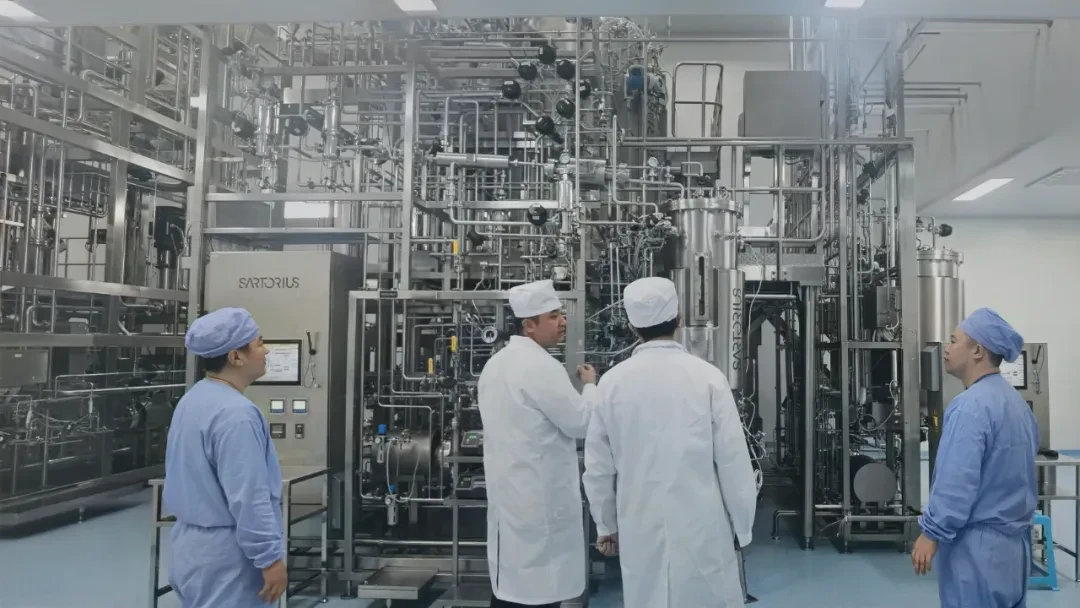
On June 17, Matwings Technology, a portfolio company of Bencao, and Changchun GeneScience Pharmaceutical Co., Ltd. (GenSci) jointly announced a breakthrough in designing ultra-alkali-resistant single-domain antibodies using AI large models. They successfully completed the development of the world’s first protein product designed by a large model that has entered 5,000-liter scale-up production and practical application.

Improving the alkali resistance of proteins has always been a highly challenging task. In the industry, the only truly alkali-resistant affinity chromatography ligand protein is Protein A.It took researchers nearly 10 years to improve its alkali resistance to an industrially usable level, but the application scope is still limited to antibodies.。
This time, Matwings Technology and GenSci collaborated to design entirely through a general large model for protein engineering, combined with a small amount of wet-lab closed-loop iterative validation.In less than a year,Transforming an ordinary non-alkali-resistant single-domain antibodyAlkali resistance increased by 4 times, and apply it in5000 LitersIn the scale-up production.
This event marks the maturity of custom-developing highly alkali-resistant affinity chromatography media technology through large AI models. This technology can evolve any single-domain antibody into alkali-resistant affinity chromatography media usable in industrial applications, enabling the purification of any biomolecule (including GLP-1, cell and gene therapy carrier proteins, AAV viral particles, etc.) via affinity chromatography., replacing the multi-step chromatography process for unlabeled proteins, solves the problem of high purification difficulty and low production efficiency for this type of molecule. This is a major technological innovation in downstream processes, being a global first.
“
Dr. Lei Jin, General Manager of GenSci, stated: "This breakthrough not only marksLow-cost purification using affinity chromatography becomes possible,which also means that artificial intelligence has taken an important step from Science research to Engineering application in the biopharmaceutical field, and it is of profound significance for improving drug production efficiency, reducing production costs, and promoting the development of new quality productivity.
Alkaline Resistance Modification of Single-Domain Antibodies
Growth Hormone (GH) is a peptide hormone secreted by the anterior pituitary gland, playing a crucial role in human growth and development. It promotes human growth and cell proliferation by directly acting on bones, cartilage, and muscles, as well as indirectly stimulating the liver to produce insulin-like growth factor 1 (IGF-1), showing significant efficacy in treating short stature in children.
As the only long-acting growth hormone currently approved for marketing in China,GenSci JinSai Growth®The production method mainly adopts E. coli secretory expression technology, utilizing E. coli to efficiently express human growth hormone, which is then manufactured through fermentation, centrifugation, and purification steps.
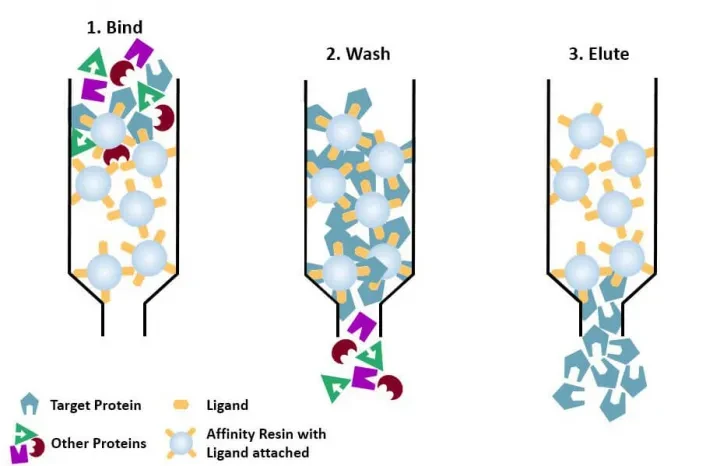
However,Traditional purification methods result in significant growth hormone loss.。Therefore, GenSci successfully identified a target after initially screening a 40 million single-domain antibody library from alpacas.Single-domain antibodies with excellent affinity(Single-domain antibody, sdAb), also known as Nanobody (Nb), VHH antibody, or camel antibody, is a small protein with high affinity found in camelid animals. Considering the small size, simple structure, and ease of production of single-domain antibodies, GenSci has decided to use single-domain antibodies as affinity chromatography ligands for the specific binding of growth hormone.
However, "alkali" is the nemesis of the vast majority of proteins, and single-domain antibodies have poor alkali resistance.Proteins generally require mild acidic or alkaline conditions to function. Typically, when the environmental pH is less than 5 or greater than 10, the molecular structure of proteins will be affected. Under more extreme alkaline conditions where the pH exceeds 13, the protein structure will be further disrupted, leading to the loss of its function and activity.
During the production process, after using affinity chromatography to purify growth hormone, it is necessary to remove other organic contaminants from the chromatographic medium, reduce non-specific adsorption, promote medium regeneration, and achieve a disinfection effect, thereby improving purification efficiency and the reusability of the medium. Therefore, a strong alkali (0.5M NaOH, PH 13-14) is required to elute these contaminants. When conventional single-domain antibodies encounter a strongly alkaline environment, the most direct consequence is their...UseLifespan becomes extremely short, and corporate costs soar.。This is also the main reason why affinity chromatography, an excellent purification method, is limited in its application in industrial production.
AI Protein Design General Large Model AccelProtein™
Alkali resistance increased 4 times, service life extended multiple times
“
Dr. Liu Hao, Chief Technology Officer of Matwings Technology, stated:Matwings Technology Designs Extremely Alkaline-Resistant Single-Domain Antibodies,Compared with other companies or traditional methodsHas Natural AdvantagesOur AI protein design general large model AccelProtein™(Developed by Professor Hong Liang's team from Shanghai Jiao Tong University, the Pro series general artificial intelligence), the dataset used covers moreExtreme EnvironmentProtein of Lower OrganismsSequence and Structure, and then with the help of strong few-shot learning capabilities, it can quickly capture features related to extreme conditions, which is a capability to predict anti-extreme condition mutants that general large models or traditional methods do not possess.
The traditional method of alkaline resistance modification is to replace amino acids with weak alkaline resistance (such as asparagine, glutamine). While this approach is effective in improving the alkaline resistance of proteins, its effect is limited. Other types of amino acids and their combinations in proteins can also have a significant impact on alkaline resistance, but there is no universal rule to summarize this influence, thus modifications often fall into a situation of relying on random mutations.Making its workload heavy and the process unpredictable, with a difficulty much greater than the modification of indicators such as activity, affinity, and selectivity.。
Matwings Technology's AI protein design large model AccelProtein™, based on self-supervised learning of nearly 1 billion protein sequences from various extreme environments in nature, has understood the composition rules of natural proteins and mastered the complex semantic relationships between protein sequences, structures, and their functions.Can directly predict mutants with excellent alkali resistance,This is something that traditional methods and other conventional large models lacking protein datasets in harsh environments cannot achieve.
In the initial design, the AccelProtein™ large model wasSuccessfully designed more than ten without any experimental dataIn terms of alkali resistance, affinity, and thermal stability, etc.Single-point mutants superior to wild-typeAfter this, AccelProtein™ once again demonstrated its powerful capability to capture feature predictions for multi-point mutations. Many of these multi-point mutations exhibited enhanced alkali resistance, affinity, and thermal stability, even based on the complex epistatic effects it had learned.Designed two sequences where negative mutations turn into positive mutations when combined.,This isThings that traditional design methods cannot achieve。
Traditional rational design in protein engineering tends to automatically dismiss negative mutations, as human cognition struggles to comprehend how negative sites can improve a multi-site mutant through epistatic effects. In contrast, large models, starting from protein semantics, can inherently understand these epistatic effects and ingeniously incorporate negative sites into mutants to make the "semantics more coherent" — thereby enhancing protein function.Large models can ingeniously leverage negative mutations, representing a fundamental innovation across the entire field, significantly amplifying the design capabilities and imaginative scope of protein engineering.。
4 monthsAfter a period of time, the single-domain antibody designed by the AccelProtein™ large model was proven in the protein pilot phase: after being treated with 0.5M NaOH for 24 hours, the breakage ratio decreased from 60% (wild type) before modification to 15%, which meansAlkali resistance increased by 4 times; The binding ability to growth hormone is twice that before the modification; the thermal stability has increased by 8°C compared to before the modification.
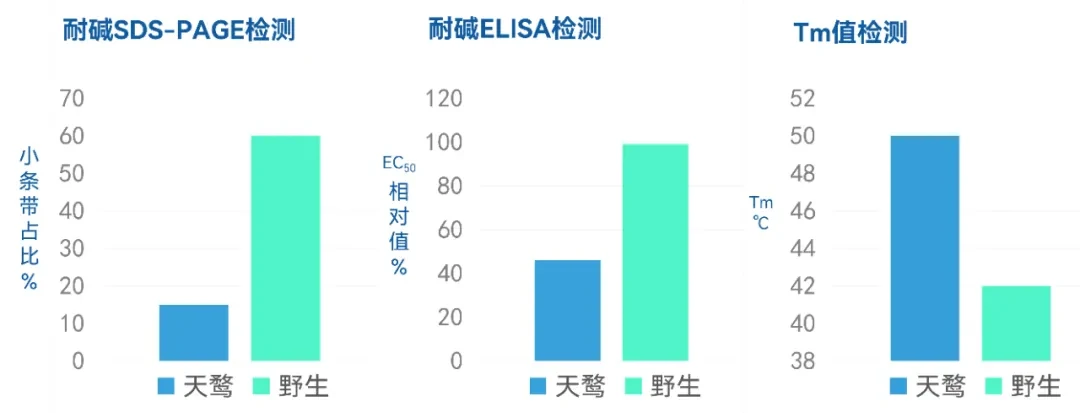
After this single-domain antibody was conjugated to an affinity filler and prepared into a chromatography column, the remaining dynamic capacity following treatment with 0.5M NaOH for 6 hours and 24 hours showed that, compared to the wild-type single-domain antibody 14#, the AI-designed protein molecule demonstrated a significant improvement, such as M74 Alkali Treatment for 24h Shows a Loading Capacity of 56.21, Nearly 4 Times Higher Than the Wild Type's 15.2。

"The core goal of this cooperation between the two parties isEnhance the alkali resistance of this single-domain antibody, reduce the production cost for enterprises, and improve the production efficiency of enterprises.。"The use of single-domain antibodies in affinity chromatography holds great promise and industrial application potential, as it allows for customized development of fillers targeting different substrates, thereby broadening the application scope and enhancing binding specificity," said Dr. Lei Jin.
Dr. Liu Hao believes that as a pioneer in the transition from AI for Science to AI for Engineering, Matwings Technology's collaboration achievements have demonstrated the industrial application capabilities of its general AI protein design model AccelProtein™, providing a more cost-effective solution for CMC in biopharmaceuticals.
In the future, Matwings Technology will continue to promote the innovation and development of general artificial intelligence technology in the field of protein engineering to meet the growing needs of the biopharmaceutical industry and contribute more to the cause of human health.

100+ Portfolio Ecosystem
Innovative Pharmaceuticals/Biotechnology

Purinomia
ITabMed
Shanton Pharmaceuticals
Xunji Bio
Larkspur
Ansun
Enrui Ni

Rapafusyn

Cytek
Gewu Zhihe
Genotix

CareHealth
Ligetai

Aibono德
RuiMu Bio
Zhengli Technology

Biocytogen
Sincerity CRO
Opmay
Pharmacodia
Jingyu Group

Quadriga
Dr. Zhaoyang
Cognition
Lysoway
Regenacy

Sentieon
Zhiyin Orient
Profusa

Twist
VentureLab

Nabio
Wangdu Bio
Qingyuan Agro-Crown
Oubofang

Follow 「Herbal Capital" WeChat Official Account and set it as 'Starred ⭐' to get the latest updates第一时间收获最新推送."