

Johnson & Johnson's Nipocalimab Meets Primary Endpoint in Phase 2 Trial for Sjögren’s Disease, Highlighting Potential Across Multiple Autoimmune Conditions

Johnson & Johnson
Healthcare Product Manufacturers, Health Service Providers
▎WuXiEdited by Kant Content Team
Johnson & Johnson announced the other day that itsNipocalimab, an investigational antibody therapy targeting the neonatal Fc receptor (FcRn), met the primary endpoint in the Phase 2 clinical trial DAHLIAS for adult patients with Sjögren’s disease (SjD).Patients treated with nipocalimab showed a statistically significant (P=0.002) and clinically meaningful improvement in their ClinESSDAIa scores at week 24 compared to baseline. The same efficacy was achieved compared to the placebo group. The press release noted that these data represent the first positive clinical trial results for nipocalimab in the treatment of SjD.This therapy was listed by the industry media Evalute earlier this year.Top 10 Potential Blockbuster Therapies in DevelopmentOne of.

In this Phase 2 clinical trial,From the 4th week, patients in the nipocalimab treatment group began to experience relief, which continued to increase throughout the 24-week treatment period.The primary endpoint of the trial, ClinESSDAI, is a comprehensive scale specifically designed for SjD, assessing disease activity across 11 organ system domains, including skin, lungs, kidneys, joints, muscles, peripheral nervous system (PNS), central nervous system (CNS), blood, glands, lymphadenopathy, and lymphoma, with higher scores indicating more severe symptoms.
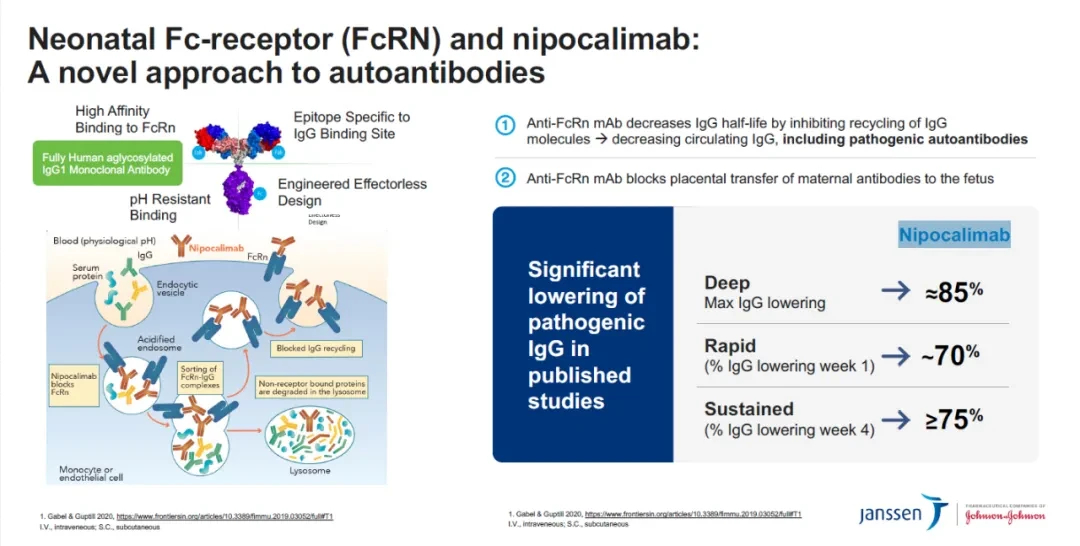
▲Introduction to Nipocalimab (Image Source:Johnson & Johnson Official Website)
In addition to achieving the primary endpoint, the nipocalimab (15 mg/kg) treatment group demonstrated clinically significant improvements in the following aspects at week 24:
Secondary endpoints, including multi-organ assessment (DALc), physician assessment (PhGAd), and comprehensive tools for clinical trial endpoints (STARe, CRESSf), achieved clinically meaningful improvements. Important SjD symptoms, including dry mouth, dry eyes, and vaginal dryness, showed an improving trend. Safety and tolerability were consistent with other nipocalimab clinical trials.
SjD is one of the most common autoantibody-driven diseases, with no approved therapies currently targeting its root cause. It is a chronic autoimmune disease estimated to affect approximately four million people worldwide, with a female-to-male incidence ratio of 9:1. SjD is characterized by autoantibody production, chronic inflammation, and lymphocytic infiltration of the exocrine gland system. Most patients suffer from mucosal dryness (eyes, mouth, vagina), joint pain, and fatigue. SjD patients are at high risk for various related conditions, with the risk of B-cell lymphoma being up to 20 times higher compared to the general population.

▲To learn more about the application of cutting-edge technologies in the biopharmaceutical industry, please long-press and scan the QR code above to access "WuXi AppTec Live Studio" and watch live discussions and exciting replays on related topics.
Disclaimer: The content team of WuXi AppTec focuses on introducing the research progress in global biopharmaceuticals and health. This article is for information exchange purposes only, and the views expressed in the article do not represent the position of WuXi AppTec, nor does it imply that WuXi AppTec supports or opposes these views. This article is not a recommendation for treatment plans. For guidance on treatment options, please visit a正规 hospital.
Copyright Statement: This article is from the content team of WuXi AppTec. Individuals are welcome to share it on their social media circles, but unauthorized reproduction by media or institutions in any form to other platforms is prohibited. For authorization to reproduce, please reply with "reprint" on the WeChat Official Account of "WuXi AppTec" to obtain reprint guidelines.


Share,PointLike,In View,Focusing on Global Biomedical Health Innovation