Recently, RRGENER (Shanghai Dingxin Gene Technology Co., Ltd.) announced that the clinical results of its AAV1-OTOF drug, co-developed with the Eye, Ear, Nose and Throat Hospital of Fudan University, were published in the top global medical journal "Nature Medicine" (Nature Medicine) Published an article titled "Bilateral gene therapy in children with autosomal recessive deafness 9: single-arm trial results".

Through bilateral gene therapy, 5 deaf-mute childrenHearing in both ears has significantly improved, with enhancements in speech function and sound localization ability.. These deaf-mute children all have defects in otoferlin (OTOFCongenital deafness caused by gene mutations, with the oldest being 11 years old and the youngest being 1 year old. The research team precisely injected the previously developed gene therapy drug into both ears of the patient through local minimally invasive and microinjection methods. During the follow-up period, it demonstrated good safety. The AAV1-hOTOF drug showed that bilateral ear gene therapy is safe and effective. The project is led by the team of Professor Li Huawei, Professor Shu Yilai, and Professor Wang Wuqing from the Eye, Ear, Nose, and Throat Hospital of Fudan University and the Key Laboratory of Auditory Medicine of the National Health Commission, in collaboration with Professor Chen Zhengyi from Harvard Medical School. Research Background:There are 26 million patients with congenital deafness globally, and China sees about 30,000 newborns with hearing loss each year, 60% of which are related to genetic factors, severely hindering children's speech, cognitive, and intellectual development. However, there are currently no therapeutic drugs available in clinical practice.OTOFGene mutations are one of the common causes of congenital deafness, with patients typically exhibiting severe, profound, or complete hearing loss and speech disorders. These mutations have been identified across different populations.OTOFHigh mutation carrier rate of genes. In China, among the population of infants and young children with auditory neuropathy, due toOTOFUp to 41% of patients with deafness are caused by gene mutations. With the rapid development of biopharmaceutical technology, gene therapy is considered one of the most promising strategies for curing hereditary deafness.It can directly deliver genes with normal functions to the inner ear through delivery vectors to express functionally normal proteins, restoring normal function, thereby fundamentally recovering or improving the hearing of patients with deafness. Adeno-associated virus (AAV) is currently the most commonly used gene therapy delivery vector; howeverOTOFThe gene exceeds the delivery limit of a single AAV vector. To overcome the challenge of delivering large genes to the inner ear, the research team developed an AAV-based dual-vector gene replacement therapy (AAV1-hOTOF), which uses dual AAV vectors to carry the normal humanOTOFGenes are recombined in the inner ear to function normally.
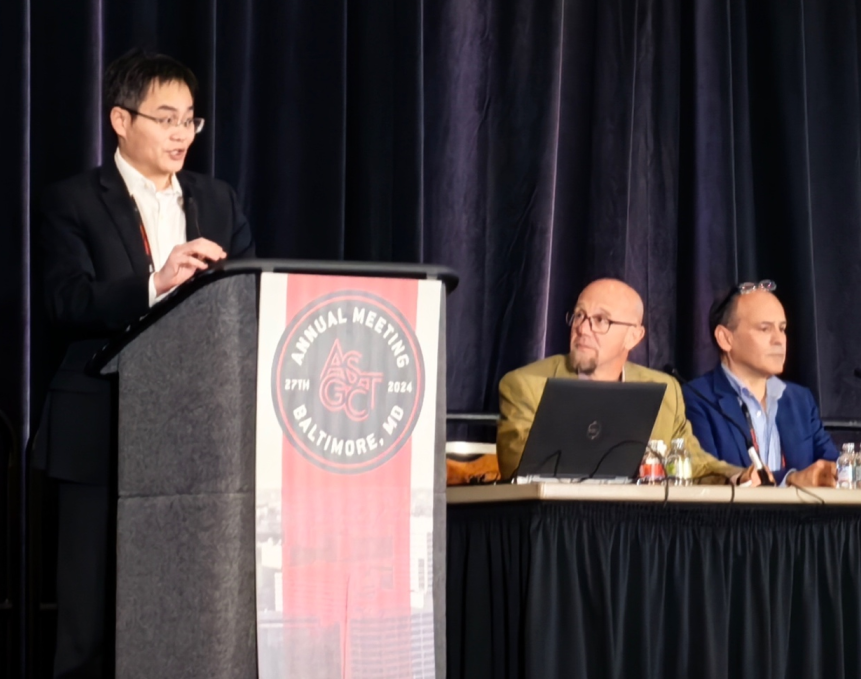
Based on preclinical efficacy and safety studies, in June 2022, the team received ethical approval for the world's first clinical trial of gene therapy for hereditary deafness. In October 2022, patient recruitment was officially initiated, and in December 2022, the world's first pediatric gene therapy was successfully completed.A total of 6 patients have completed unilateral ear gene therapy, with the longest follow-up time reaching 1 year and 5 months, and the patients are now able to engage in daily communication. In October 2023, Professor Yilai Shu systematically disclosed the results of the gene therapy clinical trial at the 30th Annual Meeting of the European Society of Gene and Cell Therapy (ESGCT) held in Brussels, Belgium.Becoming the World's First Clinical Trial for Gene Therapy of Congenital Deafness to be Officially Presented at a Formal Academic Conference, which has attracted significant attention. The research findings on single-ear gene therapy were published in January 2024 in the prestigious international medical journal *The Lancet*, selected as a cover feature, and highlighted in the same issue of *The Lancet* with commentary from international peers."Paradigm Shift in Deafness Treatment" "Marks the Dawn of a New Era in Gene Therapy for Auditory Disorders and Beyond". In July 2023, to maximize patient benefits and restore natural binaural hearing abilities in humans—including three-dimensional stereo sound perception, accurate sound localization, and speech discrimination in noisy environments—the team systematically enrolled patients for bilateral gene therapy. The research findings were published in *Nature Medicine* (Nature Medicine)。This project is the world's first clinical trial of bilateral gene therapy to be launched.This study demonstrated the safety and efficacy of bilateral gene therapy in the clinical treatment of patients with congenital deafness, significantly advancing the field of deafness treatment and showcasing the immense application potential of gene therapy in curing congenital deafness. It has garnered significant attention from professionals in the international gene therapy community. On May 9, 2024, at the 27th Annual Meeting of the American Society of Gene and Cell Therapy (ASGCT), held in Baltimore, USA, Professor Shu Yilai presented the latest progress of the gene therapy clinical trial to experts and scholars from around the world, drawing significant attention and interest from attendees.
▲ Professor Shu Yilai Gives an Academic Report at the 27th ASGCT Annual Meeting

Ten Years to Sharpen a Sword, Collaboration to Tackle Challenges. The deafness gene therapy team of our hospital, in collaboration with multiple partners, has developed a treatment after many years of dedicated efforts.OTOFGene therapy drugs for deafness caused by genetic mutations, and innovatively developed precise delivery pathways and equipment for the inner ear. Collaborating with biotech companies rich in transformation experience, RRGENER utilized the complementary advantages of industry-academia-research-medicine to overcome key hurdles in gene therapy drug research and development, industrial design, process production, and safety assessment.A new model for the development of industry-academia-research-medicine has been established, ushering in a new era of gene therapy for deafness.
▲Patient Presents Team with Silk Banner

References:[1] RRGENER Official WeChat[2] Official WeChat Account of Fudan University Affiliated Eye, Ear, Nose and Throat Hospital
Disclaimer: This article aims to convey industry development information and explore the frontier progress of biomedicine. The content of the article represents the author's viewpoint, and does not represent the position of EMedClub, nor does it constitute any value judgment, investment advice, or medical guidance. If necessary, please consult a professional for investment or visit a regular hospital for medical advice.
DD "Share”、“Like"and"In Progress", charge me up a bit~"