Source: Eye Future; Editor: Seven KiteReprint requirements: Can be reprinted 24 hours after the first publication, source must be credited.
Recently, focusing on the research and development in the ophthalmology field,Legding Micros("Legding Micros" for short)) AnnounceCompleted a new round of financing, this round of financing was led byWuShengyuan Baiyinghuicai Venture Capital Fund (Wuhan) Partnership (Limited Partnership)Leading investment,Zhongxi Fund(Legding Micros) followed the investment.This round of financing will be used for team building, advancing the development and clinical registration of meibomian gland devices and ophthalmic surgical robots.
Prior to this, Legding MicrosHas completed seed round and angel round financing,Total financing amount is 25 million yuan。May 2023,Legding Micros Announces CompletionTens of Millions of YuanAngel Round Financing, with investments from Danlu Capital, Beijing Medical Robotics Industry Innovation Center, and Shuimu Dongfang Medical Robotics, among others.As early as August 2022, just two months after Legding Micros was established,Just got itMillions of yuanSeed Round FinancingIn October of the same year, Legding Micros received strategic financing from Beijing Beihang Tianhui Incubator and Yuanhe Capital, with the scale undisclosed.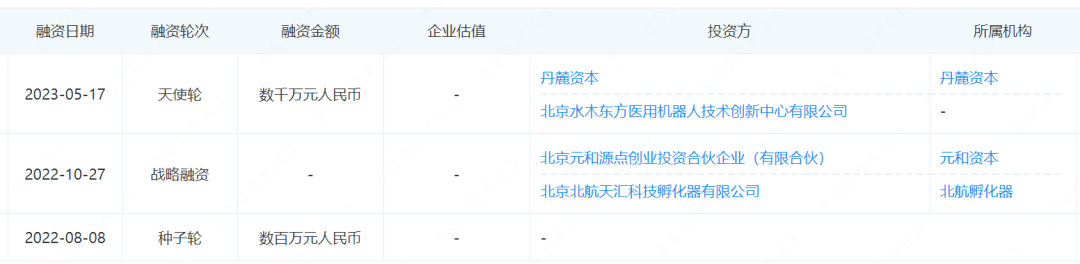
According to public information, in the next two to three years, the main task of Legding Micros isObtaining the Class III Medical Device Certificate for Ophthalmic Surgical Robots, andThe target customer group is expected to be ophthalmic hospitals.Currently, the company is pushing forward with the finalization and inspection submission process for this product, while also initiating the application for medical device registration certificates for its pipeline, including dry eye treatment equipment and other products under development.
# Legding Micros

Legding Micros was founded in June 2022. As aChinese Ophthalmic Surgical Robot R&D Enterprises,The core technology of Legding Micros originates fromTechnology Transfer of Beihang UniversityThe chief scientist of the company is from Beihang University.Professor Yang Yang from the Research Laboratory of Intelligent Mechanical Design and Control.The company in the process of product developmentCollaborated with multiple renowned ophthalmic clinical institutions to conduct academic research and animal experiments on the application of ophthalmic surgical robots.Legding Micros possesses globally leading platform technologies, including advanced robotic mechanisms, precision drive technology, micro-force sensing technology, artificial intelligence algorithms, and advanced control technology, achieving world-leading precision control and force feedback accuracy metrics.Legding Micros officially began operations in June 2022. In its first year of establishment, it achieved several phased breakthroughs in ophthalmic surgical robot technology.It is one of the few companies in China that has achieved independent research and development of core technologies in this field.。According to reports, Legding Micros launched the prototype of its first-generation product not long after its establishment. However, due to a lack of feedback from doctors who used it, the first-generation product did not fully meet surgical needs. After extensive communication and observation,Legding Micros Decides to Abandon the First-Generation System, Redesign, and Find a Better Solution in the Second Generation。Currently,Legding Micros has iterated through three generations of ophthalmic surgical robot systems., its technical indicators remain synchronized with world-class standards. The overall size of the system continues to shrink, while precision and stability meet the needs of most intraocular minimally invasive surgeries. This is mainly due toThe company's accumulated technical advantages in areas such as end-of-arm sensing and precision manufacturing。Legding Micros has simultaneously plannedThreeProduct Pipeline:
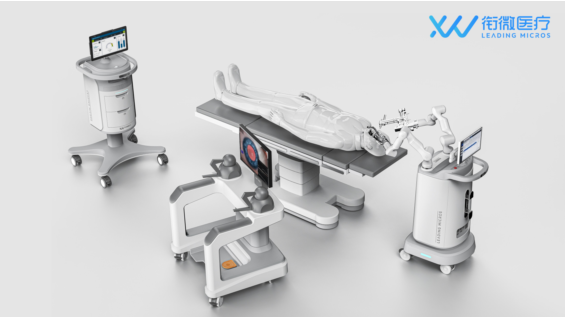
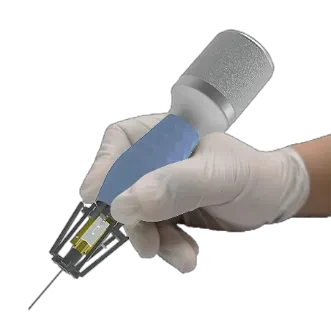
The first pipeline is the meibomian gland massager., used to alleviate symptoms such as dry eyes caused by blocked meibomian glands.The second pipeline is the retinal surgery robot., used for subretinal and retinal vascular puncture injection to treat macular diseases, retinal vascular occlusion, and other conditions.The third pipeline is handheld intelligent surgical instruments., which can actively suppress hand tremors through special structures and algorithms, assisting doctors in performing complex procedures such as peeling retinal proliferative membranes.Ophthalmic Microsurgery RobotThe structure of the eyeball is extremely complex, and the difficulty of operation in ophthalmic surgery is high, especially for cataract surgery, glaucoma surgery, vitrectomy, corneal transplantation, and retinal surgery within the eye.And the eyeSurgical robots, with their high precision and excellent stability, have become an important tool for solving the above problems.。Ophthalmic surgical robots integrate multiple disciplines such as mechanical science, biomechanics, microscopic technology, and sensor technology, and are mainly composed of a vision system, control system, perception system, and end-effector.Taking corneal transplantation as an example, the application process of ophthalmic surgical robots is,Doctors use the visual system to accurately locate the surgical position, and the control system manipulates the movement of the ophthalmic surgical robot., with the assistance of the perception system, the end-effector completes operations such as corneal cutting and corneal suturing according to instructions.This product integrates advanced robotic mechanisms, precision drive technology, micro-force sensing technology, artificial intelligence algorithms, and advanced control technology based on independent research and development, achieving world-leading precision control and force feedback accuracy indicators.Helping the human body break through operational limits to achieve ultra-precise retinal surgeries that were originally impossible by human hands.。Thermal Pulsation Meibomian Gland Treatment DeviceWith the popularity of electronic products and the intensification of aging, the incidence of dry eye syndrome is increasing.On average, one in four people has dry eye syndrome.Dry eye syndrome has become another national eye health issue in China following myopia.The incidence rate of dry eye syndrome in China is approximately 21%-30%. Dry eye patients account for more than 30% of the total number of ophthalmology visits in Chinese medical institutions. The patient base for dry eye syndrome in China has exceeded 360 million.。Dry eye syndrome is roughly divided into aqueous-deficient and evaporative types, with meibomian gland dysfunction (MGD) being the main cause of the evaporative type. According to research data,MGD-related in mainland ChinaThe proportion of dry eye is as high as 87.6%.。Unblocking the clogged meibomian glands is fundamental, and both intense pulsed light therapy and thermal pulsation therapy can effectively alleviate dry eye symptoms caused by meibomian gland dysfunction. Compared to intense pulsed light therapy, thermal pulsation therapy has a clear mechanism of action and has been proven by large-scale, diverse sample data to provide single-treatment effects lasting one year or more.Legding MicrosUtilizeInnovative Heating Materials and Silicone Massage,Achieve warm compress, squeezing massage of the meibomian glands, and far-infrared irradiation., quickly and effectively unclogging the meibomian glands to treat lipid abnormality dry eye syndrome. Affordable meibomian gland thermal pulsation treatment devices will open a new chapter in the treatment of dry eye syndrome in China.Intelligent Ophthalmic Handheld Auxiliary Instrument RobotFor different ophthalmic diseases, various instruments are required for treatment. The company has innovatively developed an intelligent ophthalmic handheld auxiliary robot that can be matched with commonly used ophthalmic microsurgical instruments.Can sense physiological tremors and operating forces in the hand, achieve tremor compensation and micro-force control, and enhance surgical safety.; Capable of recording intraocular microforces and hand tremor data, providing quantitative support for evaluating surgical outcomes and surgical skills.