

China's First Domestically Developed Meibomian Gland Dysfunction Therapeutic Device Approved, Offering New Hope for Over 430 Million Dry Eye Sufferers

DisionTech
Ophthalmic Medical Device R&D, Production, and Sales
At first, it was just slight discomfort in both eyes. A feeling of having a foreign object, soreness, itchiness, swelling, or some kind of discomfort that couldn’t be accurately described... It could have been from staring at the computer and phone all day, wearing cosmetic contact lenses for too long, or getting too absorbed in binge-watching shows or playing games… Anyway, who hasn’t experienced eye discomfort at some point? You didn’t pay much attention to it, and as usual, you skillfully grabbed your eye drops, smoothly applying them into your eyes with a few forceful blinks. Hoping to double the effect, you leaned on the railing and gazed into the endless distance.
But at some point, such discomfort became frequent and noticeable. In addition to the aforementioned symptoms, both eyes began experiencing brief photophobia, redness, fluctuating vision, and blurred sight. When closing the eyes, the area around the orbits also felt extremely tense. At this moment, your colleague nearby skillfully pulled out a bottle of eye drops, expertly applying them into their eyes with a few forceful blinks…
Dry eye syndrome has become one of the most common ophthalmic diseases, second only to myopia. According to statistics from the "Chinese Expert Consensus on Dry Eye (2020)," the incidence rate of dry eye syndrome in China is approximately 21% to 30%, with about 436 million patients (approximately 31.4% of whom exhibit symptoms), meaning that roughly one in four Chinese individuals suffers from dry eye syndrome. Influenced by factors such as aging, poor eye care habits, and prolonged use of electronic devices, the number of patients with eye diseases in China continues to grow.
Dry eye cannot be cured completely and requires regular repeated treatments. For example, patients with moderate to severe conditions need treatment once a week. After 12-16 sessions, they pause for 1-2 months before starting another cycle of treatment. On average, each person requires 32-36 treatments per year.
Meibomian Gland Dysfunction (MGD) is the most common cause of evaporative dry eye disease, with over 80% of dry eye patients experiencing tear film instability due to MGD. The meibomian glands are the ducts in the eyelids that produce and deliver lipids to the surface of the eye. With each blink, these lipids form an "oil film" on the eye's surface, reducing water evaporation. Meibomian Gland Dysfunction (MGD) refers to a reduction in ocular oil production and deterioration in oil quality, leading to excessive evaporation of moisture from the eye's surface. Clinical symptoms include dryness, stinging, foreign body sensation, and fluctuating vision.
Current MGD treatment methods mainly include physical therapy and medication, with physical therapy being the primary approach, especially hot compresses, steam therapy, and manual meibomian gland massage. These two methods are easy to perform and can be widely applied in grassroots medical institutions. However, their limitations also stem from this — a single treatment involves hot compresses, atomization,Squeeze,Cold compress involves multiple steps, and the entire treatment usually takes 40 to 60 minutes, resulting in low treatment efficiency. Moreover, the treatment method is relatively crude, requiring weekly repetition, making it difficult to achieve personalized and precise treatment. Particularly, manual meibomian gland massage can cause pain in sensitive patients, affecting the treatment experience.
Although there are intense pulsed light treatments available on the market, this method can only heat and melt meibum but cannot drain it. Manual expression by a doctor is still required afterward.
Meibomian Gland Treatment Device Brings New Solutions for MGD Treatment. With the dual functions of heating and compression, this device reduces the treatment time from the original 40 minutes to 15 minutes, significantly improving treatment efficiency. It effectively alleviates meibomian gland blockages and restores their function. In recent years, advanced foreign meibomian gland treatment devices have been introduced in China. However, the high cost of the main unit (approximately 350,000 RMB per unit) and consumables (about 4,000 RMB per use) has limited its widespread adoption, with only a few high-end ophthalmology specialty hospitals currently having introduced the technology.
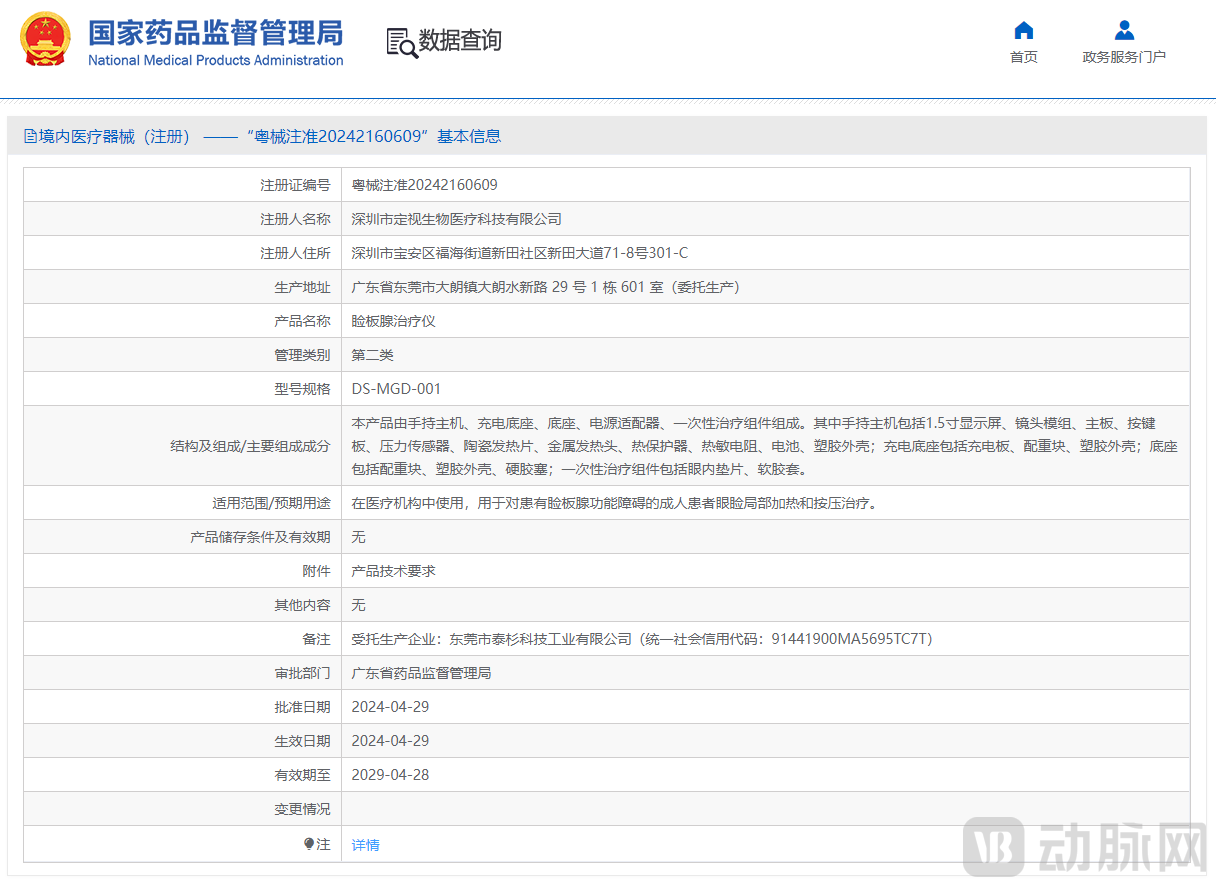
In April 2024, DisionTech (Shenzhen Dision Biomedical Technology Co., Ltd.) earned the first certificate for a domestically produced meibomian gland treatment device with its self-developed intelligent visualized meibomian gland therapeutic instrument, DisionEyemore (Guangdong Medical Device Registration Certificate No. 20242160609), becoming a benchmark product in the field of ophthalmic treatment. In June, it successfully obtained the production license and quickly achieved its first sale at an independent private hospital in the Guangdong-Hong Kong-Macao Greater Bay Area within the same month.
"Dry eye syndrome should be managed as a chronic disease, as it cannot be completely cured and is not a problem that can be solved with a one-time treatment. Therefore, patients are highly concerned about the effectiveness and cost of the treatment."
According to the founder of DisionTech, although manual massage is affordable, there is still significant room for improvement in terms of user experience. Meanwhile, imported meibomian gland treatment devices offer better efficacy and experience, but the cost of a single treatment session, often reaching thousands of yuan, makes many patients hesitate. Recognizing this market gap, DisionTech has achieved comprehensive optimization in treatment effectiveness and user experience compared to foreign products through technological innovation and 100% localization in China. Its unique intelligent and visualized design facilitates treatment operations while effectively reducing treatment costs.
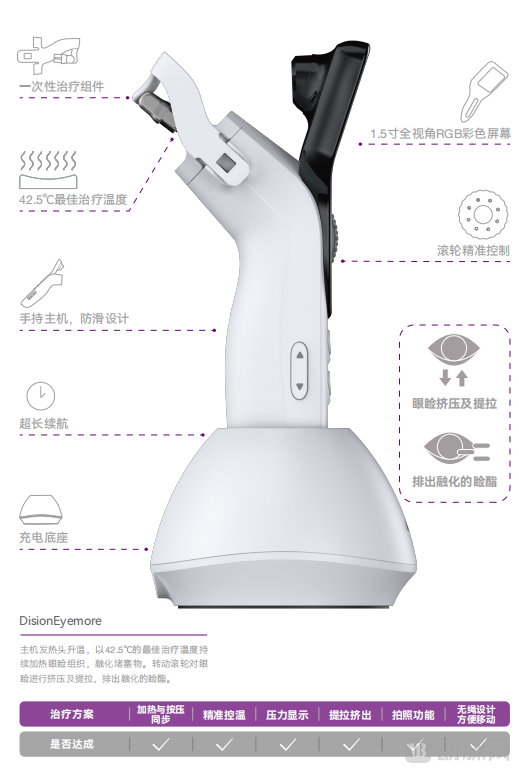
Intelligent Visual Meibomian Gland Treatment Device DisionEyemore
DisionTech Launches Intelligent Visualized Meibomian Gland Treatment Device DisionEyemore
Patients only experience a sense of warmth and uplift during treatment, with the entire process being non-invasive and painless. Additionally, the product is equipped with a 1.5-inch RGB color screen that displays temperature and pressure in real time, allowing doctors to create personalized treatment plans and assess treatment effectiveness through visualized operations.
It is worth mentioning that DisionEyemore comes with a built-in camera function, making up for the limitation of similar products that can only observe through a magnifier but cannot take photos for record-keeping. By photographing and documenting the entire treatment process, it not only allows doctors to track treatment outcomes conveniently but also enables patients to visually see the treatment results after the procedure, enhancing their confidence and satisfaction in the treatment.
According to the founder of DisionTech, the therapeutic effects of DisionEyemore are long-lasting, with a single treatment lasting 1 to 3 months. Patients do not need to visit the hospital frequently every week. Moreover, the cost of a single treatment is significantly lower compared to similar products abroad, closer to the price of a full course of manual therapy.
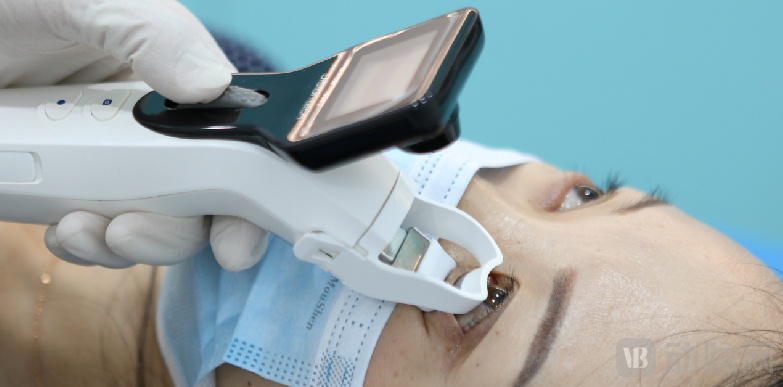
Doctor uses DisionEyemore to treat patients
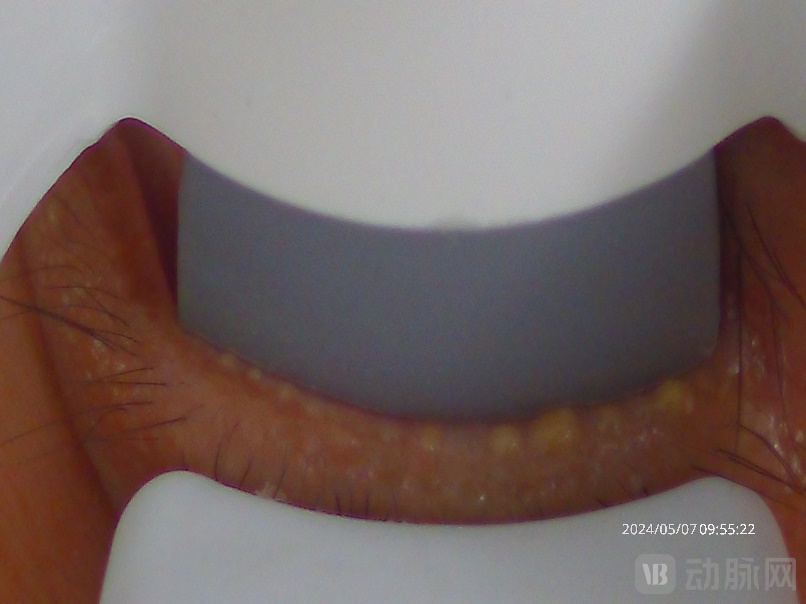
DisionEyemore Treatment Footage: Meibomian Gland Dysfunction (MGD) Patient Expressing Meibum
Compared with similar products on the market, DisionTech's intelligent visualized meibomian gland treatment instrument, DisionEyemore, has been optimized in the following three aspects:
Adopting a completely new electric heating technology pathway, it has achieved an integrated treatment process with simultaneous heat and pressure, building a unique patent protection barrier for the product.
The introduction of the precision roller control system offers advantages including but not limited to: doctors can adjust the pressure individually according to the meibomian gland condition of different patients by turning the roller; the roller design allows for effective compression while also providing an eyelid lift, further enhancing the treatment effect; the inclusion of safety protection and limit switches effectively avoids operational safety risks.
The application of intelligent visualization technology not only assists doctors in precise operations but also supports real-time photography throughout the entire process, providing convenience for patient follow-up and retrospective analysis of treatment outcomes.
It is worth mentioning that the product has passed the special approval for Class II innovative medical devices in Guangdong Province, and conducted strict clinical comparative experiments with the most advanced similar equipment abroad. The specific clinical protocol was jointly formulated by several authoritative experts in the field of dry eye in China. Approximately 40 patients were selected for each group, with a total of about 80 patients, completing a rigorous clinical trial. Clinical trial results showed that after one week of treatment with DisionTech's intelligent visual meibomian gland therapeutic device, the dry eye symptoms of the patients' left and right eyes were significantly alleviated, and the therapeutic effect could stably last for more than one month.
"Medically Committed, Vision for the Future" is the origin of the name "DisionTech." The company focuses on innovation in ophthalmic equipment and emphasizes the domestic production substitution of high-end ophthalmic medical devices. In addition to the recently approved intelligent visual meibomian gland therapeutic instrument DisionEyemore, DisionTech has also actively developed and reserved multiple ophthalmic devices, such as the intelligent patterned corneal cross-linking instrument and anterior segment comprehensive OCT. Some products have entered the critical stage of approval.
With close cooperation with Tsinghua University and Shenzhen Eye Hospital, as well as a professional team with over 15 years of rich experience in the medical and ophthalmology fields, DisionTech has the motivation and ability to continuously innovate. The company plans to launch 1 to 2 innovative ophthalmic devices each year, gradually expanding the market share of cost-effective ophthalmic devices produced in China.
It is reported that DisionTech has recently entered into cooperation negotiations with several large domestic private ophthalmic chain institutions, and its first product also achieved its first sale in the Guangdong-Hong Kong-Macao Greater Bay Area in June this year. It is believed that in the future, DisionTech will bring a clear "vision" to more patients with eye diseases.