Medtronic Senior Executive and Top Individual Shareholder Rob ten Hoedt Retires Amid Leadership Shake-up

Medtronic
Chronic Disease Medical Device and Therapy Developer
Click above "Medical Device Business Review"--Upper Right Corner"…"--Set asStarred

Source: Medical Device Business Review
Author: Commenter
Reproduction without authorization is prohibited, and reproduction is allowed 24 hours later.
Today (U.S. time June 17), according to Mass Device, Medtronic Executive Vice President and President of Global Regions, Rob ten Hoedt, will retire on June 28.
He has reached the age of 63, and according to Medtronic's regulations, the mandatory retirement age for departing executives is 65, which means ten Hoedt is retiring early.
Notably, Ten Hoedt has been with Medtronic since 1991.AppointmentFor 33 years,Known as a founding backbone of Medtronic。
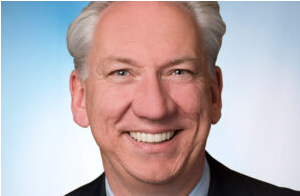
Rob ten Hoedt, Executive Vice President and President of Global Regions, Medtronic
In terms of equity holdings,According to a filing with the U.S. Securities and Exchange Commission (SEC),Ten Hoedt is one of the largest individual shareholders of Medtronic., as of August 2023, he held approximately 540,000 shares.
The document at that timeOnly two executives holding more shares are listed.:Chairman and Chief Executive Officer Geoff MarthaHolding 795,000 shares,Former Executive Vice President and President of Medical Surgical, Bob WhiteHolding 623,000 shares.
In terms of salary and benefits,Medtronic, plc. rated ten Hoedt last yearOne of the highest-paid executives in the company, with a total compensation of $5 million (approximately 36.28 million RMB) for the fiscal year 2023.
Personal ResumeTen Hoedt is quite inspiring.
Since joining Medtronic in the 1990s, he has been involved in the Western European neurological system business.Starting as a marketing manager, he was promoted to the head of Medtronic's Cardiovascular Business in Western Europe in less than ten years, and expanded the business to Europe and Central Asia (ECA).。
Medtronic's official website states that, as the President of the Global Regions, ten Hoedt "Fully responsible for Medtronic's products and therapies in the Americas, Europe, Middle East, Africa, and Asia-Pacific regions.”。
Which also includesHugo Surgical Robot System, which began with Medtronic's $43 billion acquisition of Covidien, remains one of the core focuses of Medtronic's business portfolio.
Hugo received the CE mark in the EU in 2021.At that time, ten Hoedt said in the official press release: "Robotics and artificial intelligence are the undeniable future of healthcare, with tremendous potential not only to enhance patient care but also to increase access to these benefits."
Last month, Medtronic announced it was conducting additional clinical studies to support the submission of the Hugo system for FDA review.
02
Notably, according to incomplete statistics, this is already Medtronic'sThe fifth change in core senior management positions in less than a year.
In February this year, CEO Geoff Martha announced at the end of the company's third-quarter earnings call that Executive Vice President and President of Surgery Bob White would be leaving.
Similar to Ten Hoedt's intersection, Bob White's medical and surgical portfolio also includes Hugo.
"For a long time, he has been a highly influential and important leader in the company," said the CEO of Medtronic when talking about White.
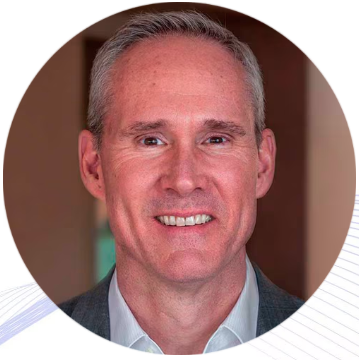
Executive Vice President and President of Surgery, Bob White
Since 2017, Bob has been serving as MedtronicExecutive Vice President and Group President of Minimally Invasive Therapies Group.
Medtronic Minimally Invasive Therapies Group is a$90 BillionThe enterprise, one of the four major business segments of Medtronic Group, has three global business units, spanning 70 countries and regions, with...25,000 employees。
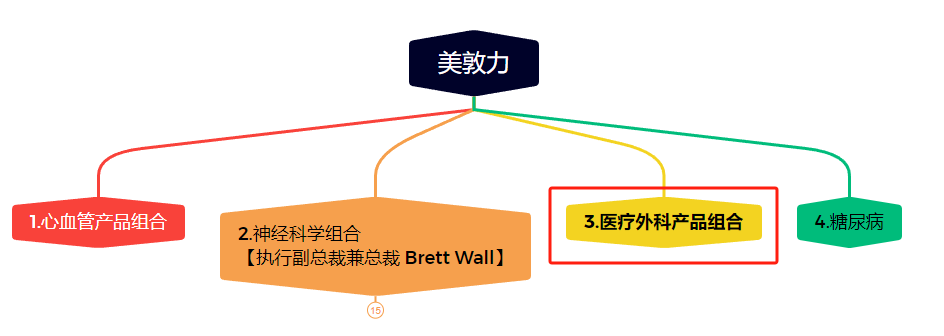
Medtronic Business Framework, Chart: Medical Device Commercial Review
In 2015, after Medtronic acquired Covidien, Bob successfully led the integration of the two companies in Australia and New Zealand, Southeast Asia, the Indian subcontinent, South Korea, and Japan, uniting more than 5,000 employees into one team.。
Previously, Bob served as President of Emerging Markets at Covidien, President of Respiratory and Monitoring Solutions, and Vice President and General Manager of Patient Monitoring.
He has also held leadership positions at GE Healthcare and IBM.
Apart from surgery and cardiovascular, Medtronic's neuroscience sector is also experiencing a series of personnel changes.
At the end of last month (May 2024), Medtronic officially announced two personnel appointment updates:NeurovascularAndPelvic HealthTwo Major Business UnitsEach welcomed 1 new memberPresident。
Burman will succeed Dan Volz as the company's Senior Vice President andPresident of Neurovascular Business。
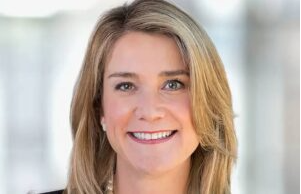
President of Neurovascular Business, Linnea Burman
In her new role, Burman willResponsible for Medtronic's global business portfolio strategy, product development, commercial execution, and overall financial performance in stroke treatment.。
A few months ago, taking officeNeuromodulation BusinessPresidentPaolo Di Vincenzo likewise,Burman will also report to Brett Wall, Executive Vice President of Medtronic and President of the Neuroscience Portfolio.
Burman has more than 20 years of experience in managing global teams in the medical technology industry.
Previously, she served as the largest division of Medtronic's neuroscience business, which also delivered the most impressive performance in recent years.Cranial and Spinal Technologies (CST) BusinessThe Vice President and General Manager of Supporting Technologies, it is reported that Burman is a key figure in this business unit.FounderAndBusiness Strategy Driver。
Meanwhile, during his tenure at Medtronic, Burman also played a key role in driving the market development for post-stroke spasticity indications.
In addition, Medtronic also announced that Emily Elswick, former Vice President of the CEO Office, now serves asPresident of Pelvic Health, SimilarlyA Member of the Neuroscience Leadership Team。
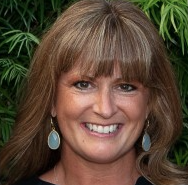
Emily Elswick, President of Pelvic Health
Elswick is a 20-year veteran of Medtronic, and her previous role focused on implementing company-wide strategic initiatives, including coordinating the annual strategic planning and capital allocation processes.
She also used to be at Medtronic.Vice President and General Manager of Lung Health and Visualization,Lead a cross-functional global organization dedicated to developing minimally invasive diagnostic and therapeutic solutions.
Before the announcement of the two female presidents last October, another important branch of Medtronic's neuroscience business, the neuromodulation business, also welcomed a new leader.
At that time, Paolo Di Vincenzo was appointed to Medtronic.Neuromodulation BusinessPresident, effective at the end of the month (October 30, 2023).
In this position, Di Vincenzo will be responsible for Medtronic's neuromodulation business.Overall Strategic DirectionAnd itsDaily Operations,and report to Brett Wall, President of the company's Neuroscience Portfolio.
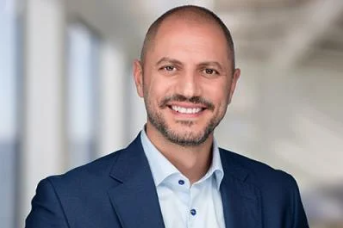
Neuromodulation BusinessPresidentDi Vincenzo
Di Vincenzo worked at Smith+Nephew, one of the top five orthopedic giants globally, for nine years, holding positions such as Senior Vice President and General Manager of the U.S. Advanced Wound Management division.
Prior to this, he had also risen through the ranks at established giants such as BD and Roche Diagnostics.
It is worth mentioning that this hasThis is the second leadership adjustment in the neuromodulation division following the replacement of the chief medical officer last year.
After more than half a century of accumulation, MedtronicDeep Brain Stimulation、Spinal Cord Stimulation、Sacral Nerve Stimulation、Hypoglossal Nerve StimulationProducts and technologies in fields such as [...] are industry-leading, providing"The First of the 'Big Three in Neuromodulation'"。
Medtronic Executive Vice President and President of the Neuroscience Portfolio, Brett Wall, welcomed Di Vincenzo's addition.
He pointed out, "As neuromodulation enters the era of personalized medicine adopting sensing technology,Di Vincenzo will play a key role in enhancing our capabilities in these areas., while driving business execution to align with Medtronic's focus on a performance-driven culture."
In addition, apart from the major personnel changes in the original key segments, in June last year,MedtronicAlso appointedFormer Amazon ExecutiveKen Washington for itsChief Technology and Innovation Officer。
In thisNewly Established PositionAbove, Washington will leverage his experience leading technology development in the robotics, consumer goods, automotive, and aerospace industries to better serve in this role. Meanwhile, heWill also become a member of the Medtronic Executive Committee.
Chief Technology and Innovation Officer Ken Washington
"This new leadership role will help Medtronic leverage the innovative spirit of our founders and ensure that we use our scientific and technical knowledge to invent and innovate in the future medical technology market," said Medtronic Chairman and Chief Executive Officer Geoff Martha in a speech.
"Dr. Washington will help Medtronic expand the use of technology platforms across our product portfolio, including robotics, sensors, implants, and artificial intelligence, thereby increasing our return on investment in innovation, enhancing our technological competitive advantage, and driving sustained growth."
Washington previously served asAmazonVice President and General Manager of Consumer Robotics, previously also served asFord Motor CompanyThe company's Chief Technology Officer (CTO) is responsible for overseeing the development of the company’s technology strategy, including next-generation vehicle architecture, control, and automation systems.
03
In the short term, the frequent personnel changes in top medical device companies are probably not "impulsive decisions," but rather stem from the companies themselves.ExternalTheMarket Competition and Industry ChangesAndInternalTheStrategic Adjustments and Performance PressureOften lies the key to the answer.
Just a few days ago, the USMedtronic issued a statement to the "Star Tribune" regarding itsThe Rumor of Global Layoffs Is Confirmed。
Combined with the recent restructuring of the business management structure in the China region,Renal Care/Dialysis Business, Patient MonitoringAndRespiratory Intervention BusinessPeeling Off,All不由让People have begun to take a new look at this giant standing at the top of the medical device industry.
So, what kind of game is Medtronic playing? Is there a new strategy brewing behind the frequent changes?
Last week, Medtronic Chairman and CEO Geoff Martha answered a series of questions at the Goldman Sachs 45th Annual Global Healthcare Conference call.
Geoff Martha stated that the new goals are mainly divided into three major aspects, which have been advanced since he took office in 2019.
As mentioned in this conference in 2023, GodThe five key areas of focus for Medtronic's business remain: vascular, structural heart, soft tissue robotics, diabetes, and AFib (atrial fibrillation).
In key business segments, Geoff Martha particularly emphasized a strong interest in innovation.
"I thinkInnovation is a winning strategy"Geoff Martha said."
"In high-growth areas, we see better technology and better solutions."
Therefore, like PFA (Pulse Field Ablation), AFib is a great example. As the population ages, people develop AFib. It's almost a foregone conclusion: if you live long enough and enjoy drinking, you'll get AFib—it's that simple. Compared to taking medication, ablation technology is undoubtedly the better choice.
However, these ablation technologies (radiofrequency ablation, cryoablation) have some obstacles, while PFA is faster. Patients do not sacrifice any efficacy or safety, and it is easier for doctors. So, it is "taking off" in this situation."Innovation is strategy, innovation is the driving force."。
It can be seen that the core essence of Medtronic's new strategy is to cut non-core businesses and focus on leveraging technological advantages and innovation-driven approaches to capture the leading-edge market.
After elaborating on the priorities of the core business, Geoff Martha categorized this segment as "technical difficulty" in terms of company operations and supply chain restructuring.
Under global environmental changes, volatility, geopolitics, and supply chain vulnerabilities are becoming another major variable affecting returns.
"How to become a better operator, an operator with a broader reach than the global operational supply chain, but that's a big question."Geoff Martha said.
At the JP Morgan Healthcare Conference earlier this year, Medtronic announced that it would “Close more than five production bases, andIntegrate 8 distribution centers into 2 super distribution centers”。
In terms of numbers, this is merely a sweeping integration and reduction.However, in fact, it goes beyond that.
"We have brought in some new people to gain certain capabilities, and invested in new tools, software, demand planning software, supply planning, and all these different things," said Geoff Martha.
Hence, rather than a reduction aimed at "cost-cutting," this is more of a "structural transformation" aimed at "efficiency enhancement."
On the third topic, Geoff Martha mentioned, "will retain "Mission"Drive Culture" and Increase "Performance"Driving Culture".
Martha did not elaborate too much on the specific details as usual, but this inevitably reminds people of its global layoff actions and outsourcing measures.
In August 2023, the total compensation of executives and the median salary of employees for the 2023 fiscal year were both significantly lower.
The chairman and CEO's compensation is $15.4 million (approximately RMB 112 million), an increase from last year's salary.Reduced14%. Meanwhile, the median employee salary alsoDecreased by 14%, at $67,073 (approximately RMB 490,600).
Against the established fact that the company's earnings per share have declined for three consecutive years and that both senior management and employees have seen significant reductions in compensation, the reasons behind the frequent changes in core management and early retirement events are becoming increasingly clear.
However, under a series of changes, how to become a "company that balances mission and profit" and how to "achieve a balance between cost reduction and efficiency improvement" may be long-term challenges that this top medical device company has to face.
The content of this article is for reference only and does not constitute investment advice. Readers are expected to effectively distinguish.If any platform reprints this article, it must take responsibility for the content of the article. Medical Device Business Review is not responsible for the impact of secondary dissemination caused by the reprint.

If you find the content helpful, welcomeStar Marker、Like、Forward!
Your support is our greatest motivation