Medtronic's Global First-in-Class Aurora EV-ICD Launches in China with Successful First Implant

Medtronic
Medical Device Manufacturer
Click above "Medical Device Business Review"--Upper Right Corner"…"--Set asStar Mark

Source:Medical Device Business Review
Author: Jin Fan
Reproduction without authorization is prohibited, and reproduction is allowed 24 hours later!
Medtronic's First Global New Product
Recently, according to the news released by the Lecheng Pilot Zone Administration, a team led by Professor Tang Baopeng, the vice president of the First Affiliated Hospital of Xinjiang Medical University, successfully completedChina's First Clinical Application of the Extravascular Implantable Cardioverter Defibrillator Aurora EV-ICD™。
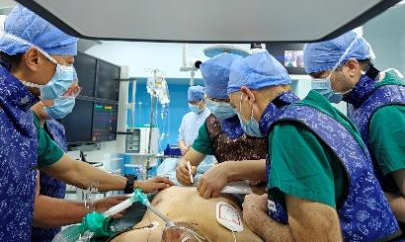
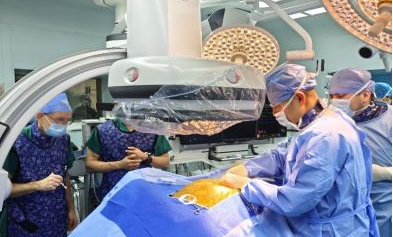
Source: Release from the Lecheng Pilot Zone Administration
It is reported that this extravascular implantable cardioverter defibrillator, Aurora EV-ICD™From Medtronic, an international medical device giant, which received FDA approval in October last year, isThe World's FirstAn extravascular ICD that can provide complete defibrillation, cardioversion, and anti-tachycardia pacing therapy for patients with sudden cardiac death (SCD).
Sudden cardiac death is one of the most common causes of death from cardiovascular disease. According to data from the "China Cardiovascular Disease Report" released by the National Center for Cardiovascular Diseases, the incidence rate of sudden cardiac death in China is 41.84 per 100,000.The total number of deaths from sudden cardiac death each year is as high as 544,000, ranking first in the world.Preventing sudden cardiac death has always been a key focus of China's national health initiatives.
The success of this surgery not only brings innovative therapies aligned with international standards to patients in China but also signifies that China has entered the forefront of global standards in the prevention and treatment of sudden cardiac death, marking a milestone for the advancement of related work in China.
Tackling Clinical Infection Challenges
Due to the sudden onset of cardiac sudden death and the difficulty in obtaining timely rescue, the survival rate is often extremely low. The advent of defibrillators has given humanity a chance to save lives when facing the "grim reaper," especially with the implantable cardioverter-defibrillator (ICD).
ICD monitors the patient's heart rhythm for 24 hours, and once arrhythmias such as ventricular fibrillation or cardiac arrest occur, it can deliver an electric shock for defibrillation within 10 to 20 seconds., ensuring the effectiveness of sudden cardiac death prevention reaches 80%, gradually becoming the gold standard for preventing SCD., known as a portable "ambulance".
However, as clinical data continues to accumulate, although the safety and efficacy of the defibrillation function have been confirmed, the risks caused by lead damage and infection after surgery are gradually being magnified.
How to avoid infection after ICD surgery has become a key focus of industry exploration.
In this clinical battle, Medtronic, which holds half of the global cardiac rhythm management market, successfully broke through with its unparalleled technical advantages in the pacemaker field.Not only has it overcome the clinical challenge of lead infections associated with traditional ICDs, but it has also introduced the Aurora EV-ICD™, a vascular implantable cardioverter defibrillator that simultaneously offers defibrillation, epicardial pacing, and ATP treatment functions.。
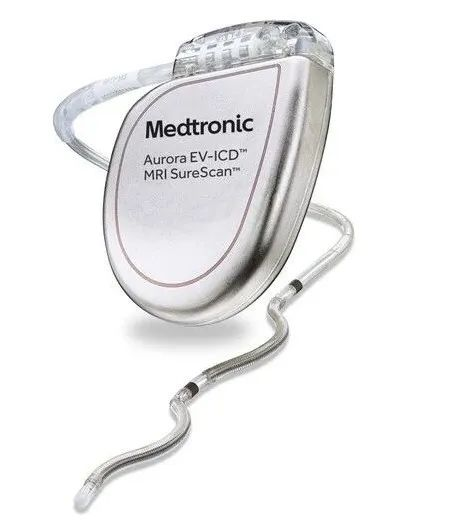
Aurora EV-ICD™
Traditional transvenous ICDs typically implant the pulse generator between the pectoralis major and pectoralis minor muscles, with leads entering the right ventricle of the heart through the subclavian vein to detect electrocardiographic signals and identify arrhythmias.
The pulse generator of the EV-ICD is implanted subcutaneously near the mid-axillary line, with the defibrillation lead placed beneath the sternum and outside the heart and veins.Cleverly addressing certain complications associated with transvenous leads, such as vascular injury and vascular occlusion (vein narrowing, blockage, or compression), marks a significant innovative breakthrough in ICD technology.
And besides the change in the product implantation site, Medtronic has also made innovations in product design.Fully taking into account the patients' experience and financial burden.
Patients can receive multiple functions such as defibrillation, anti-tachycardia pacing (ATP), and backup pacing therapy through the implantation of a dedicated surgical implant tool.
EV-ICD can provide patients with 40 joules of defibrillation energy, delivering life-saving shocks in a device the size of a transvenous ICD (33 cc).
The estimated lifespan of EV-ICD is 11.7 years, which can reduce the number of device replacement surgeries throughout a patient’s life and lower patient costs.
Medtronic's exclusive PhysioCurve™ design enhances patient comfort and implant acceptance.
Patients treated with commercially available Aurora devices will also benefit from Smart Sense, a proprietary algorithm designed to reduce inappropriate shocks. This algorithm has successfully prevented inappropriate treatments caused by P-wave oversensing, reducing the inappropriate detection rate due to P-wave oversensing by 57%.
Dr. Bradley Knight, Distinguished Professor of Cardiology, once stated:Aurora EV-ICD is a significant step forward in implantable defibrillator technology, enabling us to further advance safe and effective ICD technology.
Riding the Policy Winds
It is worth mentioning that the completion of the first clinical application of Aurora EV-ICD in China is mainly due to the "Pilot First" policy in Lecheng, China.
Public information shows that in 2013, the State Council approved the establishment of Boao Lecheng International Medical Tourism Pilot Zone in Hainan. In 2018, the State Council further granted additional privileges to the medical institutions within the Lecheng Pilot Zone.Approval authority for the use of internationally innovative drugs and medical devices that have been marketed abroad but not yet in China。
Currently, 28 medical institutions have opened and are operating in Lecheng, exceeding400 Special Licensed Medical Devices Achieve "First Use in China" in LechengLecheng is gradually becoming a new approach and method for the reform of the national drug and medical device review and approval system, accelerating the accessibility of global innovative products in clinical use in China.
And as a global leading medical device giant, how could Medtronic miss such an opportunity?
In 2020, Medtronic, which had been eyeing the "huge cake" of China's medical market, targeted the policy high ground of Lecheng. It signed a "Strategic Cooperation Memorandum" with the Administration Bureau of Boao Lecheng International Medical Tourism Pilot Zone, establishing a comprehensive and in-depth strategic partnership in the fields of medical innovation and medical technology.
According to statistics,Currently, 10 cardiovascular products of Medtronic have been implemented in the Boao Lecheng Pilot Zone., including AFA Pro Cryoballoon Ablation System, Micra Leadless Pacemaker, Renal Artery Sympathetic Nerve Multi-Pole Radiofrequency Ablation Catheter System, etc.
AFA Pro Cryoballoon Ablation System
Completed the first application in China at Boao Super Hospital in 2020, and it has now been routinely applied at the super hospital.
Symplicity Spyral™ Catheter System
Completed the first application in China at Boao Super Hospital in 2021, and received NMPA approval in 2024.
Dual-chamber Leadless Pacemaker Micra AV
Successfully completed the first clinical application in China on September 5, 2020, at Boao Super Hospital.
Since entering the Chinese market in 1989, Medtronic has been developing in China for 30 years. Today, China has become the largest single market for Medtronic globally, outside of the U.S. market.In addition to accelerating the implementation of innovative products, in recent years, Medtronic has also made frequent moves to seek broader development in this fertile land.
In June 2023, Medtronic held the groundbreaking ceremony for its first production line in Lingang New Area, Shanghai, which will focus on the research, development, and industrialization of products related to cardiovascular diseases.
In March this year,The first product for heart disease therapy on this production line has successfully come off the line., which not only accelerates Medtronic's localization innovation pace in the Chinese market but also further promotes the quality development and enhancement of China's high-end medical device industry.
In addition, as an international medical device giant, Medtronic has also invested a large amount of resources in the path of clinical training empowerment.
Medtronic has established innovation centers in Shanghai and Chengdu. It is reported that these two centers are equipped with complete simulation training facilities, including operating rooms, catheter labs, etc., aiming to provide clinical physicians with a more realistic surgical training experience.Approximately 15,000 medical professionals can be trained annually on average.
It can be seen that, driven by multiple factors such as market expansion, technological innovation, and clinical empowerment, Medtronic has successfully created a distinctive development system tailored for China's clinical needs by taking advantage of national policies. It has built a localized medical ecosystem in China, encompassing research and development, production, and training.The debut of the world's first extravascular implantable cardioverter defibrillator also signifies that Medtronic's localization strategy will enter a new phase.
Giants Enter the Market, Centralized Procurement Provides Support
And returning to the ICD market in China, since ICD products incorporate highly sophisticated technologies such as electrocardiophysiology, biomedical engineering, integrated circuits, and wireless communication, they have always been the "technological peak" in the cardiac rhythm management (CRM) field.Currently, China is still in a blank state in this field and has not yet achieved a breakthrough from zero in domestic production.
A highly promising yet untapped "virgin land" has naturally attracted the coveting of many multinational medical device companies besides Medtronic, such as Boston Scientific, Abbott, and Biotronik, which have long been ahead in strategic layout.
But in solving ICD postoperative infections caused by lead issues, the company that can currently compete with Medtronic is none other thanBoston Scientific's Global FirstA leadless ICD product that does not require venous implantation —— Emblem S-ICDBelongs to none other than.
According to reports,This product entered the Chinese market in 2016., but due to its inability to provide bradycardia treatment and anti-tachycardia pacing (ATP) therapy, along with the excessively large size of the product model, it has given Medtronic, despite being nearly 10 years behind, the confidence to catch up.
Medtronic stated that the lead of the EV-ICD is placed below the sternum, with electrodes closer to the heart compared to the lead of the EMBLEM S-ICD. It is nearly half the size of its competitors, requiring only a 40J shock, while the battery life is expected to be extended by 60%.
Besides, under the general trend of localization in China, a powerful hand is also steadily pushing forward domestically produced ICDs in their battle to break zero.
In 2020, implantable cardioverter defibrillators (ICDs) were included in the "First National List of Key Supervision High-Value Medical Consumables," with the Chinese government taking centralized measures to address issues such as inflated ICD prices and overuse.
In addition, several provinces in China have already carried out bulk procurement of pacemakers, including ICDs, which has driven the price of ICDs "down." In Guangdong Province, for example, through centralized procurement,The price of ICD has decreased from an average of 85,500 yuan to 20,400 yuan., each unit can save patients 65,100 yuan in consumable costs.
A significant drop in price will inevitably drive up product sales and penetration rates.A series of national initiatives have brought new vitality to China's ICD market. In this tough battle for domestically produced ICDs, several brave companies have stepped up to meet the challenge.
Created in 2014, MicroPort Cardiac Rhythm Management Co., Ltd. is a subsidiary of MicroPort Medical, mainly focusing on the research and development and production of cardiac rhythm management medical devices.
In 2017, MicroPort acquired LivaNova and gained the full CRM product line, including the ICD products originally developed and marketed by LivaNova.Platinium™ ICD, the product with the world's longest 14.3-year service life`, which can reduce the risks associated with frequent ICD replacements`In April last year, according to the official website of Medtronic, the Platinium™ series ICD officially received approval from the National Medical Products Administration (NMPA).

In addition to technology introduction, Chuangling Heart Rhythm has also made significant progress in independent research and development. In early October last year,Medtronic's ICD Product ULYS and Defibrillation Lead INVICTA Receive Approval for Market Release in JapanAt the same time, in the S-ICD field, Chuangling Heart Rhythm is also actively laying out.
Wushuang Medical isCurrently the only enterprise in China that fully masters the independent rights of ICD research and development and production.With its leading-edge advantages in the ICD field, Unique Medical has completed several rounds of financing amounting to hundreds of millions of RMB.
In September last year, Wusong Medical's ICD officially entered China's special review process for innovative medical devices.According to the introduction, this ICD product features a streamlined design and is capable of automatic sensing and pacing, 40J energy charging and discharging, Bluetooth telemetry, and other functions.Performance indicators have basically reached internationally leading levels.
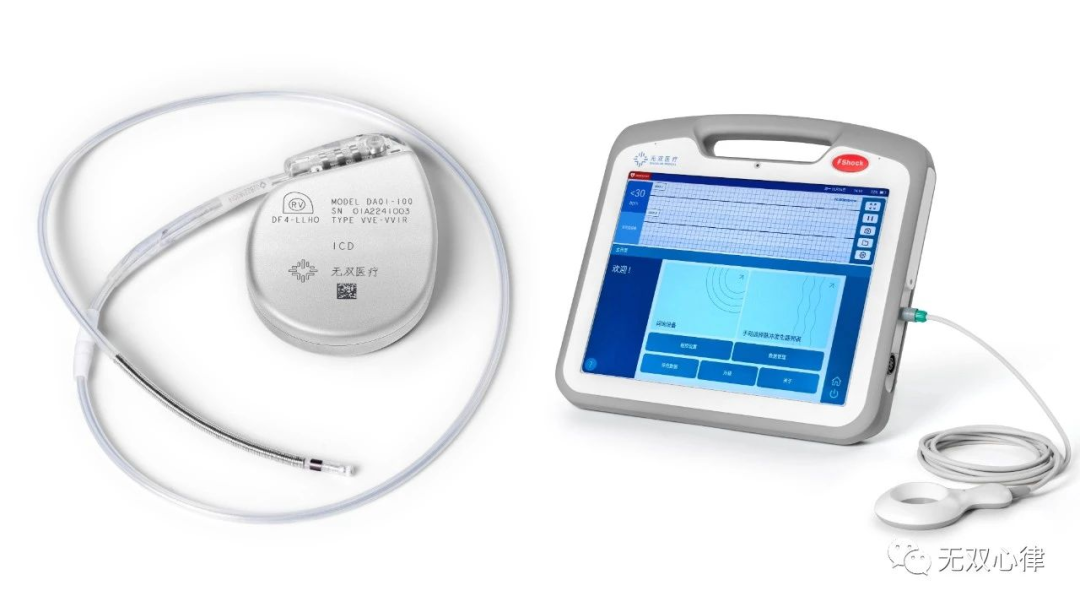
In addition, at the end of December last year, Wu Shuang Medical's ICD product officially launched a nationwide multi-center confirmatory clinical trial in China.
With the entry of giants and the rise of domestically produced devices, it's not hard to see that ICDs are gradually becoming another hot field following cardiac pacemakers.
However, at the same time, the importance of quality issues with ICD products is gradually becoming apparent.
In the past two years, Medtronic, Boston Scientific, Abbott and others have encountered several serious Class I recalls on ICD products, which is undoubtedly a wake-up call for companies in China. While focusing on technological innovation, it is essential to pay high attention to product quality issues and strengthen quality management and development.Issue, ensuring the safety and effectiveness of ICD products are fully guaranteed.
All views in this article do not constitute investment advice. Medical Device Business Review remains neutral on all views in the article and is only for sharing and communication.
*Advertisement

▼More Book Recommendations▼
If you find the content helpful, welcomeStar Mark、Like、Forward!
Your support is our greatest motivation