How Far Is China's AI-Driven Drug Discovery from Success?
XtalPi
Computation-Driven Innovative Drug R&D Provider
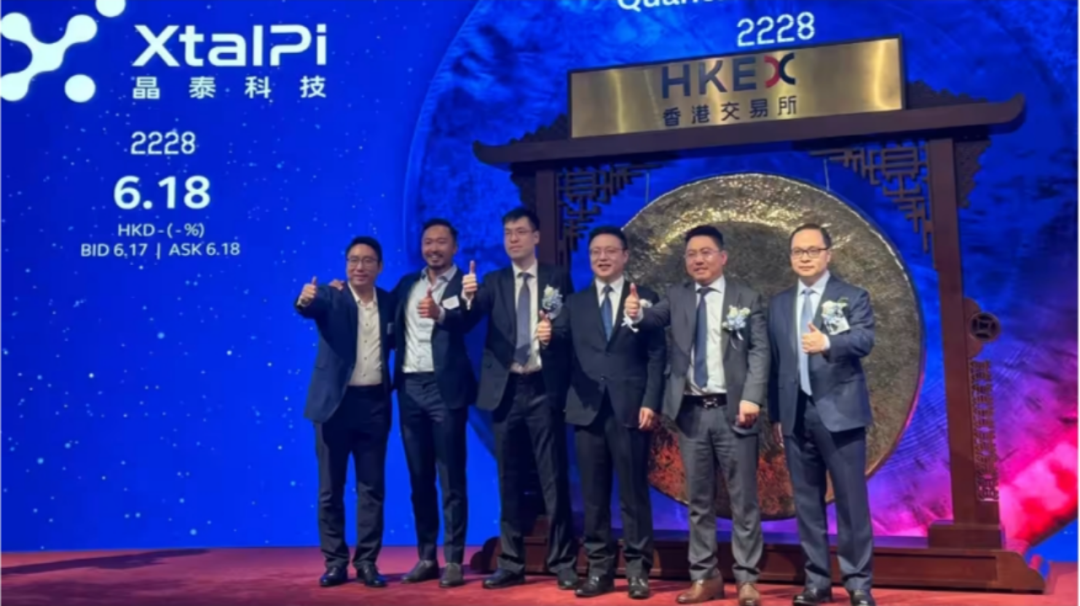
On June 13, XtalPi, a Chinese AI drug research company invested in by Tencent, was listed in Hong Kong., becoming the first China-produced AI pharmaceutical stock。
China's AI pharmaceutical companies started relatively late, with XtalPi and Insilico Medicine both being established in 2014, while their foreign counterparts...Atomwise, BenevolentAI (London), Exscientia(Oxford) has had extensive business dealings with multinational pharmaceutical companies over the past decade. Moreover, even these two most renowned AI pharmaceutical companies in China were founded in the United States.
At that time, almost no one paid attention to AI drug research in China.
Ma Jian, co-founder of XtalPi, said that when he first returned to China in 2015 and began reaching out to Chinese pharmaceutical companies, the majority of them are clearly not interested in AI-driven drug discovery, or are not ready yet.
Time and circumstances have changed.
Data shows that, as of the end of 2023, there were 897 AI pharmaceutical companies globally, with 93 of them based in China.
XtalPi once assisted Pfizer in the development of the COVID-19 drug Paxlovid, completing the mutual verification and accurate matching of drug crystal form predictions with experimental results in just six weeks. Insilico Medicine has also reached partnerships with Fosun Pharma and Sanofi, and its AI platform serves 11 of the top 20 global biopharmaceutical companies.
However,InternationallyAdvanced LevelCompared with,China'sAI Drug DiscoveryIndustryThere are still some gaps.。
01
"Data Silos" Need to Be Broken Through
Data, algorithms, and computing power areAI Drug DiscoveryThe key condition, especially data。ChatGPT became an instant hit because a large amount of data accumulation led to a qualitative change through quantitative change.
China has a population of 1.4 billion, with hospitals on a large scale, providing rich data. Compared with their Western counterparts, ChinaAIThe company has certain advantages, but the preclinical and clinical data used to train the company's algorithms remainExistenceSome QualityProblem。
CurrentlyThe main data sources for AI drug discovery are public data and non-public data. Public data refers to data that can be obtained or purchased through various public channels, such as some databases used for target identification. Such data is easy to access but its quality is not guaranteed. Non-public data mainly consists of internal project data from various pharmaceutical companies, which is of high quality but considered confidential company information and is difficult to obtain.
InternationalLeadingAI Pharmaceutical Company, after years of accumulation, has established multiple channels for data acquisition (public databases, R&D datasets obtained through collaboration, and datasets accumulated from the company’s own R&D efforts). For example, Verge Genomics has established partnerships with more than a dozen hospitals, academic centers, and biobanks to build its proprietary database of human tissues (mainly brain and spinal cord), which consists of 6,800 human tissue samples and is one of the largest drug discovery datasets for neurodegenerative diseases.
Although China is also actively promoting the accumulation and sharing of biomedical data, compared with international peers,Data Standardization and Sharing MechanismTo be determinedPerfect, there are still issues of inconsistent quality and lack of unified standards.Ye Tao, a medicinal chemist who uses computer-aided drug design at Peking University's Shenzhen Graduate School, says data quality is absolutely crucial. Professor Zhang Jian, head of the molecular research laboratory at Shanghai Jiaotong University, says data quality is an issue, especially outside a few medical research centers in cities like Beijing and Shanghai. "It may be only in big cities that you can get good-quality data," he says. "The situation is a bit complicated."
Especially, if a disease is unique or more prevalent in China, new drug development must consider ethnic differences and requires research on disease data within China. However, most of this data is currently fragmented and scattered across various hospitals, making it inaccessible for pharmaceutical companies to truly utilize.
In addition,Data Privacy and Security IssuesAlso needs to be further resolved.In the United States, AI companies are particularly restricted by laws, such asThe Health Insurance Portability and Accountability Act of 1996 set the standards for how electronic medical records should be shared. Only by protecting patient data and addressing patient concerns can we truly improve the accessibility and utilization of data., expand the application of AI in the pharmaceutical field.
02
Interdisciplinary复合型人才InHighDemand
Top-notchAI pharmaceutical companies often bring together experts from fields such as biomedicine, computer science, chemistry, and pharmacology, forming strong interdisciplinary teams. Their success in drug discovery and clinical trial optimization also benefits from the collaboration and innovation of these interdisciplinary teams.
AI drug discovery companies have three mainstream business models: AI SaaS (selling software), AI CRO (selling services), and AI biotech (developing drugs). Most AI drug discovery companies in China, considering their long-term development, do not engage in only one type of business model but instead operate in two to three models simultaneously. Therefore, building interdisciplinary teams is crucial.
AlthoughThere are quite a few excellent ones in China.AI and biomedicine talents, but interdisciplinary comprehensive talents are relatively scarce.。Precisely because of this, leading domestic companies, industry giants, emerging startups, as well as foreign enterprises have all increased their efforts, offering attractive compensation packages to compete for top talent in this field.
The annual salary of data scientists typically ranges from 500,000 to 1,200,000 RMB. The annual salary of data managers can be as high as 1,500,000 - 2,200,000 RMB.Entry-levelThe Highest Annual Salary for AI DevelopersSometimes it can reach 800,000 RMB.In addition, the compensation system also includes appropriate incentive measures such as stock options, which are particularly common in start-up enterprises.
Insilico CEO Zhavoronkov said that in China, top experts in this industry earn more than those in the United States and have high mobility.
So, what kind of talent is most welcomed in this industry? In a word: young, strong, well-educated, and experienced professionals.
Since AI pharmaceuticals inherentlyIt is a relatively new field, and the founding team is usually also very young,So they usually prefer younger job seekers, such as those with a master's degree or higher.Candidates with 1-3 years of work experience or those who have just obtained a Ph.D. According to Hays' statistics, there is high market demand for algorithm engineers and data scientists with 0-5 years of work experience. Meanwhile, professionals with experience in strong AI projects such as deep learning and machine learning will be more competitive.
To narrow this talent gap, it is necessary to formulate and implement targeted educational measures and training programs that provide opportunities for learning multidisciplinary skills. Meanwhile, if companies wish to retain top talent, they should place greater emphasis on clearly building corporate culture, encouraging continuous employee learning, developing talent strategies, and achieving sustainable talent growth.
03
The financing market is volatile.
On April 24, Xaira Therapeutics secured a $1 billion seed funding round, marking the largest financing in the AI pharmaceuticals industry so far this year. On the same day, another established AI pharmaceutical company, BenevolentAI, announced a 30% workforce reduction and the closure of its U.S. office due to financial strain. Just last May, BenevolentAI had laid off 180 employees.
The capital market is ever-changing, often half sea water and half flame. Looking back over the past few years, the AI + pharmaceuticals investment market in China has also experienced a roller-coaster ride.
In 2018, AlphaFold participated in the 13th CASP (Critical Assessment of protein Structure Prediction) makes a stunning appearance, predicting protein structureswith an accuracy rate close to 60%In 2020, AlphaFold 2 was released with an accuracy rate of 90%.
Subsequently, the AI track has gained unprecedented popularity. Both in China and internationally, 2021 was the peak year for AI pharmaceutical financing.
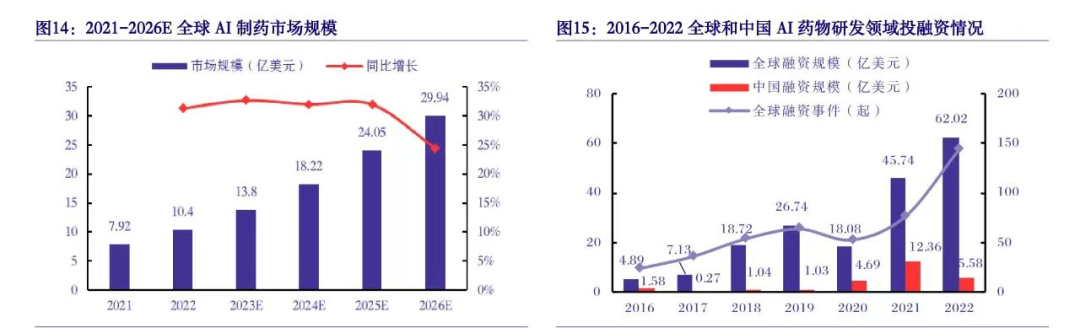
However, in 2022, overseas AI pharmaceutical investment and financing remained vigorous, while the enthusiasm in China began to cool down, with a significant decrease in newly established AI pharmaceutical companies. In 2023, only three new AI pharmaceutical companies were founded in China, compared to 31 in 2021!
Since February this year, this track has regained its popularity in China. As of May, there have been 55 AI pharmaceutical financings globally this year, of which 17 came from China, accounting for an unprecedented over 30%.
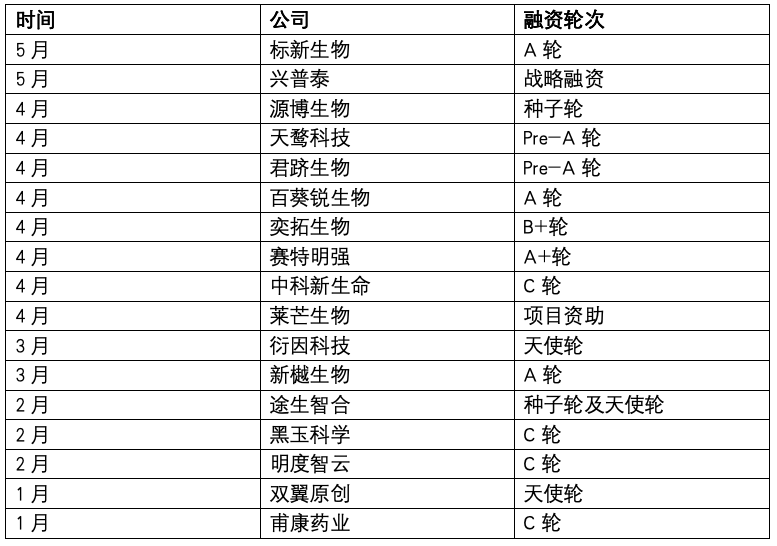
However, beneath the bustling surface, we must soberly recognize that, out of 94 AI pharmaceutical companies in China, except for those that have successfully gone public,XtalPiIn addition to Insilico Medicine, which has also submitted its prospectus to the Hong Kong Stock Exchange, only six companies—Drug Farm, Deep Potential Technology, Fortun Pharmaceutical, Accura Bio-Tech, Hei Yu Science, and Mingdu Smart Cloud—have reached the C-round. Only two companies, Red Cloud Biotech and Yituo Biotech, have reached the B+ round, with most companies still in very early funding rounds.Meanwhile, in the overseas market during the same period, Schrödinger, Recursion Pharmaceuticals, Relay Therapeutics, etc. have all gone public successively.
This shows that, on the one hand, China's AI pharmaceutical companies are still in the early stages of development, and on the other hand, it also indicates that the scale and intensity of venture capital in China are unstable. Most investors are risk-averse, prefer to invest small amounts in early-stage projects, and remain cautious about AI pharmaceuticals, leaving room for improvement in the investment environment.
04
Though the road is long and fraught with obstacles, we can reach the destination by moving forward.
To address data gaps, Insilico Medicine has built its own data mining team and established an intelligent robot laboratory in Suzhou, combining dry and wet experiments to generate high-quality data. Currently, the target identification platform PandaOmics has integrated five million omics data samples and millions of compounds and biologics data.
In order to build a team that understands both artificial intelligence and pharmaceuticals, Cornerwell Biotech recruited Chi Ying. Chi Ying is a member of the Ministry of Science and Technology's 14th Five-Year Plan "Biotechnology and Information Technology Convergence" expert group, a doctoral supervisor at Zhejiang University and Nanyang Technological University, and has served as the head of Alibaba's DAMO Academy Pharmaceutical Intelligence.is a top talent in China who spans the fields of medicine and artificial intelligence.
In order to balance artificial intelligence with biomedicine, Insilico Medicine, which has a background in computer science and business,CEO Alex ZhavoronkovBefore RecommendationGSKChief Scientific Officer Ren Feng Appointed as Co-CEO。
AI biotech R&D investment is huge, requiring a疯狂烧钱. Looking globally, the only ones that have achieved profitability areSchrödingerOne.China's AI pharmaceutical companies have been established more recently, making this even more critical. However, if they can successfully execute drug out-licensing (license out), they can recoup funds, achieve self-sufficiency, and even turn a profit, boosting investor confidence and creating a良性循环 of assets.
This year's two sessions in China, "Artificial Intelligence+ "Appeared in the government work report for the first timeIn China. From "Internet Plus" in 2015 to "Intelligent Plus" in 2019, and then to "Artificial Intelligence Plus" this year, China’s industrial upgrading and transformation have been continuously improving. The country will strengthen strategic design from a high vantage point and accelerate the formation of new quality productivity driven by artificial intelligence.
As of 2023, globally, 102 AI drug pipelines have successfully entered the clinical stage, with 56 in Phase I clinical trials and 41 in Phase II clinical trials.Five have progressed to Phase III clinical trials, two of which are from China:
1. MTS004 by JiTai Pharmaceuticals, applicable for neurological disorders, received approval from the Center for Drug Evaluation of the National Medical Products Administration (NMPA) for Phase III clinical trials in June 2022.
2. EG-007, developed by Egle Therapeutics for endometrial cancer, was approved by the FDA to enter the pivotal Phase III clinical trial in August 2021.
Currently, there is no real AI drug successfully launched worldwide. The situation is still uncertain, and every one of us has the potential to be a dark horse.。
Phoenix News "Chiying Chi from Jiao Jing Bio: Focusing on Developing the First AI-Based Macromolecule Drug Entering Clinical Trials"
BiG 10th Anniversary Preview
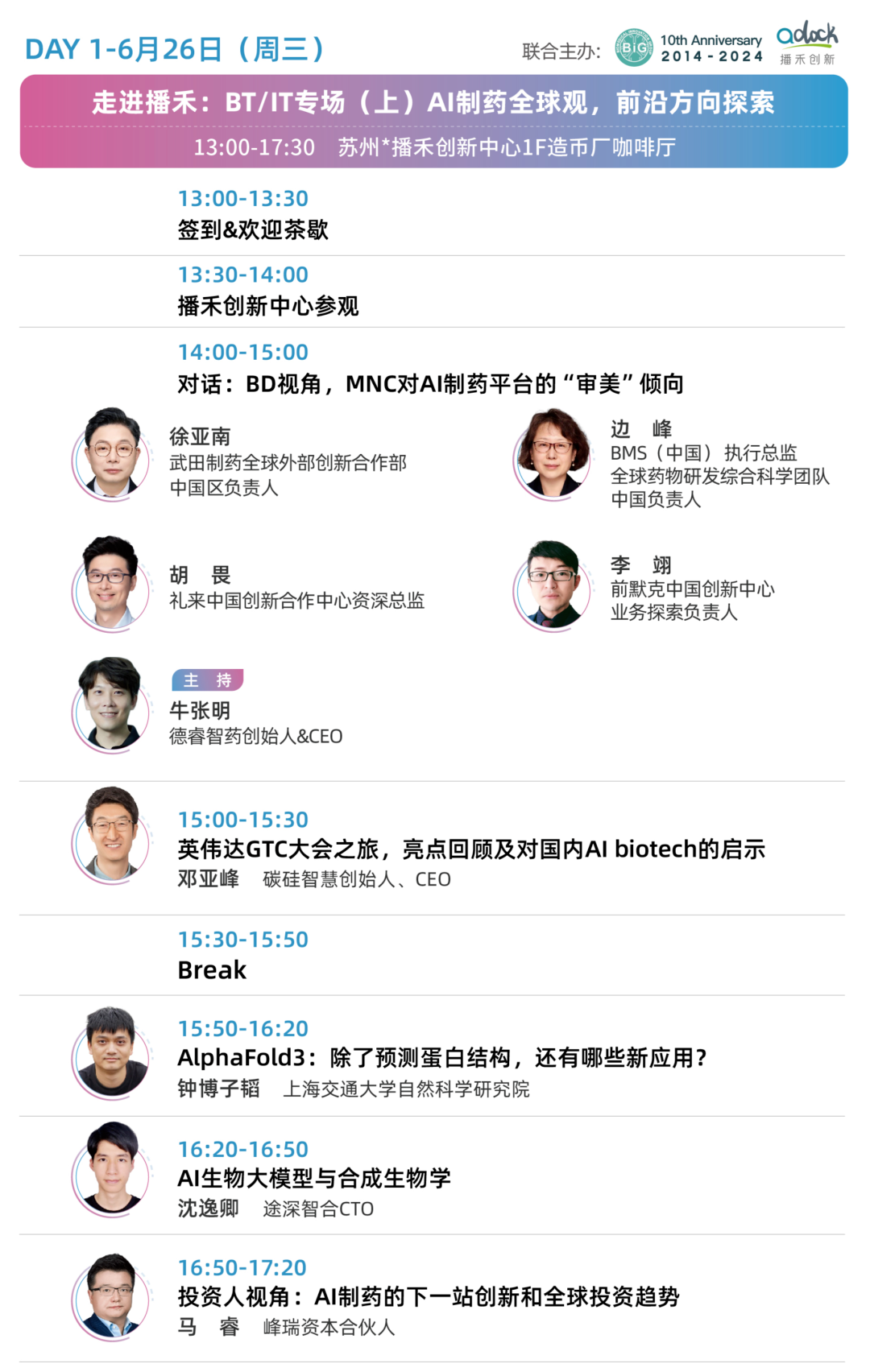
Public MeetingRegister to Attend
Conference Tickets:Approval System (Free));
Including the main forum + sub-forums, excluding meals; priority given to biotech/pharma, clinical, academic scientists, and investment institutions.
Consult BiG