

Lenoss Medical, Founded by Former Johnson & Johnson Executive, Files IPO for First Fully Biological Solution to Vertebral Compression Fractures

Johnson & Johnson
Medical Device R&D and Manufacturer
With the gradual increase in the degree of population aging, the incidence of osteoporosis is also rising year by year. As of 2020, about 80 million people in China suffer from osteoporosis of varying severity.
As an important complication of osteoporosis, vertebral compression fractures are a common first symptom or reason for seeking medical attention in patients with osteoporosis. According to WHO statistics, more than 8.9 million people worldwide suffer from osteoporotic fractures each year.
Osteoporotic Vertebral Compression Fractures
Lenoss Medical, founded in 2017, is a U.S.-based biotechnology company focused on physiological treatment technologies for osteoporotic spine fractures. The company believes that through natural therapies, patients can achieve better treatment outcomes. Its core product, the OsteoPearl VBA System, was thus introduced.This system is used to treat spinal fractures by leveraging the natural healing properties of healthy bones and a minimally invasive, cementless technique, revolutionizing the treatment approach for spinal fractures.AsThe First Fully Structured VBA System in the United States`, provides cementless, 100% cortical bone stable implants`, providing a better option for the treatment of vertebral compression fractures.
In the 1980s, French doctors Deramand and Galiber were the first to use vertebroplasty to treat vertebral bone destruction caused by hemangiomas, quickly alleviating patients' long-term pain. Since then, this technique has been widely used to treat osteoporosis and vertebral compression fractures and bone destruction caused by tumors, ushering in a new era of minimally invasive treatment for vertebral compression fractures. Currently, bone cement filling has become a common treatment for vertebral compression fractures, and percutaneous kyphoplasty (PKP) and vertebroplasty (PVP) have become the preferred minimally invasive surgical treatments for osteoporotic vertebral compression fractures.
Bone CementBone cement is a medical material used in orthopedic surgeries, serving to connect and fill. Some of its physical properties, as well as its appearance and characteristics after solidification, are similar to those of white cement commonly used in construction. During surgery, the vertebral body at the patient's lesion site needs to be distracted, and then bone cement is injected to quickly stabilize the spine.
Although bone cement has the advantages of fast shaping, good plasticity, and high biocompatibility, its side effects and risks are also obvious.
During the surgical process of percutaneous vertebroplasty (PVP), bone cement diffuses in a disorderly manner from the injection site to the surrounding area. Due to the inability to control the dispersion of bone cement, there is a significant risk of leakage. Moreover, vertebroplasty cannot physiologically heal fractures or promote the formation of new bone within the vertebrae. Percutaneous kyphoplasty (PKP) can achieve a certain degree of reduction of compression fractures through balloon expansion. After the balloon is removed, the cavity formed inside the vertebral body facilitates low-pressure injection of bone cement. However, similar to percutaneous vertebroplasty (PVP), complications such as bone cement leakage, vertebral re-fracture, and postoperative venous thrombosis still exist.
It is not difficult to see that one of the major reasons for the relatively high number of side effects and risks associated with these procedures is the bone cement used during the surgery.
Studies have pointed out that in these spinal surgeries requiring the use of bone cement, there is more than a 20% chance that the bone cement will leak out of the vertebrae. This leakage can sometimes cause the bone cement to enter the circulatory system, potentially leading to blockages in the heart or lungs, which increases the risk of patients developing pulmonary hypertension or needing cardiac surgery. Additionally, the bone cement may leak from the fractured part of the vertebral posterior wall into the spinal canal, causing spinal canal stenosis, which could then compress the spinal cord or nerves and damage the patient’s nervous system.
In addition, a large amount of heat is generated during the solidification process of bone cement, which increases the local temperature and may cause thermal necrosis of the bone. During the curing process of bone cement, a certain degree of expansion may occur. If bone cement is implanted inside the medullary cavity, it may cause severe compression within the medullary cavity. The fat inside the medullary cavity may enter the blood vessels due to excessive pressure, subsequently forming fat embolisms.
So,How to completely eliminate the risks associated with bone cement leakage and heat dissipation? Lenoss Medical offers a solution that addresses the issue at its root — cementless technology.
Speaking of Lenoss Medical's dedication to eliminating the drawbacks of bone cement procedures, one must mention its founder, Dom Messerli.
As the founder, president, and CEO of Lenoss Medical, Dom Messerli previously served as the Director of R&D, overseeing acquisitions, integrations, and transformations for DePuy Synthes Spine, the spinal division of Johnson & Johnson. Prior to joining Johnson & Johnson, Dom held leadership roles in product development and marketing at Synthes Spine, during which the company’s revenue grew to exceed $500 million. Dom led global teams in the commercial launch of multiple products and successfully guided his division from its startup phase to a market-leading position. With an impressive pace of innovative product introductions, he increased global annual sales from $10 million to $150 million.
During his time at DePuySynthes, Dom was shocked by the high prevalence of vertebral compression fractures and the significant unmet clinical needs.
In order to solve this problem through natural bone repair, Dom founded Lenoss Medical and developedOsteoPearl Biologic Allograft Implant, which replaces the current complex and high-risk bone cement treatment with a natural alternative.OsteoPearl is entirely made from allogeneic cortical bone, utilizing clinically proven bio-bone tissue to heal spinal fractures.
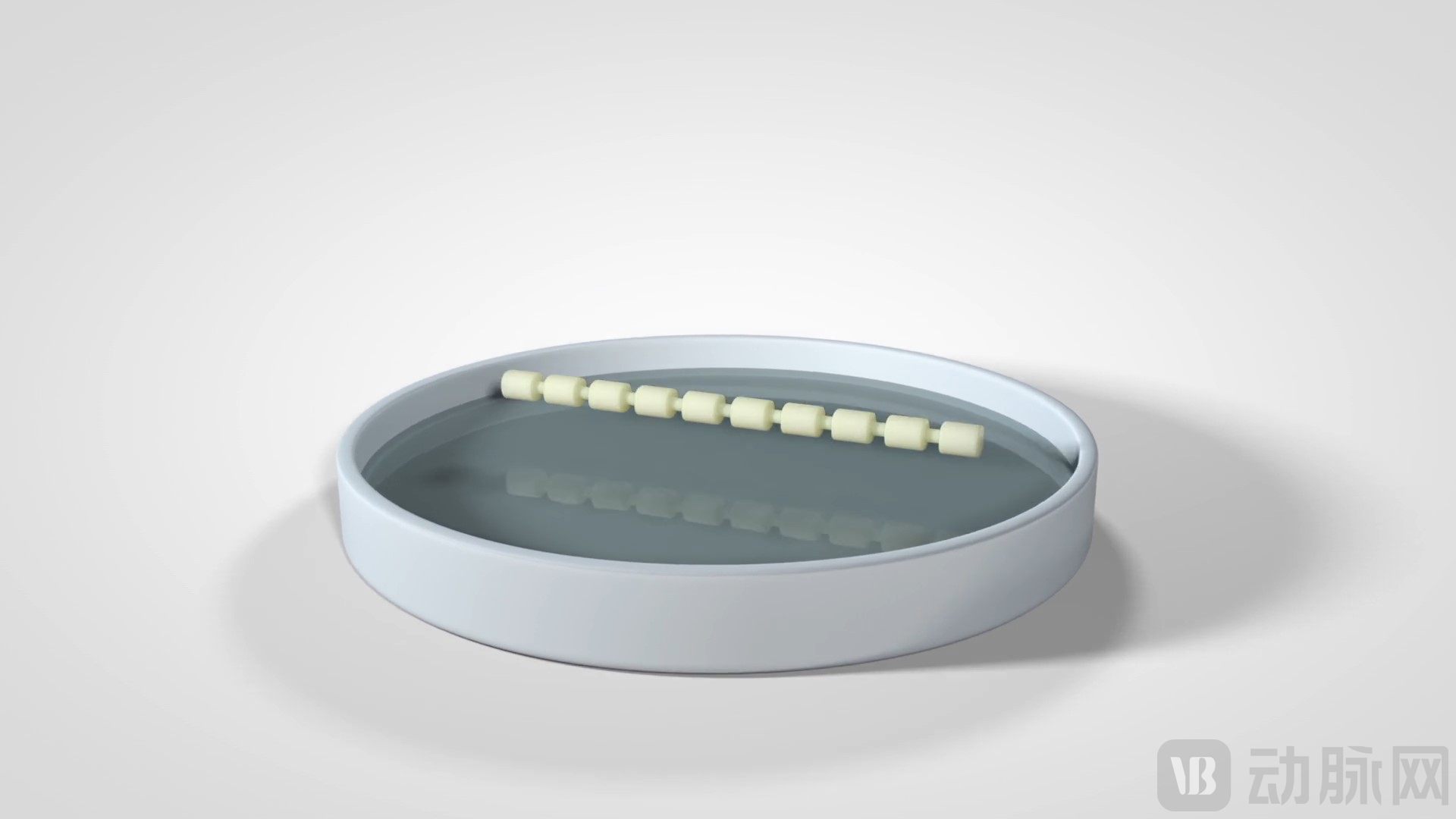
OsteoPearl Implant
"Creativity lies in simplicity," this is Dom Messerli's philosophy of product development. In his 30 years of dedication to the field of spinal medical devices, as an inventor, he owns multiple patents related to specialized spinal medical equipment, and has also laid a solid foundation for the development of the OsteoPearl VBA system.
In line with Dom's aforementioned philosophy, the OsteoPearl VBA System adheres to the design concept of "simplicity and efficiency," not only enhancing work efficiency during surgical or treatment procedures but also alleviating pressure and complexity in the supply chain. The system utilizes advanced non-toxic materials and technology, ensuring no harmful fumes are produced during operation. Additionally, it minimizes the number of procedural steps, reduces the quantity of instruments brought into the operating room, and is optimized for outpatient surgical center settings.
OsteoPearl VBA System can be implanted through minimally invasive surgery to stabilize spinal fractures while promoting natural recovery and healing of the damaged area. The system features anatomical and biological properties, allowing it to integrate more naturally into the human body as opposed to non-healing synthetic foreign materials. It adheres to AO principles of fracture reduction and fixation to restore anatomical relationships, protect blood supply to soft tissues and bones.
According to the company's disclosure,OsteoPearl VBA System is the first and only full biological solution for treating VCF.The system uses a 100% cortical bone introduction structure to treat osteoporosis. At the same time,As the first system to adopt a fully biological cementless technology, the OsteoPearl VBA system eliminates the risk of cement-related embolism by avoiding the use of bone cement., which aims to immediately stabilize the damaged vertebrae and promote long-term spinal healing and recovery.
OsteoPearl VBA System Utilizes Patented OsteoPearl Implant Technology to Instantly Form a Three-Dimensional Bone Structure Scaffold During Implantation While Promoting Blood Flow.This technology has osteoconductivity and osteoinductivity., enabling the stent not only to promote bone growth but also to guide new bone formation, while using fully biocompatible materials to achieve high-strength compressive support, thereby bringing long-term biological benefits to patients.
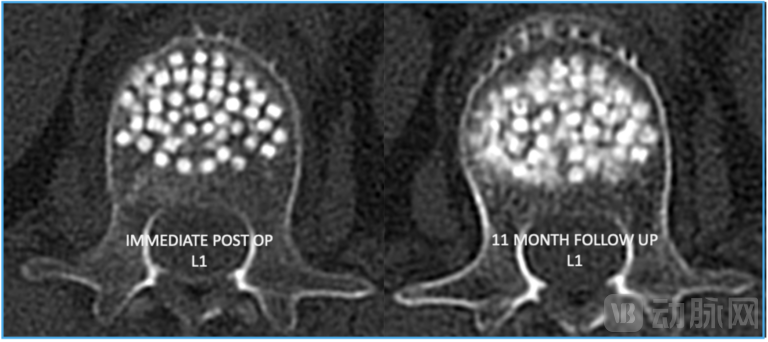
The right image shows the condition of the OsteoPearl implant after 11 months. The blurred edges indicate that new bone is forming where it is most needed.
The patented tool of the OsteoPearl VBA system — the Elevoss Cavity Creator — allows doctors to precisely control the direction of operation and perceive the procedure through tactile feedback when treating vertebral injuries or fractures, enabling the accurate creation of a cavity suitable for placing the OsteoPearl implant within the patient’s body. The OsteoPearl implant consists of 100% cortical bone bead chains, which, once rehydrated, expand by 40%, increasing their volume and elasticity while maintaining strength, thereby adapting better to the shape of the vertebrae and providing support.
The above characteristics make the OsteoPearl VBA system a long-term, natural solution that is beneficial for bone health and repair.
In the process of developing the OsteoPearl VBA system, the main challenge faced by Lenoss Medical was how to efficiently produce in large quantities. Unlike metal or plastic implants, their products are made from precious raw materials—donated human tissue—both valuable and sacred.
In order to protect and maximize the utilization of these raw materials as much as possible, Lenoss Medical applies iterative design and general manufacturing principles, using efficient fixtures and tools to carry out large-scale production without causing waste of raw materials. At the same time, the company has applied a great deal of engineering innovation, and whenever a method to improve the efficiency of the manufacturing process is found, a patent is filed for this method.
Currently, the OsteoPearl VBA System has successfully performed its first human surgery, with nearly 50 surgeries completed to date without any occurrence of venous thrombosis. On May 11, 2024, Lenoss Medical announced the completion of a $4 million Series A financing round on May 9, invested by Xcellerant Ventures, Highpoint Ventures, Vodia Capital, RightHill Ventures, and multiple angel investment groups. Moving forward, Lenoss Medical will continue to focus on the collection of clinical data and adopt registered data collection for all new customers. The OsteoPearl VBA System has already obtained excellent clinical evidence for the use of allogeneic tissue in orthopedic surgeries and plans to apply this data more specifically to the treatment of vertebral fractures.