

Chinese CAR-T Therapies Showcase Significant Advances at EHA 2024: Clinical Updates from BeiGene, Legend Biotech, IASO Bio, and More
Imviva Biotech
Developer of Novel Cancer Cell Immunotherapies
Legend Biotech
Tumor Cell Immunotherapy Developer

IASO Biotechnology
Cancer Treatment New Drug Developer

CARsgen Therapeutics
Developer of CAR-T Cell Immunotherapy Drugs

Juventas
Innovative Cell Therapy Drug Developer
AbelZeta
Developer of Immune Cell and Stem Cell Therapy Products
Welcome to follow Asymchem Pharma News
From June 13 to June 16, 2024, the 29th Annual Meeting of the European Hematology Association (EHA) was grandly held in Madrid, Spain. As a major event in the field of hematology in Europe and even globally, the EHA conference brought together numerous top experts and scholars, with more than ten thousand professionals from over 100 countries around the world gathering to share innovative treatment concepts in the field of hematology and showcase the latest scientific and clinical research achievements.
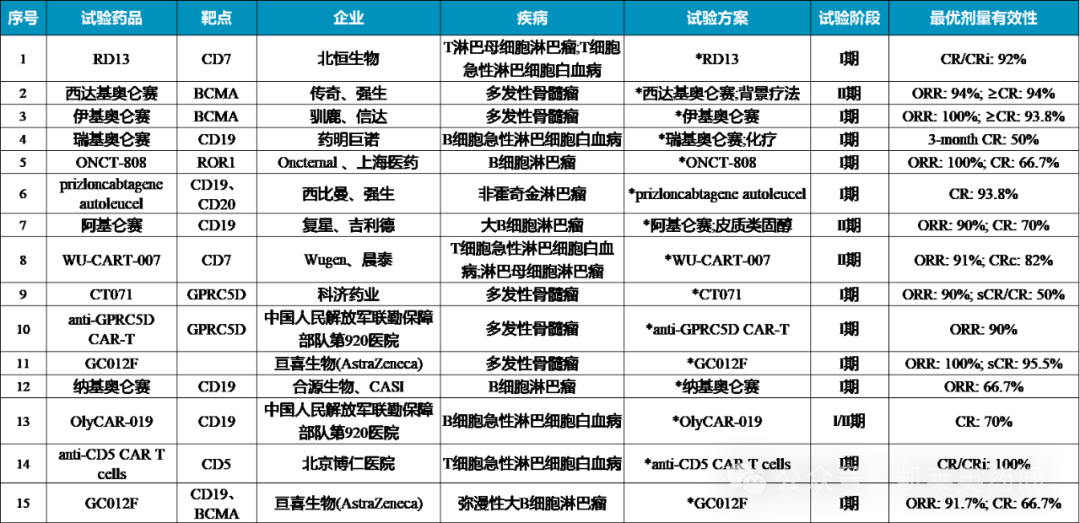
In recent years, driven by technology, policy, and market forces, cell and gene therapies have shown rapid development and demonstrated promising results in the treatment of major diseases such as cancer, bringing new hope to many patients, especially those with advanced cancer. As a novel precision-targeted therapy, Chimeric Antigen Receptor T-cell Immunotherapy (CAR-T therapy) is becoming increasingly recognized, and China's CAR-T cell therapy sector has also experienced rapid growth in recent years. According to incomplete statistics, more than 80 financing events occurred in the first half of 2024, with over ten financings happening in cell therapy alone.
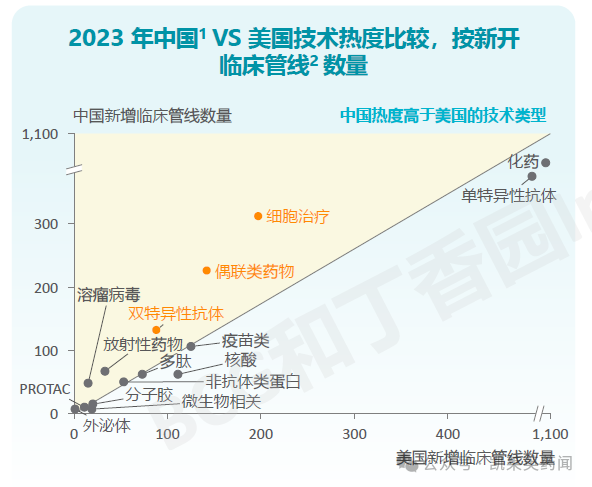
Image source: DXY Insight Database
At this conference, Chinese companies presented a large number of research findings in the form of oral reports and poster abstracts. Among them, companies such as Nanjing Bioheng Biotech Co., Ltd., Legend Biotech, IASO Bio, CARsgen Therapeutics, Ltd, Juventas, and Cellular Biomedicine Group (Shanghai) Ltd disclosed the latest research progress on their CAR-T cell therapies. The following will elaborate on the latest developments regarding some of these drugs.
Latest Research Data on CAR-T Therapy Disclosed at 2024 EHA
One
Nanjing Bioheng Biotech Co., Ltd.: RD13
RD13-02 is a universal CAR-T cell therapy targeting CD7. It avoids fratricide, graft-versus-host disease (GvHD), and host-versus-graft rejection (HvG) through genetic modification, thereby enhancing anti-tumor activity. It is under development for the treatment of relapsed/refractory CD7-positive T-cell acute lymphoblastic leukemia/lymphoma. This cell therapy can be manufactured in a single batch for multiple patients, achieving an "off-the-shelf" purpose when CAR-T cell therapy is needed for patients.
This EHA conference reported a single-arm, open-label, dose-escalation Phase I study designed to evaluate the safety and efficacy of RD13-02 in treating R/R T-ALL/LBL patients. As of February 21, 2024, among 12 patients with R/R T-ALL/LBL, 9 achieved CR/CRi by Day 28 post-RD13-02 infusion; during the M2 assessment post-infusion, an additional two patients achieved CR/CRi, resulting in an overall CR/CRi rate of 92%. Except for Patient 11, who tested positive for hepatitis B surface antigen and showed amplification detected at the research center laboratory, all other patients demonstrated amplification via qPCR. The onset of amplification occurred between D6-D15, with peak amplification observed between D8-D27. The median duration (range) of sustained amplification was 33 days (15, 79).
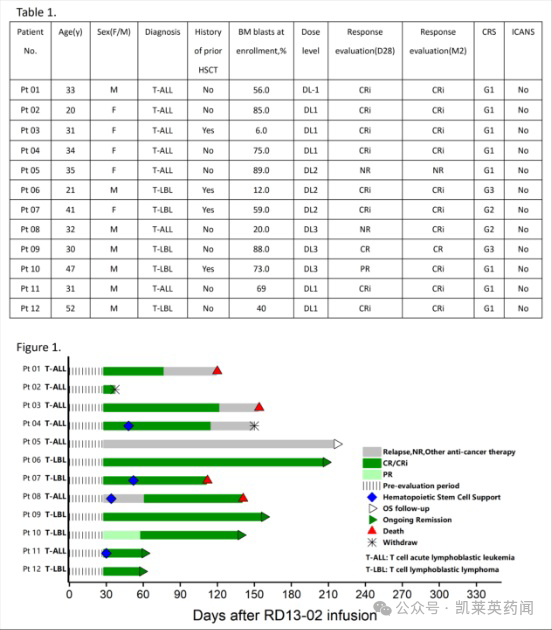
In terms of safety, no dose-limiting toxicity (DLT), neurotoxicity, or GvHD was observed at any dose level. Cytokine release syndrome (CRS) was manageable, with most cases being mild (G1, n=8; G2, n=2; G3, n=2).
Two
Legend Biotech: Cilta-cel
Ciltacabtagene Autoleucel (brand name CARVYKTI) is a CAR-T therapy targeting B-cell maturation antigen (BCMA). It modifies the patient's own T cells using a transgene encoding a chimeric antigen receptor (CAR) to recognize and eliminate cells expressing BCMA. In December 2017, Janssen and Legend Biotech entered into a global exclusive license and collaboration agreement to develop and commercialize ciltacabtagene autoleucel. In February 2022, ciltacabtagene autoleucel was approved for marketing by the U.S. FDA, in May it received conditional marketing authorization from the EU EC, and in September it was approved for marketing by Japan’s MHLW for the treatment of adult patients with relapsed or refractory multiple myeloma.
This month, Legend Biotech announced the results of Cohort D from the phase 2 CARTITUDE-2 study of Cilta-cel for patients with multiple myeloma; the above data were shared as an oral presentation at the 2024 American Society of Clinical Oncology (ASCO) Annual Meeting and were again presented orally at the EHA Congress. The results showed that patients (n=17) treated with CARVYKTI achieved an overall response rate (ORR) of 94% (n=16/17), with all 16 patients reaching complete response (CR) or better. Among the 15 patients evaluable for minimal residual disease (MRD), 80% achieved 10-5 MRD negativity. The median duration of response (mDOR) was not reached (NR), the median time to first response was 1 month, and both the 18-month progression-free survival (PFS) and overall survival (OS) rates were 94%.
In terms of safety, all patients experienced grade 3 or 4 treatment-emergent adverse events (TEAEs), including neutropenia (94%), lymphopenia (65%), thrombocytopenia (47%), leukopenia (41%), infections (71%), or CRS (82%). One patient developed a secondary tumor, which was grade 3 myelodysplastic syndrome (MDS). No motor and neurocognitive treatment-emergent adverse events (MNTs)/Parkinson's cases were observed.
Three
IASO Bio/Innovent: Icaritin
Eque-cel (Idecabtagene Vicleucel) is a BCMA-targeted CAR-T therapy approved in China in June 2023 for the treatment of patients with relapsed/refractory multiple myeloma who have received at least three prior lines of therapy. The drug uses a lentivirus as a gene vector to transfect autologous T cells, and its CAR comprises a fully human scFv, CD8α hinge and transmembrane domain, 4-1BB co-stimulatory domain, and CD3ζ activation domain. Through rigorous screening and comprehensive in vivo and in vitro functional evaluation, Eque-cel demonstrates potent and rapid efficacy with remarkable persistence in vivo.
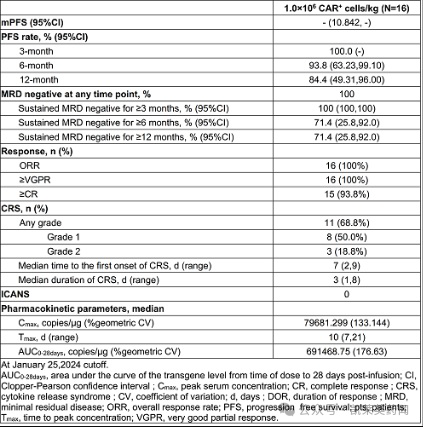
Disclosed at the 2024 EHA is a multicenter, open-label, Phase I, single-arm study initiated by investigators. It aims to explore the efficacy, safety, and pharmacokinetic/pharmacodynamic (PK/PD) characteristics of Idecabtagene Vicleucel Injection in treating high-risk NDMM. The primary endpoints are the proportion of minimal residual disease (MRD)-negative subjects and progression-free survival (PFS). Secondary endpoints include overall response rate (ORR), duration of response (DOR), safety, and PK/PD. The results showed:
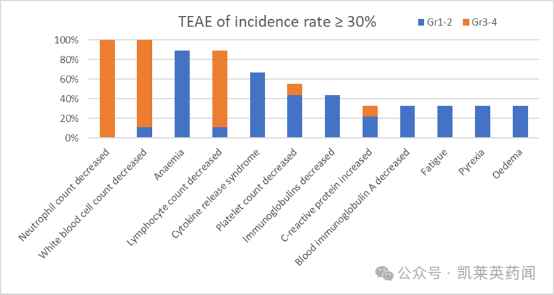
(1) In terms of efficacy, the median follow-up time was 7.46 (range: 2.8-18.1) months, and the median PFS has not yet been reached. The 12-month PFS rate was 84.4% (95% CI: 49.31-96.00). All 100% of the subjects achieved MRD negativity, with 71.4% (95% CI: 25.8-92.0) maintaining MRD negativity for more than 12 months. The ORR was 100%, with 93.8% achieving stringent complete response (sCR). (2) Pharmacokinetics and pharmacodynamics showed that the median time to peak CAR copy number in peripheral blood was Day 10 (range: 7-21) post-infusion, with a median peak level of 79,681.299 copies/microgram DNA. In 81.25% of subjects, free B-cell maturation antigen (sBCMA) was cleared within one month post-infusion. The median time to peak levels of cytokines IL-6 and CRP was Day 7 and Day 10, respectively, while serum ferritin levels showed no significant changes. (3) In terms of safety, the incidence of Grade 1-2 CRS was 68.8%, with no occurrence of Grade 3 or higher CRS, immune effector cell-associated neurotoxicity syndrome (ICANS), or other neurotoxicities. The most common Grade 3 or higher drug-related adverse events were reduced blood cell counts, with an incidence rate of Grade 3 or higher infectious disease-related adverse events at 25.0%.
Four
CARsgen Therapeutics: CT071
CT071 is a second-generation, fully human, autologous CAR-T cell product targeting GPRC5D, manufactured using the CARcelerate platform. GPRC5D is significantly overexpressed on the surface of malignant plasma cells, with limited expression in normal tissues, making it an ideal target for treating multiple myeloma and plasma cell leukemia. The CARcelerate platform shortens the manufacturing process to approximately 30 hours, producing CAR-T cells that are younger, healthier, and even more potent than those produced by traditional methods; the improved production efficiency further enhances supply capacity, reduces manufacturing costs, and increases patient access to the product.
A first-in-human, single-arm, open-label exploratory clinical trial disclosed at this year's EHA aimed to evaluate the safety and efficacy of CT071 in patients with R/R MM. As of February 28, 2024, a total of 10 patients received CT071 infusion. The results showed: (1) In terms of efficacy, the overall response rate was 90%, including 5 patients (50%) achieving stringent complete response (sCR), 2 patients (20%) achieving very good partial response (VGPR), and 2 patients (20%) achieving partial response (PR). One patient (10%) showed continuous tumor reduction at week 8, with serum M-protein decreasing by 84.1% from baseline, assessed as stable disease (SD). Two patients previously treated with BCMA/CD19 CAR-T therapy both achieved responses (1 sCR, 1 PR). Among 9 evaluable patients for MRD, all reached MRD negativity (10-6 threshold) by week 4, including the 5 patients who achieved sCR/CR. (2) In terms of safety, the median follow-up period was 4.07 months (range: 2.8 to 7.4 months). Overall safety was manageable; 4 patients experienced grade 1 CRS, 1 patient experienced grade 2 CRS, with no grade 3 or higher CRS observed; no ICANS occurred. No adverse events of special interest or dose-limiting toxicity (DLT) were reported.
Five
Juventas: Najiolumab
Nazioleucel (CNCT19) is a CAR-T cell therapy targeting CD19 with independent intellectual property rights. It features a globally unique CD19 scFv (HI19a) structure and internationally leading manufacturing processes. After infusion into the body, it binds to target cells expressing CD19, activates downstream signaling pathways, induces CAR-T cell activation and proliferation, and exerts cytotoxic effects on target cells. In November 2023, the drug's marketing application was approved by the NMPA for the treatment of adult relapsed or refractory B-cell acute lymphoblastic leukemia (r/r B-ALL). It is the first fully self-innovated CAR-T cell therapy product targeting CD19 in China.
This EHA disclosure pertains to the cell therapy inr/r B-ALLData from the Phase I clinical trial conducted in patients, with the primary objective of evaluating the safety, DLT, and recommended Phase II dose (RP2D) of CNCT19. Secondary objectives include preliminary anti-tumor activity and pharmacokinetics (PK). The results showed:
(1) In terms of efficacy, as of November 1, 2022, the median follow-up time was 24.1 months (range: 3.9 to 27.3 months), with an ORR of 66.7%, of which 55.6% achieved CR. The median duration of response was not reached (95% CI, 1.18 months to unavailable); OS was not reached (95% CI, 3.94 months to NA), and the 2-year progression-free survival rate and OS rate were 33.3% and 66.7%, respectively. (2) In terms of adverse reactions, the most common adverse events (AEs) were laboratory abnormalities and CRS; 6 patients (66.7%) experienced CRS, all of which were grade 1 or 2, with no reported cases of immune effector cell-associated neurotoxicity syndrome.
Six
Cellular Biomedicine Group: prizloncabtagene autoleucel
Prizloncabtagene autoleucel (C-CAR039) is a novel bispecific CAR-T therapy with an optimized bispecific antigen-binding domain that targets both CD19 and CD20, effectively eliminating CD19/CD20 single-positive or double-positive tumor cells.
The EHA disclosure this time is an open-label, dose-escalation and expansion study conducted in patients with r/r Diffuse Large B-Cell Lymphoma (DLBCL), Primary Mediastinal Large B-Cell Lymphoma (PMBCL), Follicular Lymphoma (FL), and Mantle Cell Lymphoma (MCL). The primary objective is to evaluate the safety and tolerability of the drug; the secondary objectives are to assess the efficacy and pharmacokinetics of C-CAR039. The results showed:
Among 47 evaluable patients, the ORR and CR rates were 91.5% and 85.1%, respectively. The median time to first response and CR was 1.0 month and 1.2 months, respectively. In 43 patients with LBCL, the ORR was 90.7% and the CR rate was 86.0%. The median DOR, PFS, and OS were not reached. The 24-month PFS and OS rates for all patients were 62.6% and 76.5%, respectively. Pharmacokinetic profiles showed robust expansion and long-term persistence of C-CAR039, with a median Tmax and Tlast of 11.5 days and 216 days, respectively.
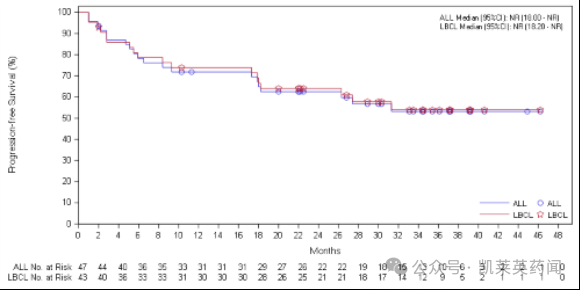
In terms of safety, 45 out of 48 patients (93.8%) experienced CRS, with only 1 patient (2.1%) reaching grade 3. The median onset time for CRS was 3 days (range: 1–12 days), and the median duration was 5 days (range: 2–78 days). Among patients receiving a dose of 5.0x10^6 CAR-T cells/kg, 3 developed ICANS, including 2 with grade 1 and 1 with grade 2. The median onset time for ICANS was 6 days (range: 5–29 days), and the median duration was 12 days (range: 3–53 days). All cases of CRS and ICANS were resolved. Unresolved grade 3 or higher cytopenia by day 30 post-infusion included neutropenia (54.2%), anemia (20.8%), and thrombocytopenia (20.8%). Twelve patients (25.0%) experienced grade 3 or higher infections. Three patients developed second primary malignancies after C-CAR039 infusion, but none were related to C-CAR039. There were 15 deaths, including 11 due to disease progression, 2 attributed to AML-related adverse events, and 1 from an unknown cause.




"Under Observation"Click once