Lion TCR's HBV-Targeted TCR-T Therapy LioCyx-M004 Demonstrates Triple Extension in Median Overall Survival for Advanced Liver Cancer Patients; Phase 2 Global Clinical Trial Actively Enrolling

Lion TCR
Developer of Novel Immunotherapies

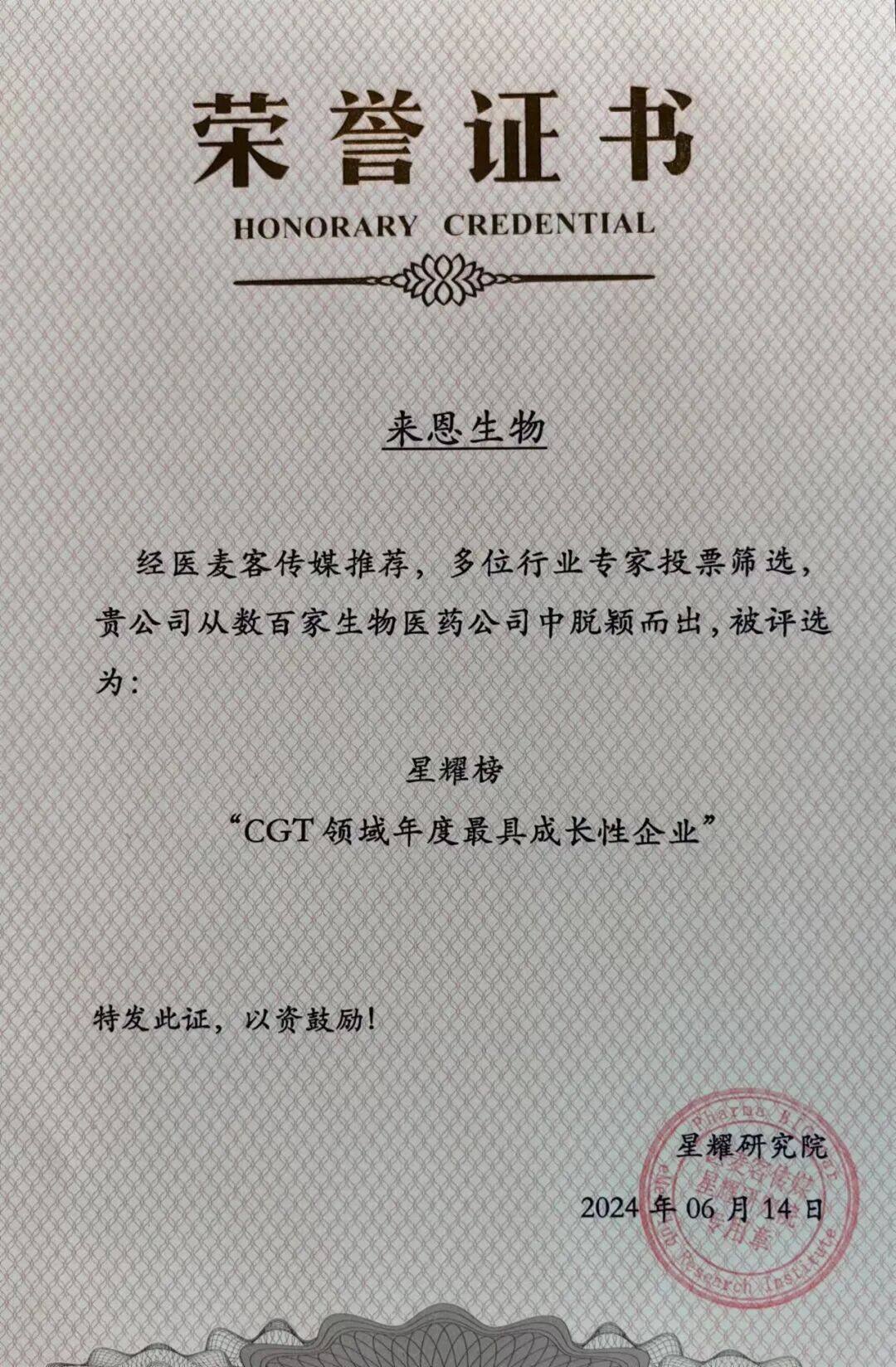
Introduction: "The 2024 IBI EXPO Biopharmaceutical Innovation Industry Conference held on June 14th"Starlight List"At the awards ceremony, Guangzhou Laien Biological Medicine Co., Ltd. was recognized for its significant progress in HBV (hepatitis B virus)-specific TCR-T cell therapy for the treatment of liver cancer."CGT Field's Most Growth-Oriented Company of the Year"The research breakthrough by Guangzhou Laien Biological Medicine Co., Ltd. not only holds significant practical importance for China, a country with a high incidence of chronic hepatitis B, but will also have a positive impact on global public health."
Hepatocellular Carcinoma (HCC) is the most common type of primary liver cancer and is associated with a high mortality rate. In China, HBV infection is the main cause of liver cancer, accounting for about 90% of cases.
In recent years, significant progress has been made in the systemic treatment of advanced hepatocellular carcinoma, with targeted therapy combined with immunotherapy gradually becoming the preferred option. Nevertheless, the progression-free survival (PFS) of these combination therapies remains relatively short, ranging from only 4.6 to 6.9 months, limiting their efficacy.Currently, there is no specific treatment method for HBV-related liver cancer available globally., we urgently need more effective treatment methods to meet the actual needs of patients and improve their quality of life.
To this end, from SingaporeLaien BioPioneered the development of the world's first T-cell receptor (TCR-T) therapy, LioCyx-M004, specifically targeting HBV antigens for the treatment of HBV-related advanced adult hepatocellular carcinoma.
T cells, as a component of the human immune system, can act like police to combat foreign pathogens or mutated and aging cells within the body. However, in cancer patients, the immune system is often weakened, leaving T cells unable to recognize or fight effectively. TCR-T cell therapy involves extracting T cells from the patient, engineering them in vitro, and equipping the T cells with TCR.“Weapon”。“Armed”After the T cells are returned to the patient's body, they act like special forces, capable of more precisely identifying cancer cells.“Enemy”, and kill them directly.HBV TCR-T can not only kill cancer cells, but also has the potential to reduce HBsAg levels (hepatitis B surface antigen, one of the clinical indicators for hepatitis virus etiological testing), thereby reducing tumor recurrence rates.
Guangzhou Laien Biological Medicine Co., Ltd.'s HBV TCR-T therapy, as an original First-in-Class cell therapy, has been granted Fast Track designation and Orphan Drug status by the U.S. FDA, fully demonstrating the FDA's high recognition of this therapy.
Recently, we invitedDr. Tingting Wang, Chief Medical Officer and Chief Operating Officer of Guangzhou Laien Biological Medicine Co., Ltd.The "Peak Guest Interview" column under MedPeer, provided us with a detailed analysis of this innovative therapy and its current application progress in the clinical treatment of advanced liver cancer.

Wang Tingting (MD, PhD)
Chief of Laien BioMedical Officer&Chief Operating Officer
Dr. Wang Tingting holds a Ph.D. in Cancer Biology from the National University of Singapore and is an industry mentor at Southern Medical University. With over 20 years of experience in the fields of biopharmaceuticals, cancer diagnosis and treatment, and translational medicine, she is a pioneer in the TCR-T and CAR-T cell therapy domains, possessing extensive experience in advancing cell therapies into clinical applications. She led the team at Guangzhou Laien Biological Medicine Co., Ltd. to successfully obtain FDA Phase 1b/2 clinical trial IND approval for HBV-specific TCR-T cell therapy for liver cancer, which was granted Fast Track designation by the FDA. At a CAR-T biotechnology company, she facilitated the successful FDA IND approval in the United States for autologous CAR-T therapy to treat lymphoma. Dr. Wang also has substantial experience in promoting medical products in the Asia-Pacific market. While at Roche Diagnostics APAC, she led the Asia-Pacific medical team in successfully promoting the application of Roche's cancer diagnostic kits across the region.
Tumor Chronic Disease Transformation
Advanced Liver Cancer Can Survive for Another Three Years
According to reports, the HBV TCR-T therapy developed by Guangzhou Laien Biological Medicine Co., Ltd. has previously undergone clinical trial treatments on multiple patients at the Fifth Medical Center of the PLA General Hospital. One patient achieved partial remission (PR) lasting 27.7 months after treatment; three patients had stable disease (SD), which was maintained for up to 9.4 months. The median overall survival (OS) of the patients was 33.1 months.
“Patients with advanced liver cancer typically have a survival period of no more than 1 year. However, after receiving Laien HBV TCR-T treatment, the median overall survival reached 33 months, significantly extending the patients' survival time."Dr. Wang Tingting introduced."
Prolonging overall survival is the gold standard pursued in clinical tumor treatment.Therefore, prolonging overall survival (OS) is the most important indicator for evaluating the efficacy of tumor drug treatments.
Dr. Wang Tingting gave an example:“Even if a drug has a 60% overall response rate, if the median overall survival is only 10 months, its effect may not be as good as a drug with a 30% overall response rate but a median overall survival of 30 months. The latter can help patients achieve longer survival time, essentially transforming the tumor into a "chronic disease" state, which brings greater significance and substantial help to both patients and their families.”
In addition, Dr. Wang Tingting particularly pointed out that in the clinical trials in Singapore, Laien Biological Medicine's HBV TCR-TIt also has a good therapeutic effect on pulmonary metastases of liver cancer, which can significantly reduce the tumor diameter and make the tumor completely disappear.This may be related to the fact that both the lungs and liver have rich vascular networks. Since T cells are transported through the blood to the sites where they function, the therapeutic effects are particularly significant for organs with ample blood supply.
mRNA Transient Transfection TCR-T
Addressing the Challenges of Liver Cancer Treatment
In the treatment of liver cancer, the tumor microenvironment (TME) and tumor heterogeneity are two major obstacles leading to treatment difficulties.
The tumor microenvironment refers to the complex interactions between tumor cells, immune cells, and fibroblasts, which are typically inhibitory to the activity and function of T cells, making it difficult for T cells to exert their tumor-killing effects. Under the influence of this suppressive tumor microenvironment, the reinfused TCR-T cells struggle to maintain long-term tumoricidal activity, as they are quickly inhibited within the TME and unable to effectively perform their anti-cancer functions.This is more prominent in liver cancer, as the liver itself has immunosuppressive properties, which further weaken effective T cell-mediated antigen responses.
Tumor heterogeneity refers to the differences in genotype and phenotype among tumor cells in different patients or in different parts of the tumor within the same patient, even if the tumor occurs in the same location. As a result, tumor cells in the same patient may express different antigens, limiting the drug's efficacy by failing to recognize all tumor cells.
Based on these bottlenecks, Guangzhou Laien Biological Medicine Co., Ltd. has taken an alternative approach, building an mRNA technology platform that applies mRNA-encoded TCR and introduces it into T cells through electroporation.This non-viral vector-dependent, mRNA-mediated transient expression characteristic makes TCR-T therapy safer.Control,Multiple reinfusions can be performed to achieve the desired therapeutic effect. In current clinical trials, patients typically receive intravenous reinfusion once every 1-2 weeks, with 8 times constituting one course of treatment. Notably, the number of cells required for one course of treatment can be obtained from a single blood draw preparation.
Dr. Wang Tingting stated: "Repeated infusions of fresh and potent mRNA-encoded TCR-T cells not only help target attacks on HBV initial antigens but also, through the mechanism of antigen spreading (similar to a chain reaction of immune activation),Enhance T-cell recognition of other tumor-associated antigens, thereby expanding the killing range of T-cells, addressing the challenge of tumor heterogeneity, and providing more comprehensive and lasting anti-cancer effects.Currently, we have already observed the antigen spreading effect induced by HBV TCR-T treatment in liver cancer patients in Singapore."
In addition, Dr. Wang Tingting also mentioned that the flexibility and transience of mRNA technology enable it to respond more quickly to tumor changes, providing dynamic and sustained therapeutic effects. Multiple infusions can continuously supplement and enhance the anti-tumor immune response of TCR-T cells, overcoming the suppressive effects of the TME.
Balancing Efficacy and Safety
Prioritize Patient Safety
Regarding common side effects in cell therapy, such as neurotoxicity and cytokine release syndrome, Dr. Wang Tingting explained: "This is often due to an overly rapid and intense treatment response. To address this issue, Guangzhou Laien Biological Medicine Co., Ltd. has adopted a 'short-acting, high-quality, multiple-dose' treatment strategy, which involves using transient short-acting TCR-T therapy and dividing the treatment process into eight injections."Each input of cells is like an elite force, capable of efficiently attacking cancer cells. Meanwhile, these cells do not remain in the body for long-term transmission, effectively reducing the occurrence of toxic side effects.”
Clinical trial data from the Fifth Medical Center of the PLA General Hospital and Singapore General Hospital show that Laien Bio's HBV TCR-T therapy has demonstrated good tolerability. During the trial, patients only experienced transient fever and a temporary increase in liver function indicators, with no observed cases of cytokine release syndrome.SymptomAnd neurotoxic side effects.
Moreover, it is worth mentioning that Laien Bio's HBV TCR-T therapy adopts electroporation transfection technology for cell modification. Compared with traditional viral transfection, this method avoids the long-term retention of viral vectors in the body and eliminates the risk of gene insertion, significantly enhancing patient safety.
No need for clear drenching
Reduce clinical risks,Increase Accessibility
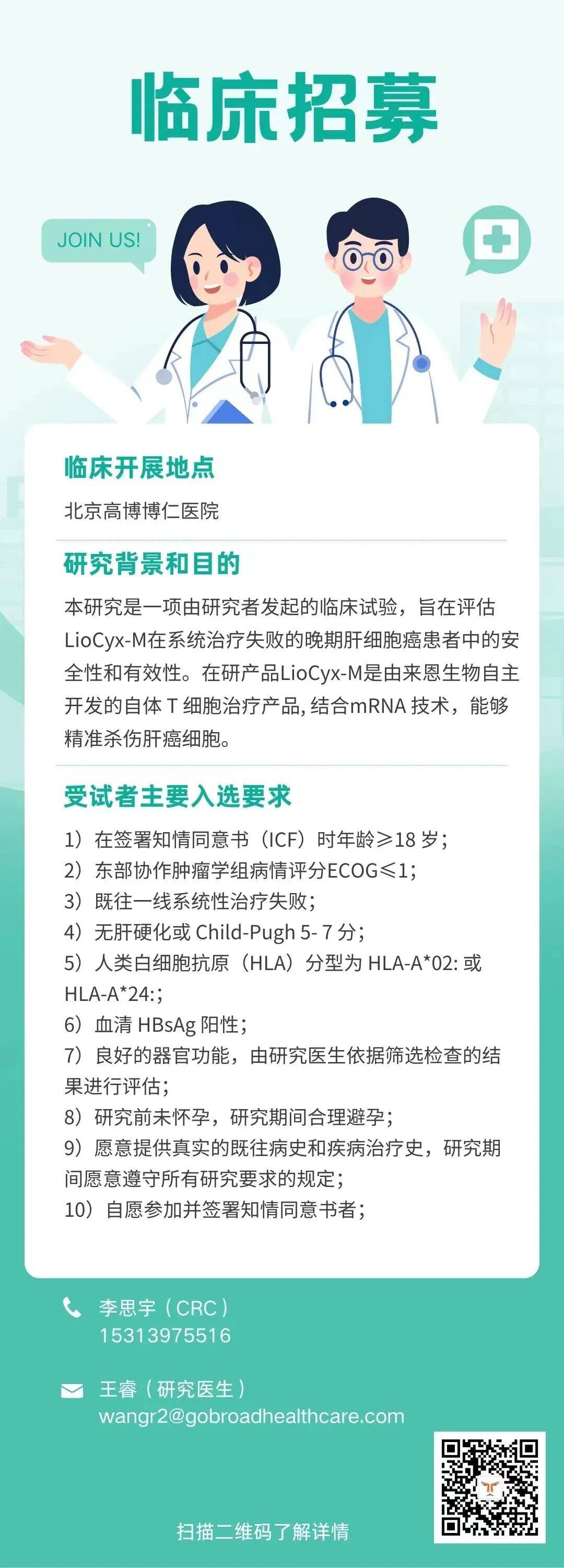
Clinical Recruitment for Advanced Hepatocellular Carcinoma
Message from Dr. Wang Tingting:
Thank you to all the patients who considered participating in our clinical trials! Your participation is the driving force behind our progress. We are not only committed to providing safe and effective treatment options, but also hope to advance medical progress through your courage and trust, bringing hope to every patient!
Liver cancer was once an insurmountable challenge, but now we stand at the forefront of groundbreaking treatments. However, to achieve even greater breakthroughs, we need your participation and support to jointly open a new chapter in liver cancer treatment!
mRNA-encoded HBV-specific TCR-T cell therapy represents the latest pinnacle of science and technology, and their combination will bring unprecedented treatment possibilities for liver cancer patients. We firmly believe that this is not only a technological innovation but also a struggle to fight for a new life for each patient.
Let us shoulder this mission together and jointly usher in a new era of liver cancer treatment!