

AI Protein Design Rising Star TianWu Tech Achieves End-to-End Industrialization Within 3 Years, Delivers 20+ Projects and Files IPO Prospectus

Matwings Technology
AI Protein Design Service Provider

GenSci
Gene Engineering Pharmaceutical and Growth Hormone Producer
In recent years, the advent of AlphaFold has ushered in an explosive growth period for "AI + biology." Interdisciplinary fields such as life sciences and digital technology have brought significant changes to people's lives. Particularly in the medical field, which has gradually become a vast application scenario for artificial intelligence, achieving unprecedented cost reduction and efficiency improvement across the entire industry chain.
As an observer in the medical industry, VCBeat has observed the tremendous potential of the AI + biology interdisciplinary field while covering and continuously tracking the biomanufacturing sector. Among them, Matwings Technology (hereinafter referred to as "Matwings Technology"), the largest AI protein design service provider in China founded in 2021 by Professor Hong Liang's team from Shanghai Jiao Tong University, has drawn VCBeat's attention.
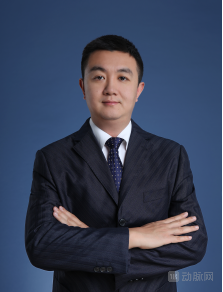
Founder and Chief Scientist of Matwings Technology, Professor Hong Liang, Image Source: Matwings Technology
Recently, Matwings Technology and Changchun GeneScience Pharmaceutical Co., Ltd. (hereinafter referred to as "GenSci") jointly announced a breakthrough in the use of AI large models to design ultra-alkali-resistant single-domain antibodies. They have increased the alkali resistance of an ordinary non-alkali-resistant single-domain antibody by four times and successfully completed the development of the world's first protein product designed by a large model that has entered 5,000-liter scale-up production and practical application.
This technology can evolve any single-domain antibody into an alkali-resistant affinity ligand that can be used industrially. It can apply affinity chromatography to the purification of any biomolecule (including GLP-1, cell and gene therapy carrier proteins, AAV viral particles, etc.), replacing the multi-step chromatography process for tag-free proteins. This addresses the challenges of high purification difficulty and low production efficiency for such molecules.
The rapid closed-loop of AI protein design,
From Research to Implementation in Less Than 3 Years
In addition to the significant cooperation with GenSci, Matwings Technology, which has been established for less than three years, has successively served several well-known enterprises in the industry, covering fields such as biopharmaceuticals, in vitro diagnostics, pharmaceutical intermediates, nutritional health, food and beverages, beauty skincare, cleaning and textiles, bioenergy, bioagriculture, and environmental engineering.
Matwings Technology's abundant achievements in the industry have gained recognition, and the company has successively received numerous honorary titles such as National High-tech Enterprise and Emerging Enterprise of Minhang District. In 2022 and 2023, it completed two rounds of financing successively, with investors including multiple industrial capital firms such as Glory Ventures, GSR United Capital, 3E Bioventures, and Xiaochi Capital.
In fact, applying AI in the field of protein design and achieving results is something that has only emerged in recent years.
Previously, using traditional methods for protein design required meeting numerous conditions. First, researchers needed to rely on their accumulated understanding and experience of protein structures over a long period, combined with complex calculations, to obtain the design sequence of the target protein. Finally, biotechnology was used to test the functionality of the expressed protein to see if it matched the design goal. This process was not only time-consuming and costly but also had a very low success rate.
"In 2020, the advent of AlphaFold greatly advanced researchers' exploration and study in the field of biology, butAlphaFold only solves the problem of protein design from sequence to structure, not the problem from structure to function. However, the success of AlphaFold has pointed the way for later entrants, confirming that using AI to empower protein design is the right direction. This is also the reason why AI + protein design has developed rapidly in recent years, because in the process of scientific research transformation, often we are not even sure if this is a viable path, and the journey ahead is full of unknowns." Professor Hong Liang told VCBeat.
Based on this, Professor Hongliang led his team to develop a general artificial intelligence for protein design in 2021, AccelProtein™, which is based on pre-training. This innovation completely breaks the industry pain points of traditional protein engineering methods, such as numerous experiments, long duration, and high costs.
From 2021 to present, Matwings Technology has helped more than 20 enterprises improve product performance, shorten R&D cycles, reduce production costs, and strengthen patent layouts based on the AI protein design general large model AccelProtein™.
This also makes Matwings Technology different from most research transformation enterprises.Generally, it takes scientists 10 years or even longer to transition from basic research to industrial application. "Matwings Technology is quite rare in that it only took two to three years to go from research to implementation."This is because the artificial intelligence track is a fast closed-loop track, and AI + protein design is a highly innovative, short closed-loop sub-track. The叠加of multiple attributes allows Matwings Technology to quickly achieve a closed loop in scientific research transformation."
"In the face of our achievements, Professor Hongliang, the company's founder and chief scientist, remarked, 'The success of a professor-turned-entrepreneur is actually an event with very low probability. The technology and capabilities that the team possesses are merely one of the crucial conditions for a company to provide services and develop products. However, compared to the comprehensive operation of a business and the realization of a commercial closed loop for products and services, these conditions are not the most important. It was only after enduring much hardship from society that I came to understand this truth.'"
It is reported that Matwings Technology's AccelProtein™ large model adopts advanced Transformer architecture and masked language model, trained on nearly one billion complex data of protein sequences from organisms across various environments.This model has mastered the complex semantic relationships between protein sequences, structures, and their functions, achieving the mapping from "sequence to function" and possessing true zero-shot prediction capability.
Using "AccelProtein™ Large Model Automatic Design + Limited Experimental Validation" can achieve the design of all types of protein sequences. Multiple protein design cases have proven that this technology not only optimizes key indicators such as protein stability, activity, and affinity to reach or even surpass world-leading levels but also significantly reduces the optimization time for protein properties from the traditional 2-5 years to just 2-6 months.
Taking the recent collaboration with GenSci as an example, in the initial design phase, the AccelProtein™ large model successfully designed more than ten single-point mutants with superior performance to the wild type in terms of alkali resistance, affinity, and thermal stability, all without any experimental data.
After this, AccelProtein™ once again demonstrated its powerful ability to capture feature predictions of multi-point mutations. Many multi-point mutations exhibited stronger alkali resistance, affinity, and thermal stability. Moreover, based on the complex epistatic effects it learned, it even designed sequences where two negative mutations combined to form a positive mutation — something traditional design methods could never achieve.
Moreover, compared with traditional rational design in protein engineering, AccelProtein™ can automatically understand epistatic effects and cleverly incorporate negative sites into mutants to make the "semantic coherence" more fluent. This is a fundamental innovation across the entire field, greatly amplifying the design capabilities and imaginative scope of protein engineering.
Ultimately, Matwings Technology took only four months, and the single-domain antibody designed by the AccelProtein™ large model was proven in the protein pilot phase: after being treated with 0.5M NaOH for 24 hours, the breakage rate decreased from 60% (wild type) before modification to 15%, which means the alkali resistance increased fourfold; its binding ability to growth hormone is twice that before modification; thermal stability increased by 8°C compared to before modification.
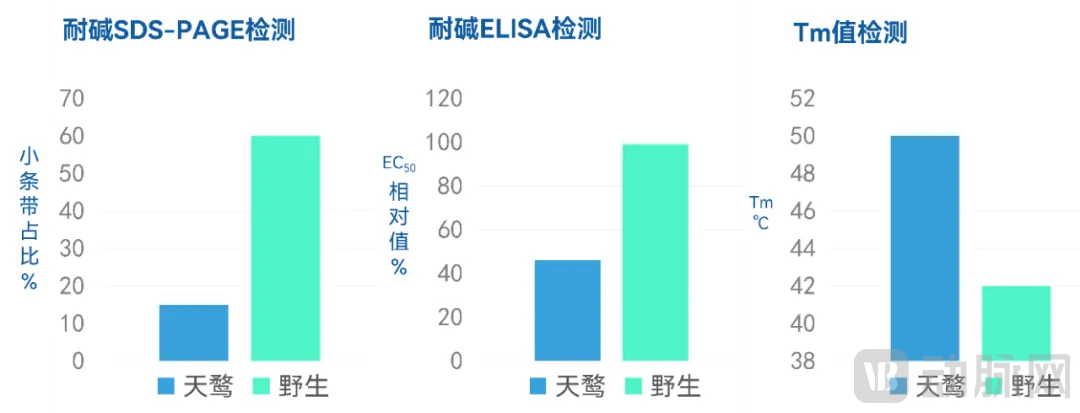
Comparison of various data between Matwings Technology-designed antibodies and wild-type antibodies, image source: Matwings Technology
More notably, compared to Protein A, the currently industry-recognized affinity ligand base protein that is truly alkali-resistant, which took researchers nearly 10 years to make industrially viable but is still only suitable for antibodies, Matwings Technology managed to enhance the alkali resistance of an ordinary non-alkali-resistant single-domain antibody fourfold in less than a year and applied it in a 5,000-liter scale-up production. This marks the maturity of customized development of highly alkali-resistant affinity chromatography technology through AI large models.
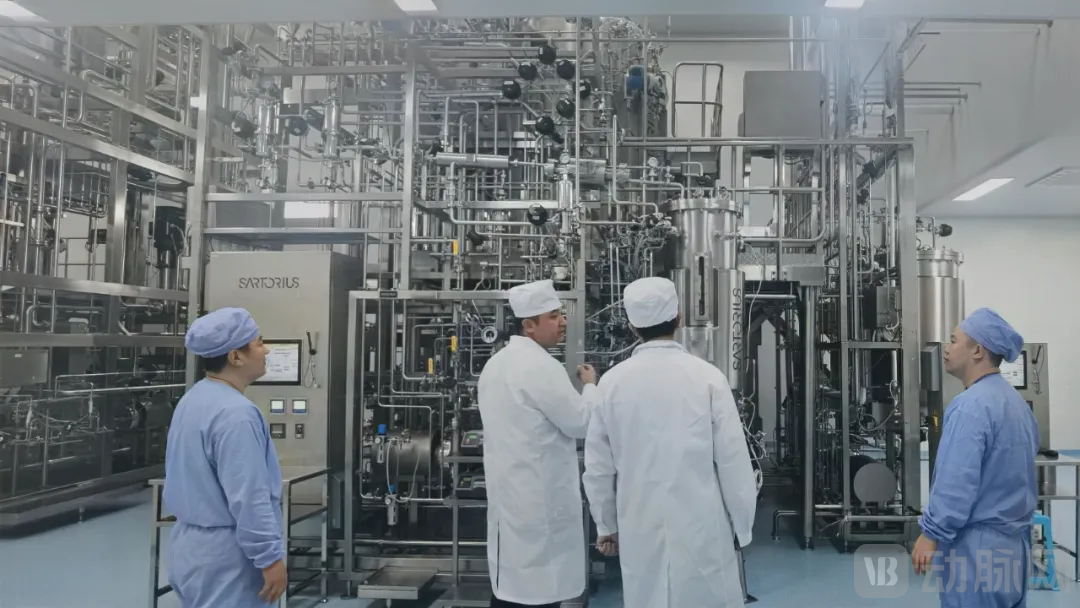
Scale up the production process, image source: Matwings Technology
This technology can evolve any single-domain antibody into an alkali-resistant affinity ligand that is industrially usable. It can be applied to the purification of any biomolecule, such as GLP-1, cell and gene therapy carrier proteins, and AAV viral particles, using affinity chromatography to replace the multi-step chromatography process for tag-free proteins. This addresses the high difficulty and low production efficiency in purifying such molecules, representing a groundbreaking technological innovation in downstream processes on a global scale.
Using the biopharmaceutical track as an entry point,
Layout of the Entire Biomanufacturing Industry Chain
In fact, the applications of protein design engineering go far beyond designing antibodies. Based on the general large model AccelProtein™ for protein design, it can be applied in pharmaceutical fields such as antibody therapy, vaccine prevention, in vitro diagnostics, cell therapy, and gene therapy, as well as in synthetic biology areas like nutritional health, food and beverage, beauty skincare, cleaning and textiles, and bio-agriculture.
When asked why the medical track, which has high barriers, long cycles, and great risks, was chosen as the industrialization entry point for AI protein design applications, Professor Hongliang jokingly described Matwings Technology as "a rabbit that likes to eat the grass around its burrow."
The fact is that Professor Hongliang has been deeply engaged in AI + biology research for many years and has extensive research experience in the field of AI protein design. During his Ph.D. studies, he conducted mechanistic research on protein biophysics at the Department of Polymer Science at the University of Akron in the United States. After completing his postdoctoral research at Oak Ridge National Laboratory in the U.S., Dr. Hongliang came to Shanghai Jiao Tong University, where he leads a team combining experimental and computational biology methods to continue studying the properties of proteins.
Professor Hongliang explained, "The previous scientific research characteristics allowedThe team has accumulated rich experience and resources in the pharmaceuticals and in-vitro diagnostics fields. Therefore, Matwings Technology naturally entered the biopharmaceuticals track at its inception, enabling its technology, products, and services to quickly achieve closed-loop validation. Additionally, AccelProtein™ is versatile at the molecular design level. The protein mutants generated based on this large model show significant improvements in activity, stability, selectivity, and specificity compared to natural wild types, making them suitable for various niche scenarios in the biomanufacturing field.
Therefore, when it comes to future development, Professor Hongliang stated,Whether targeting which application scenario, Matwings Technology aims at the incremental market uncovered by AI-driven protein engineering, rather than the competitive existing market or an immature, unrealistic market.
In order to meet the upcoming high-speed development, Matwings Technology is initiating a new round of financing to strengthen the platform's construction capabilities, industrialization capabilities, and independently explore and collaborate on more valuable projects. It is expected that Matwings Technology, based on its AI protein design platform, will empower the industry and bring more cost-effective products and services to the field of biomanufacturing.