SangeneBio's Class 1 New Drug SGB-9768, Targeting Complement C3, Receives IND Approval in China for Complement-Mediated Kidney Diseases

SANEGENEBIO
Small Nucleic Acid Drug Developer
On June 24, according to the CDE official website, SANEGENEBIO's Class 1 new drug SGB-9768 injection received clinical trial tacit approval. The indication is for complement-mediated kidney diseases, including adult IgA nephropathy, C3 glomerulopathy, and immune complex-mediated membranoproliferative glomerulonephritis. Public data shows that this drug is an RNAi therapy targeting the complement C3 protein.

Source of the image: CDE official website
Targeting Complement C3
Overseas Clinical Trials Initiated
The complement system is an important component of innate immunity, with the main function of eliminating invading pathogens through cytolysis, phagocytosis, and mediating inflammatory responses, playing a crucial immune and physiological role in the human body. Studies show that the complement system consists of more than 30 components, widely present in serum, tissue fluid, and on cell membrane surfaces. Among these components, complement C3 has the highest concentration and is a key substance in both the classical and alternative pathways.
Elevated or decreased levels of C3 are commonly seen in kidney diseases such as glomerulonephritis and lupus nephritis, liver conditions like hepatitis and cirrhosis, as well as various autoimmune disorders. Drugs targeting the C3 protein hold promise for curing a range of diseases; however, there are currently very few approved medications, and significant clinical needs remain unmet in this field.
SGB-9768 is a siRNA-GalNAc conjugate targeting complement C3 developed by SANEGENEBIO, which has the advantages of low treatment frequency, good patient compliance, and long-lasting efficacy. It was approved to initiate Phase I clinical trials in New Zealand this February.
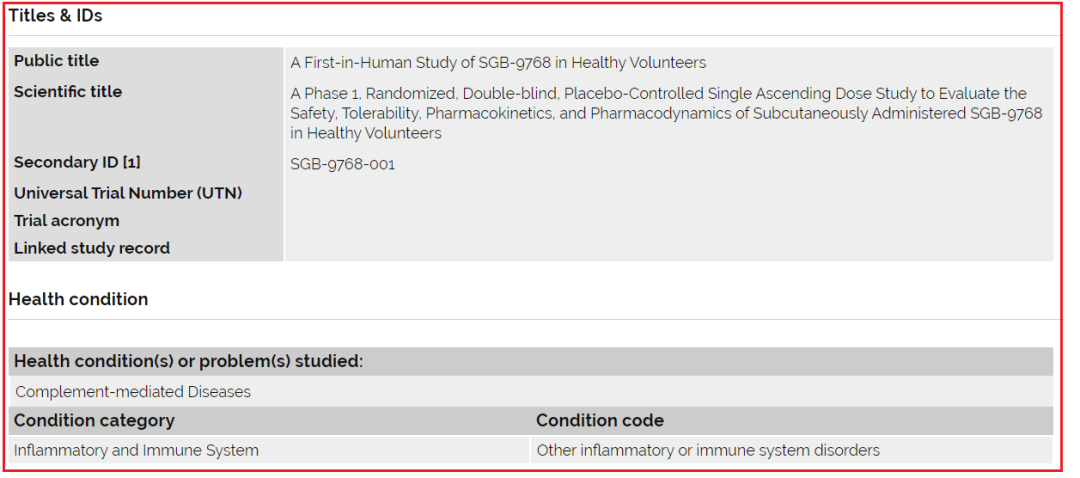
Image Source: anzctr.org.au
According to SANEGENEBIO, in preclinical studies, SGB-9768 effectively and sustainably reduced C3 production, showing the potential to become a best-in-class drug. Following the recent approval for clinical trial by default, SANEGENEBIO is expected to initiate further research on SGB-9768 in China.
Focus on Small Nucleic Acids
PCSK9、AGT…
SANEGENEBIO focuses on the development of small nucleic acid drugs and has currently laid out a series of small nucleic acid projects, covering therapeutic areas such as cardiovascular and cerebrovascular diseases, metabolic disorders, immune-related diseases, and neurological disorders.
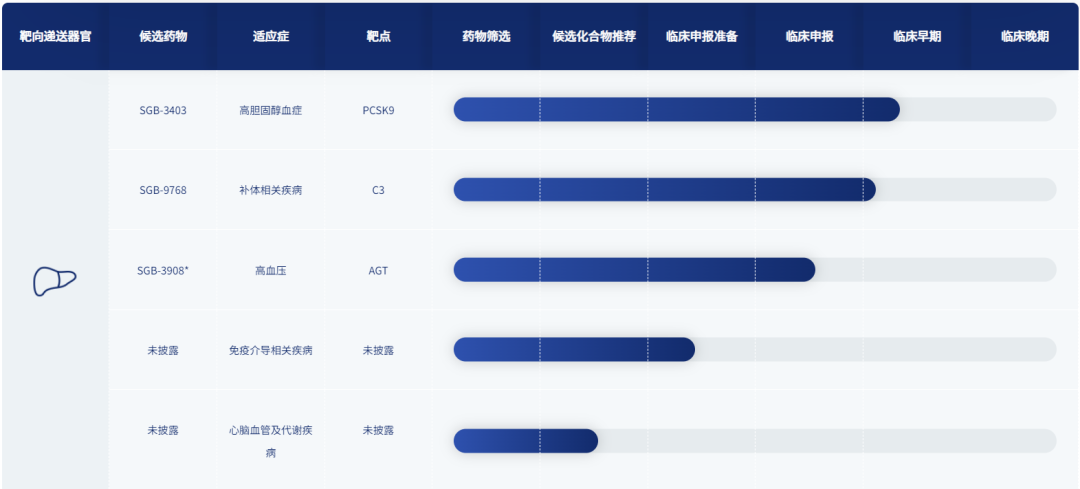
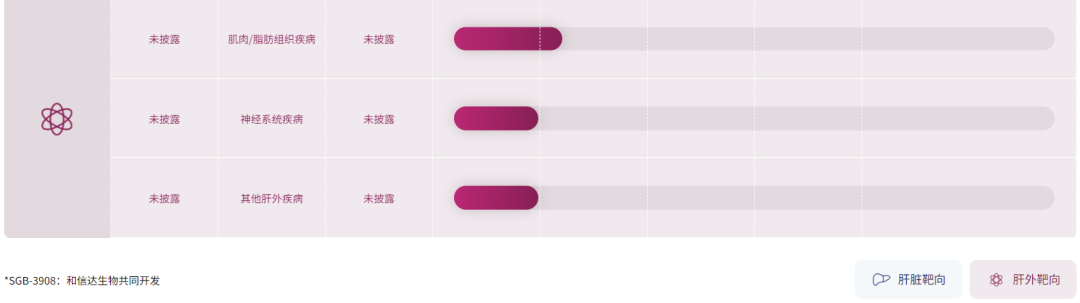
Image Source: SANEGENEBIO
SGB-3403
SGB-3403 is a siRNA-GalNAc conjugate targeting PCSK9 in hepatocytes, which has demonstrated good safety and tolerability in preclinical trials. It also showed superior efficacy compared to reference products in multiple preclinical animal disease models (including hyperlipidemic cynomolgus monkey models). In January this year, SANEGENEBIO initiated a Phase I clinical trial in China to evaluate the safety, tolerability, pharmacokinetic characteristics, and pharmacodynamic features of SGB-3403 in healthy subjects and subjects with elevated low-density lipoprotein cholesterol (LDL-C).
SGB-3908
SGB-3908 is an siRNA drug developed by SANEGENEBIO based on its proprietary small nucleic acid drug development platform LEAD™. It is currently co-developed by Innovent Biologics and SANEGENEBIO. According to publicly available data, SGB-3908 demonstrated a significant blood pressure-lowering effect in hypertensive cynomolgus monkeys during preclinical studies, with no safety issues such as hypotension observed. On May 1, 2024, the clinical trial application for SGB-3908 was accepted by the CDE.
In addition, SANEGENEBIO has several undisclosed projects in its pipeline, including liver-targeted and extrahepatic-targeted programs, with indications covering immune-mediated diseases, cardiovascular and metabolic diseases, muscle/adipose tissue disorders, and neurological diseases.
Conclusion
RNAi Therapy: One of the Hottest Emerging Treatments Today Continues to Overcome Obstacles Posed by High Charge and Poor Cell Membrane Penetration. SANEGENEBIO has previously reported that its self-developed RNAi therapy has achieved efficient, long-lasting, and specific silencing of target genes in different tissues. The innovative technology of its proprietary LEAD™ platform is expected to target multiple extrahepatic disease treatment sites, fully unlocking the potential applications of RNAi technology and addressing unmet medical needs in various disease areas.

Editor: Muyan
Disclaimer: The views expressed in this article represent the author's personal opinions and do not reflect the position of PharmNet. We welcome discussions and additional insights in the comment section; for reprints, please be sure to credit the author and source. If the content, copyright, or other issues are involved, please leave a message on this platform, and we will address it promptly.