

Epkinly Receives FDA Accelerated Approval for Relapsed or Refractory Follicular Lymphoma with 60% Complete Response Rate

Genmab
Differentiated Antibody Therapy Developer

AbbVie
Innovative Drug Developer
▎WuXiEdited by Kant Content Team
Recently, AbbVie and Genmab jointly announced that the U.S. FDA has granted accelerated approval to their bispecific antibody therapy, Epkinly (epcoritamab), for the treatment of adult patients with relapsed or refractory (R/R) follicular lymphoma (FL) who have previously received two or more lines of systemic therapy. According to the press release,Epkinly is the first subcutaneously injected T-cell engaging bispecific antibody approved by the FDA for the treatment of this patient population.In addition,Epkinly is also the first bispecific antibody approved by the FDA for the treatment of R/R FL and R/R diffuse large B-cell lymphoma (DLBCL) patients who have received more than two lines of therapy.It is worth mentioning that,This innovative therapy was also listed by the industry media Evalute as one of the highlights of 2023.Top 10 Potential Blockbuster TherapiesOne of.

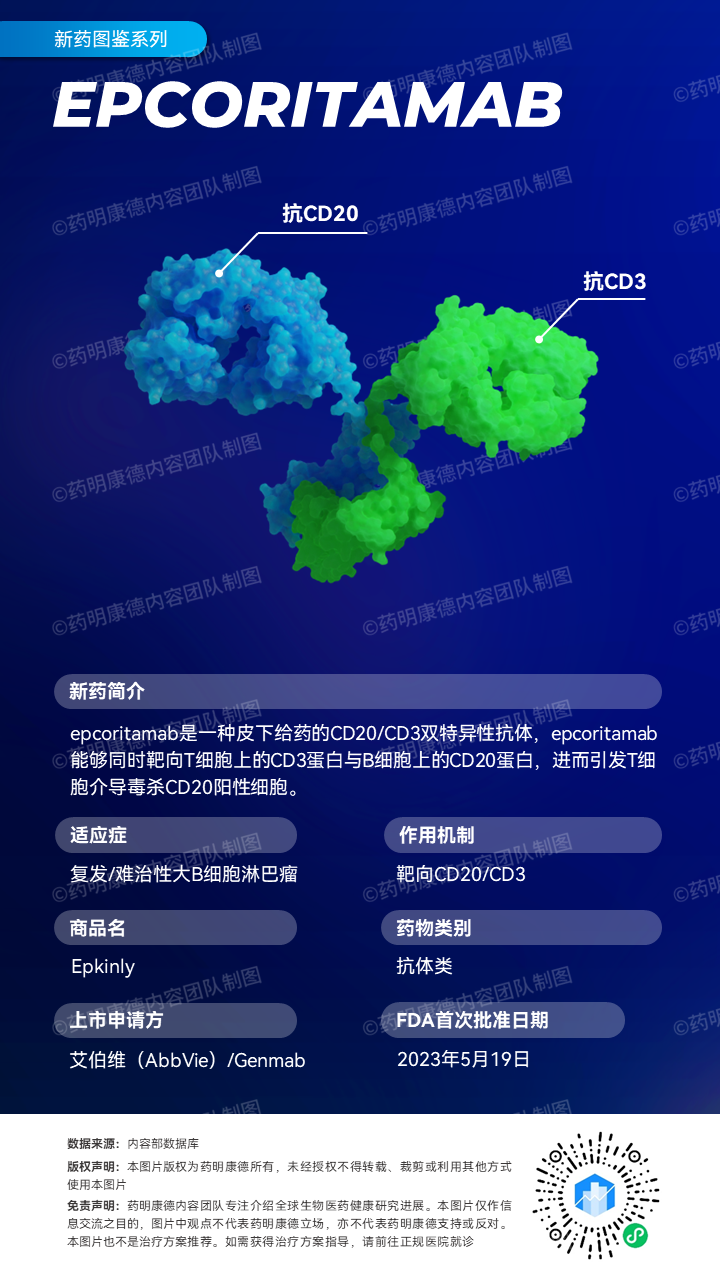
The analysis shows,The overall response rate (ORR) was 82%, with a complete response rate (CR) of 60%, including 67% of patients achieving minimal residual disease (MRD) negativity.Moreover, at the time of data analysis (i.e., median follow-up of 14.8 months), more than half of the patients who achieved response were still in ongoing response, and the median duration of response (DoR) has not yet been reached. These results were recently published in a subsidiary journal of The Lancet.Lancet HaematologyIn China.
Common treatment-emergent adverse events (≥20%) in the FL cohort of the trial included injection site reactions, cytokine release syndrome (CRS), COVID-19, fatigue, upper respiratory tract infections, musculoskeletal pain, rash, diarrhea, fever, cough, and headache.
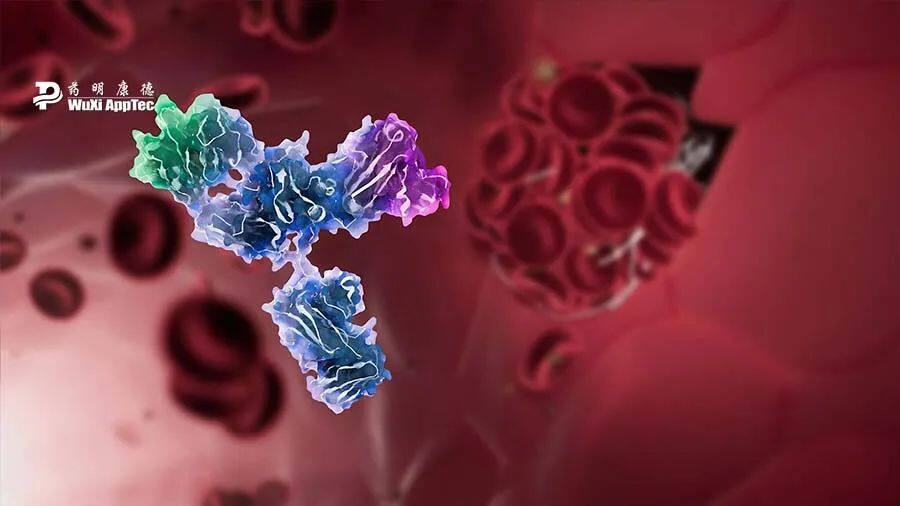
EpkinlyIt is a subcutaneous administration, IgG1 subtype bispecific antibody constructed based on Genmab's proprietary DuoBody technology.Genmab's DuoBody-CD3 technology is designed to selectively direct cytotoxic T cells to generate an immune response toward target cell types. It simultaneously binds to CD3 on T cells and CD20 on B cells, inducing T cell-mediated killing of CD20-positive cells.EpkinlyIn May last year, it was the first time to obtain the approval from the U.S. FDAApproval, for the treatment of R/R DLBCL.
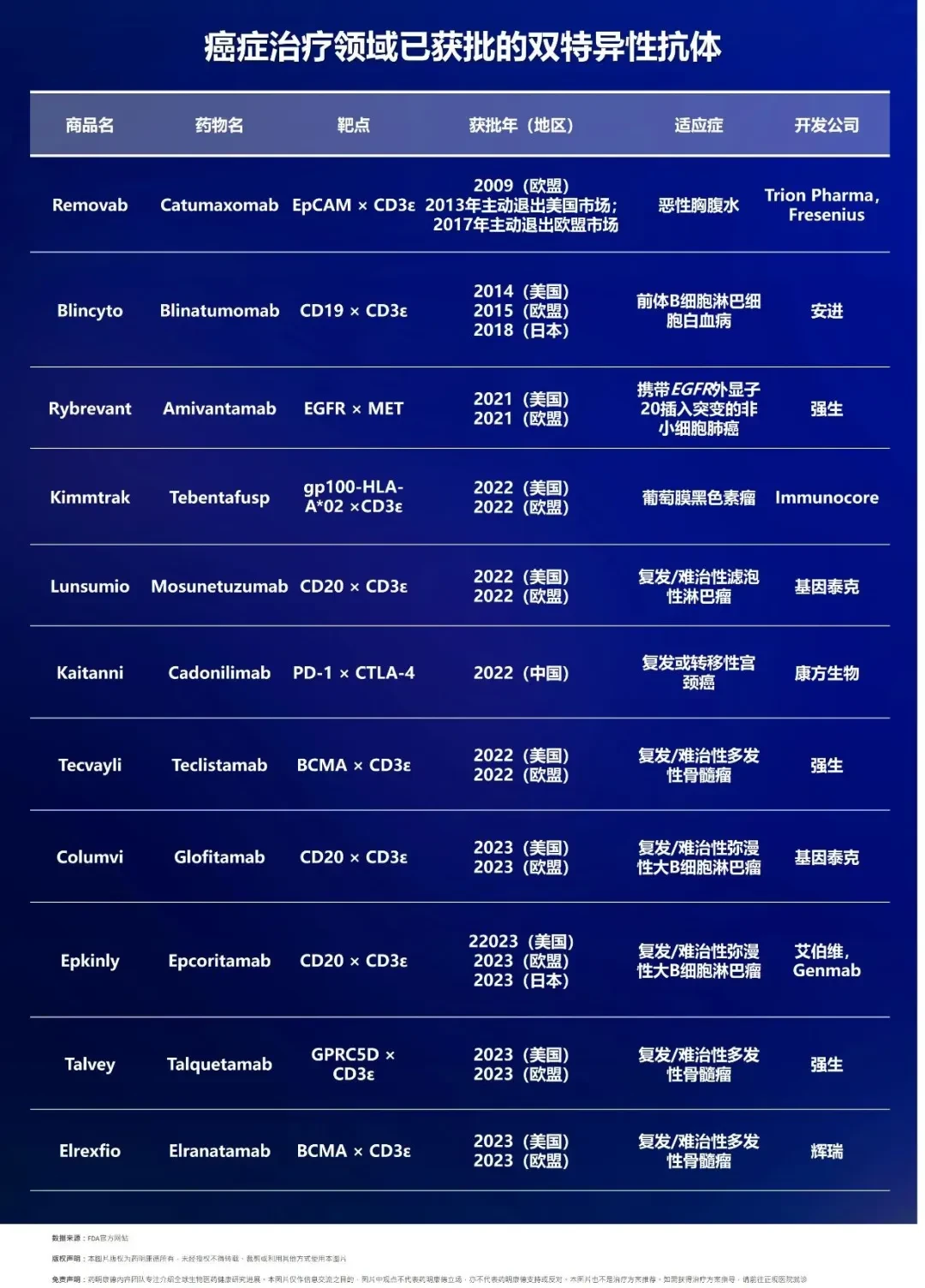
In recent years,Bispecific antibodies have garnered widespread attention in the pharmaceutical field, particularly in cancer treatment, where this therapeutic approach has made remarkable progress. Between 2021 and 2023 alone, nine bispecific antibodies were approved for cancer treatment.The key to its success lies in the fact that this therapy can simultaneously leverage multiple mechanisms of action, offering therapeutic potential that surpasses traditional monoclonal antibodies.
According to statistics,Currently, more than 200 bispecific antibodies are being evaluated in over 300 clinical trials, with approximately 73% of the trials targeting solid tumors and the remaining 27% aimed at treating hematologic malignancies.It is worth mentioning that,Currently, approximately 50% of bispecific antibodies in clinical development have entered late-stage (Phase 2 and Phase 3) or have already been approved.In terms of mechanism of action, bispecific antibodies for the treatment of solid tumors are mainly immunomodulators, including bispecific immune checkpoint inhibitors (CPIs, approximately 45%) and bispecific T-cell engagers (TCEs,Approximately 33%), followed by bispecific antibodies targeting dual signaling pathways, Immune Cell Engagers (ICEs), and Antibody-Drug Conjugates (ADCs). In the treatment of hematologic malignancies, TCEs dominate (approximately 75%), followed by ICEs, dual CPIs, and Natural Killer Cell Engagers (NKCEs).

▲To learn more about the application of cutting-edge technologies in the biopharmaceutical industry, please long press and scan the QR code above to access "WuXi Live Studio" and watch live discussions and exciting replays on related topics.
References:
[1] EPKINLY® (epcoritamab-bysp) Approved by U.S. FDA for Patients with Relapsed or Refractory (R/R) Follicular Lymphoma (FL). Retrieved June 27, 2024 from https://www.businesswire.com/news/home/20240626204925/en
[2] Klein, C., Brinkmann, U., Reichert, J.M. et al. The present and future of bispecific antibodies for cancer therapy. Nat Rev Drug Discov (2024). https://doi.org/10.1038/s41573-024-00896-6
Disclaimer: The content team of WuXi AppTec focuses on introducing the research progress in global biopharmaceuticals and health. This article is for information exchange purposes only, and the views expressed in the article do not represent the position of WuXi AppTec, nor does it indicate that WuXi AppTec supports or opposes these views. This article is not a recommendation for treatment plans. For guidance on treatment options, please visit a正规 hospital.
Copyright Statement: This article is from the WuXi AppTec content team. Individuals are welcome to share it on their social media platforms, but unauthorized reproduction by media or institutions in any form to other platforms is prohibited. For authorization to reproduce, please reply with "reprint" on the "WuXi AppTec" WeChat Official Account to obtain reprint guidelines.


Share,PointLike,In viewFocusing on Global Biomedical Health Innovation