On June 26, the Advisory Committee on Immunization Practices (ACIP) of the U.S. Centers for Disease Control and Prevention (CDC) revised its recommendations for Respiratory Syncytial Virus (RSV) vaccination. The committee unanimously voted to recommend that adults aged 75 and older, as well as those aged 60 to 74 at higher risk of severe illness due to underlying medical conditions, receive a single lifetime dose of the vaccine.Previously, adults aged 60 and above could receive the RSV vaccine after consulting with their healthcare provider. Now, adults aged 75 and above are automatically recommended to receive the RSV vaccine without evaluation; however, there are restrictions for those aged 60 to 74.Studies suggest a potential link between existing RSV vaccines and the rare neurological condition Guillain-Barré Syndrome (GBS). A preliminary statistical analysis found that 23 cases of GBS occurred among approximately 9.5 million elderly individuals who received the RSV vaccine. As a result, ACIP revised its stance on low-risk RSV populations, narrowing the scope of its RSV vaccination recommendations.The new policy may put all three currently marketed vaccines at risk of a shrinking market. On the day the policy was announced, the stock prices of the three RSV vaccine companies fell, with GSK dropping nearly 4%, Pfizer falling about 2.3%.Moderna Falls About 11%。
Source: Xueqiu
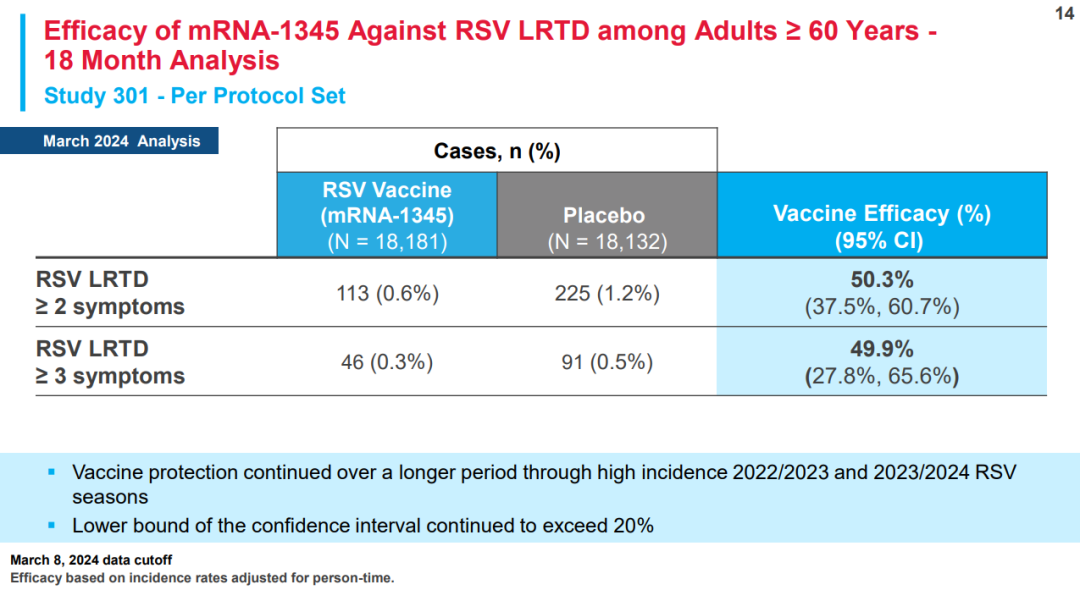
One month ago (May 31), the FDA approved Moderna's RSV vaccine mRNA-1345 (brand name mRESVIA) for the protection of adults aged 60 and above from lower respiratory tract diseases caused by RSV infection. mRESVIA is Moderna’s second commercialized product and the world’s first approved mRNA RSV vaccine.The phase III clinical trial ConquerRSV data for mRNA-1345 showed that, with a median follow-up time of 3.7 months, the protective efficacy of mRNA-1345 against RSV-LRTD with two or more symptoms was 83.7%, and the protective efficacy against RSV-LRTD with three or more symptoms was 82.4%.In the RSV vaccine race, products from GSK and Pfizer were successively approved by the FDA in May 2023. The approval of mRNA-1345 signifies a shift in the global RSV vaccine landscape, with Moderna set to compete directly against GSK and Pfizer in the RSV market.Although the latecomer mRESVIA has its own advantages: on the one hand, mRNA-1345 is the only single-dose "pre-filled syringe" vaccine on the market, making it more convenient to use; on the other hand, mRNA-1345 has a short R&D cycle and low cost. In August 2021, the drug received Fast Track designation from the FDA, and Phase I clinical data was published in 2022. It took only about five years from development to market.But in terms of market competition, GSK and Pfizer have the first-mover advantage, and Moderna's commercialization capabilities cannot compare with the two established pharma companies.So Moderna is bound to face a tough battle to catch up with GSK and Pfizer's two established products.But the latest Phase II/III data (NCT05127434) of mRNA-1345 released by the CDC on June 26 indicates that this battle appears to be even more difficult.This latest clinical data shows that the effectiveness of mRNA-1345 has sharply declined. With a median follow-up time of 18.8 months, its protective efficacy against RSV-LRTD with two or more symptoms was 50.3%, and for RSV-LRTD with three or more symptoms, it was 49.9%, far inferior to competitors GSK and Pfizer.Latest Clinical Efficacy Data of mRNA-1345 (Source: CDC Official Website)[1])Moderna stated, "Immunity to RSV from the vaccine is not lifelong. Like all currently approved RSV vaccines, mRESVIA has shown a gradual decline in effectiveness over time."References:[1]https://www.cdc.gov/vaccines/acip/meetings/downloads/slides-2024-06-26-28/04-RSV-Adult-Das-508.pdf[2]https://www.fiercepharma.com/pharma/cdc-immunization-committee-votes-shrink-recommended-age-group-rsv-vaccination