On June 25, Roche announced that the European Commission has granted Ocrevus (ocrelizumab injection) subcutaneous injection formulation (SC) marketing authorization for the treatment of relapsing multiple sclerosis (RMS) and primary progressive multiple sclerosis (PPMS).
Ocrevus® SC is a twice-a-year injection, with each administration taking only 10 minutes, which almost completely suppresses clinical relapses and brain lesions. It has revolutionized the treatment landscape of multiple sclerosis, becoming the first approved anti-CD20 therapy.Moreover, long-term follow-up data further confirms the efficacy of Ocrevus. In the 48-week magnetic resonance imaging (MRI) assessment, the annual relapse rate was only 0.04, and the vast majority of patients did not show new or expanding lesions. These results fully demonstrate the superiority and potential of Ocrevus in treating multiple sclerosis.
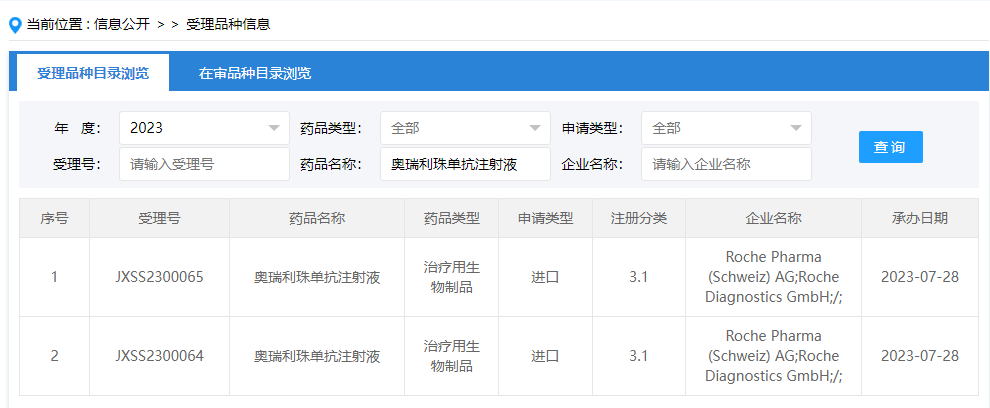
More encouragingly, after receiving Ocrevus treatment, patients not only experienced disease control but also significant improvement in their quality of life. In patient-reported outcome measures, the vast majority expressed satisfaction or high satisfaction with the treatment results, while also finding the treatment process convenient and easy to accept.As early as March 2017, the U.S. Food and Drug Administration (FDA) approved Ocrevus for the treatment of relapsing-remitting multiple sclerosis (RRMS) and primary progressive multiple sclerosis (PPMS).Ocrelizumab is available in the form of intravenous infusion, administered once every 6 months. The initial dose is 300 mg intravenous infusion, followed by a second 300 mg intravenous infusion two weeks later. Subsequent doses are single 600 mg intravenous infusions every 6 months.The drug's sales in Q1 2024 were approximately 1.66 billion Swiss francs, an 8% increase year-over-year; with the approval of injectable Ocrelizumab, sales are expected to grow significantly by over 2 billion US dollars.Figure: Roche Q1 Earnings ReportMultiple Sclerosis (MS) is an immune-mediated, chronic, and disabling inflammatory demyelinating disease of the central nervous system, often affecting the periventricular area, near-cortex, optic nerve, spinal cord, brainstem, and cerebellum. The clinical manifestations of MS are diverse and related to the functions governed by the affected nerves. Common symptoms include decreased vision, diplopia, limb sensory disturbances, limb motor dysfunction, ataxia, and bladder or rectal dysfunction. Due to the gradual stiffening of their bodies, patients are referred to as "puppet people."On July 28, 2023, Roche's import application for Ocrevus was accepted by the CDE in China. The application for market approval in China is for the intravenous injection formulation.Figure: CDE Official Website
Source| Rare Disease Information Network
Rare Neurological Diseases Communication Group

↓Click below "Read the original text", DownloadMedSci Medical APP!