Source of the article: Heart Future; Editor: Bai Xiaofei
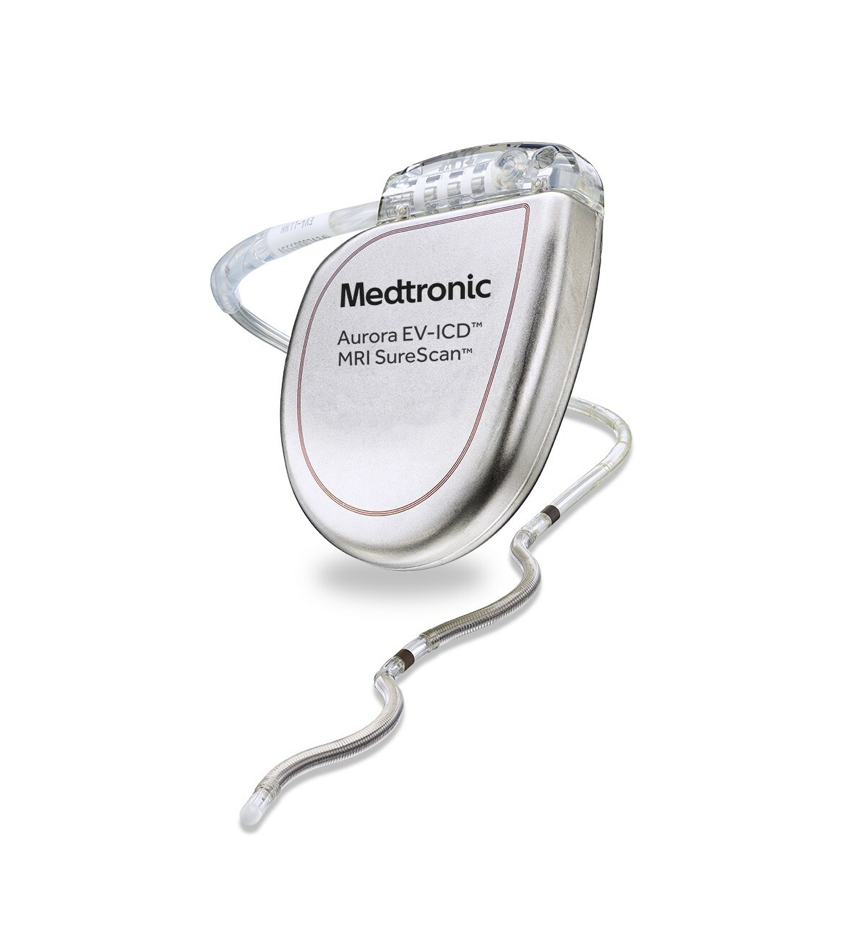
Reprint Requirements: If the source of the article is indicated at the beginning of the text, it can be reprinted directly.Recently,Medtronic(NYSE:MDT)Innovative DevicesSubcutaneous Implantable Cardioverter Defibrillator Aurora EV-ICD™ InBoao Lecheng International Medical Tourism Pilot ZoneRuijin Hainan HospitalCompleted the First Application in China。This surgery was performed byThe First Affiliated Hospital of Xinjiang Medical UniversityLed by the expert team from the Cardiac Pacing Electrophysiology Department and the Cardiac Surgery Department,Ruijin Hospital Affiliated to Shanghai Jiao Tong University School of MedicineProfessor Wu Liqun's team, the expert team from Christchurch Hospital in New Zealand, andRuijin Hainan HospitalSupport from Cardiology, Anesthesiology, and Operating Room DepartmentsCooperate to complete。This Extravascular Implantable Cardioverter DefibrillatorAurora EV-ICD™ isThe World's FirstExtravascular ICD Capable of Providing Complete Defibrillation, Cardioversion, and Anti-Tachycardia Pacing Therapy, inObtained in August 2023EU CE Certification, obtained in October of the same yearFDA Certification in the United States, which is the latest implantable defibrillator technology globally.Unlike traditional ICDs,Aurora EV-ICD™Implanted under the patient's left armpit, without entering the cardiovascular system,Can reduce the risk of vascular occlusion and blood infection, significantly improving safety.。Thanks to the "pilot program" policy,EV-ICD First Launched in Lucheng Pilot Zone, Bringing Innovative Therapies to Chinese Patients in Sync with Global Standards。
The patient is a 61-year-old male who was diagnosed with coronary heart disease and had three stents implanted a year ago. Upon admission, echocardiography showed an EF of 31%.Dynamic Electrocardiogram Shows:Ventricular Premature Beats in Bigeminy, Short-Run Ventricular Tachycardia. Diagnosed with ischemic cardiomyopathy, the patient is at high risk for sudden cardiac death. Preoperative imaging evaluation of the patient's anatomySuitable for EV-ICD implantation。 Before the surgery, Professor Tang Baopeng from the First Affiliated Hospital of Xinjiang Medical University and the surgical team fully communicated with the patient and their family. At the same time, they conducted thorough and detailed case discussions and surgical operation reviews multiple times with experts from both within and outside China, as well as the anesthesia and medical care teams. During the surgery, the internal medicine and surgical teams collaborated closely.The EV-ICD implantation procedure went smoothly.The electrode under the sternum is stable, electrical parameters are normal, and defibrillation test passed.The patient was transferred back to the general ward the next day, with all parameters optimized and good recovery.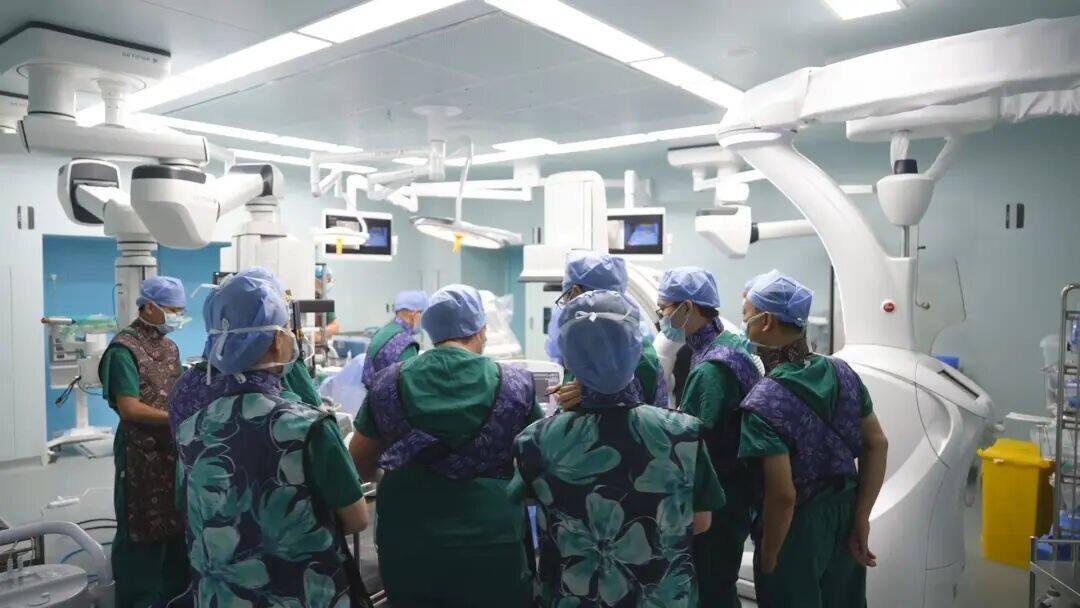
▲Source: Xinjiang Medical University
It is worth noting that, currentlySeveral provinces in China have carried out bulk procurement of pacemakers, including ICDs.Taking Guangdong Province as an example, through centralized procurement, the price of ICDs has decreased from an average of 85,500 yuan to 20,400 yuan, saving patients 65,100 yuan per device in consumable costs.A significant drop in price will also boost product sales and penetration rates., bringing new vitality to China's ICD market.# Aurora EV-ICD DefibrillatorAurora EV-ICD is aNon-Vascular ICD, aimed at treating dangerous rapid heart rhythms that could lead to sudden cardiac arrest (SCA), whileAvoid Certain Risks of Traditional Transvenous ICDs。Traditional transvenous ICDs typically implant the pulse generator between the pectoralis major and pectoralis minor muscles, with leads entering the right ventricle of the heart via the subclavian vein to detect electrocardiographic signals and identify arrhythmias.AndThe pulse generator of the EV-ICD is implanted inSubcutaneously near the mid-axillary line, the defibrillation lead is implanted below the sternum and outside the heart and veins.,Minimizes certain complications associated with transvenous leads, such as vascular injury and vascular occlusion (vein narrowing, blockage, or compression), represents a major innovative breakthrough in the field of ICD technology.Aurora EV-ICD consists of a defibrillator and leads.Size comparable to traditional defibrillators (33 cubic centimeters). In addition to having functions similar to traditional ICDs (defibrillation, anti-tachycardia pacing, etc.), this defibrillator...Similar to traditional ICDs in terms of shape and longevity.。The defibrillatorCan deliver up to 40 joules of current(Bibo KeEmblem S-ICDhalf the size), and is equipped with sensing and pacing circuits designed for substernal treatment. Aurora EV-ICDThe lead is ε-shaped.,With 2 pacing/sensing electrodes and 2 defibrillation coil segments (each 4 cm), for the purpose of defibrillationBound together to form an 8 cm overall defibrillation coil。Aurora EV-ICD in ChinaThree sensing and three pacing vectors are available.The sensing vector includes the near-field vector between two ring electrodes and two far-field sensing vectors from each ring electrode to the ICD device. The pacing vector includes the ring-to-ring vector, coil-to-coil vector, and the vector from the distal ring to the proximal coil segment.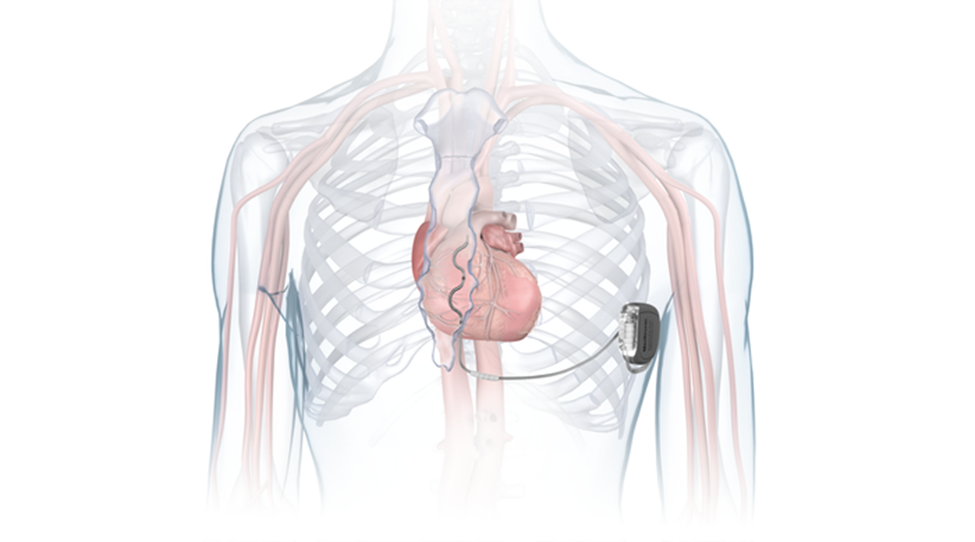 The Aurora EV-ICD system has the functions of Medtronic's transvenous ICD andHas other advantages that subcutaneous ICD does not possess, including:
- Anti-Tachycardia Pacing (ATP), using low-energy pacing pulses to terminate ventricular arrhythmias (rapid and/or chaotic heart activity that can lead to SCA), thus potentially avoiding defibrillation shocks.
- Pause Prevention Pacing, for Brief, Intermittent Cardiac ArrestProvide Backup Pacing。
- 40 Joules Defibrillation Energy, delivering life-saving shocks in a device comparable in size to a transvenous ICD (33 cubic centimeters).
- MedtronicExclusive PhysioCurve™ Design, improved patient comfort and implant acceptance.
- The expected lifespan is 11.7 years., which can reduce the number of device replacement procedures a patient undergoes in their lifetime and alleviate the cost of treatment.
# Clinical Trial Results
EV ICD Pivotal Study is a prospective, multicenter, single-arm, non-randomized, pre-market clinical study evaluating MedtronicSafety and Efficacy of EV ICD in Patients at Risk of Sudden Cardiac Death。
EV ICD Pivotal Study Enrolls 356 Patients at 46 Centers Across 17 Countries Globally
EV ICD Pivotal Study Results:- EV ICD Defibrillation Therapy Effectiveness is 98.7%(298 out of 302 patients), exceeding the predetermined goal of 88%,Indicates that the defibrillation efficacy of EV ICD is higher than that of previous transvenous ICD studies.。
- All spontaneous arrhythmias were successfully treated (18/18, 100%).。
- The Efficacy of ATP(ATP interrupts and terminates dangerous rhythms by regulating heart rate through rapid pacing, avoiding defibrillation shocks)Comparable to the ATP efficacy in transvenous defibrillatorsA total of 33 shocks were avoided through machine-initiated ATP therapy.
- At 6 months,92.6% of patients(Kaplan-Meier Estimate)No major complications related to the product and surgery occurred., without significant perioperative complications.
Medtronic (Medtronic, NYSE: MDT) was founded in 1949, with its headquarters in Minneapolis, Minnesota, USA. It is a global leading medical technology company, employing over 95,000 people.
Medtronic's innovative solutions have expanded to more than 70 key disease areas, committed to providing lifelong treatment options for patients with chronic conditions. Every second, two patients worldwide benefit from Medtronic's medical technologies or therapies.Medtronic's main businesses includeCardiovascular, Medical Surgery, Neuroscience, and DiabetesFour business blocks, includingCardiovascular accounts for the highest proportion。
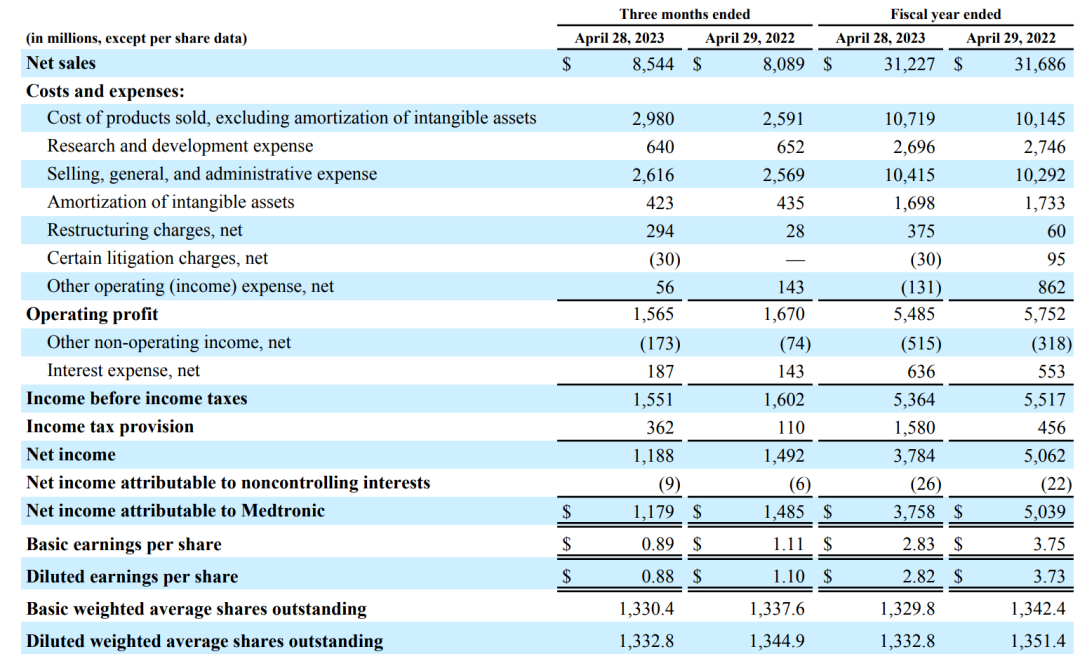
Taking the 2023 financial report as an example, the company's total revenue was $31.227 billion, ranking first in the global medical device enterprise revenue. Among this, the cardiovascular business revenue was $11.573 billion, accounting for 37.06%, includingCardiac Rhythm and Heart Failure (CRHF), Structural Heart and Aorta (SHA), and Coronary and Peripheral Vascular (CPV)Three departments.
▲2023 Annual Report (Source: Company Official Website)