

Shijiazhuang Pharma Secures First Generic Approval for Palbociclib Tablets in China Amid Fierce Domestic Competition
CSPC
Innovative Drug Research and Development, Manufacturer

Qilu Pharmaceutical
Specialty Formulations and Active Pharmaceutical Ingredients (API) Developer
NJCTTQ
Major Pharmaceutical R&D Company
Thanks to the clinical treatment potential for breast cancer, CDK4/6 inhibitors have become a hot track at present. Recently, information from the National Medical Products Administration showed that Palbociclib Tablets produced by CSPC Ouyi Pharmaceutical Co., Ltd., a subsidiary of CSPC, have been approved for marketing. This is the first generic product of this drug.

Palbociclib, originally developed by Pfizer and marketed under the brand name Ibrance, is the world's first approved inhibitor of cyclin-dependent kinase (CDK) 4/6. It can restore cell cycle control by inhibiting CDK4/6, thereby blocking the proliferation of tumor cells. Both capsule and tablet formulations have been successively approved.
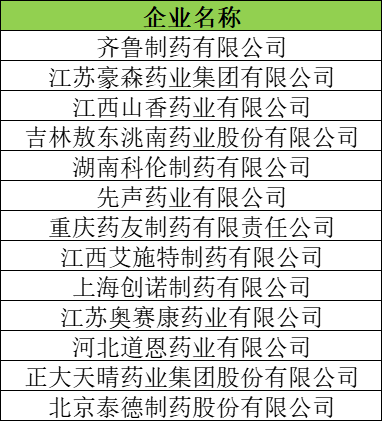
It is worth mentioning that the compound patent for palbociclib expired in January 2023, and more than ten pharmaceutical companies in China have received approval for their generic versions of palbociclib capsules, with the first generic developed by Qilu Pharmaceutical. Regarding the development of palbociclib tablets, CSPC Ouyi Pharmaceutical Co., Ltd. has secured the first generic approval, while other companies such as Chia-TaiTianqing and Qilu Pharmaceutical Co., Ltd. are also actively positioning themselves in this field.
Market observers believe that palbociclib, as a highly anticipated blockbuster tumor drug, is experiencing a "patent cliff" for the original drug. This presents an important opportunity for local generic drug companies to capture market share. However, with the increase in the number of approved generic products, the downward pricing pressure from intense market competition in the future cannot be underestimated.

Layout Tablets Seize the First Generic
Can CSPC overtake on the curve?
Data released by the International Agency for Research on Cancer (IARC) of the World Health Organization (WHO) shows that breast cancer surpassed lung cancer as the most common cancer globally in 2020, with more than 2.26 million new cases annually. Among all breast cancer patients, the proportion of HR+/HER2- is approximately 70%, and these patients are suitable for endocrine therapy. However, once resistance to endocrine therapy develops, the survival rate of patients drops significantly.
CDK4/6 inhibitors are exactly the most successful class of new drugs in the first- and second-line treatment fields for HR+/HER2- advanced breast cancer in recent years. Among international pharmaceutical giants, Pfizer was the first to consider simultaneously inhibiting CDK4 and CDK6 and successfully developed palbociclib.
Since its accelerated FDA approval for marketing in the United States in 2015, Pfizer's Ibrance quickly became a mainstream option in combination with endocrine therapy for HR+/HER2- breast cancer. It has gained prominence in the field of targeted endocrine treatment for HR+/HER2- advanced breast cancer, with palbociclib gradually becoming a "mainstay" in this area and gaining widespread clinical application.
With its first-mover advantage, Pfizer's Ibrance has seen steady annual growth in global sales since its launch, bringing substantial profits to Pfizer. In 2020, Ibrance sales surpassed the $5 billion mark, and by 2021, the global sales of Palbociclib reached a peak of $5.44 billion.
In recent years, the sales growth of Palbociclib has slowed down in the global market, with a 6% year-on-year decrease in 2022. In 2023, the downward trend continued, with the same 6% drop. In 2023, the revenue of this product fell below $5 billion.
Palbociclib tablets, another oral formulation developed by Pfizer, were approved by the FDA in November 2019. The drug's market application was submitted to the CDE in December 2020. In 2022, Palbociclib, which was the first to be marketed in China, dominated the market with 500 million yuan in sales, followed by Abemaciclib (39 million yuan) and Dalpiciclib (12 million yuan).
However, in the PALOMA-2 study, palbociclib did not achieve a statistically significant benefit in overall survival (OS). Coupled with the ultimately negative results from the PALLAS and PENELOPE-B studies, as well as patent expiration and superior data from later competitors, these numerous unfavorable factors have led to a slowdown in its growth.
In August 2023, Pfizer's 25mg and 125mg Palbociclib tablets were approved for marketing in China.
It is reported that on May 9, 2022, CSPC Ouyi Pharmaceutical Co., Ltd. announced the bioequivalence (BE) trial of its Palbociclib Tablets in 125mg specification, applicable for hormone receptor (HR)-positive, human epidermal growth factor receptor 2 (HER2)-negative advanced or metastatic breast cancer. It should be used in combination with an aromatase inhibitor as the initial endocrine therapy for postmenopausal women or male patients, or combined with Fulvestrant for patients with disease progression after endocrine therapy. On August 17 of the same year, this BE trial was completed.
Besides, as the patent for the original Palbociclib drug is about to expire, the battle for the Chinese market is imminent. The subsequent launch of generic drugs will inevitably impact its market. At the same time, competition among similar CDK4/6 inhibitors is intensifying. To date, five CDK4/6 inhibitors have been approved for marketing in China: Pfizer's Palbociclib, Eli Lilly's Abemaciclib, Hengrui Medicine's self-developed Dalpiciclib, Simcere Pharmaceutical’s Trilaciclib, and Novartis' Ribociclib.
The marketing of generic drugs will inevitably impact their market, but it also means that patients will have more choices for clinical treatment.

CDK4/6 Inhibitor Involution
Fierce Competition Among Enterprises in Capsule Formulations
The large number of competing manufacturers reflects the industry's general optimism about the palbociclib market.
IQVIA data shows that the global sales of Palbociclib oral conventional release formulations exceeded 5 billion US dollars, ranking 20th in Fierce Pharma's "Top 20 Best-Selling Drugs Worldwide in 2021."
In the Chinese market, Palbociclib capsules were approved for marketing in 2018, and sales have shown an increasing trend in the following years.
On January 18, 2023, the National Healthcare Security Administration and the Ministry of Human Resources and Social Security announced the "National Basic Medical Insurance, Work-related Injury Insurance, and Maternity Insurance Drug Catalog (2022)." Palbociclib Capsules successfully entered the catalog.
In January of the same year, the Chinese compound patent for palbociclib expired, and multiple local companies, including Qilu Pharmaceutical, began generic production. According to public data, Qilu Pharmaceutical initiated clinical trials for its palbociclib generic as early as 2015, and it was approved for marketing in November 2020, becoming the first domestically produced palbociclib capsule generic drug in China.
Following this, Jiangxi Shanxiang Pharmaceutical, a subsidiary of Qingfeng Pharmaceutical, and Hengsen Pharmaceutical, a subsidiary of Hansoh Pharma, successively received approval for their Palbociclib Capsules to enter the market. Currently, the Chinese market is dominated by capsule formulations, with products from more than ten pharmaceutical companies already approved. Leading enterprises such as Qilu Pharmaceutical, Hansoh Pharma, Kelun, Simcere, and Chia-TaiTianqing have launched a comprehensive competition for market share.
Notably, the combined market size of Palbociclib (Pfizer), Ribociclib (Novartis), and Abemaciclib (Eli Lilly) reached $8.835 billion in 2022. The industry believes that the ability to simultaneously produce three products with revenues exceeding $1 billion each demonstrates the enormous market potential of the CDK4/6 inhibitor sector.
It is not difficult to see that CDK4/6 inhibitors are a highly competitive field, but intense competition does not mean there are no opportunities. With patents expiring, a surge in generic drugs, and inclusion in medical insurance, Palbociclib may experience a significant increase in sales. Despite numerous competitors, the market potential for companies winning national procurement bids remains considerable, ensuring continued benefits for some time to come.



www.yyjjb.com.cn
Insight into Industry Trends

"Pharmaceutical Economy Herald"
Academic Official Account
Focus on the Frontier of Oncology Academia

Terminal Official Account