

Jieti Medical Founder Dr. Li Xue: Product Excellence Is Key as Company Advances Invasive Brain-Computer Interface Platform

StairMed
Developer of Implantable Brain-Computer Interface Technology
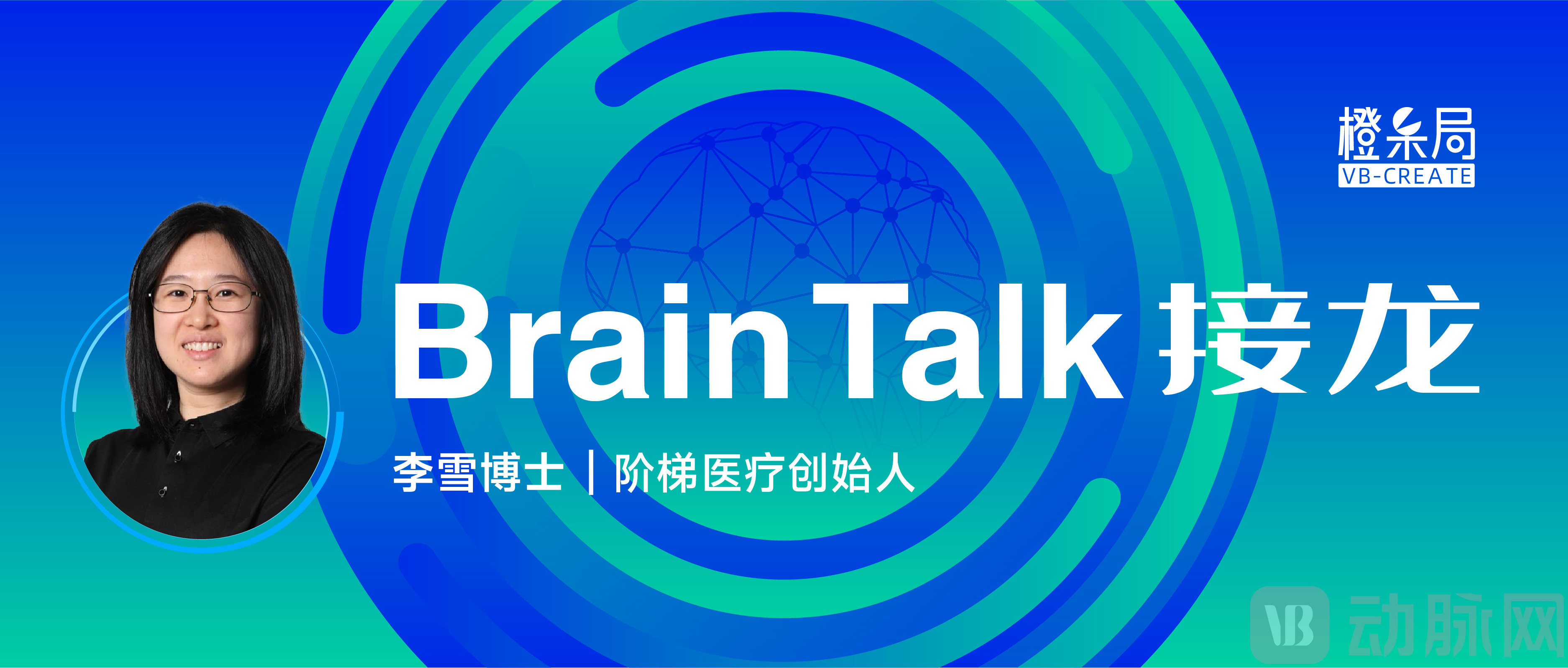
Since 2024, Neuralink's latest research achievements and breakthrough progress in invasive brain-computer interface technology have undoubtedly once again captured the attention of global investors. Due to the significant advantage of invasive brain-computer interfaces in acquiring high-quality neural signals, they have demonstrated extremely high clinical application potential in the serious medical field.
However, as an innovative medical device that requires craniotomy, invasive brain-computer interface medical products must undergo thorough safety verification and rigorous registration review before being applied to clinical treatment.Dr. Li Xue, founder of StairMed, told VCBeat that domestic regulators are particularly cautious in this area, causingEvery invasive brain-computer interface startup needs to overcome this difficult and challenging "Long March" road.。
"Invasive Brain-Computer Interfaces Are More Imaginative"
Dr. Li Xue's scientific career began in biomedical engineering, initially focusing on atlas research to explore the structural morphology of neurons. Her extensive work with numerous brain tissue samples deepened her understanding of brain structure, but she was not content with this alone. Instead, she aspired to further uncover brain functions, answering the question, "How does the brain work?" and ultimately hoping to truly help humanity. Dr. Li Xue believes that brain-computer interfaces can help her address these questions and even achieve the "ultimate" ideal of "bringing substantial progress to humanity," becoming a key technology in the Fourth Industrial Revolution. With her recognition of the value and significance of brain-computer interfaces, along with her strong personal interest, Dr. Li Xue embarked on the path of brain-computer interface research during her doctoral studies and has continued exploring it ever since.
"Brain-computer interface is not a new field."Li Xue told VCBeat, "This concept emerged in the early 20th century and has undergone more than a hundred years of development. Currently, it has mainly formed three technical pathways: from the earliest non-invasive solutions (EEG), to semi-invasive solutions (ECoG), to the recently popular invasive solutions."
Non-invasive solutions do not require surgery on patients; electrodes for signal collection are simply attached to the patient's scalp. However, the quality of the neural signals collected is not high, significantly limiting the functions that can be achieved. Dr. Li Xue stated, "This is also the key issue why there has been no disruptive effect in this direction." Semi-invasive solutions involve placing electrodes on the surface of the cerebral cortex. Although the signal quality collected is higher than that of non-invasive solutions, it is limited to the superficial layers of the cortex.
In contrast, invasive brain-computer interfaces implant electrodes directly into the cerebral cortex and subcortical nuclei to capture neural signals at the single-cell level, offering significantly higher spatiotemporal resolution than non-invasive and semi-invasive technologies.
Compared with non-invasive brain-computer interfaces, Dr. Li Xue sees broader prospects in invasive brain-computer interface technology."Although traditional non-invasive brain-computer interface technology has undergone more than a century of development, it is still mainly used in simple tasks and consumer medical scenarios, with few breakthrough advancements in serious medical fields," she explained. "Invasive brain-computer interfaces, in the future, have greater potential and room for imagination not only in serious medical fields but also, in the longer term, in consumer applications."
From Technology to Industry, Making Good Products is the Key
Dr. Li Xue believes that the research and application of brain-computer interface technology can be regarded as an "inverted pyramid model," and the product development of StairMed is precisely carried out around this model.Among them, the neural interface is the base of this model. She emphasized that although researching brain-computer interfaces from the neural interface is highly challenging and extremely difficult, it is also the primary bottleneck faced by the entire field.
Before founding StairMed, Dr. Li Xue and Dr. Zhao Zhengtuo, the other co-founder of the company, had already accumulated years of research experience in invasive brain-computer interface neural interfaces. They have long been committed to advancing the clinical application and boundary expansion of ultra-flexible neural electrodes, as well as the development of large-scale electrophysiological systems and brain-computer systems. With a wealth of scientific and technological experience and breakthrough achievements, the two scientist-founders successfully led StairMed in completing the development of ultra-flexible micro-nano electrodes. The related products have completed the preliminary stages of design, experimentation, and trial use, and have achieved mass production and delivery, successfully serving the research market.
The cross-sectional area of StairMed's HNE ultra-flexible micro-nano electrode is approximately 1/7 to 1/5 that of Neuralink. Its advantages lie in the brain tissue hardly "sensing" the presence of the "electrode". After implantation, almost no immune scar is formed, and the biocompatibility of the electrode is greatly improved, thereby meeting the demands for large-scale, high-quality, and long-term stable neural activity recording and stimulation.
In order for StairMed to go further, applying invasive brain-computer technology to medical clinical practice is an indispensable goal and direction. The two founders unanimously believe that,To achieve interconnection between external devices and brain neural activity signals, it is necessary to build a platform system that meets medical device standards through engineering methods to solve technical conversion challenges.In Dr. Li Xue's view, this is a necessary step to achieve her goal of applying brain-computer interface technology. Therefore, StairMed has developed a miniature wireless invasive brain-computer interface system capable of single-neuron acquisition.
At the third level of the pyramid—clinical accessibility—StairMed continues to take on the role of an industry pioneer, actively promoting the development of clinical processes. Since 2023, the company has collaborated with multiple medical institutions to complete China's first intraoperative clinical validation of the effectiveness of Spike signal acquisition and brain-control functionality using a flexible implantable brain-computer interface system. This implantable solution has completed large animal experiments, and the entire system is currently in the registration-type inspection phase, with the first long-term human implantation expected by the end of 2024.
Dr. Li Xue believes that,NoScientific and technological research with industrial application value lacks practical significance, and scientists' work should not be limited to answering the questions of "what" and "why.""I hope that by continuously refining and iterating on good products, my scientific research work in the brain-computer interface field can truly help humanity. The corporate mission of StairMed is to 'become a stepping stone for human progress,'" she said.
The Next Wave of Investment After Clinical Trials
The development of emerging industries is often accompanied by a large influx of capital and high market enthusiasm, but subsequently, they also face technological and market challenges, entering an adjustment period. In the process of waiting for the next breakthrough, the industry will continuously seek innovation and development in hopes of reaching another climax. Brain-computer interfaces are no exception, Li Xue said: “Around 2021, brain-computer interfaces were very popular, and many investors were willing to invest in this direction. However, in 2024, people will be calmer about it.
There are many reasons for the calm. The imbalance in brain-computer interface research and the high threshold of the research itself have led to slow progress in technological innovation and application implementation in this field. For venture capital (VC), uncertainty will increase investment risks. Another factor is that due to ethical constraints, as well as restrictions imposed by approval regulations and processes, the path to implementation for brain-computer interfaces still requires further exploration.
If the investment and financing situation of brain-computer interfaces were to be likened to something, Li Xue described it as a "wave." The waves of investment come one after another, and after each wave recedes, some companies are sifted out like gold in a storm.
The next wave of investment will come when clinical data is released, and those who can continue to stay in this track are often companies with the ability to continuously innovate and optimize. "We need to make people see that brain-computer interface is not a very distant story; it is something that can be proven now. After this, more institutions and investors will be willing to join the brain-computer interface track," said Li Xue.
Speaking of this, Li Xue still insists on developing from the aspects of technology and products. She told VCBeatTechnology is the cornerstone of any innovative project. Without solid technical support, no matter how advanced the business model is or how strong the policy support is, true breakthroughs cannot be achieved.
Among technology, policy, and business models, this scientist-entrepreneur believes that different stages require focus on different priorities. "In the early stage of a project, the selection of the technical route and continuous refinement of the technology are the most critical. As the technology gradually matures, policy support becomes particularly important, paving the way for the commercialization of the project, while the business model is the key to transforming technology into actual products or services and creating value," said Li Xue.
At present, StairMed is also starting from the underlying technology, maintaining close communication and cooperation with the industry and scientific research communities. On one hand, it is promoting policy formulation, and on the other hand, providing a more powerful series of invasive brain-computer interface products.