

Zhejiang University School of Medicine Second Affiliated Hospital & Xinrui Medical Announce Public Disclosure of High-Polymer Heart Valve Patent

Foldax
Heart Valve Developer

Peijia Medical
Developer of Cardiac and Cerebrovascular Interventional Medical Devices

MitrAssist Lifesciences
Cardiovascular Innovative Medical Device R&D Manufacturer

HearHill
Cardiovascular Innovation Product Developer
On May 7, 2024, the Second Affiliated Hospital of Zhejiang University School of Medicine & Suzhou HeartSharp Medical Technology Co., Ltd. jointly disclosed a method for dip molding of heart valves and an apparatus for dip molding.
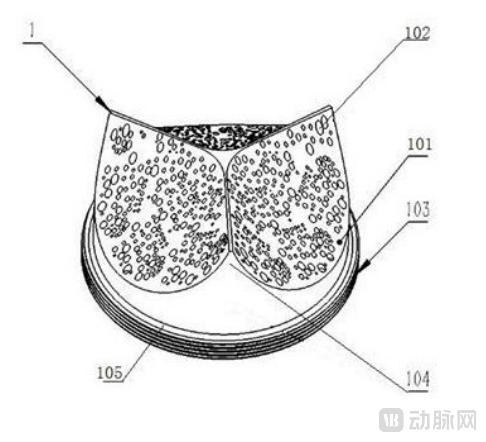
Schematic diagram of the heart valve dip molding method and the apparatus for dip molding, image sourced from the patent specification.
Xinrui Medical is a company in China engaged in the research and development of polymer valves. Its self-developed polymer valve combines the advantages of good blood compatibility found in biological valves and the high durability of mechanical valves. Due to the softness and easy foldability of the material, it can also be applied in the field of interventional valves. It is reported that this collaboration with Zhejiang University Second Hospital is for co-research and development.Mainly to solve the problem in the existing technology where bubbles between the polymer solution and the mandrel contact surface affect the performance of the valve leaflets, ensuring the valve leaflets are intact and free of defects, and improving the mechanical and fatigue performance of polymeric heart valves.
Enterprises Layout the Next Goldmine
The ideal artificial valve material should possess excellent mechanical properties, biological stability, biocompatibility, fatigue resistance, anticoagulation, anti-degradation, and anti-calcification characteristics. Polymer-based valves combine the advantages of both mechanical and biological valves, offering superior fatigue resistance and excellent blood compatibility.
As a frontier exploration direction in the valve market, polymer valves not only possess durability and biocompatibility but also do not require manual sewing in the manufacturing process. Instead, laser cutting and edge sealing are utilized, which is expected to reduce production costs. With the continuous expansion of China's heart valve replacement and repair market, polymer valves are expected to become the next goldmine, with numerous companies beginning to make their moves.
Among them, the polymer valve product launched by Foldax, a pioneer in the global polymer valve field, has entered the human clinical trial stage. Existing clinical data shows that Foldax's polymer valve product has a longer service life than traditional biological valves, lasting up to 25 years. One year after the implantation of the polymer valve, patients showed significant improvements in transvalvular pressure gradient, effective orifice area (EOA), and cardiac function, and they do not need to take anticoagulants long-term.
SAT, a spin-off startup from the University of Cape Town in South Africa, offers a balloon-expandable polymer valve made from CarboSil thermoplastic silicone-polycarbonate-polyurethane (TSPCU), a polymer material developed by Royal DSM in the Netherlands.
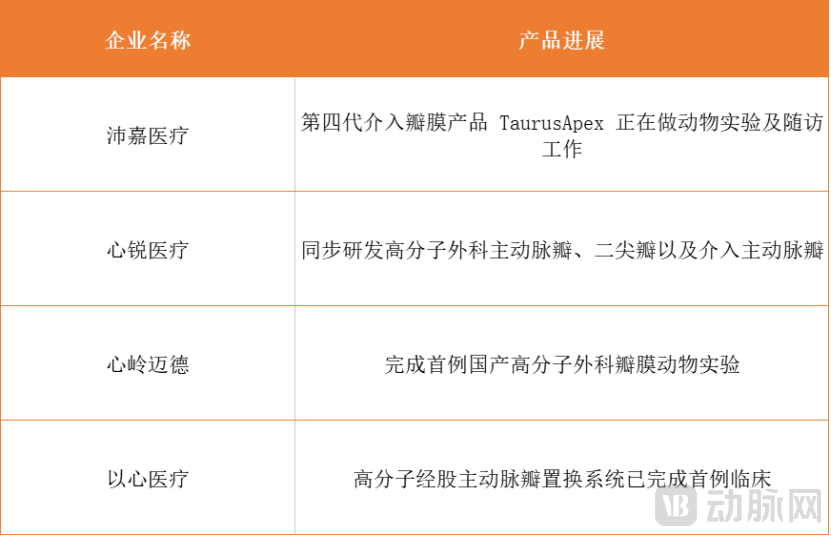 Polymer Valve Industry in China: Corporate Landscape (Partial), Data sourced from official websites of respective companies
In China,Peijia Medical, MitrAssist Lifesciences, HearHill, and other innovative companies are also driving the development of polymer valves.In July 2022, the world's first transcatheter aortic valve replacement (TAVR) product featuring synthetic polymer nanocomposite leaflets, Polymer TAVR TRISKELE®, developed by MitrAssist Lifesciences, completed its first clinical trial. The product consists of a self-expanding valve made from nickel-titanium alloy and synthetic polyurethane (PU) nanocomposite materials. This marks the world’s first polymer-valved transcatheter aortic valve replacement (TAVR).
HearHill has completed the first animal experiment of a domestically produced polymer surgical heart valve. Xinrui Medical is simultaneously developing polymer surgical aortic valves, mitral valves, and interventional aortic valves. In addition, Zhi Zhenjun, CEO of Venus Medtech, revealed at the Sequoia Capital Global Healthcare Summit held on March 28, 2021, that Venus Medtech is also researching various polymer heart valves as well as biomimetic materials and intelligent valves.
Few commercial transformations, still awaiting technological breakthroughs
Currently, most research on polymer valves at home and abroad is still in the preclinical stage, with few being commercialized.To date, LifePolymer (Foldax) is the only bio-polymer material that has successfully passed preclinical testing and been implanted in humans during clinical trials. MitrAssist Lifesciences was the first in China to complete the initial clinical trial of a polymer valve product, while Peijia Medical has published animal experimental data for its polymer valve product.
In the academic field, many researchers also pay special attention to the study of polymer valves.The global patent database of Smart Bud shows that there are currently more than 2,000 patent applications applicable to the field of polymer heart valves worldwide, of which more than 1,700 are invention patents.
In China, a team led by Professor Ge Junbo, an academician of the Chinese Academy of Sciences and director of the Cardiology Department at Zhongshan Hospital Affiliated with Fudan University, successfully implanted the world’s first high-polymer polymer-based artificial heart valve in an 80-year-old patient with severe aortic valve stenosis. This marks a generational breakthrough in valve materials, potentially extending the lifespan of heart valves by approximately 10 years beyond the current bioprosthetic valves.
In addition, the team led by Professor Wei Lai from Zhongshan Hospital, Fudan University, has developed a novel interventional artificial heart valve using polymer materials as the leaflet substrate, achieving multiple outcomes. These include the development of surgical valves based on polymer materials, leaflet substrates made from a hybrid weave of silk, polyester, and nickel-titanium alloy wires, and an interventional pulmonary valve based on polytetrafluoroethylene (ePTFE) membrane.
Among them, the polymer-based surgical valve is made through an impregnation molding process, which is low-cost and offers vast optimization design space for the valve leaflets. Researchers further optimized the initial shape of the valve using finite element simulation, improving its hydrodynamic performance while reducing stress distribution on the leaflets during closure, thereby enhancing its fatigue resistance.