

Eli Lilly Doubles Down on Oncology Radiopharmaceuticals with Over $1 Billion Investment
Radionetics Oncology
Radiopharmaceuticals Developer

Eli Lilly
Global Pharmaceutical R&D and Production Company

July 5, 2024
eMedClub News
Recently,Eli Lilly and Company and Radionetics Oncology, Inc.OncologyReached a cooperation agreement to introduce the latter's small molecule G protein-coupled receptor (GPCR) targeted radiopharmaceutical technology. According to the terms of the agreement,Radionetics to Receive $140 Million Upfront PaymentThe two parties will jointly advance novel small molecule radiopharmaceuticals targeting GPCR for the treatment of a wide range of solid tumors.
As part of the strategic cooperation, Eli Lilly has obtained the exclusive right to acquire Radionetics Oncology, Inc.Potential acquisition amount is $1 billionDuring the collaboration, Radionetics will apply its proprietary discovery platform to continuously build a small-molecule radioligand therapeutic asset targeting GPCRs.
This is Eli Lilly's second investment in the radiopharmaceuticals field this year.On May 21, Eli Lilly and Company reached a multi-target discovery collaboration agreement with Aktis Oncology focused on radiopharmaceutical therapies, with a total transaction value exceeding $1.1 billion.. Last OctoberEli LillyInvesting $1.4 billion to acquire POINT Biopharma, gaining access to drug candidates such as PNT2002, which uses 177Lu as an isotope and targets PSMA, officially entering the radiopharmaceuticals field. Pharmaceutical giants like Novartis, BMS, and AstraZeneca have also acquired similar startups in recent months.
Radionetics Oncology
eMedClub
Radionetics was founded in 2021, spun off from the clinical-stage drug company Cretics.Pharmaceuticals, dedicated to discovering and developing novel radiotherapeutic agents for the treatment of various oncology indications. Incubated by Crinetics and several dollar funds (5AM Ventures, Frazier Healthcare). In January this year, Radionetics Oncology, Inc. completed a $52.5 million Series A financing round.
Radionetics Oncology, Inc. is dedicated to the discovery and development of novel radiotherapeutics for the treatment of various oncology indications. Its proprietary platform technology utilizes small molecule targeting to deliver therapeutic radioisotopes precisely to a broad range of tumors by selectively binding to GPCRs that are overexpressed on cancer cells. This small molecule platform addresses many of the significant challenges currently faced in peptide and protein-targeted radiotherapy, particularly in optimizing drug-like properties and manufacturing.

Radionetics Oncology stated that its platform is not limited by alpha or beta emitters. The shortage of radionuclide supply has become a significant factor restricting the development of nuclear medicine. Just last month, RYZ101, a drug acquired by Bristol-Myers Squibb (BMS) through the acquisition of RayzeBio, suspended patient enrollment in its Phase III clinical trial due to supply constraints of the radionuclide actinium-225 (Ac-225).
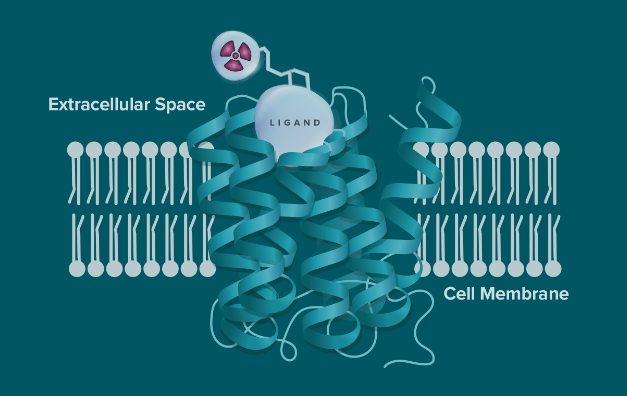
Radionetics' investigational radiopharmaceutical 68Ga-R8760 is currently in Phase I studies for the treatment of adrenocortical carcinoma, with additional clinical studies planned in breast cancer and lung cancer.
Aktis Oncology
eMedClub
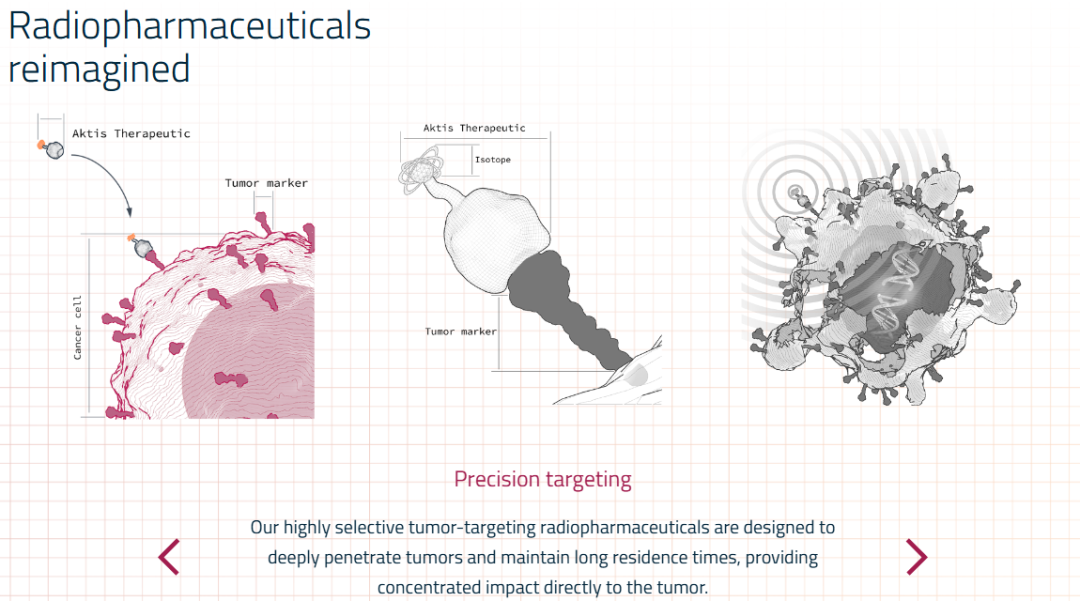
Aktis, headquartered in Boston, is a biotechnology company that discovers and develops innovative targeted alpha-particle radiopharmaceuticals for the treatment of various solid tumors. The company was founded and incubated by MPM Capital and has built a proprietary technology platform for producing tumor-targeted drugs with optimal therapeutic effects.
The proprietary technology platform of Aktis has the following features:
① Precise Targeting: Specific targeting ability can deeply penetrate tumors and accumulate over extended periods, "concentrating firepower" to destroy tumors.
②Unique Molecular Design: Custom-designed radiotherapy drugs deliver powerful alpha particles directly to tumor tissues while being rapidly cleared from non-target tissues in the body, minimizing systemic isotope exposure.
③ Powerful Tumor-Killing Ability: The tumor-killing ability of alpha particles is approximately 1000 times that of beta particles, effectively inducing double-strand DNA breaks and preventing the development of drug resistance.
Aktis's core pipeline targets the Nectin-4 antigen. Nectin-4 is widely present in solid tumors and exhibits high expression in various cancers such as urothelial carcinoma, breast cancer, lung cancer, head and neck cancer, and ovarian cancer. It promotes tumor proliferation and migration by activating the PI3K/Akt pathway, making it an ideal target for anti-tumor drugs.
Conclusion
eMedClub
Currently, the field of radiopharmaceuticals is experiencing an unprecedented wave of transactions. In China, companies like Dongcheng Pharmaceuticals, Grand Pharmaceutical, and China Isotope & Radiation Corporation, which have gone through IPOs, are rapidly expanding. Now, new players such as Lanature Pharma, NuYu Pharmaceuticals, Xiantong Pharmaceuticals, Fulllink Pharmaceuticals, and Hexin Pharmaceuticals have joined the fray, making the nuclear medicine market more prosperous than ever.
Radiopharmaceuticals have demonstrated advantages such as precise targeting, powerful killing, limited damage, and integrated diagnosis and treatment, gradually becoming the next significant wave of innovation in the field of cancer treatment.


Dian Dian "Share”、“Like" and "In View", give me a little recharge~"