Source of the article: MedRobot
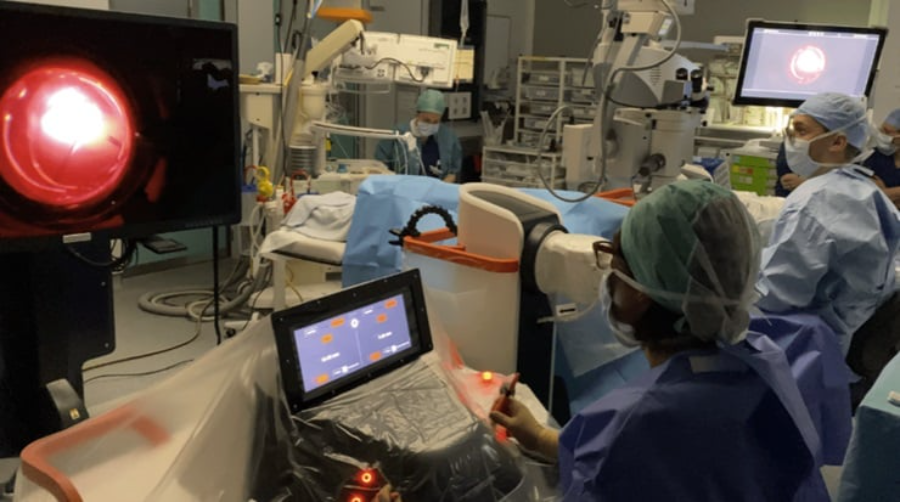
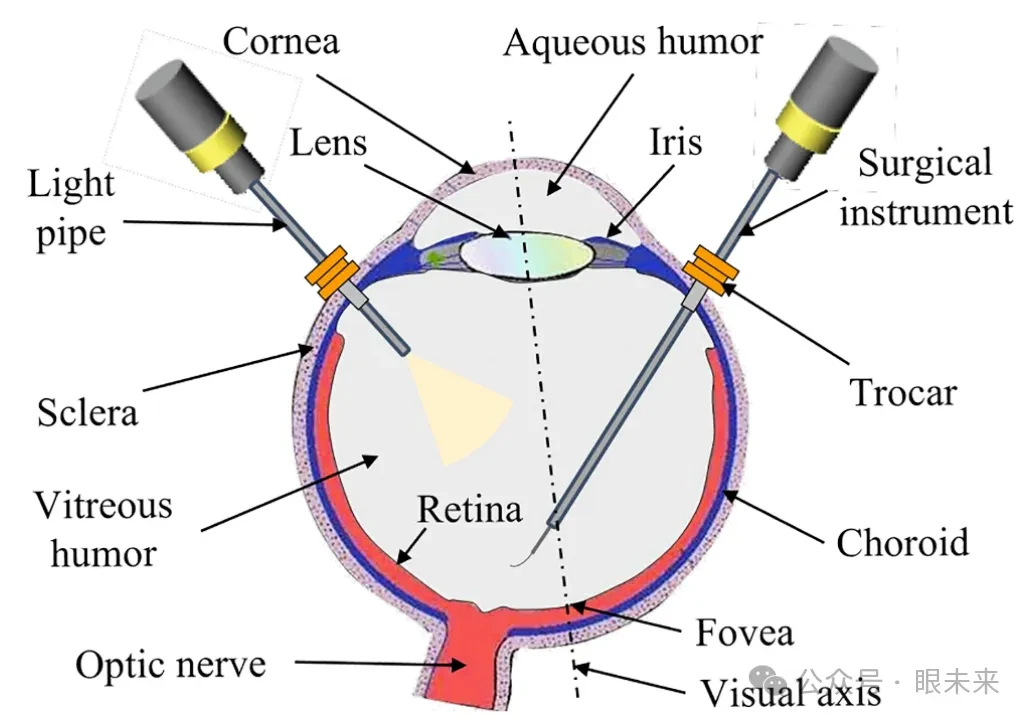
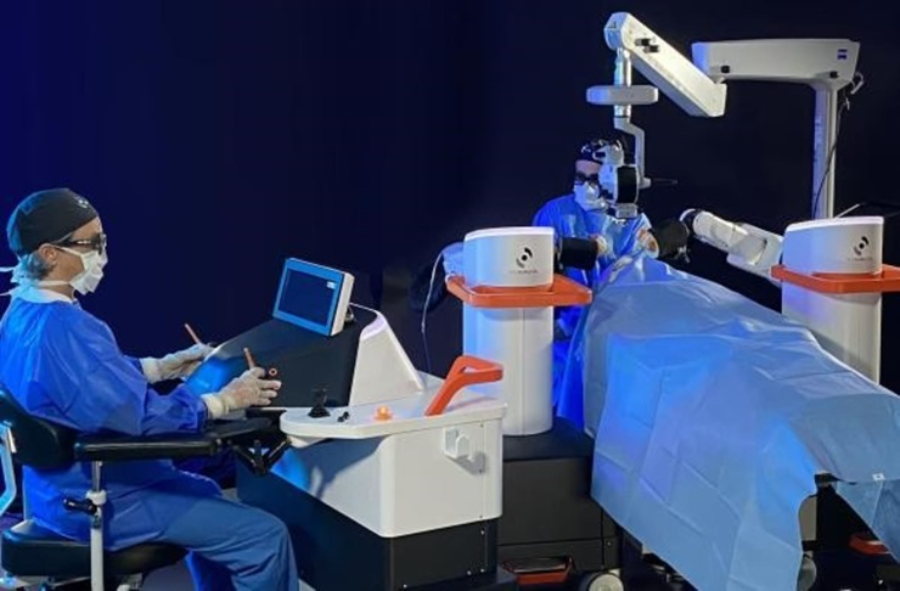
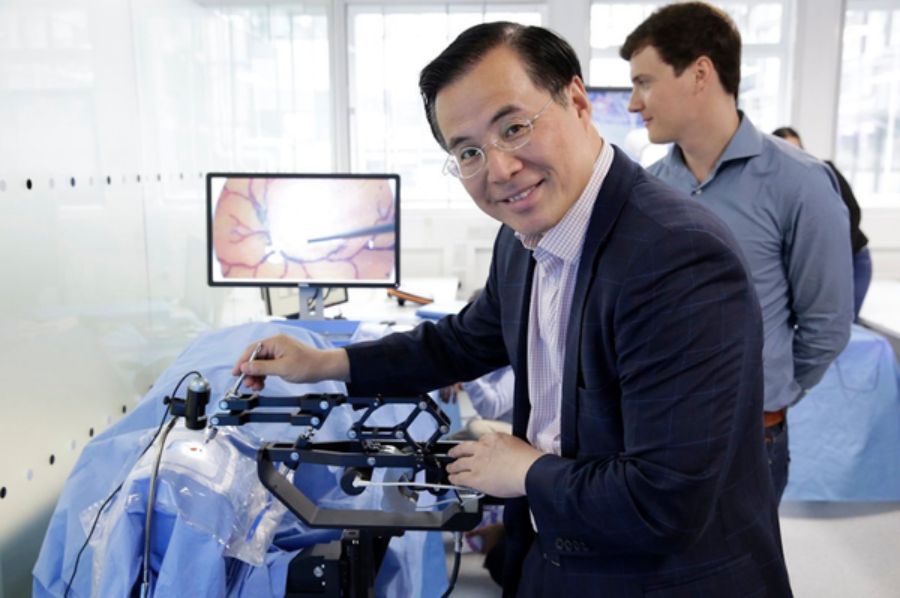
July 4, 2024AcuSurgical Announced the successful completion of its first use ofLuca™ Surgical RobotProceedVitrectomyClinical research.Globally, there are over 300 million patients suffering from retinal diseases. Retinal surgery requires micron-level precision, which can only be performed by well-trained surgeons with an accuracy of up to 100 micrometers.And Luca™ Surgical RobotAccuracy of 10 microns,Therefore, surgeons are able to treat more patients, address a wider range of pathological issues, accelerate training, and improve accuracy and safety.# The First Dual-Arm Ophthalmic RobotGlobally, there are over 300 million patients suffering from retinal diseases, including age-related macular degeneration (AMD), diabetic retinopathy, and macular holes.AndRetinal surgery is one of the most delicate and complex surgeries in ophthalmology.Unprecedented precision is required to perform surgery on structures as fine as a hair.The main difficulty of retinal surgery lies in:(1)Target MicrostructureInsufficient spatial resolution and depth perception;(2)Due toPhysiological Hand Tremor, the imprecise movements during tissue micromanipulation can reach up to 100 microns, while ophthalmic surgeries often require membrane peeling within 15 to 20 microns;(3)Lack of Force Sensation, because the movement required for anatomy is below the surgeon's sensory threshold. The possibility of patient movement during the procedure further exacerbates the challenges of retinal microsurgery, leading to a higher risk of complications;(4)Poor ergonomic design of surgical microscopes may increaseThe Risk of Back and Neck Injuries in Ophthalmologists, and further increase the difficulty of hand-eye coordination.▲ Image source: company's official websiteThrough remote control, the Luca™ ophthalmic surgical robotCan filter tremors and maintain the instrument in a predefined position for an extended period.,At the same time, enhance the visualization of the surgery, fully controlled by the surgeon.
# Postoperative Evaluation
On July 4, 2024, AcuSurgical announced the successful completion of its first clinical study using the Luca™ surgical robot for vitrectomy.This clinical research was conducted by Dr. Fanny Nerinckx, a senior vitreoretinal surgeon at Ghent University Hospital in Belgium, with seven patients treated using the Luca™ system, and all surgeries were successful.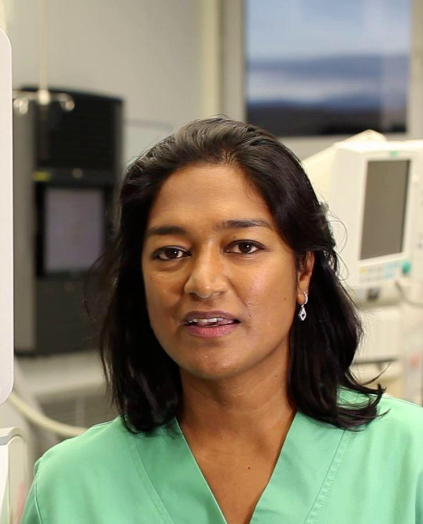
Dr. Nerinckx pointed out: "The Luca surgical robot can be seamlessly integrated into our operating room workflow; it assisted us in performing multiple surgeries in a single day and effectively executed core vitrectomies during the first-in-human clinical trial."

AcuSurgical CEO Christoph Spuhler said, "Completing this first-in-human clinical study isAn important milestone,Retinal surgery can be more widely popularized. The success of human clinical research three years after our initial proof of concept also demonstrates the professional knowledge and solid skills of the AcuSurgical team."
This successful clinical study marks a significant advancement for AcuSurgical in improving retinal surgery through innovative technology.
In March 2024, the Luca™ Ophthalmic Robotic Surgery Platform completed its first clinical case., the case was successfully and safely completed by Dr. Fanny Nerinckx at Ghent University Hospital in Belgium.# Research on the Application of Ophthalmic RobotsThere are many potential advantages of using robots in ophthalmic surgery, including improved operability, precision, scalability of operations, filtering hand tremors, better ergonomics, task automation, and surgical training functions.Ophthalmic surgery is characterized by high precision, small operating range, the need for microscopic vision, and sensitive feedback, posing special requirements for surgical robots.Applied in corneal transplantation surgery:In 2017, Chammas et al. from Strasbourg University Hospital in France were the first to report the use of an ophthalmic surgical robot for penetrating keratoplasty (PK) surgery.
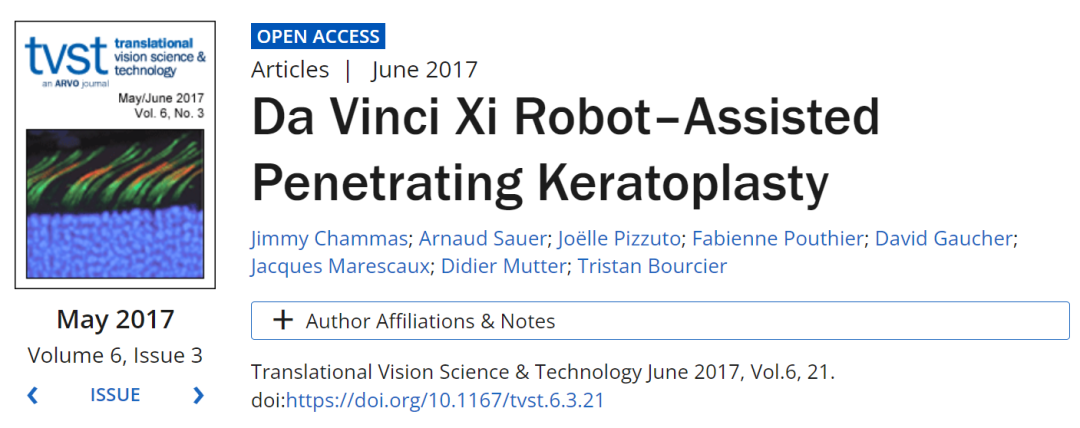
Successfully completed 12 PK surgeries using the da Vinci Xi robot on an artificial eye (a human fresh cornea covering an artificial anterior chamber injected with viscoelastic agent to simulate human intraocular pressure).Postoperative spectral-domain optical coherence tomography confirmed appropriate suture depth.
The suturing effect and operation time were similar to those of the doctor, indicating the feasibility of using the da Vinci Xi robot for PK surgery.
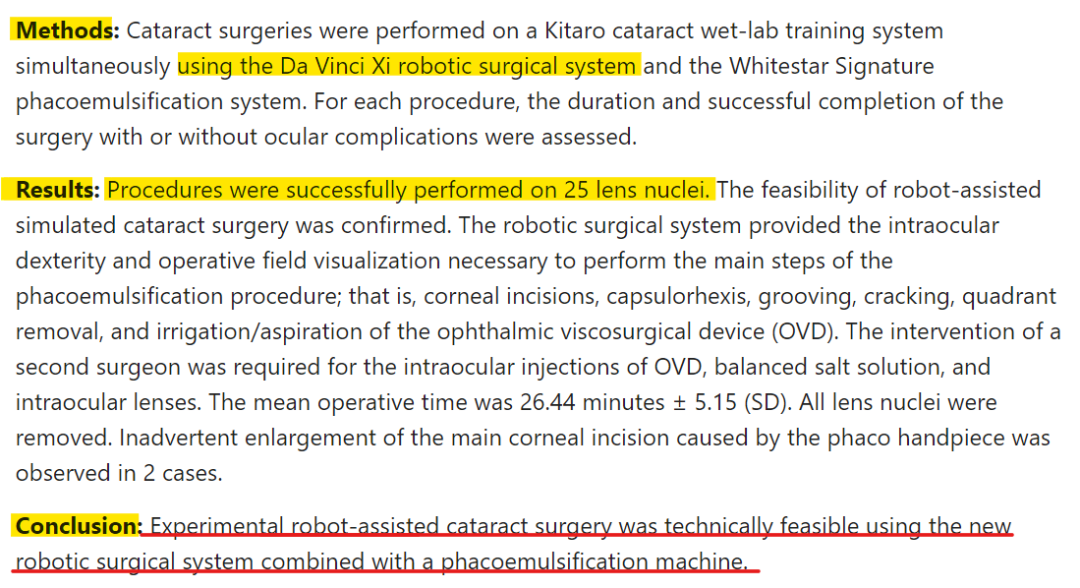
Applied in cataract extraction surgery:In 2017, the European Remote Surgery Association in Strasbourg, France, and the University Hospital Research Center jointly conducted the firstCompletedApplication of the Da Vinci Xi Robot in Cataract Extraction SurgeryExploratory Research.
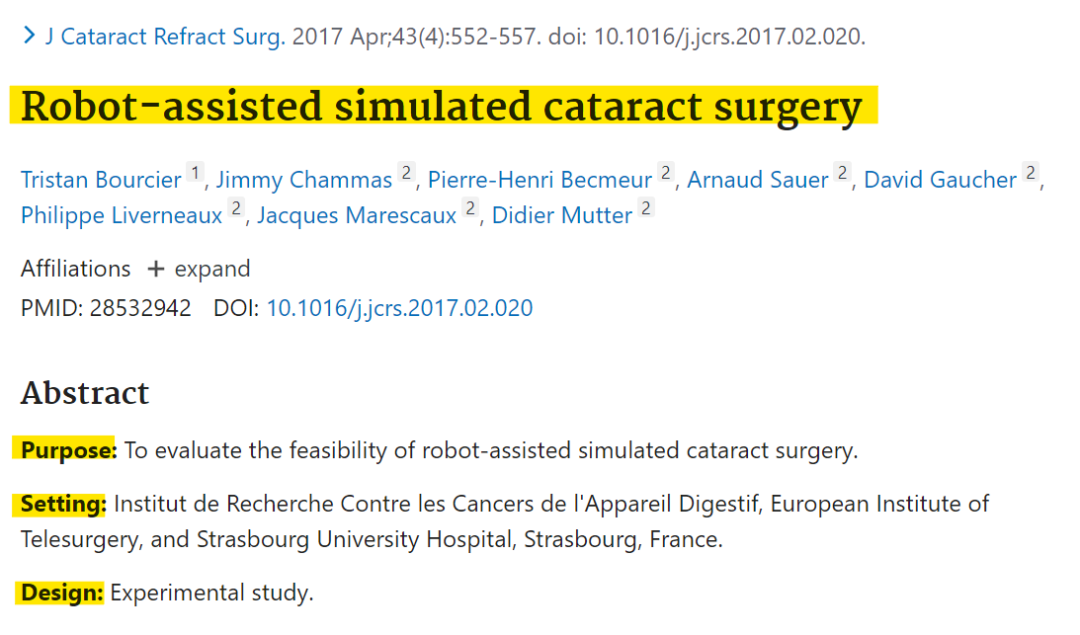
The experiment successfully removed cataracts from all artificial eyes without complications such as rupture of the posterior lens capsule. It confirmed that the main steps of cataract extraction surgery can be performed using the da Vinci Xi robot.However, the use of the da Vinci robot for cataract extraction surgery has the following limitations:- The remote center of motion (RCM) is close to the operator's manipulation point but far from the instrument tip, making intraocular maneuvers more difficult to control, increasing surface tension on the eyeball during surgery, and prolonging capsulorhexis time.
- Secondly, the inability to be compatible with ophthalmic special surgical instruments means some steps still need to be completed manually;
Finally, the imaging capture system used is mainly applicable to endoscopes, and its dynamic range, optical resolution, and color performance are all inferior to those of ophthalmic microscopes.
Applied to Retinal Surgery: Andy Gijbels et al. designedCo-manipulated RobotTo improve the accuracy and stability of retinal vein cannulation thrombolysis.Andy Gijbels, Jonas Smits Win 2017 Surgical Robotics Challenge
The robot is connected to surgical instruments directly operated by the surgeon. The instruments are manipulated by the operator while also being intelligently adjusted by the robot. In this co-manipulation mode, movements with six degrees of freedom, including translation along the X, Y, and Z axes as well as rotation, can be performed around the RCM.
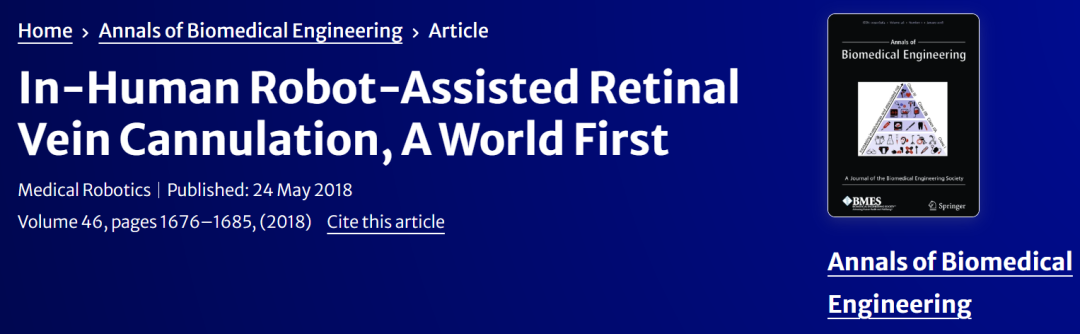
In 2017, the University of Leuven in Belgium successfully completed 78 retinal vein cannulations (out of 80 attempts) on 20 pig eyes using this robot, with a success rate of 97.5%.Subsequently, Gijbels et al. conducted a Phase I clinical trial using co-manipulated robots for retinal vein cannulation to treat retinal vein occlusion, demonstrating the safety and feasibility of robot-assisted retinal vein cannulation in patients with central retinal vein occlusion.The field of orbital diseases often involves complex and difficult cases with challenging diagnosis and treatment. It usually requires multidisciplinary collaborative care involving specialties such as craniofacial surgery, otorhinolaryngology, and others, along with the use of endoscopic and navigation equipment during surgeries.If robotic technology can be combined with endoscopic and navigation systems, it will further enhance the effectiveness and safety of orbital surgeries.AcuSurgical Founded in 2020 in Montpellier, France, it is a company specializing inCompany Developing Ophthalmic Robotic Microsurgery Technology。
CompanyFounded based on the intellectual property developed by the Montpellier University Robotics Laboratory, AcuSurgical is a fast-growing startup aimed at revolutionizing retinal microsurgery.
AcuSurgical Develops the World's First Dual-Arm Ophthalmic Robot Luca™, The goal isProviding first-class treatment for over 300 million patients with retinal diseases worldwide。


AcuSurgical was co-founded by Christoph Spuhler, the co-founder and CEO, Professor Philippe Poignet and Yassine Haddab in robotics, and retinal surgeons Philippe Gain and Professor Gilles Thuret.
The company evolved from a collaboration between the co-founders and the LIRMM robotics laboratory, and received seed funding from the AxLR incubator.
After the company was established, its first ophthalmic surgical robot prototype quickly achieved proof of concept and was validated in a preclinical environment.Subsequently,Completed a €5.75 million Series A financing round in 2021This round of financing was led by Mérieux Equity Partners and Supernova Invest, with participation from Sofimac Innovation and IRDI Capital Investissement.Statement:This article is for informational purposes only and is provided for reference.This article does not constitute any advice on investment or treatment. Please scrutinize carefully.If the content, copyright, or other issues of the work are involved, to protect the rights and interests of both parties, please contact us, and we will handle it immediately.If any platform reprints this article, it must take responsibility for the content of the article itself. The Medical Device Innovation Network is not responsible for any secondary dissemination caused by the reprint.