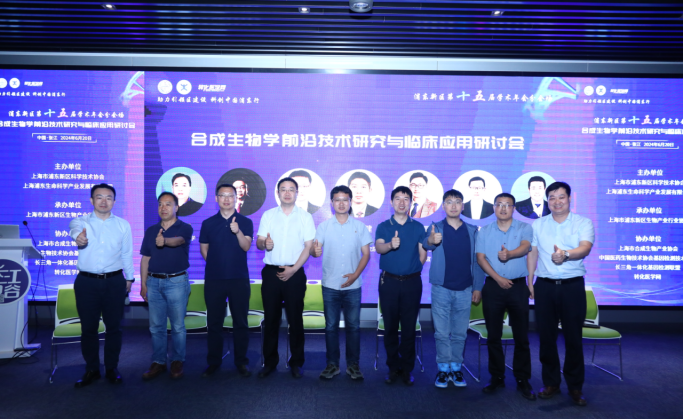
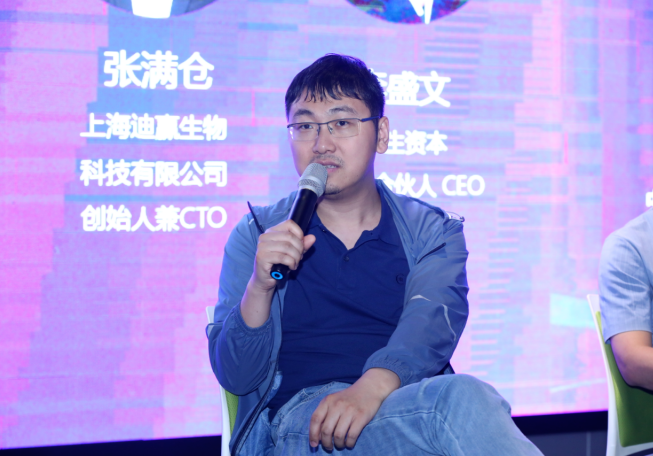
To comprehensively promote the high-quality development of the biopharmaceutical industry with new productive forces, on the afternoon of June 20,The 15th Academic Annual Meeting of Pudong New Area, Branch"Frontiers in Synthetic Biology: Research and Clinical Applications Symposium"”Successfully held at the Zhangjiang·China Med Valley Biomedical Innovation Exchange Center in Pudong. This event was hosted by the Pudong New Area Science and Technology Association of Shanghai and Shanghai Pudong Life Science Industry Development Co., Ltd., and organized by the Pudong New Area Biomedical Industry Association of Shanghai.Dr. Wang Sheng, CEO of Zelixir, was invited to participate in the roundtable discussion session, focusing on "Translation and Challenges of Synthetic Biology in Clinical Applications".In the roundtable discussion, Dr. Wang Sheng from Zelixir..."Application and Implementation of AI + Synthetic Biology in Biomanufacturing"Themed, In-depth IntroductionFinishedZelixir's Innovative AI Technology: Frontier Applications in Biomolecular Simulation and Enzyme Engineering R&D,Provided profound insights for the attendees.WangShengDr. [Name] proposed that by applying AI foundational models in biomolecules, we can deeply explore the complex world of biomolecules. This includes not only proteins, nucleic acids, small molecules, and other biomolecules themselves but also involves their intricate interactions. This multi-dimensional analytical capability allows us to more accurately simulate and predict the behavior of biomolecules, especially in the fields of drug design and enzyme engineering.
Dr. Wang Sheng first introduced the application of AI models in flexible protein-ligand docking. He pointed out that this technology can simulate the interactions between proteins and small molecules, predicting how small molecules bind to proteins, which plays a crucial role in new drug development. Through flexible docking, researchers are able to account for the dynamic changes in protein structures, thus providing more accurate predictions of binding modes.At the same time,AI Models Show Great Potential in High-Precision Enzyme Property PredictionPotential.Enzymes, as biological catalysts, their properties directly affect the rate and selectivity of biochemical reactions. Through AI models, we can predict enzyme activity, stability, and affinity for specific substrates, which is of great significance for enzyme screening and optimization.Dr. Wang Sheng further elaborated on the AI-based foundational tools.A Novel Enzyme Engineering R&D Model —— "Pathfinding-Enzyme Mining-Enzyme Modification".Pathfinding: AI Technology for Novel Synthetic Route Design.
Enzyme Mining: Identify and discover enzymes with specific functions through AI based on a particular synthetic pathway.
Enzyme Modification: The process of improving enzyme performance or endowing it with new functions through AI and protein engineering methods.
The application of this full-process enzyme engineering R&D model will greatly promote the development of high value-added products, especially in the production of food additives and fragrances.Wang ShengboExperts point out that traditional chemical synthesis methods often pose issues of environmental pollution and health risks. However, by utilizing enzyme engineering technology, we can develop more natural, green, and safer alternatives. These products not only meet consumers' demands for health and environmental protection but also enhance the market competitiveness of the products.Then, Dr. Wang Sheng emphasized,This AI-based enzyme engineering R&D model will help achieve the strategic goal of Healthy China, ushering in a new era of comprehensive green living.By reducing pollution in the chemical synthesis process, enhancing the biodegradability and safety of products, we can offer consumers healthier and more sustainable lifestyle choices. At the same time, this will also promote the development of the biotechnology industry, providing new momentum for economic growth.At the end of the meeting, Dr. Wang Sheng concluded that the application of AI foundational models for biomolecules is not only significant in scientific research but also demonstrates enormous potential and value in practical applications. Through this technology, we can better understand and utilize biomolecules, promoting the sustainable development of science and society.This roundtable discussion not only fully brought new insights to the field of synthetic biology,Dr. Wang Sheng's speech also provided new ideas and directions for the development of the industry.Zelixir, as a pioneer in "AI + synthetic biology",Will continue to collaborate with industry peers to jointly explore the infinite possibilities of AI + synthetic biology, contributing more wisdom and strength to the development of the biomanufacturing field!
Zelixir, established in 2021 and located in Shanghai, was founded by a team of experts with extensive experience in macromolecular structure prediction and design as well as synthetic biology from renowned universities and industries both within and outside China. Its main businesses include computational services for macromolecular (including proteins, RNA, etc.) structure, design, and modification; as well as the design and production of synthetic biology-related components and products. The company boasts highly competitive AI technology and industrial capabilities in synthetic biology, continuously pushing the boundaries of biotechnology through AI, exploring unknown fields using known data, creating from scratch with design tools, and empowering every aspect of the DBTL cycle in synthetic biology to reduce costs and improve efficiency. This drives the collaborative development of healthcare, agriculture, food, consumer goods, and chemical industries. For more information about Zelixir, please visit https://www.zelixir.com.