Disclaimer: Due to limited proficiency, errors are inevitable, and some information may not be the most up-to-date. Feel free to point out in the comments. This article is only an introduction to medical and health-related drugs, not a recommendation of treatment plans (if involved); this article does not constitute any investment advice.
July 15,Headquartered in San DiegoClinical-Stage Cell Therapy DeveloperArtiva Biotherapeutics announced information regarding itsInitial Public Offering (IPO)More details: ArtivaPlanSelling 8.7 million shares at a price of $14 to $16 per share,ProposedRaise approximately $116 million (RMB 840 million) through IPO, and may go public this week with the stock code "ARTV".If priced at $15 per share, the company expects that after the underwriters exercise their option to purchase an additional 1.3 million shares,Up to $135 million (approximately 980 million yuan)。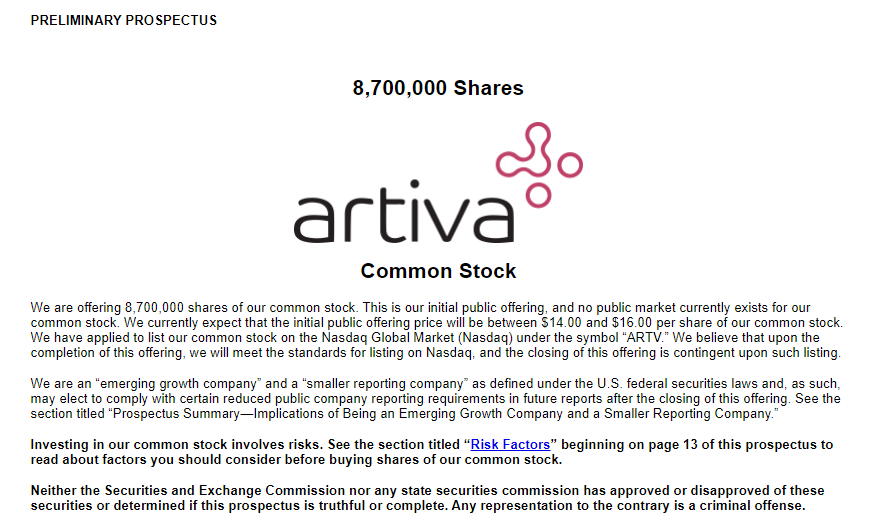
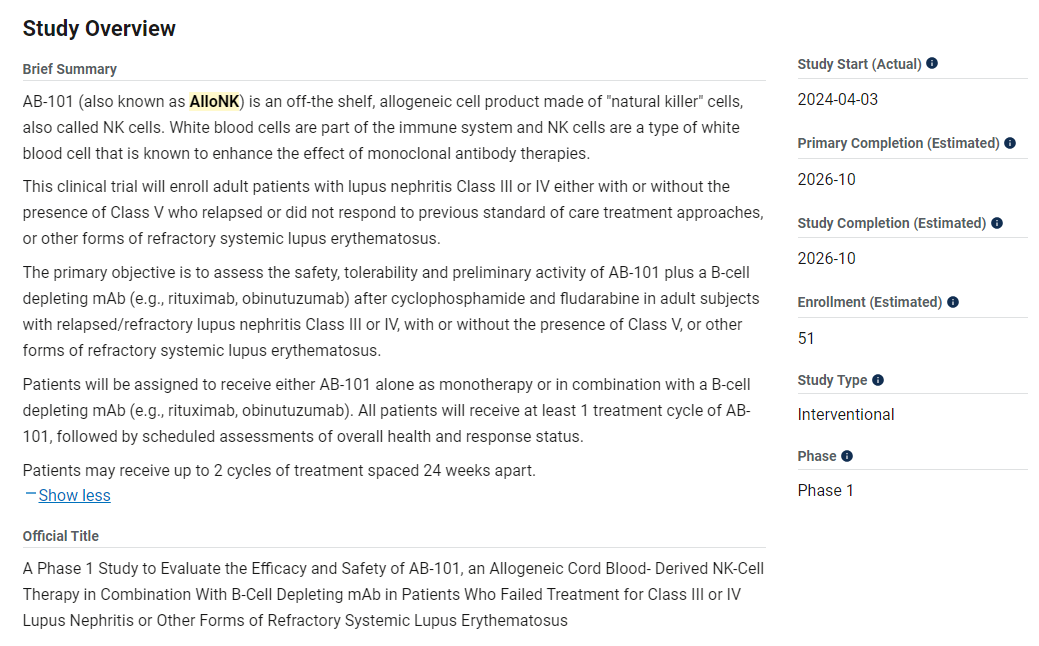
This financing will provide the startup with more room to develop its early-stage off-the-shelf cell therapy pipeline for treating lupus, B-cell malignancies, solid tumors, and other blood cancers.Artiva Biotherapeutics pointed out that the $55 million raised from the IPO will be used to support itsAlloNK Cell TherapyThe development. These funds will help the candidate drug obtain preliminary clinical data from Phase I/Ib trials targeting patients with systemic lupus erythematosus (SLE).Phase I Study of SLE Therapy Began in April.All remaining funds will be used to support other projects that Artiva is preparing and other general purposes. This IPO and its existing cash are expected to provide funding for the company until 2026.Artiva's Two IPO JourneysArtiva initially sought to go public in the spring of 2021, during the height of the IPO gold rush. In recent years, few private biotech companies have managed to list on Nasdaq or the NYSE, and those heady days are now a thing of the past.In November 2022, Artiva Biotherapeutics officially withdrew its planned initial public offering to announce a collaboration with Affimed that month. At the time, Artiva's CEO Fred Aslan referred to putting the brakes on the IPO.The key reason is to announce a co-development, production, and commercialization agreement with a German partner.Artiva Biotherapeutics is a company that provides efficient, allogeneic, off-the-shelf NK cell therapies.As many cell therapy biotechnology companies begin to venture into or shift towards autoimmune diseases, Artiva Biotherapeutics is applying itsResearch on systemic lupus erythematosus positioned as a leading project。Its core pipeline, AlloNK (AB-101), is an allogeneic CAR-NK therapy. The main development direction of this drug is autoimmune diseases, including combination with CD20 monoclonal antibody for the treatment of SLE, rheumatoid arthritis, pemphigus, etc. The core component of AlloNK therapy is umbilical cord blood-derived natural killer (NK) cells. AlloNK aims to address diseases such as lupus nephritis by enhancing the efficacy of monoclonal antibody therapies targeting B cells. Such antibodies achieve therapeutic effects by reducing the number of immune cells involved in the production of autoantibodies and lupus disease activity.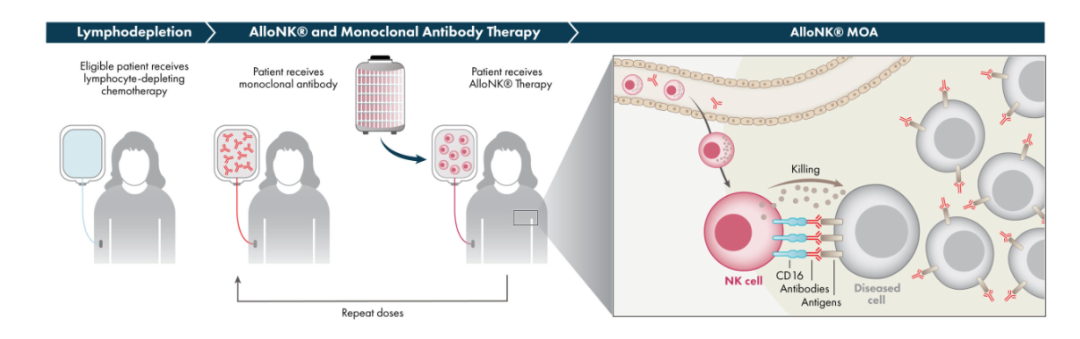 In May 2024, Artiva Biotherapeutics announced that the U.S. FDA had approved the Investigational New Drug (IND) application for AlloNK in combination with rituximab for the treatment of systemic lupus erythematosus (SLE) in patients with active lupus nephritis (LN).This IND approval marks the first use of allogeneic, off-the-shelf NK or CAR-T cell therapy for the treatment of autoimmune diseases.A multicenter, open-label phase 1 clinical study is currently underway to further explore the safety and efficacy of AlloNK in combination with rituximab or obinutuzumab for the treatment of patients with class III or IV lupus nephritis who are refractory or relapsed to standard therapies.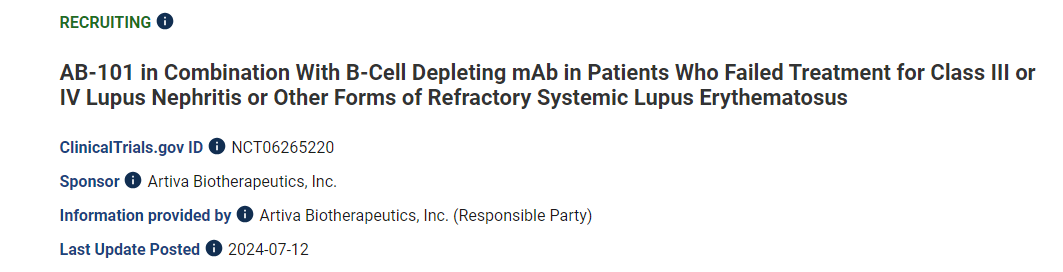
In addition to AlloNK, the company's CAR-NK projects include AB-201 (a novel HER2-specific CAR-NK cell therapy for the treatment of HER2+ solid tumors) co-developed with GC Cell.) and AB-205 (a CD19-specific CAR-NK cell therapy for the treatment of hematologic malignancies).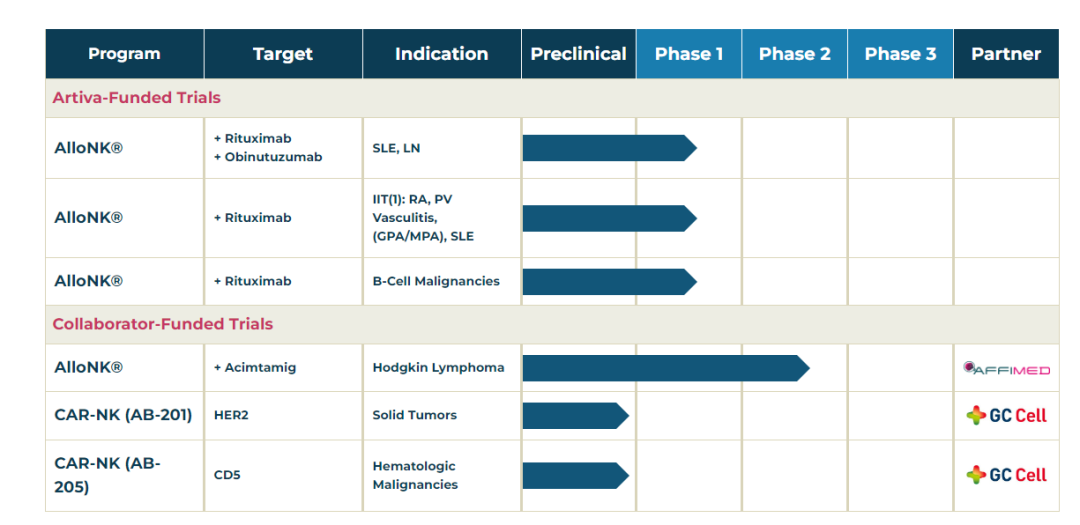
ArtivaThe collaboration with Merck ended in October 2023.As early as 2021On January 28, Artiva Biotherapeutics announced that the company had entered into a global exclusive collaboration and license agreement with Merck.This collaboration will leverage Artiva's off-the-shelf allogeneic NK cell manufacturing platform as well as its proprietary CAR-NK technology. Merck has obtained global licenses for two off-the-shelf, solid tumor-targeting CAR-NK programs from Artiva. Accordingly,Merck paid $30 million upfront, along with potential future milestone payments several times that amount.
According to the terms at that time, in addition to the $30 million Artiva Biotherapeutics received for the first two programs, if Merck decides to opt for a third program, an additional $15 million will be paid. Based on future developments, commercialization milestones, and global sales of the products, Artiva Biotherapeutics could potentially receive up to $612 million per program.
As of the end of March, Artiva had approximately $62 million in assets.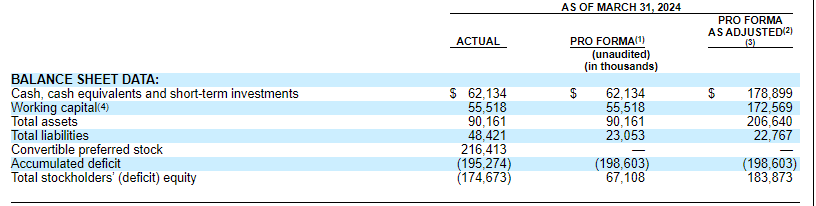
R&D expenditure in 2023 was approximately US$50 million, and in Q1 2024 it was approximately US$11 million.
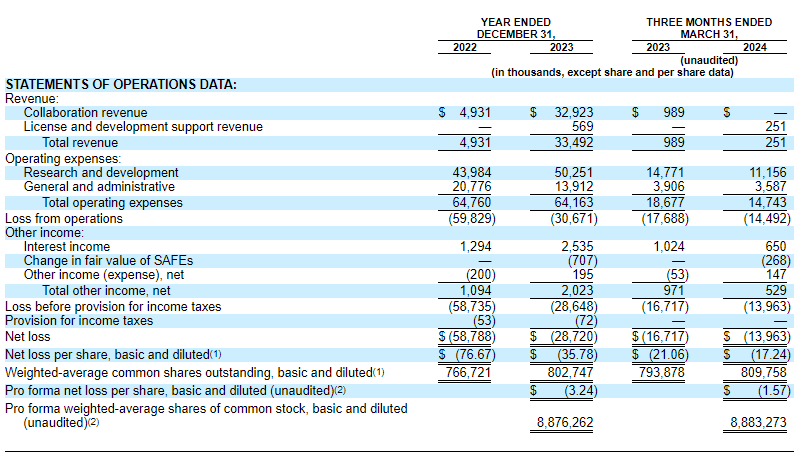
Its main shareholders are GC LabCell, 5AM Ventures, venBio, and RA Capital.
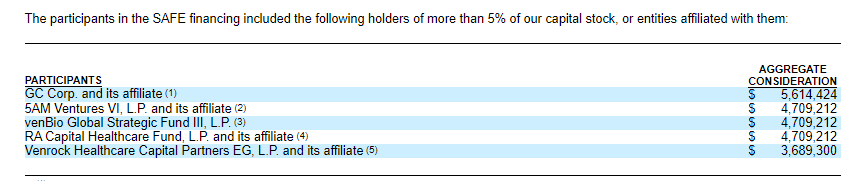
The company's most recent disclosed major financing was a $120 million Series B round in February 2021, which came just one week before its initial confidential IPO filing.
In view of Artiva Biotherapeutics' financial situation, seeking an IPO at this moment—without any commercialized products generating profit and with the collapse of a substantial collaboration with Merck—is undoubtedly a move of self-rescue.
If it completes its IPO, Artiva will join this year's autoimmune companies Alumis and Kyverna, and neuroscience biotech companies Rapport, Co.Ntineum and Alto, gene-editing company Metagenomi, metabolic biotechnology company Fractyl Health, and cancer biotechnology companies Boundless Bio, ArriVent, and CG Oncology have further sparked market enthusiasm for the autoimmune disease field.References:
[1]https://www.sec.gov/Archives/edgar/data/1817241/000119312524178806/d808948ds1a.htm#toc808948_6
[2]https://endpts.com