

Newly Established Rehabilitation University Appoints Academician as President and Affiliates with Three Grade-A Hospitals

Qilu Pharmaceutical
Specialty Formulations and Active Pharmaceutical Ingredients (API) Developer

Dingxiang Morning Read Updated on time on weekdays
Track Medical Hotspots, Share Industry Highlights
Entrectinib Tablets Approved in China for the Treatment of HIV-1 Infection
Recently, Qilu Pharmaceutical's Entecavir and Rilpivirine Hydrochloride and Tenofovir Alafenamide Fumarate Triple Combination Tablets (Tewino®) for the treatment of HIV-1 (Human Immunodeficiency Virus Type 1) infection has been granted marketing approval by the National Medical Products Administration. This product is the first generic drug in China to be approved for marketing as a triple combination of Entecavir + Rilpivirine Hydrochloride + Tenofovir Alafenamide Fumarate, and is suitable for the treatment of HIV-1 infection in adults and pediatric patients weighing ≥35kg.
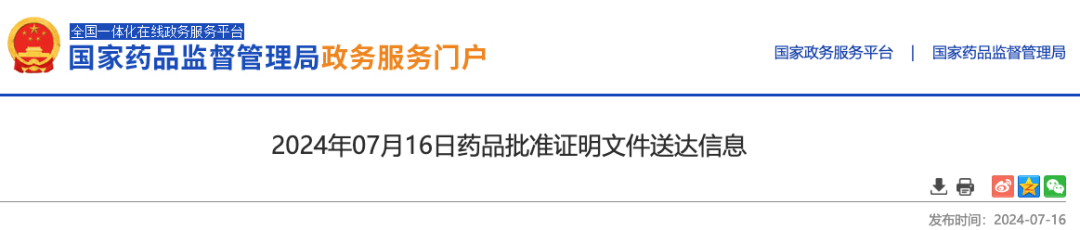

Entecavir and Rilpivirine Hydrochloride and Tenofovir Alafenamide Fumarate Tablets are composed of entecavir, rilpivirine hydrochloride, and tenofovir alafenamide fumarate. Entecavir is a nucleoside reverse transcriptase inhibitor that can block the synthesis of viral DNA chains. Rilpivirine is a non-nucleoside reverse transcriptase inhibitor with broad-spectrum antiviral activity against various HIV-1 subtypes. Tenofovir alafenamide is converted into its active form, tenofovir, in the body, and then through phosphorylation, it is transformed into tenofovir diphosphate, inducing the termination of viral DNA chain replication.(Image and information source: National Medical Products Administration, "Qilu Pharmaceutical Group" WeChat Official Account)
Shanxi Province Launches Flying Inspection: Focus on Anesthesia, Pulmonary Tumor Medications, and Intensive Care in Three Areas
Recently, the 2024 National Healthcare Security Fund Fly-in Inspection Shanxi Province Launch Conference was held in Taiyuan. The inspection will cover four designated medical institutions and two designated chain pharmacies in Taiyuan and Jincheng, focusing on the use, management, and related internal control system establishment and implementation of healthcare security funds from 2022 to 2023. This fly-in inspection focuses on three aspects: anesthesia, pulmonary tumor medication, and intensive care.(Source: Shanxi Provincial Medical Insurance Bureau)
Academician as President: Rehabilitation University Established Last Month, Already Affiliated with 3 Tertiary Hospitals
On the afternoon of July 14, Rehabilitation University held a meeting of leading cadres to announce the provincial Party committee's decision on the appointment of the university's leadership: Comrade Liu Jun was appointed as the Party Secretary of Rehabilitation University, and Comrade Dong Erdan was appointed as the President of Rehabilitation University.
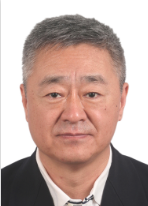
Dong Erdan, a cardiovascular pathophysiologist and medical science and technology management expert, mainly engages in research on the regulatory mechanisms of the sympathetic/adrenaline receptor on cardiovascular functions, as well as the establishment of innovative medical research systems and the implementation of strategic planning and other scientific project management studies. He graduated from Peking University (formerly Beijing Medical University) in 1994 with a doctoral degree and was elected as an academician of the Chinese Academy of Engineering in 2019.
Rehabilitation University is located in Qingdao, Shandong Province. It was established in June this year, hosted by the Shandong Provincial Government and jointly supported by the Ministry of Education, the China Disabled Persons' Federation, the National Health Commission, and other units. Rehabilitation University is the first university in China named after "rehabilitation" and has three affiliated hospitals, including Qingdao Central Hospital of Rehabilitation University, Qingdao Hospital of Rehabilitation University, and Qingdao Rehabilitation Hospital of Rehabilitation University.(Image and information source: Rehabilitation University official website, Chinese Academy of Engineering official website)
Jiangsu Includes Painless Childbirth in Medical Insurance
Recently, the Jiangsu Provincial Medical Insurance Bureau issued a policy to include intrathecal labor analgesia in medical insurance payments, listing it as a Class A item, which will be implemented on July 1.
Painless childbirth refers to the use of intrathecal nerve block techniques to manage labor pain in pregnant women, an anesthetic method that alleviates the pain of natural childbirth. Painless childbirth was first introduced in China in 2008 and gradually promoted nationwide after 2018.
In 2019, the dedicated project for painless childbirth, intrathecal labor analgesia, was initiated in Jiangsu and managed as a Class C special medical service project, priced at around 2000 yuan. In 2022, only 65,000 pregnant women in Jiangsu used labor analgesia, with a utilization rate of about 14%. However, the cesarean section rate in secondary level hospitals and above exceeded 44% during the same period, far surpassing the WHO's alert line of a 15% cesarean section rate.
Preliminary understanding shows that, apart from Jiangsu, provinces and municipalities such as Beijing, Hebei, Shanghai, Jiangxi, Shandong, Henan, and Guizhou in China have already included labor analgesia in their local medical insurance coverage.(Source: National Healthcare Security Administration)
WHO Updates Priority Pathogens List for Bacteria: 5 Removed, 4 Newly Added
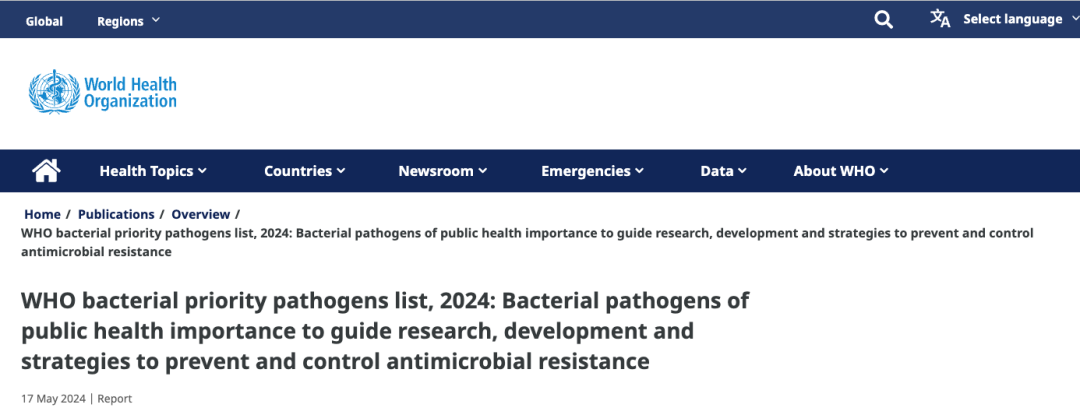
Recently, the WHO updated the 2024 Bacterial Priority Pathogens List (2024 WHO BPPL), revising and improving the prioritization of antibiotic-resistant bacterial pathogens based on the 2017 version.
The 2024 WHO BPPL includes 15 drug-resistant bacteria, categorized by importance into critical priority, high priority, and medium priority. Among these, third-generation cephalosporin-resistant Enterobacteriaceae are listed as a separate item under the critical priority pathogens.
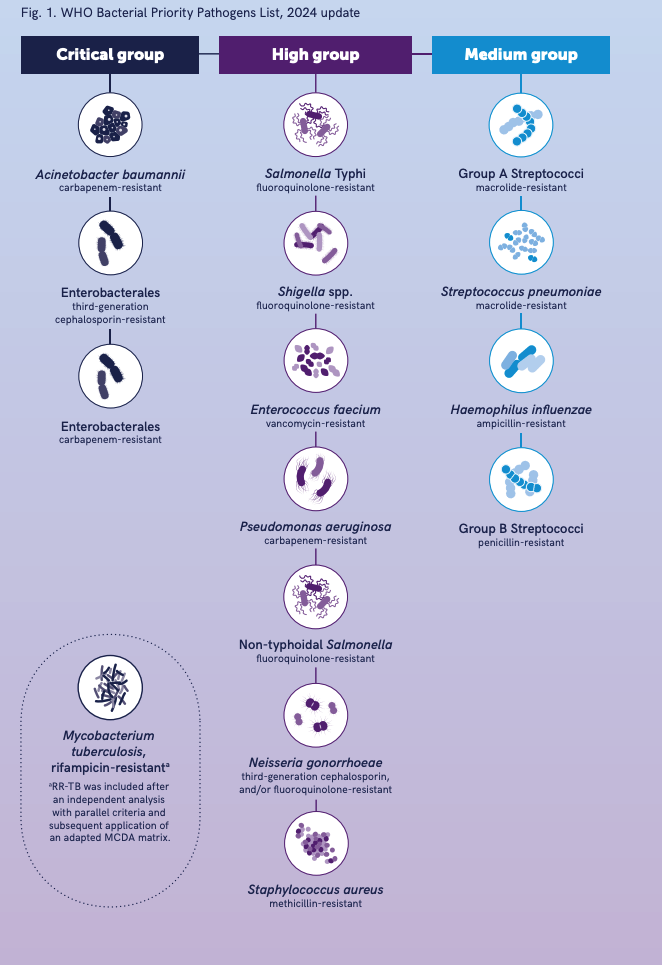
In addition, the 2024 WHO BPPL removed five pathogen-antibiotic combinations included in the 2017 list, including third-generation cephalosporin-resistant Providencia spp., clarithromycin-resistant Helicobacter pylori, fluoroquinolone-resistant Campylobacter, vancomycin-resistant Staphylococcus aureus (VRSA), and penicillin-non-susceptible Streptococcus pneumoniae.
Four new combinations have been added, including rifampicin-resistant Mycobacterium tuberculosis, macrolide-resistant Group A Streptococcus, penicillin-resistant Group B Streptococcus, and macrolide-resistant Streptococcus pneumoniae.(Image, Information Source: WHO)
Planning: sysoon| Supervised by:ame