

Science Corporation Files IPO Prospectus: Pioneering 'Gene Therapy + Visual BCI' to Restore Sight

Science
Medical Device Developer
From monkey experiments to Neuralink's upcoming second human trial in July 2024, we are frequently witnessing historic moments created by brain-computer interfaces.
In April 2024, Elon Musk shared another piece of good news about Neuralink on social media — "The Blindsight implant is already working in monkeys." From this, we can infer that invasive brain-computer interface companies represented by Neuralink are expected to achieve "restoration of sight for the blind."
Besides Elon Musk, there is another brain-computer interface company equally dedicated to restoring sight to the blind. This is Science Corporation, founded by Max Hodak, the co-founder and former president of Neuralink.
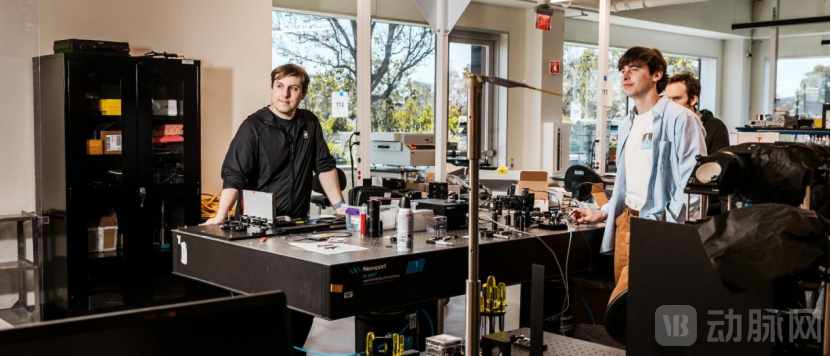
Science CEO Max Hodak (left)
Source: The Washington Post
Science Corporation CEO Max Hodak, like a group of star entrepreneurs in the brain-computer interface track, has an impressive background.
In addition to his entrepreneurial experience as the president of Neuralink, Max Hodak, a graduate of Duke University, also founded MyFit during his sophomore year in college and secured $1 million in funding. This company was later acquired by Naviance. Over the next two years, Max Hodak chose to continue his studies to complete his degree in biomedical engineering under the mentorship of Miguel Nicolelis, a professor of neurobiology, neurology, and biomedical engineering at Duke University who is known as the "father of brain-computer interfaces."
After graduating in 2012, Max Hodak chose to start a business again, but this time, it still had nothing to do with brain-computer interfaces. Transcriptic, the life sciences research platform founded during Max Hodak's second venture, is a cloud-based service. The project gained favor from prominent investment institutions such as Google Ventures, Data Collective, and Silicon Valley Bank, accumulating over $30 million in funding.
After five years of twists and turns in the technology industry, Max Hodak has returned to his starting point. During his university years, Max Hodak worked as an assistant researcher in Professor Miguel Nicolelis's lab at Duke University, participating in brain-computer interface research on rhesus monkeys. This entrepreneurial endeavor led to the establishment of Neuralink with seven other partners, focusing on the development of invasive brain-computer interfaces.
On April 9, 2021, Neuralink announced the implantation of a brain-computer interface in a monkey's brain to control the monkey playing video games. Subsequently, on May 2, Max Hodak officially announced his departure and founded a brand-new brain-computer interface company, Science Corporation, after parting ways. To date, Science Corporation has raised a cumulative total of $160 million.
The first product developed by Science is a visual prosthesis called "Science Eye," which primarily targets severe blindness caused by the death of photoreceptor cells in conditions such as Retinitis Pigmentosa (RP), Age-related Macular Degeneration (AMD), and Stargardt Disease.
Specifically, Science Eye is a combination device consisting of two parts. The first is an implant, which includes a wireless power coil and an ultra-thin flexible micro-LED that is directly inserted into the retina. The second part is a pair of frameless glasses, similar in size and shape to regular glasses, containing a miniature infrared camera and an inductive power coil.
But before the device, Science also utilized a new gene therapy tool — Optogenetic Therapy.This therapy can help patients with damaged photoreceptor cells regain their sight by injecting opsins into the photoreceptor cells, using channelrhodopsin (ChR) to make neurons respond to light, and enhancing the light sensitivity of the retinal tissue at the back of the eyeball.
From the underlying principle behind the action of "seeing," light enters the eye through the lens and forms an image on the retina. The photoreceptor cells on the retina (rods and cones) receive light stimulation and generate nerve impulses. These nerve impulses are transmitted to the cerebral cortex via the optic nerve fibers, ultimately forming visual perception.
In retinal pigment degeneration, the rod and cone photoreceptor cells are broken down and die, leading to the loss of peripheral vision and the development of tunnel vision. Patients must turn their entire head to see the world around them. Eventually, complete blindness follows.
Fortunately, during this pathological process, the decomposition of photoreceptor cells does not weaken the brain's ability to process electrical signals. More crucially, the third-order neurons in the retina—retinal ganglion cells (RGCs)—remain intact. Therefore, the first step for Science Eye is to bypass the visual pathway and directly deliver opsins to the retinal ganglion cells, making them sensitive to specific wavelengths of light and turning them into new "photoreceptor cells."
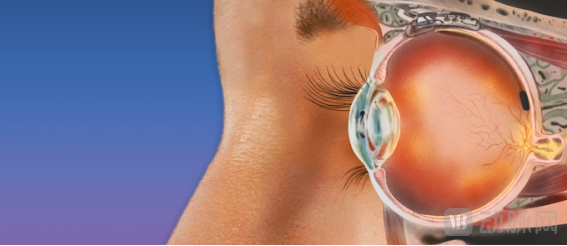
Step 1: Targeting Ganglion Cells
Source: The Washington Post
The second step is to install an implant into the patient's retina — an ultra-thin, flexible micro-LED. Through surgery, the light sheet at the end of the device is placed onto the new "photoreceptor cells," and specific wavelengths of light emitted by the micro-LED are used to drive these photoreceptor cells, causing them to send electrical signals to the cerebral cortex.
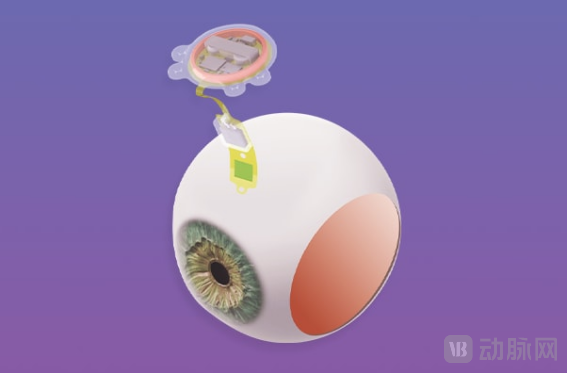 Step Two: Ultra-Thin Flexible Micro-LED
Source: The Washington Post
Specifically, this implant, named "FlexLED," is an ultra-thin, flexible, wireless Micro LED with a thickness of only 30μm, containing 8,192 pixels with a pixel light-emitting area of 66μm². During surgery, doctors secure the FlexLED to the back of the eyeball for use, while the accompanying electronic components are installed on the top of the eye.According to Max Hodak's revelation in a public interview, the resolution of this visual prosthesis technology can reach up to 8 times that of an iPhone screen.
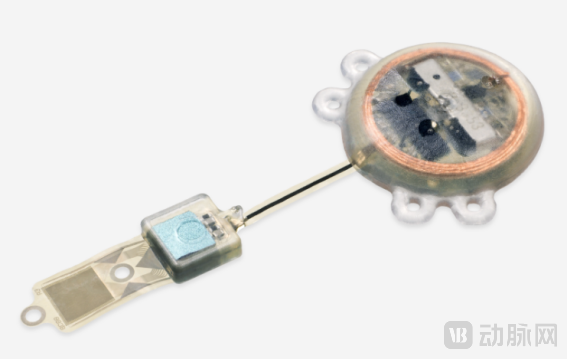
Ultra-thin Flexible Wireless Micro LED and Accompanying Electronic Components
Source: Science official website
The third step is a special pair of glasses named "PRIMA." Equipped with a mini infrared camera and an induction power coil, these glasses can project image signals onto Micro LED, activating the modified photoreceptor cells, thereby bringing information back to the signal chain and ultimately generating vision in the brain.
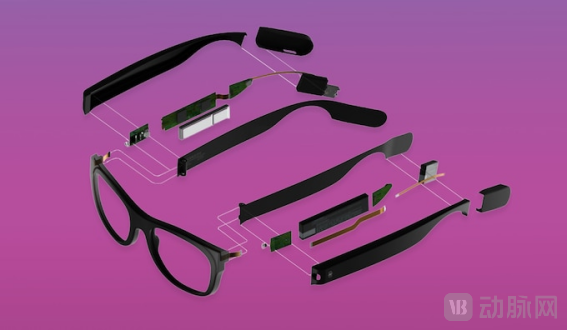
Step Three: PRIMA Glasses
Source: The Washington Post
Relying on these three steps, even those who are blind from birth may have the chance to regain their sight. Science has successfully converted RGCs into photoreceptor cells in a rabbit test model, "illuminating" the brain.Regarding the most concerning clinical trial issues, Max Hodak also mentioned in an interview with The Washington Post that Science Eye's human clinical trials will commence before 2025.
The concept of visual prosthetics itself is not sufficiently "novel." Apart from Science, there are many innovative companies globally that are developing visual prosthetics, such as Second Sight and Pixium Vision SA. However, after studying the existing technologies on the market, Max Hodak stated: "The early industry leaders used traditional electrodes, but in the long run, these electrodes cannot achieve truly high-resolution vision."
At the same time, some companies around the world are also developing optogenetic technologies, such as Bionic Sight and GenSight. "These companies use laser projectors mounted on glasses to drive opsins, which do not move with the eyes. However, the flexible micro-flexible Micro LED technology adopted by Science Eye can maintain a continuous mapping of photoreceptor cells to the cortical image as patients look around and move," said Max Hodak.
It is worth mentioning that in April 2024, Science completed the acquisition of Pixium Vision SA's intellectual property and related assets, which is also the source of the third phase of Science Eye's PRIMA technology.Pixium Vision had nearly run out of cash before the final results of the critical trial at the end of 2023, and was on the brink of collapse when it was acquired by Science. However, this was not due to a failure of the technology but rather the cancellation of a key merger deal.
PRIMA received the FDA Breakthrough Device Designation in the United States in 2023 and is currently undergoing three human clinical trials. However, neither Pixium Vision nor Science has released a complete dataset of the trial results.But Max Hodak and IEEE Spectrum videos have publicly shared three videos of AMD patients using Prima. The videos show that, with the help of Prima, these three patients were able to slowly but fluently read hardcover books, complete crossword puzzles, and play card games.
Regarding this acquisition, Max Hodak said: "Elon does whatever he wants to do, but we need something that can truly drive future progress. In terms of value to patients and society, Prima has the capacity and potential to help us achieve our ambitions."
Max Hodak has also compared Science's technology with existing technological pathways. Compared to the N1 chip implanted in the brain, he believes that "as long as the optic nerve is intact, the retina is the ideal place to restore vision to the brain because the visual cortex of the brain is too complex and dispersed, making surgical implantation more difficult. However, considering the two technological pathways of optogenetics and Prima, we still don’t know which one will ultimately help visually impaired people regain their sight, but I believe optogenetics will be more powerful than Prima’s electrical stimulation."
In terms of technology implementation, Science acquired a U.S.-based MEMS foundry in early 2023, establishing the "Science Foundry." In July 2024, Science announced a decision to invest an additional $65 million to expand its manufacturing facility by over 5,000 square meters to support the production of cutting-edge technology products such as Science Eye and PRIMA.
At the same time, Science Foundry will also leverage the company's advanced MEMS manufacturing capabilities to provide customized development services to customers, mainly includingThin Film Electrode Standard Technology, Polysilicon Standard Technology, Piezo Standard Technology, and Silicon-on-Insulator Standard Technology.These four platforms will help users shorten the development time from months to weeks, reduce early-stage process development investment, and promote the rapid development and implementation of the brain-computer interface industry.