

Qilu Joins the Fray: '1 Originator + 7 Domestic' Competition Intensifies for Takeda's Blockbuster P-CAB Drug

Qilu Pharmaceutical
Specialty Formulations and Active Pharmaceutical Ingredients (API) Developer

Kanghong Pharmaceutical
Comprehensive pharmaceutical product manufacturer
In the drug market for treating diseases related to gastric acid secretion, a new change is brewing.
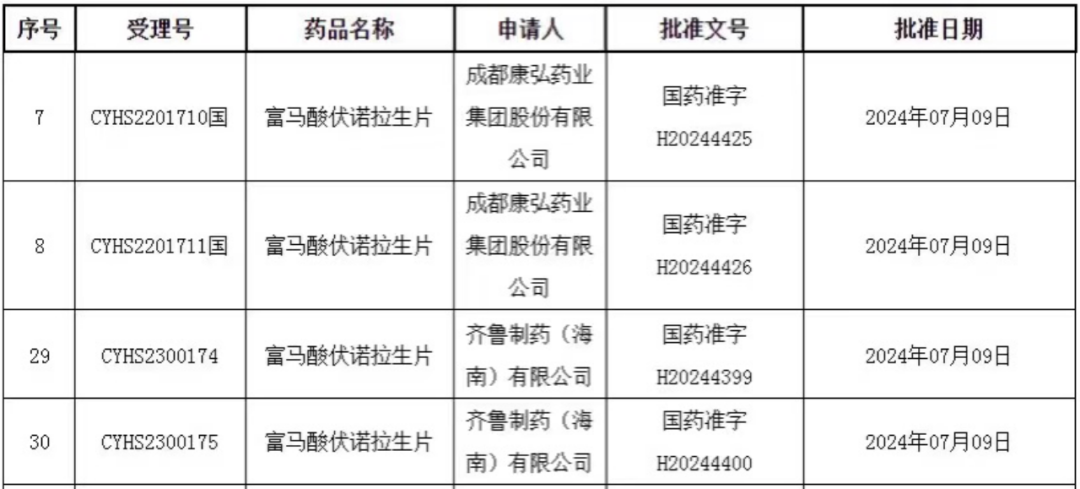
Recently, the potassium-competitive acid blocker (P-CAB) vonoprazan fumarate tablets, reported for production by Qilu Pharmaceutical and Chengdu Kanghong Pharmaceutical Group Co., Ltd. as Category 4 generics, were approved on the same day. Vonoprazan fumarate tablets are a best-selling drug for treating diseases related to gastric acid secretion, and this approval has also upgraded the product’s competitive landscape in China to “1 original research + 7 domestically produced.”
Vonoprazan Fumarate Tablets are a new generation acid suppressant originally developed by Takeda Pharmaceutical. Compared with proton pump inhibitors (PPIs), which are the most widely used in clinical applications, Vonoprazan Fumarate has comprehensive advantages such as faster onset (full effect with the first dose), more sustained acid suppression, better nighttime acid control, and higher mucosal healing rates. Currently, the approved indications for Vonoprazan Fumarate Tablets in China include reflux esophagitis and use in combination with appropriate antibiotics to eradicate Helicobacter pylori.
With the changes in lifestyle and living environment, as well as the acceleration of population aging, the prevalence of digestive system diseases has been gradually increasing in recent years. Diseases related to gastric acid secretion are among the main disorders of the digestive system. Against the backdrop of a continuously growing demand for treatment drugs, the market space for acid-suppressing drugs in China is vast. After the successive inclusion of PPI drugs like the "razole" class into centralized procurement, the "replacing old cages with new birds" market has provided more room for innovative acid-suppressing drugs such as P-CAB. With keen business acumen, leading local pharmaceutical companies are actively entering the market.
More Than 30 Pharmaceutical Companies Crowd to Secure
Gastroesophageal reflux disease (GERD) is a common chronic and progressive digestive system disorder, with a prevalence rate as high as 6.4% in the general population in China. Its etiology involves the reflux of gastric contents into the esophagus and above, causing reflux and/or heartburn, along with erosions of the esophageal mucosa, significantly affecting patients' quality of life and sleep.
More seriously, persistent/untreated chronic esophageal acid exposure can also lead to anatomical changes in the esophagus, resulting in various complications such as esophageal ulcers, esophageal strictures, esophageal bleeding, Barrett's esophagus, and even esophageal adenocarcinoma, further reducing the patient's quality of life, affecting their mental health, and increasing the burden of treatment.
But vonoprazan fumarate (brand name: Takecab/Vocinti), jointly developed by Takeda Pharmaceutical and Otsuka Pharmaceutical, has revolutionized the treatment of reflux esophagitis. By blocking H+,K+-K ATPase+Channel, Vonoprazan Fumarate Tablets can competitively block K+Binding to this enzyme allows it to remain in the gastric parietal cells for a long time, thereby rapidly inhibiting gastric acid secretion. Clinical data show that it has the characteristics of accelerating mucosal healing and rapidly relieving symptoms.
Vonoprazan Fumarate Tablets were first approved for marketing in Japan in February 2015 for the treatment of acid-related diseases, including reflux esophagitis, gastric ulcer, duodenal ulcer, prevention of recurrence of gastric or duodenal ulcers during treatment with low-dose aspirin or non-steroidal anti-inflammatory drugs, and eradication of Helicobacter pylori. With numerous indications, the global sales of Vonoprazan Fumarate Tablets have continued to rise.
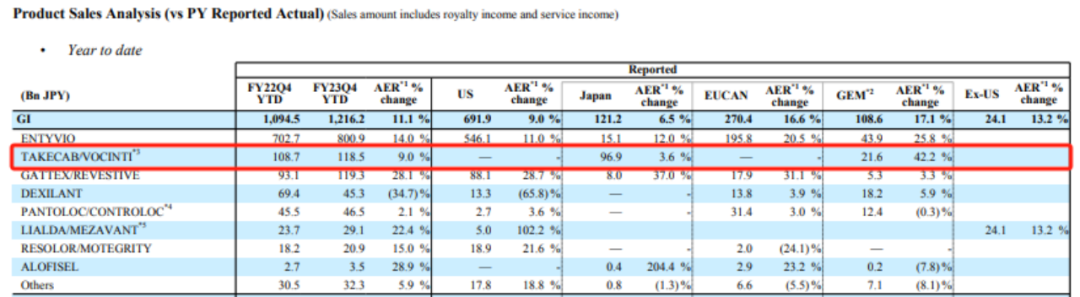
According to the financial report, Vonoprazan Fumarate Tablets contributed 118.5 billion yen (approximately $847 million at the annual average exchange rate) to Takeda Pharmaceutical's revenue in 2023, marking a 9% year-on-year increase at the actual exchange rate. Undoubtedly, it is one of Takeda Pharmaceutical's flagship products in the gastrointestinal field. Takeda Pharmaceutical predicts that the product’s sales in the fiscal year 2024 are expected to grow by 12% year-on-year, reaching 133 billion yen, showing the potential of a blockbuster drug.
In March 2018, the CDE officially accepted Takeda Pharmaceutical's marketing application for vonoprazan fumarate tablets in China; in December 2019, the product was approved to enter the Chinese market for the initial treatment of reflux esophagitis, becoming the first P-CAB approved in China; by the end of 2020, the product successfully entered the Class B National Medical Insurance Catalogue through negotiation; in October 2021, the product was approved for a new indication for maintenance therapy of reflux esophagitis.
In the 2023 National Medical Insurance Catalog, Vonoprazan Fumarate Tablets have been moved to the regular directory, but the restricted use scope remains unchanged, still limited to "patients with reflux esophagitis." Benefiting from the volume expansion effect of medical insurance, the sales of Takeda Pharmaceutical's original Vonoprazan Fumarate Tablets have been steadily increasing in the domestic market in recent years. Data from Menet shows that in 2023, the sales revenue of this product in Chinese public medical institutions exceeded 600 million yuan, ranking it among the top eight oral products for treating diseases related to gastric acid secretion.
Figure: Sales of Vonoprazan Fumarate Tablets (Unit: Ten Thousand Yuan)
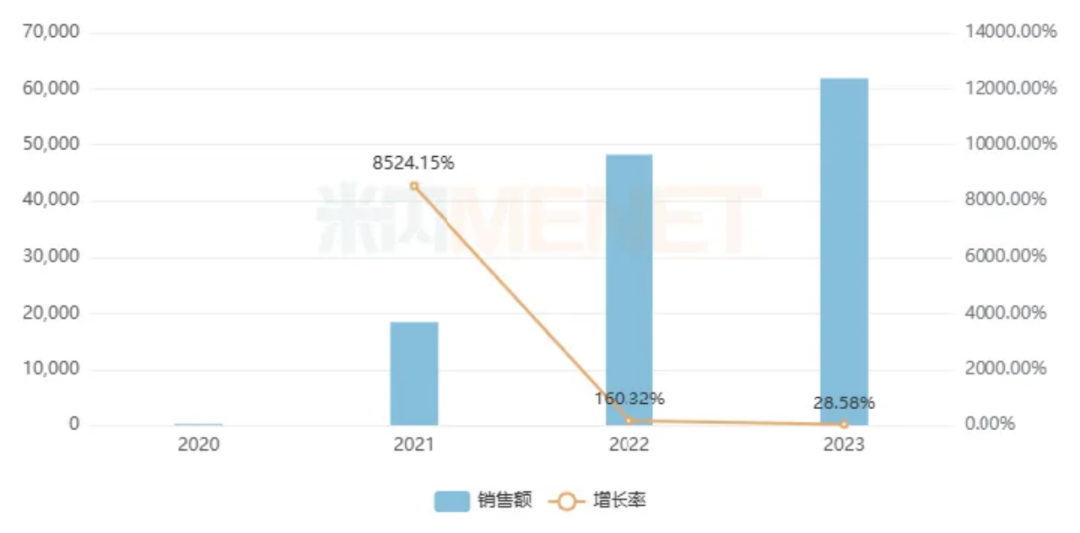
Source: MiNei Network's Competitive Landscape of Drug Terminals in Chinese Public Medical Institutions
Currently, Takeda Pharmaceutical's Vonoprazan Fumarate Tablets are still the only product available on the market in China, as the compound patent for this product does not expire until August 29, 2026. According to patent law requirements, generic drugs can only be marketed after the original drug’s patent expires. However, leading pharmaceutical companies have already made early arrangements. Since 2022, domestically produced generic drugs have been successively approved, forming a competitive landscape of "1 original + 7 domestic" products.
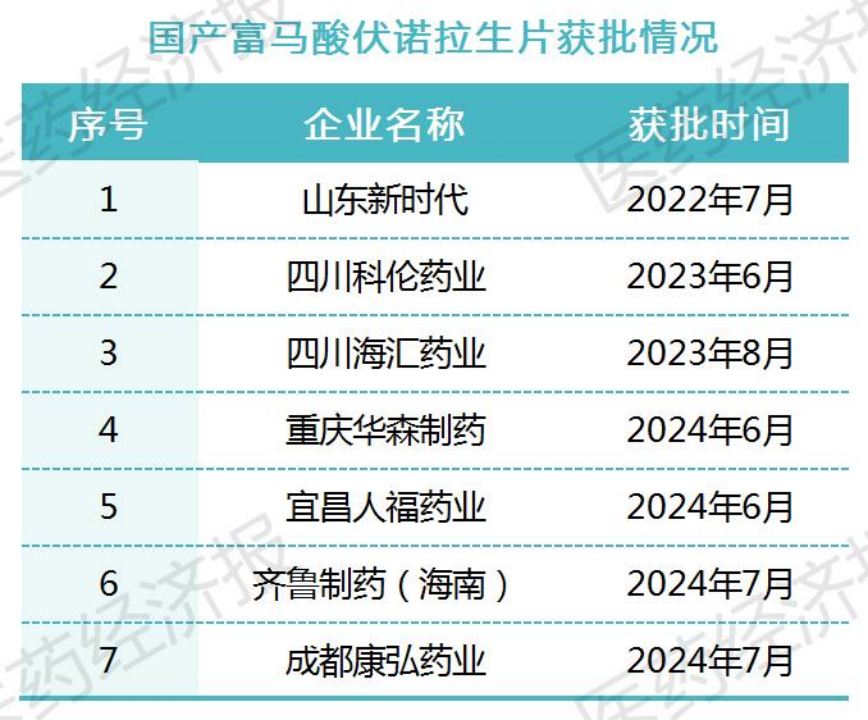
In July 2022, Shandong New Era Pharmaceutical Co., Ltd. was the first in China to obtain approval for the domestically produced generic version of Vonoprazan Fumarate Tablets; the following year, Sichuan Kelun Pharmaceutical and Sichuan Haihui Pharmaceutical (under Yangtze River Pharmaceutical Group) also secured their entry into the market with this best-selling drug. This year, Vonoprazan Fumarate Tablets have attracted more competitors. In addition to Qilu Pharmaceutical (Hainan) and Chengdu Kanghong Pharmaceutical Group Co., Ltd., whose products were recently approved, Chongqing Huasen Pharmaceutical and Yichang Renfu Pharmaceutical also joined the "competition" for this lucrative product last month.
In addition, according to the CDE's disclosed list of products under review, more than 30 pharmaceutical companies, including CSPC, Zhengdatianqing, Huadong Medicine, Shuanglu Pharmaceutical, and Dongyangguang Pharmaceutical, have successively submitted marketing applications for Vonoprazan Fumarate Tablets, all of which are currently under evaluation and approval. It is not difficult to foresee that before the expiration of Takeda Pharmaceutical’s original drug patent, more generic versions of Vonoprazan Fumarate Tablets will be approved for marketing, and the market battle is imminent.
It is worth mentioning that, based on the limitations of oral formulations, Shandong New Era Pharmaceutical, which secured the first generic version of the tablet, is also developing a Class 2.2 new drug, Fumaric Acid Vonoprazan Injection. This product is currently in Phase I clinical trials and is intended for the treatment of peptic ulcers. In the industry's view, Shandong New Era Pharmaceutical is expected to gain a certain market advantage in the formulation innovation of this significant drug variety.
Replacing PPI drugs is the general trend
As is known to all, acid-suppressive drugs are the fundamental treatment for diseases related to gastric acid secretion, playing a crucial role in promoting mucosal healing and symptom relief in patients. From the emergence of H2 receptor antagonists (H2RAs, "tidine" class) in the 1970s, to proton pump inhibitors (PPIs, "prazole" class) in the 1980s, and then to the potassium-competitive acid blocker (P-CAB) vonoprazan launched in 2015, acid-suppressive drugs have gone through three distinct eras.
Data from Menet shows that in 2022, the drug market size for treating diseases related to gastric acid secretion in China's public medical institutions exceeded 29 billion yuan. Among this, PPI drugs accounted for over 58% of the market share, remaining the best-selling subcategory. However, due to the advantages in mechanism of action, P-CAB products gradually replacing PPI drugs has become an inevitable trend. The potential medication demand for digestive ulcers and gastroesophageal reflux disease in China is enormous, which has also attracted many leading pharmaceutical giants to enter the market to "mine for gold."
Currently, in addition to Takeda Pharmaceutical's Vonoprazan Fumarate Tablets, two other P-CAB products have also been approved for marketing in China: Tigoprazan Tablets developed by Luoxin Pharmaceutical, and Hydrochloride Kepirazan Tablets jointly developed by Fosun Pharma and KeyPharm.
Luye Pharma's Tigoprazan Tablets are the first domestically developed P-CAB product in China. They were approved for marketing in April 2022 for the treatment of reflux esophagitis and were included in the national medical insurance catalog in the same year. The launch of Tigoprazan Tablets also marked Luye Pharma's breakthrough with its first Class 1 new drug. In November 2023, Tigoprazan Tablets received additional approval for the indication of duodenal ulcer; in December of the same year, the marketing application for the new indication "in combination with appropriate antibiotic therapy to eradicate Helicobacter pylori" was accepted by the CDE. It is reported that the clinical data for this indication showed a superior eradication rate compared to the control group using Esomeprazole, making it the first P-CAB with an eradication rate exceeding 90% for this indication.
A securities firm predicted that the annual sales peak of Tegoprazan tablets is expected to reach 2-3 billion yuan. With new indications being approved successively, Luoxin Pharmaceutical's Tegoprazan tablets are expected to accelerate the realization of this prediction.
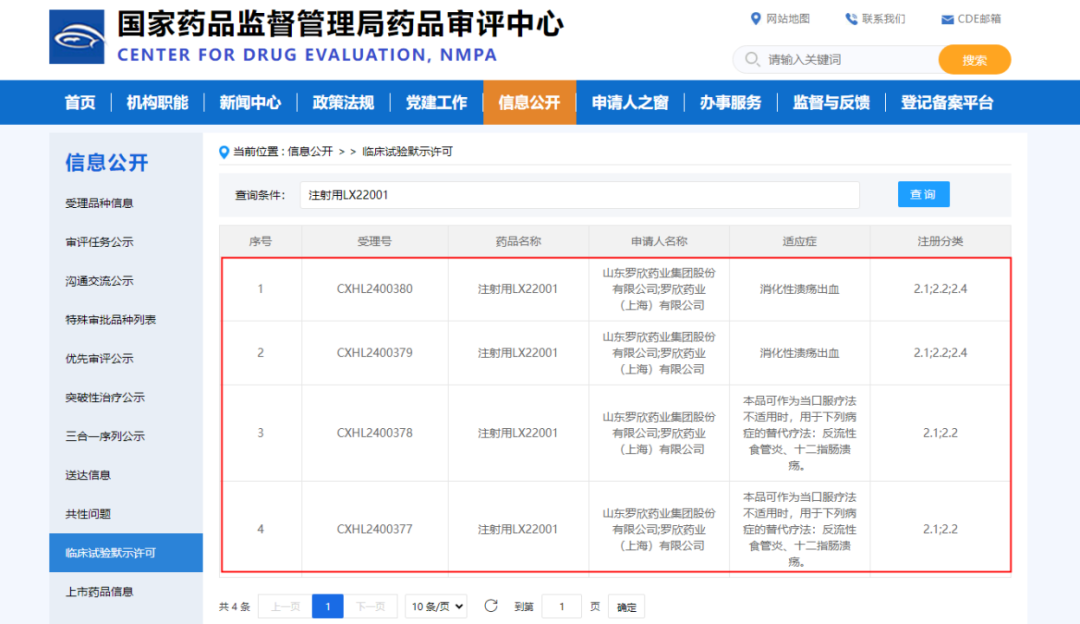
Following the same approach as Shandong New Era Pharmaceutical, Luoxin Pharmaceutical is also developing an injectable form of tegoprazan, LX22001. In July 2024, this drug was approved to begin clinical trials, and currently, there are no similar products on the market worldwide. The injectable LX22001, which has now been approved for clinical use, is being developed for two indications: as an alternative therapy when oral treatment is not applicable, for the following conditions—gastroesophageal reflux disease, duodenal ulcer; and bleeding from peptic ulcers.
Cophyline Pharmaceutical's Class 1 innovative drug, Kayprazole Hydrochloride Tablets, was approved for marketing in February 2023. It is suitable for the treatment of duodenal ulcers and reflux esophagitis and is the first domestically produced P-CAB product in China to receive dual indications. Based on the licensing agreement signed between Cophyline Pharmaceutical and Fosun Pharma in September 2022, the two parties will jointly develop Kayprazole Hydrochloride, with Fosun Pharma exclusively commercializing the product. The collaboration covers all available indications for oral and standard injectable formulations of Kayprazole Hydrochloride, and the two parties will cooperate globally.
Not only Fosun Pharma, but Yangtze River Pharmaceutical, Shanghai Pharmaceuticals, and Livzon Pharmaceutical are also laying out P-CAB products through introduction. In March 2021, Haini Pharmaceutical, a subsidiary of Yangtze River Pharmaceutical, acquired the rights to Dae Hwa Pharmaceutical's fexuprazan hydrochloride tablets in China for up to 2.2 billion yuan. Haini Pharmaceutical will be responsible for the clinical development of fexuprazan hydrochloride tablets for the treatment of digestive system diseases and will manage the entire approval process for the drug in China. In June 2023, the marketing application for fexuprazan hydrochloride tablets was accepted by the CDE.
More than half a year later, Shanghai Pharmaceuticals also introduced Xinalapride Ester Capsules, a Class 1 drug from Guizhou Shenguo Biotech. The drug was first submitted for marketing approval in February 2023, targeting the indication of reflux esophagitis. It is reported that in October 2021, Shanghai Pharmaceuticals signed a cooperation agreement with Guizhou Shenguo Biotech and its wholly-owned subsidiary Tairui Shenguo, acquiring the exclusive rights to contract manufacture the raw materials and formulations of Xinalapride Ester Capsules as well as the industrial sales rights for all indications within the China region (including Hong Kong, Macao, and Taiwan areas) for a transaction amount not exceeding 6.9 billion yuan (excluding sales royalties).
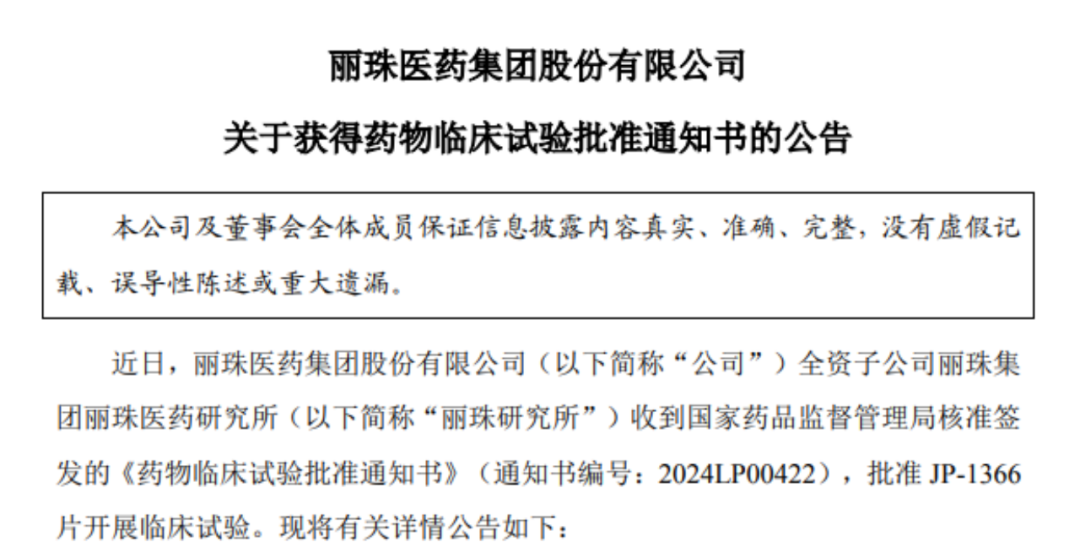
As a leading enterprise in the market for drugs treating diseases related to gastric acid secretion in China's public medical institutions, Livzon Pharmaceutical did not let itself miss the market opportunity presented by P-CAB. In March 2023, Livzon Pharmaceutical announced that it had signed an exclusive licensing agreement with Onconic Therapeutics for the latter’s development of zastaprzan (JP-1366) in Greater China.
According to the announcement by Livzon Pharmaceutical, the company will pay Onconic an upfront licensing fee of $15 million. During the development and market launch phases of the licensed product, Livzon will pay Onconic a total amount not exceeding $112.5 million for technology transfer fees, corresponding development milestones, and sales milestones. After the licensed product is approved for marketing in the licensed region, Livzon Pharmaceutical will also pay corresponding sales royalties to Onconic as per the agreement. In February 2024, Zastaprzan received clinical approval in China; in April of the same year, Zastaprzan was approved for marketing in South Korea.
Following PPI drugs, P-CAB drugs can be said to be the most anticipated new class of medications for acid-related disorders within the industry. As leading pharmaceutical companies aggressively develop both generic and innovative P-CAB products, there is no doubt that the market for drugs treating acid-related disorders in China is poised for a new era. In this surge of advancements brought by the P-CAB era, who will emerge as the next frontrunner? The industry eagerly awaits.




www.yyjjb.com.cn
Insight into Industry Trends

"Pharmaceutical Economy News"
Academic Official Account
Focus on the Frontier of Oncology Academia

Terminal Official Account