IRVINE, Calif. – IASO Bio's Ixazomib-Based CAR-T Therapy Ixekizumab Injection Receives FDA IND Clearance for Multiple Sclerosis

IASO Biotechnology
Cancer Treatment New Drug Developer
Disclaimer: Due to limited expertise, errors are inevitable, and some information may not be the most up-to-date. Feel free to point out in the comments. This article is only an introduction to drugs related to healthcare (if involved), not a recommendation of treatment plans; it does not constitute any investment advice.
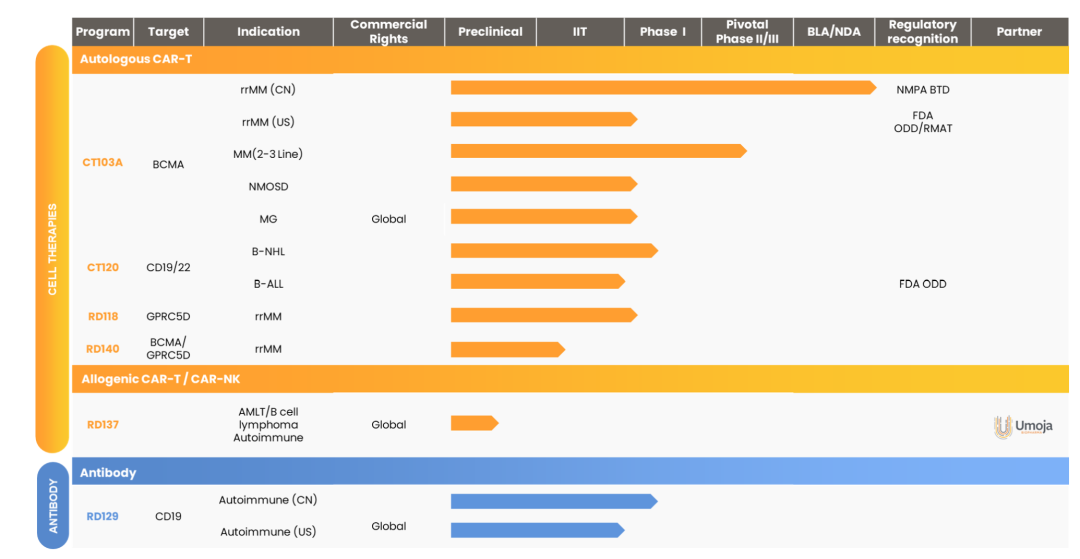
July 24, 2024, Nanjing, Shanghai, China, San Jose, California, USA — IASO Bio, a biopharmaceutical company dedicated to the research, development, manufacturing, and commercialization of innovative cell therapies, announced thatThe Investigational New Drug (IND) application for the self-developed fully human BCMA-targeted chimeric antigen receptor autologous T-cell injection (Equecabtagene Autoleucel Injection) has received tacit approval from the U.S. Food and Drug Administration (FDA) for the proposed treatment of Multiple Sclerosis (MS).). This is the second autoimmune disease indication IND for IASO Bio's equezel cel injection to successfully gain FDA approval in 2024, following refractory generalized myasthenia gravis (gMG).
Dr. Yongke Zhang, Chief Scientific Officer of IASO Bio, stated: "In an investigator-initiated clinical study conducted in China on autoimmune diseases using Icarus Injection, its efficacy has been validated across up to six different types of autoimmune diseases. The recent FDA's clearance of the IND application for Icarus Injection for the treatment of multiple sclerosis is a strong testament to IASO Bio’s continuous efforts and technological breakthroughs in the field of autoimmune disease treatment. We will remain committed to a clinical value-oriented R&D philosophy, addressing unmet clinical needs, and placing high importance on the implementation of our global strategy. Through close collaboration and in-depth exchanges with international clinical research institutions, we will accelerate the development and market introduction of more innovative drugs, bringing greater benefits to patients worldwide."
About Multiple Sclerosis (MS)
Multiple Sclerosis is a neuroinflammatory disease that affects the central nervous system (CNS), leading to demyelination and neuronal damage. It is one of the most common causes of non-traumatic disability in young adults aged 18 to 40. According to the Frost & Sullivan report, there were approximately 3.07 million people with Multiple Sclerosis globally in 2023, including around 400,000 in the United States. The prevalence of Multiple Sclerosis shows significant gender differences, with an overall female-to-male ratio of 3:1.
Multiple sclerosis is characterized by localized lymphocytic infiltration into the central nervous system, leading to demyelination and axonal damage. These damages result in neurological syndromes and physical disabilities. The clinical manifestations of multiple sclerosis depend on the location of the damage within the central nervous system. Common symptoms include sensory and visual disturbances, motor and coordination impairments, as well as spasticity, fatigue, pain, and cognitive deficits. Approximately 85% to 90% of patients with multiple sclerosis experience a relapsing-remitting course, characterized by acute exacerbations followed by periods of remission. However, as the disease progresses and recovery from symptoms becomes incomplete, about 50% of patients eventually develop secondary progressive multiple sclerosis, which is marked by the gradual and irreversible accumulation of neurological dysfunction.
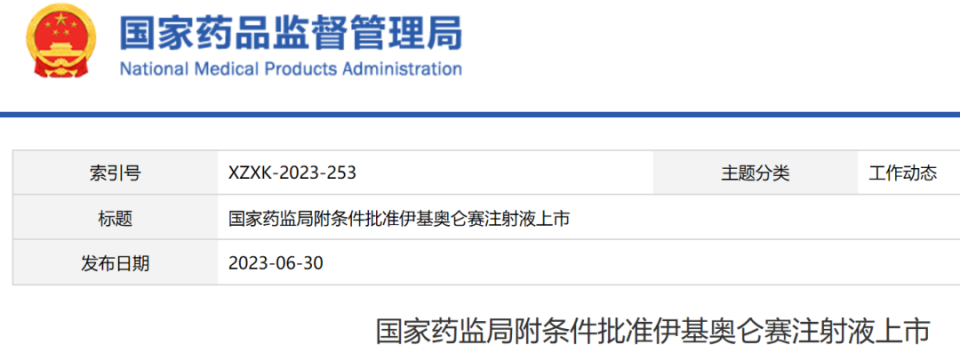
June 30, 2023China's National Medical Products Administration (NMPA) recently announced on its official website that the B-cell maturation antigen (BCMA)-targeted CAR-T product, Idecabtagene Vicleucel Injection, jointly developed by IASO Bio and Innovent Biologics, has been approved for marketing. It is indicated for the treatment of adult patients with relapsed or refractory multiple myeloma (MM) who have progressed after at least three prior lines of therapy (including at least one proteasome inhibitor and one immunomodulatory agent). Notably, this is the first BCMA-targeted CAR-T therapy approved in China.
Source: IASO Bio