丨Medicine Hunter Club Research Team
On July 18, Artiva Biotherapeutics, a biotechnology company focused on NK cell therapy, successfully went public on the Nasdaq. The company sold 13.92 million shares at $12 per share, raising $167 million (approximately RMB 1.21 billion).This is the 13th biotechnology company to go public in the U.S. stock market this year.。According toBioPharma
DiveStatistics show that as of July 22, 2024, 13 Biotech companies have successfully gone public on the US stock market, raising a total of nearly 2 billion US dollars. Compared with the same period last year, this year...IPOs Show Signs of Recovery, a total of 12 companies went public in the same period last year, raising a total of 1.7 billion U.S. dollars. There were 19 IPOs throughout the year, raising a total of 2.669 billion U.S. dollars. Although there are signs of recovery,But far less than the peak in 2021.At the peak in 2021, more than a hundred biotechnology companies priced their initial public offerings, raising nearly $15 billion in total.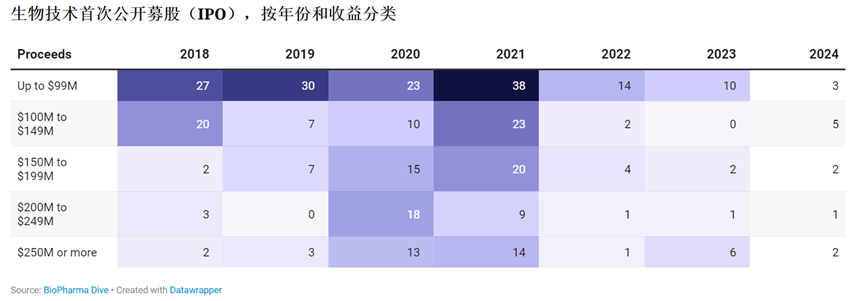
Trends in U.S. Biopharmaceutical IPO Fundraising
At its peak, more than 100 Biotech companies went public on U.S. exchanges in 2021, raising nearly $15 billion in total. This momentum took a sharp downturn in 2022, with new listings experiencing plummeting stock prices amid industry sluggishness, causing IPO activity to stall significantly. Only 22 Biotech companies successfully debuted on Nasdaq in 2022, and just 19 did so in 2023… As of July 13, 2024, 13 companies have completed IPOs on the U.S. stock market.As of now, the biotech IPOs cover a wide range of therapeutic areas, includingCentral Nervous System Diseases, Oncology, Genome Editing,Autoimmune Disease, metabolic diseases, and neurology. Tumors, immunity, and nervous system diseases have received particular attention, with the most companies focusing on immunotherapy, including Artiva Biotherapeutics, Alumis, Telomir Pharmaceuticals, and Kyverna Therapeutics.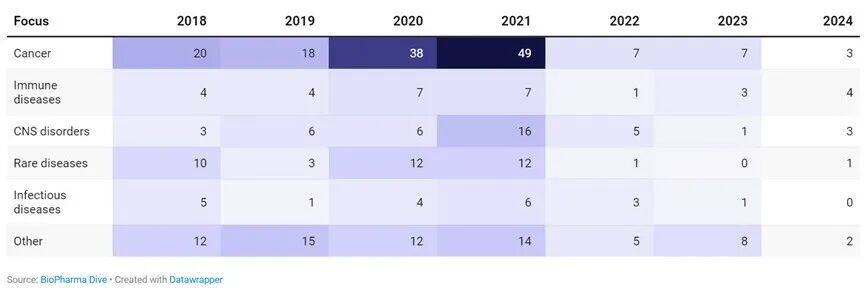
According to the highest stage of the pipeline,As of now, the largest proportion is in Phase 2 clinical trials, with a total of 5 companies., followed by Phase 1 and preclinical stages, with three companies each. Only two companies focused on the oncology field, ArriVent BioPharma and CG Oncology, have advanced pipelines reaching Phase 3 clinical trials. The current trend is different from last year's, as 2023 is mainly concentrated in the mid-to-late stages.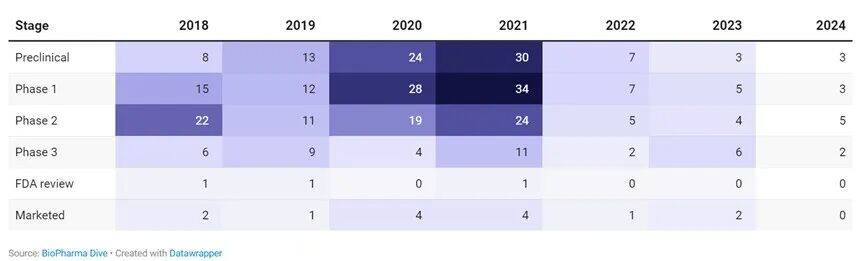
In terms of drug types, among the 13 companies that achieved IPO financing this year, there are eight small-molecule innovative drug companies.Focus on BiologicOnly 1 Innovative Pharmaceutical Company, and four of them are focused on cell and gene therapies.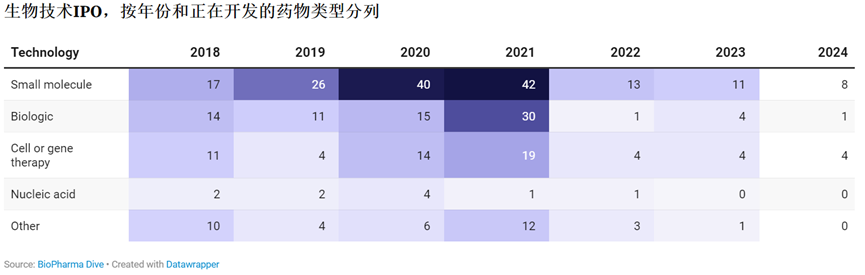
2024 U.S. IPOs: Innovative Drug Companies Raising Over $100 Million
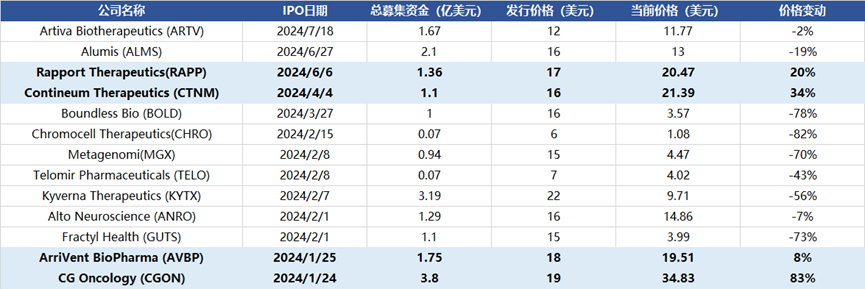
Among the 13 companies that went public in the U.S. stock market this year, 10 raised more than $100 million. As of now, only four are trading above their offering price: CG Oncology, Rapport Therapeutics, Contineum Therapeutics, and ArriVent BioPharma.Among them, the most notableCG Oncology, as the first IPO in 2024BIOTECH,It is also the largest BIOTECH issuance scale so far this year. The increase has reached 135% since its listing, and after more than half a year, it is still higher than the issuance price. Currently, it is at 34.3 USD/share, down 52% from the highest point, with an increase of over 80%. The company's market value is about 2.286 billion US dollars.Contineum sold nearly 6.9 million shares at the minimum offering price of $16 per share, surging to $21.7 intraday, a 36% increase from the offering price. The current closing price is $21.49, with a total market value of $550 million.
As of July 18, 2024, 13 companies have raised funds through U.S. IPOsU.S. IPOs raising over $100 million10 Enterprises:1、Artiva Biotherapeutics:Disease Area: Immune DiseasesTherapy Type: NK Cell TherapyTotal Financing Before IPO: $222 MillionArtiva Biotherapeutics is a clinical-stage company focused on developing NK cell therapies. Founded in 2019, the company is headquartered in San Diego, California. In March 2021, Artiva initially filed for an IPO confidentially but later decided to pause its IPO plans and entered into a collaboration with another cell therapy company, Affimed. In November 2022, Artiva officially withdrew its IPO plans. Subsequently, in October 2023, Artiva lost its collaboration with Merck in the field of NK cell therapy. The deal could have been worth up to $1 billion.The majority of the funds raised this time will be used to support the advancement of the company's NK cell therapy products. The company’s lead product is AlloNK®, a cryopreserved NK cell therapy that does not require genetic modification. It is currently being evaluated in combination with rituximab (a monoclonal antibody targeting B cells) for the treatment of B-cell non-Hodgkin lymphoma (B-NHL). In clinical observations, AlloNK® has demonstrated the ability to deeply deplete B cells in the surrounding environment and achieved complete responses in heavily pretreated patients, while showing superior safety compared to CAR-T cell therapy.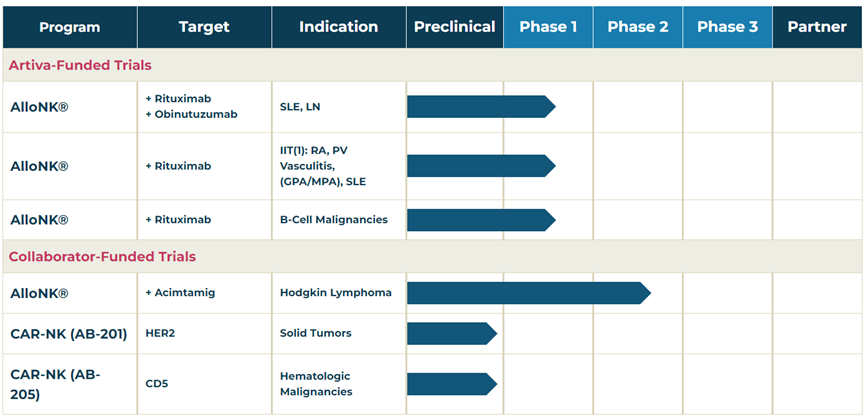
In addition, the company has also established a development platform for CAR-NK cell therapy. NK cells can be directly targeted by adding chimeric antigen receptors (CAR) specific to certain target antigens, which is achieved through genetically modified NK cells. The activity and persistence of these CAR-NK cells can be further enhanced by measures such as adding cytokines.
Artiva's largest shareholder is its parent company, GC Cell of South Korea. In addition, 5AM Ventures, venBio, and RA Capital each held 15% of the shares prior to the IPO. Currently, Artiva's manufacturing facility at its San Diego headquarters is capable of producing enough AlloNK annually to treat over 1,000 patients with autoimmune diseases.As of the end of March this year, Artiva Biotherapeutics had approximately $62 million in cash. The company invested about $11 million in R&D in the first quarter and a total of $50 million last year. Its collaboration and licensing revenue amounted to $33 million.Disease Area: Immunological DisordersTherapy Type: Small MoleculeTotal pre-IPO financing: $459 millionAlumis, Inc. was founded in 2021 and is headquartered in South San Francisco, California. It is a biopharmaceutical company focused on the application of TYK2 inhibitors in the field of autoimmune diseases. Incubated by Foresite Labs and led by a team of industry veterans with extensive experience in the development of small-molecule compounds for immune-mediated diseases, the company is pioneering a precision approach to drug development that has the potential to deliver next-generation therapies for immune dysfunction. Alumis is the third-largest BIOTECH IPO this year; however, it failed to reach its planned fundraising target of $300 million, causing the stock to fall below the issue price at opening. The current share price is $12.6 per share.Currently, Alumis has two drugs in clinical development, with the most advanced being ESK-001. This drug originates from the Chinese pharmaceutical company Haisco, and is an oral, highly selective, small molecule TYK2 allosteric inhibitor. It is currently being evaluated for the treatment of patients with moderate to severe plaque psoriasis and systemic lupus erythematosus. In March 2021, Haisco received an upfront payment of $60 million and a potential milestone deal worth $120 million to transfer the patent and rights of its TYK2 inhibitor under development to FL2021-001 (the predecessor of Alumis, Inc.).ESK-001 demonstrates differentiated advantages in its selectivity, optimized molecular properties/pharmacokinetics, maximized target inhibition effects, and better tolerability. In the recently released Phase II STRIDE clinical trial for the treatment of moderate to severe plaque psoriasis, ESK-001 showed excellent data:- In terms of efficacy, after 228 psoriasis patients were randomly treated with five doses of ESK-001 or placebo for 12 weeks, the treatment groups all reached the primary endpoint of PASI 75 and key secondary efficacy endpoints, demonstrating a clear dose-dependent response.
- In terms of safety, no treatment-related serious adverse events occurred in the treatment group, and the AE incidence rate was similar to that of the placebo group.
Alumis plans to advance the Phase 3 trial of ESK-001 for the treatment of moderate to severe plaque psoriasis in the second half of 2024, while initiating two Phase 2 clinical trials for the treatment of systemic lupus erythematosus and non-infectious uveitis. With the launch of the Phase 3 clinical trial of ESK-001 in the second half of this year, Haisco is expected to receive the second milestone payment (approximately USD 12.8432 million).Alumis is also developing a CNS-penetrant isoform-specific TYK2 inhibitor, A-005, for the treatment of neuroinflammation and neurodegenerative diseases. In addition to TYK2, Alumis is leveraging its proprietary precision data analytics platform and drug discovery expertise to identify more preclinical programs that reflect its precision approach.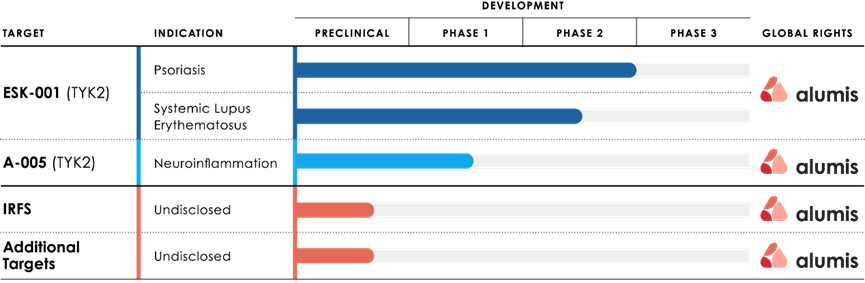
Disease Area: Nervous System DiseasesTherapy Type: Small MoleculeTotal financing before IPO: $250 millionRapport Therapeutics is a BIOTECH preparing to enter Phase 2 clinical trials, focusing on discovering and developing transformative small-molecule drugs for patients with central nervous system (CNS) diseases. Co-founded by Third Rock and Johnson & Johnson Innovation in March 2023, it has secured $100 million in funding and possesses clinical-stage seizure assets that originated from Johnson & Johnson's laboratories.Rapport Therapeutics' most advanced candidate drug, RAP-219, is a negative allosteric modulator of AMPA receptors, designed to achieve neuroanatomical specificity by selectively targeting RAP associated with clinically validated epilepsy targets. The company believes that RAP-219 also has therapeutic potential in peripheral neuropathic pain and bipolar disorder, and intends to initiate Phase 2a trials for these indications in 2024 and 2025, respectively.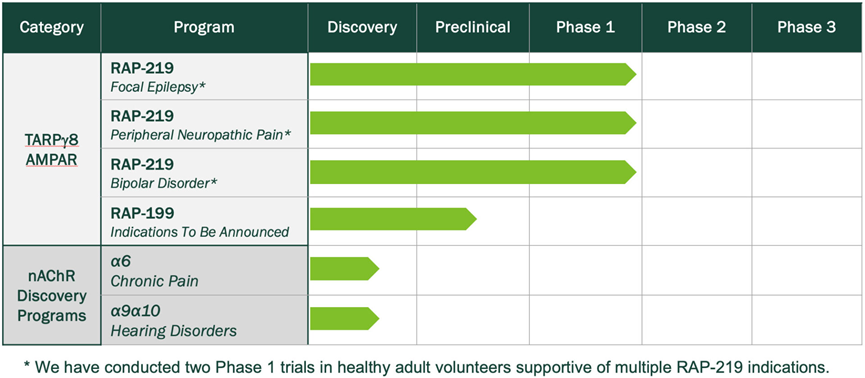
Rapport will also invest in the development of a long-acting injectable formulation, RAP-219, which will undergo a second multiple ascending dose trial, and advance another TARPs8 AMPAR program, RAP-199, into Phase 1 clinical trials. The remaining funds will be used for other R&D activities, including a preclinical nicotinic acetylcholine receptor discovery program for chronic pain and hearing impairment.4、Contineum Therapeutics:
Disease Area: Nervous System Diseases
Therapy Type: Small Molecule
Clinical Stage: Phase 2
Total financing before IPO: $194 million
Contineum Therapeutics, founded in 2009, is a clinical-stage biopharmaceutical company focused on discovering and developing novel oral small molecule therapies for neuroscience, inflammation, and immunology (NI&I) indications. On April 4, Contineum Therapeutics was listed on the NASDAQ Stock Exchange at an offering price of $16 per share, issuing 6.875 million shares, with an IPO size reaching $110 million, making it the 7th biopharmaceutical company this year to have an IPO exceeding $100 million.
$66 million of the company's IPO proceeds is planned to be used for the development of PIPE-791, an oral small molecule inhibitor of LPA1. LPA1 is a receptor associated with scar formation in idiopathic pulmonary fibrosis (IPF) and the promotion of neuroinflammation in multiple sclerosis (MS). Contineum plans to submit an application for a Phase Ib trial of PIPE-791 in the second half of this year. PIPE-791 is a novel, highly brain-penetrant small molecule inhibitor of LPA1R, currently under development for the treatment of idiopathic pulmonary fibrosis (IPF) and progressive multiple sclerosis. A Phase I clinical trial of PIPE-791 in healthy volunteers has been completed.
Another core asset of Contineum is PIPE-307, a selective muscarinic M1 receptor (M1R) antagonist currently in Phase 2 clinical trials for the treatment of relapsing-remitting multiple sclerosis (RRMS). In April 2023, Janssen Pharmaceuticals, a subsidiary of Johnson & Johnson (JNJ.US), entered into a global licensing and development agreement with Contineum Therapeutics for PIPE-307. Under the agreement, Janssen will pay an upfront fee of $50 million and may pay up to an additional $1 billion in milestone-based payments. Contineum Therapeutics will grant Janssen an exclusive license to research, develop, and commercialize PIPE-307 for all indications worldwide. Contineum Therapeutics will retain the right to advance PIPE-307 in Phase II clinical trials for the treatment of RRMS.
In addition to these two promising pipelines, Contineum Therapeutics has another pipeline named CTX-343, an LPA1R antagonist, for which the indications under study have not been disclosed. The company stated that it plans to submit an IND (Investigational New Drug) application in the United States in 2025.
5、Boundless Bio:
Disease Area: Cancer
Therapy Type: Small Molecule
Clinical Stage: Phase 1
Total financing before IPO: $254 million
Boundless Bio, founded in 2018 and headquartered in San Diego, California, is a Phase 1 biotechnology company developing inhibitor therapies for oncogene-amplified tumors. In March this year, it raised $100 million through an IPO, becoming the first Phase 1 BIOTECH to successfully go public on a U.S. stock exchange in 2023.
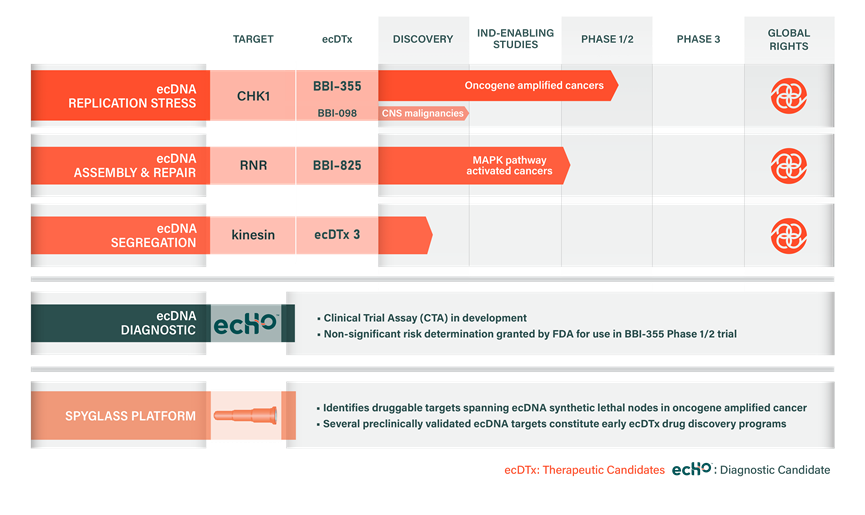
Boundless Bio Focuses on Developing Therapies for Oncogene-Amplified Tumors by Targeting Extrachromosomal DNA (ecDNA). The company utilizes its proprietary Spyglass platform to identify targets critical to ecDNA function in oncogene-amplified cancer cells and then designs and develops small molecule drugs called ecDNA-directed therapeutic candidates (ecDTx) to inhibit these targets. Its leading ecDTx, BBI-355, is a novel oral selective checkpoint kinase 1 inhibitor that manages ecDNA replication and transcription in cancer cells. BBI-355 is currently in a first-in-human phase 1/2 trial in patients with oncogene-amplified cancers, with preliminary data expected in the second half of this year.
Disease Area: Immunological DisordersTherapy Type: Cell TherapyTotal financing before IPO: $168 millionKyverna Therapeutics, Inc. was founded in 2018 and is headquartered in Emeryville, California, USA. It is a cell therapy company in Phase 2 clinical trials, dedicated to developing novel therapies for autoimmune and inflammatory diseases. Kyverna was the first cell therapy company to go public on a U.S. stock exchange this year, with an offering price of $22, significantly higher than its previously expected range of $17 to $19. The IPO was oversubscribed by 75%, raising $319 million. On its first day of trading, the stock surged 36%. As of yesterday's close, Kyverna's stock price was at $13.7, representing a nearly 38% decline from its offering price.The company's core project is KYV-101, an autologous CD19 CAR T-cell therapy particularly suited for treating B cell-driven autoimmune diseases such as lupus nephritis, systemic sclerosis, and inflammatory myopathy. Built on a chimeric antigen receptor licensed from the U.S. National Institutes of Health, it has previously completed a Phase 1 oncology trial. KYV-201 is the allogeneic version of CD19 CAR-T, an off-the-shelf treatment that utilizes genomic editing through a CRISPR/Cas9-based allogeneic platform and can be used for B cell-mediated autoimmune diseases.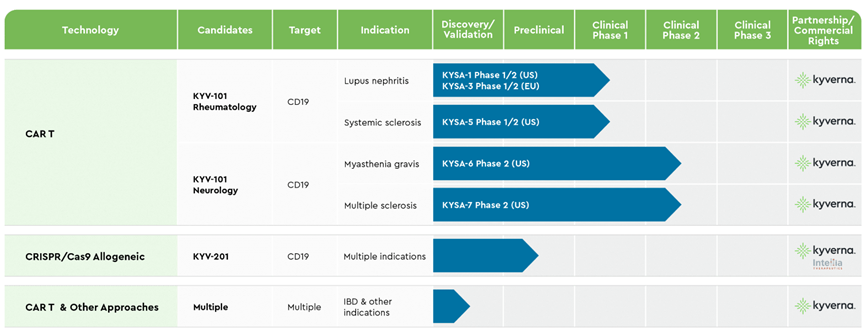
On June 14, Kyverna Therapeutics disclosed in the interim data of 50 subjects released at the EULAR 2024 Industry Symposium that KYV-101, a CAR-T therapy for treating autoimmune diseases, saw a patient with lupus nephritis relapse five months after an initial response in a Phase 1/2 clinical trial. Following the announcement, Kyverna's stock fell approximately 34% in Monday's pre-market trading, dropping from $14.44 to $9.53.Disease Area: Metabolic SyndromeType of Therapy: Gene TherapyClinical Stage: PreclinicalTotal financing before IPO: N/AFractyl Health, founded in 2010 and headquartered in Lexington, Massachusetts, is a metabolic therapeutics company focused on pioneering new approaches to treating metabolic diseases, including type 2 diabetes (T2D) and obesity. As the third BIOTECH company to go public on the U.S. stock market this year, Fractyl Health's stock price plummeted 14.33% on its first day of trading, marking it as the first biotech IPO in 2024 to close below its offering price on the debut day.The company's core candidate products are Revita® and Rejuva®. Rejuva is a novel pancreatic gene therapy platform currently being developed by Fractyl Health to achieve long-term remission of T2D. The Rejuva platform will address severe metabolic diseases, such as T2D and obesity, by expressing key metabolic hormones essential for insulin production in pancreatic β cells through endoscopic delivery and transgenes delivered by AAV. On June 23, 2024, at the American Diabetes Association (ADA) conference in 2024, Fractyl Health orally presented the latest preclinical data on its GLP-1 gene therapy, Rejuva. The results showed that a single administration of Rejuva reduced fat mass in a diet-induced obesity (DIO) mouse model and improved glycemic control. Additionally, Rejuva has the potential to prevent blood glucose and weight rebound after semaglutide discontinuation. Compared with the active control group of semaglutide, the weight loss effect in the Rejuva group reached 24.8%, while the semaglutide group achieved 18.4% weight loss (p<0.01, n=10 per group).The Revita DMR system is an outpatient procedural therapy designed to provide lasting improvement in duodenal dysfunction. Revita is approved in Europe for the treatment of patients with inadequately controlled T2D. The company is currently conducting a pivotal study of Revita in patients with insufficiently controlled T2D, with primary data expected in the fourth quarter of 2024, and plans to evaluate Revita in a weight maintenance clinical study.Disease Area: Nervous System DiseasesTherapy Type: Small MoleculeTotal financing before IPO: $143 millionAlto Neuroscience, founded in 2019 and headquartered in California, USA, is a precision medicine company focused on the development of psychiatric drugs. It has currently advanced five clinical-stage pipelines, initially targeting populations with major depressive disorder (MDD) and schizophrenia characterized by specific brain biomarkers.Alto's two fastest-progressing candidate drugs—ALTO-100 and ALTO-300—have successfully completed Phase IIa clinical trials involving over 200 patients each, and are rapidly advancing into Phase IIb. Based on the pharmacodynamic effects observed in humans, Alto also plans to advance ALTO-101 and ALTO-203 into Phase 2 proof-of-concept trials, with data expected to be released between late 2024 and the first half of 2025. Both of these candidates are being developed for treatment-resistant depression, targeting distinct patient populations characterized by objective brain biomarkers, representing the company’s late-stage development progress in matching patients with the appropriate Alto candidate.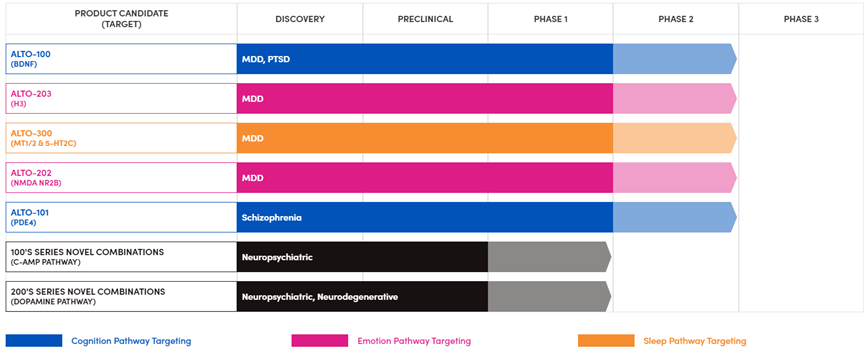
Therapy Type: Small MoleculeTotal financing before IPO: $305 millionArriVent Biopharma, Inc. was founded by Dr. Bingliang Yao in 2021 as a biopharmaceutical company adopting the license-in model. The company seeks first-in-class drug candidates at various stages of development within China and other regions active in biotech innovation. Through strategic collaborations with innovative drug developers, it aims to address unmet clinical needs across various diseases by providing high-quality medicines from around the world. Currently, the company's primary focus is on oncology treatments. On January 26, 2024, ArriVent went public, and as of the closing on July 25, its stock price had risen by 13%, with a market value of approximately $680 million.Dr. Zhengbin Yao, Chairman, Co-founder, and CEO of ArriVent, previously served as an executive at Genentech and Tanox, Senior Vice President at AstraZeneca responsible for immuno-oncology product development, and Senior Vice President at MedImmune overseeing early development (iMED) of innovative drugs for respiratory, inflammation, and autoimmune diseases; he later co-founded Viela Bio. Dr. Stuart Lutzker, Co-founder and R&D President (a veteran of Genentech and Ambrx, and also a member of the SAB of Immune-Onc Therapeutics, among others).According to the prospectus, ArriVent currently has two products and four R&D pipelines. The core pipeline is the third-generation EGFR TKI Furmonertinib, which is also the only commercialized product of Allist. Another product is the ADC drug ARR-002, which is still in the drug discovery stage.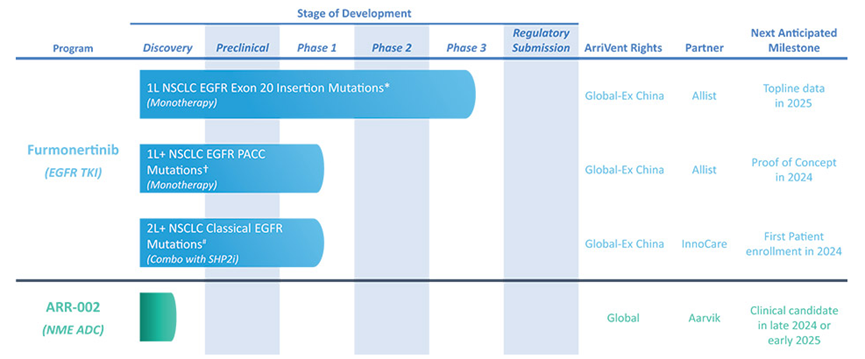
On June 5, 2024, Alphamab Oncology entered into a research and commercialization collaboration agreement with ArriVent. The parties will collaborate using Alphamab Oncology's proprietary linker-payload platform (Alphatecan) and glycosylation site-specific conjugation platform to discover and develop innovative ADC drugs.Total financing before IPO: $308 millionCG Oncology, founded in September 2010 in California, USA, was formerly known as Cold Genesys. It was re-registered in Delaware, USA, in November 2017, renamed to CG Oncology in March 2020, and listed on the NASDAQ in January 2024 with a current total market value exceeding $2.286 billion. The company is a private, clinical-stage biopharmaceutical company dedicated to the research and development of novel immunotherapies. Focused primarily on addressing unmet medical needs in urological cancers through oncolytic immunotherapy, CG Oncology became the first BIOTECH company to go public this year. More than half a year later, its stock price remains higher than the IPO price, currently at $34.3 per share, with an increase of over 80%.The main candidate oncolytic virus (adenovirus) drug of the company, Cretostimogene (CG0070), is used to treat high-risk non-muscle invasive bladder cancer (NMIBC) patients who are unresponsive to Bacillus Calmette-Guérin (BCG). The company is conducting multiple clinical trials for Cretostimogene, including Phase III trials BOND-003 and PIVOT-006, Phase II trial CORE-001, and Phase I trial CORE-008. Results from the Phase III BOND-003 clinical trial showed that 75.2% (79/105) of patients achieved CR (complete response), with no lymph node metastasis observed.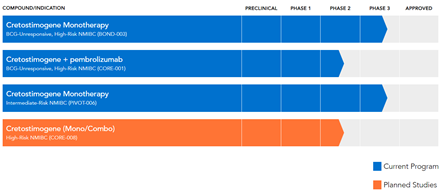
Queuing for U.S. IPOWhat else is there in Biotech?
Currently, there are 14 BIOTECH companies in queue for IPO. In 2024, a total of 5 companies have submitted IPO applications, with 4 each in 2023 and 2022, and 1 in 2021.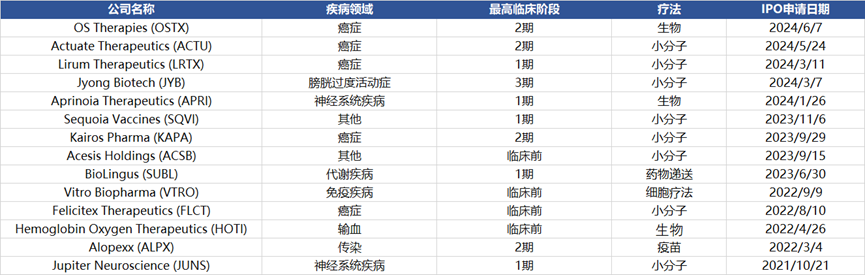
· OS Therapies:Founded in 2018, with its headquarters in Rockville, Maryland, U.S., OS Therapies is a Phase 2 biotechnology company developing off-the-shelf immunotherapies for osteosarcoma. It withdrew its IPO application on May 29 and resubmitted it on June 7. The company plans to raise $8 million by offering 2 million shares at a suggested price of $4 per share. Previously, it had applied to issue 2 million shares at a suggested price of $5 per share. Based on the revised transaction size, OS Therapies will raise 20% less than originally expected, but its market value stands at $82 million.· Actuate Therapeutics:Founded in 2015 and headquartered in Fort Worth, Texas, USA, Telomir Pharmaceuticals, Inc. is a clinical-stage biotechnology company in Phase 2, developing an inhibitor therapy for refractory cancers. The company plans to issue 3 million shares at a price range of $8 to $10 per share, aiming to raise $27 million. It focuses on developing therapies for high-impact, refractory cancers by inhibiting glycogen synthase kinase 3 (GSK-3). The company has obtained exclusive licensing rights to a series of GSK-3 inhibitors co-developed by the University of Illinois Chicago and Northwestern University. Its lead candidate drug, elraglusib (9-ING-41), is currently being evaluated in a randomized Phase 2 trial in patients with metastatic pancreatic cancer, with top-line results expected to be released in the first quarter of 2025.· Lirum Therapeutics:Founded in 2021 in New York, Lirum is a Phase 1 biotechnology company developing a licensed therapy for the treatment of cancer and autoimmune diseases. The company plans to issue 5 million shares at a proposed price of $5 per share to raise $25 million. Each unit of stock consists of one common share and one warrant with an exercise price of $0.001. In 2022, Lirum obtained the license for its lead candidate, LX-101, from IGF Oncology. LX-101 is a novel next-generation precision-designed targeted therapy aimed at the insulin-like growth factor-1 receptor (IGF-1R), which was previously evaluated by the licensor in a Phase 1a trial for late-stage pretreated cancers.· Jyong Biotech (Eternal Health Biotech):Founded in 2002, it is a botanical new drug development biotechnology company from Taiwan, dedicated to the development and commercialization of innovative and differentiated new drugs (plant-derived), primarily focusing on treating urinary system diseases. Initially targeting the U.S., Middle East, and African markets, as well as the EU and Asia. The company officially filed its IPO with the SEC on August 17, 2023, withdrew the application on December 20 of the same year, and resubmitted it on March 7, 2023. MCS-2 is a novel botanical drug candidate developed by Eternal Biotech for the treatment of benign prostatic hyperplasia/lower urinary tract symptoms (BPH/LUTS) and is currently in Phase 3 clinical trials.· APRINOIA Therapeutics:Is the parent company of Suzhou AstraZeneca Pharmaceuticals Co., Ltd.Founded in Taiwan in 2015, it later registered as a holding company in the Cayman Islands in June 2016, becoming the holding company of APRINOIA Taiwan. In 2017, the company established wholly-owned subsidiaries in Hong Kong and Japan, and founded its wholly-owned subsidiary, APRINOIA Therapeutics, LLC, in the United States. In December 2023, the company established another wholly-owned subsidiary, APRINOIA Therapeutics Limited, in Ireland. APRINOIA is a clinical-stage biopharmaceutical company focused on developing novel treatments and precise diagnostic methods for neurodegenerative diseases. In January 2024, APRINOIA submitted its prospectus to the U.S. SEC, planning to go public on Nasdaq.
Source:BioPharma Dive, official websites of various companies
Disclaimer
1. All information provided by the "Drug Hunter Club" is for reference only and should not be used as a basis for any commercial transactions or medical services. If any deviation occurs from the self-use of the content provided by the "Drug Hunter Club," our company shall bear no responsibility, including but not limited to legal liability or compensation.
2. "Drug Hunter Club" is committed to providing reasonable, accurate, and complete information, but does not guarantee the reasonableness, accuracy, or completeness of the information, and shall not be liable for any loss or damage caused by unreasonable, inaccurate, or omitted information.
3. Some articles in the "Drug Hunter Club" are reproduced from the Internet for the purpose of conveying more information, and do not imply agreement with or verification of the authenticity of their content. If you have any questions about the content, please contact our company in a timely manner.
4. For issues not covered in this statement, please refer to relevant national laws and regulations. In case of any conflict between this statement and national laws and regulations, the latter shall prevail.