

Ophthalmology Heats Up Again: Listed Giants and Emerging Players Rush Into the Dry Eye Disease Niche

Big Vision
Developer of Artificial Intelligence Analysis and Diagnosis Products for Ophthalmic Imaging

MDC
Ophthalmic Medical Device R&D, Manufacturing, and Sales Company
DisionTech
Ophthalmic Medical Device R&D, Production, and Sales
Following optometry, another significant track in ophthalmology is on the rise.
Since the beginning of this year, in the field of dry eye syndrome, both industry giants and emerging companies have been making frequent moves.For instance, recently, the Hong Kong Stock Exchange-listed company Gaosh Medical announced that its wholly-owned subsidiary, Gaoshi Innovation Technology Co., Ltd. ("Gaoshi Innovation" hereinafter), has obtained medical device registration certificates for two dry eye diagnostic devices: the Gaush iDea FOS Dry Eye Tester and the Gaush iDea Topo Dry Eye and Corneal Topography Tester. Following the announcement, the company's stock price rose nearly 7% the next day.
At the same time, relevant products from emerging companies have also recently obtained certifications or gone public.
·In February, Tearmaestro, the dry eye treatment device launched by Zhenfu Medical, obtained the Class II Innovative Medical Device License in Shanghai.
·In April, DisionTech's intelligent visualized meibomian gland treatment instrument DisionEyemore obtained the Class II medical device registration certificate.
·In May, iTEAR Muqing® Autologous Tear Secretion Stimulator (Class II Medical Device) from Extreme Vision Biotechnology was launched in China. It is the first product in China that improves dry eye symptoms by stimulating the external nasal nerve.
Notably, companies related to dry eye diagnosis and treatment products, including Aishiyia, Big Vision, DisionTech, Kerun Bio, Tiancheng Bio, Weiqing Medical, Xianwei Medical, and Zhongjing Weishi, have successively secured financing amid this year's capital winter, attracting bets from a number of well-known institutions.
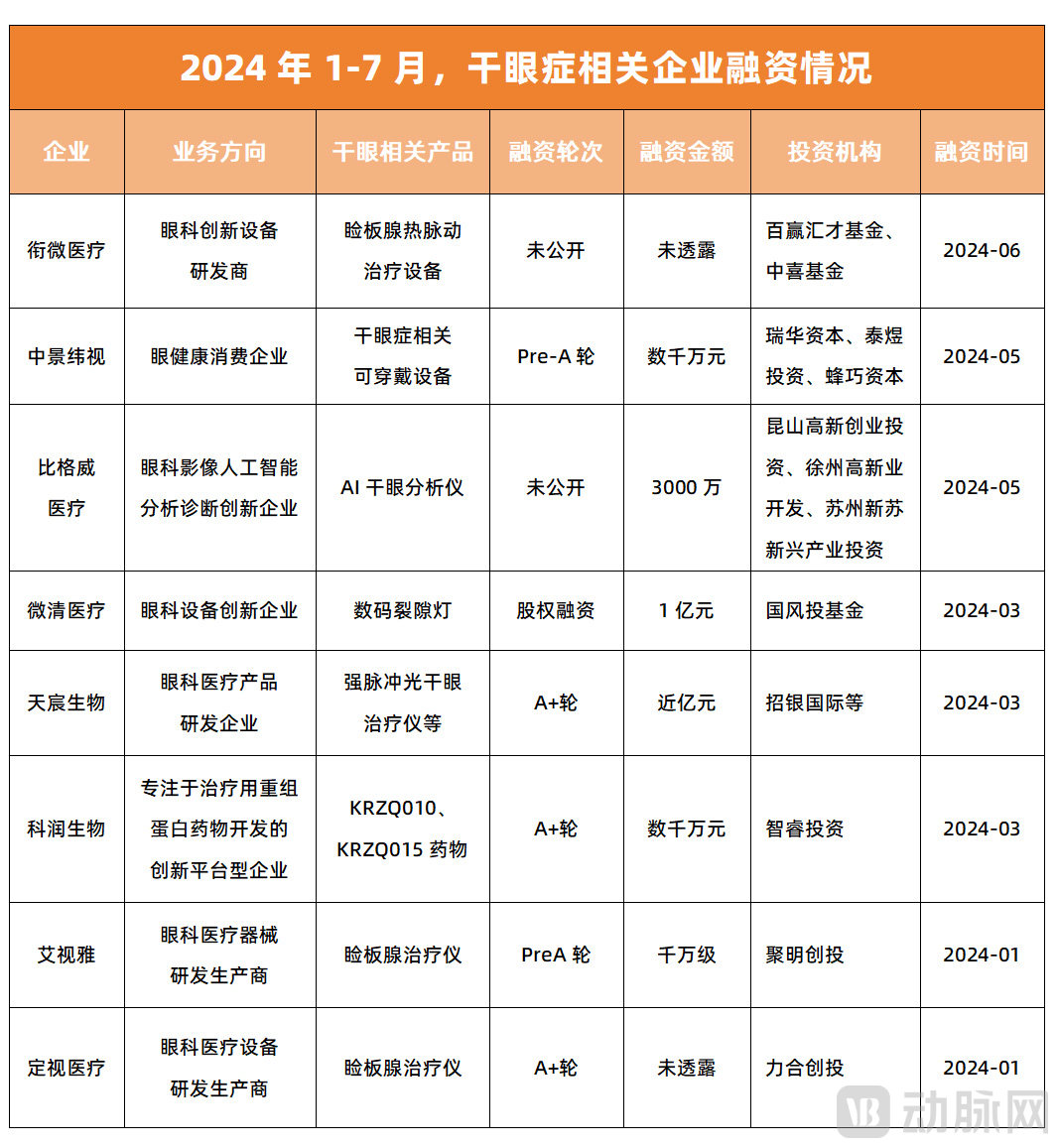
(Source: VCBeat Database, Tianyancha VCBeat Chart)
Behind the scenes of more companies and capital entering the market and increasing their investments lies a vast and continuously growing market.Statistics from the "Chinese Expert Consensus on Dry Eye (2020)" show that the incidence of dry eye syndrome in China is approximately 21% to 30%. Based on the 2022 population census data from the National Bureau of Statistics, this indicates that there are about 360 million dry eye patients. Dry eye syndrome has become the most common ophthalmic condition after myopia, and the number of patients continues to grow, creating significant commercial potential.
There is no doubt that, driven by both supply (frequent emergence of detection and treatment products/therapies) and demand (continuous growth in the number of dry eye patients), the dry eye market is rapidly accelerating.
Dry Eye Disease (DED), also known as Dry Eye Syndrome (DES), Keratoconjunctivitis Sicca (KCS), and Dry Keratitis, is a multifactorial, progressive disorder caused by abnormalities in the tear film of the ocular surface and inflammation of the ocular surface.
Generally speaking, the surface of the cornea, located at the very front of the eye, is covered by a tear film, which plays roles in moisturizing, locking in moisture, and protecting the surface of the eyeball.Once the tear film can no longer remain stable on the ocular surface, the unprotected ocular surface cells become damaged, leading to dry eye syndrome.
In the early stage of dry eye syndrome, symptoms often manifest as dry eyes and a foreign body sensation. If timely and effective treatment is not administered, it can easily progress to refractory dry eye syndrome in the middle and later stages, leading to keratitis and corneal ulcers, and may even cause blindness.
Therefore, it is crucial to detect and treat dry eye syndrome as early as possible.
Currently, the detection of dry eye syndrome includes a series of examinations such as the dry eye questionnaire scale, tear secretion test, tear film breakup time, and slit-lamp examination.
In the treatment of dry eye syndrome, it can be divided into two major categories: drug therapy and non-drug therapy. Drug therapy mainly includes three approaches: lubricating the ocular surface and promoting repair, anti-inflammatory treatment, and antibiotic treatment. Non-drug therapy encompasses various methods, including physical therapy, surgical treatment, and device-based treatments (such as intense pulsed light therapy and thermal pulsation therapy).
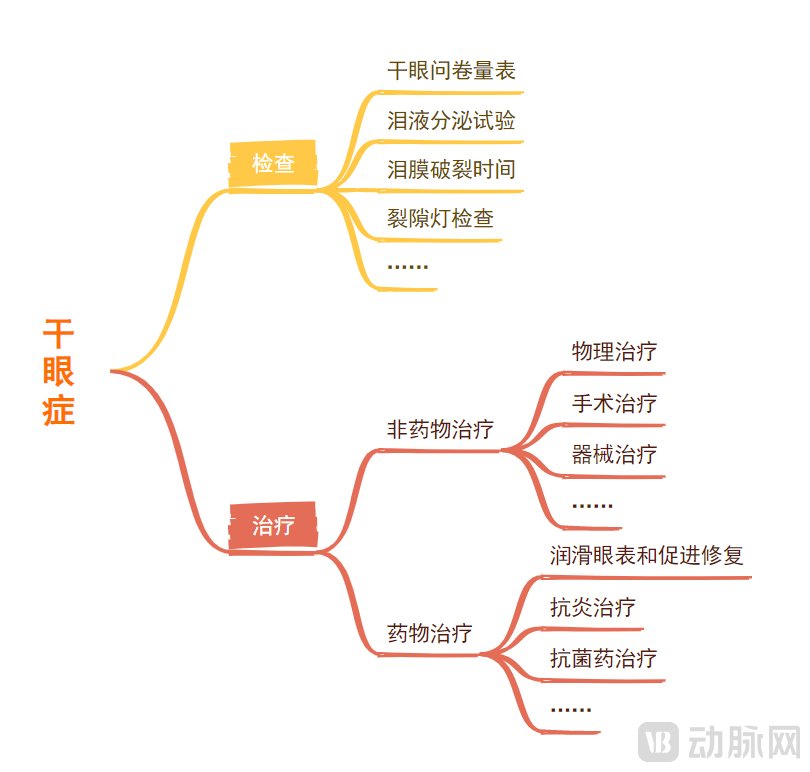
(VCBeat Mapping)
Focusing on different testing and treatment methods, major companies have launched a steady stream of products in an attempt to gain an early advantage in the dry eye market.
Next, this article will provide a glimpse into the industry's product advancements from three major dimensions: detection, non-pharmacological treatment, and pharmacological treatment.
Dry Eye Detection Market: Fierce Competition, China-Made Innovations Dominate the Mainstream
In the examination of dry eye syndrome, the Schirmer test and tear film breakup time are the most common.
In clinical practice, the Schirmer's test requires tear secretion test paper, which involves placing the test strip inside the eyelid to observe the length of wetting, thereby determining whether the patient has dry eye syndrome. If the doctor anesthetizes the ocular surface, the test evaluates the accessory lacrimal gland’s secretory function; without ocular surface anesthesia, the test assesses the main lacrimal gland’s secretory function.
In the research and development direction of tear secretion detection filter paperCompanies such as Aibornod, Hisun Biopharm, Liaoning Meizilin, Ocucon Science, Ruilin Pharmaceuticals, Tianjin Jingming, and Innohealth have relevant product layouts.
Another method of examination is to perform a tear film break-up time test, which aims to measure the length of time that a protective film forms on the surface of the eye and remains moist. Clinically, this test generally requires the use of a slit lamp microscope.
Specifically, by instilling sodium fluorescein into the conjunctival sac, after the examinee blinks several times, the time from the start to the appearance of black spots is observed under the cobalt blue light of a slit-lamp microscope to evaluate the tear film breakup time (BUT): BUT ≥ 10s is considered normal, BUT ≤ 10s indicates suspected dry eye symptoms, and BUT ≤ 5s can be basically diagnosed as dry eye syndrome.
CurrentlyIn the development of slit lamp microscopesIn China, innovative companies include 66 Vision, Motic Medical, Suzhou Kangjie, and Yide Medical, among others.
In addition to the aforementioned products, there are also many devices for detecting dry eye syndrome used in clinical settings, such as tear component analyzers, meibomian gland function evaluators, corneal topographers, and tear secretion measurement devices, among others.Some comprehensive dry eye diagnostic instruments are being developed and launched. They can perform comprehensive analysis of tear volume, tear film stability, eye congestion, lipid layer, and meibomian gland conditions. Many instruments also incorporate AI.
In this field, a group of innovative companies including Big Vision, Chongqing Shangbang, Gaoshi Innovation, Kanghua Ruiming, MDC, Morion Medical, Ruihao Biotechnology, Shanghai Meiwok, and Zhiding Medical have entered the market.
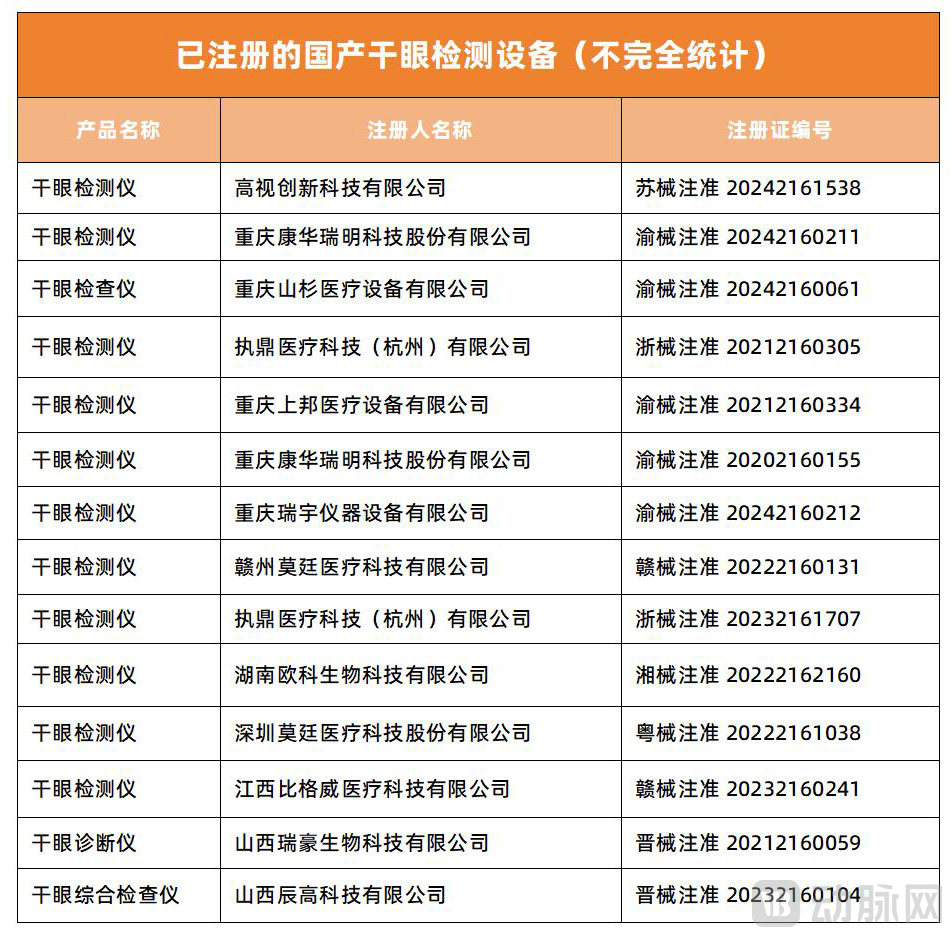
(Source: NMPA official website, chart by VCBeat)
Taking the two dry eye diagnostic devices recently launched by Gaoshi Innovation, the Gaush iDea FOS and Gaush iDea Topo, as examples. The Gaush iDea FOS is a comprehensive, rapid, quantitative, and intelligent dry eye and ocular surface analyzer that can complete a single-eye dry eye examination in just 15 seconds using innovative technology, providing clinicians with more accurate diagnostic information efficiently. The Gaush iDea Topo is a precise diagnostic device integrating dry eye and ocular surface analysis, offering clinicians additional ocular surface and tear film parameters for comprehensive diagnosis and evaluation.
In September last year, Big Vision's dry eye detector BVD6600 series obtained certification and was launched. According to the company's press release, the detector uses a large-sized Placido ring, which can cover the cornea more completely, and integrates AI-assisted analysis functions.
In November of the same year, MDC EYESIS Dry Eye Comprehensive Analyzer was launched. This analyzer adopts MDC's self-developed AI intelligent program to measure TMH (tear meniscus height) in a non-invasive manner. The specific steps are: at the start of measurement, simply align the EYESIS Dry Eye Comprehensive Analyzer with the patient’s eye, and the AI intelligent program will automatically mark the tear meniscus shape graphically within about 2 seconds, displaying the tear meniscus height and area numerically.
It can be seen that there are many competitors in the dry eye detection market, with domestically produced innovative enterprises occupying the mainstream. Related products continue to emerge, providing the industry with a wealth of solutions.
However, it should be noted that, overall, the technical barriers of dry eye detection equipment in the entire ophthalmic equipment system are not very high.
Therefore, for many innovative companies, dry eye detection devices are only one part of their ophthalmic ecosystem product line. How to achieve synergy with the entire ecosystem is a top priority for these companies. In addition, empowering through AI and continuous innovation, as well as providing more accurate, convenient, and user-friendly testing experiences to increase the added value of dry eye detection devices, is a direction that many companies are currently focusing on.
Non-drug treatment: In addition to daily health care, Intense Pulsed Light (IPL) and thermal pulsation therapy devices are becoming increasingly popular.
After suffering from dry eye syndrome, patients need to engage in long-term daily health care, such as cleaning the eyelids through physical treatments like warm compresses and massaging the meibomian glands, thereby promoting the secretion of the meibomian glands and lipid layer to ensure tear film stability.
However, the lasting effect of physical therapy is relatively short. Based on this,In recent years, instrument-based treatment methods such as intense pulsed light therapy devices and thermal pulsation therapy devices have started to gain popularity.
Specifically,Intense Pulsed Light (IPL)It is a pulsed, high-intensity broadband light with a wavelength range of 500-1200nm, which enables the selective absorption of super photons by oxyhemoglobin. Its photothermal effect seals abnormal blood vessels and prevents inflammatory mediators from being transmitted to the meibomian glands.
In a nutshell, the reason why intense pulsed light works is that the occluded blood vessels no longer allow inflammatory mediators (which may cause gland dysfunction) to reach the glands.
According to Dr. Chen Hui, Chief Ophthalmologist at Nanjing Drum Tower Hospital, in an interview with 36Kr, approximately 93% of patients treated with intense pulsed light therapy at the hospital showed significant improvement in dry eye symptoms.
Good Clinical Outcomes Drive Numerous Companies to Focus on the R&D of Intense Pulsed Light Therapy DevicesSuch as Jilin PROVINCE KING Laser Co., Ltd., MDC, Qizhi Laser, Ruihao Biotechnology, Tianchen Bio, and Zhiding Medical. VCBeat checked the NMPA official website and found that there are currently 124 entries of intense pulsed light therapy devices in the (registered) domestic medical device category, almost all used for hair reduction auxiliary treatment, namely in the medical aesthetics field. There are three approved intense pulsed light therapy devices for treating dry eye syndrome caused by meibomian gland dysfunction, coming respectively from Jilin PROVINCE KING Laser Co., Ltd., Ruihao Biotechnology, and Qizhi Laser.
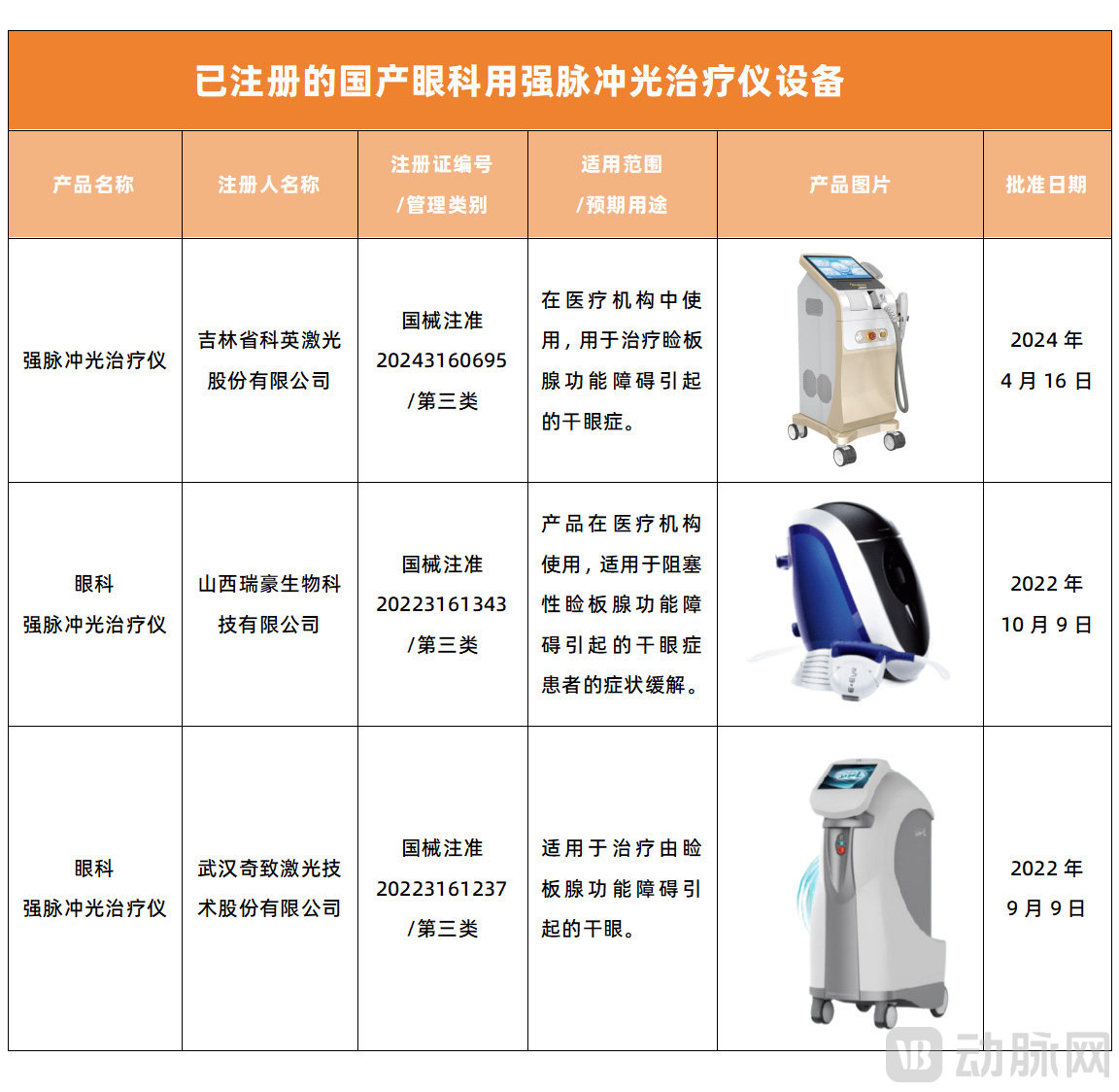 (Information and product image source: NMPA and official corporate websites)VCBeat Mapping)
Taking the ophthalmic intense pulsed light therapy device of Ruihao Biotechnology, which obtained a Class III registration certificate in October 2022, as an example, the device utilizes the photothermal effect, thermal radiation effect, sterilization, anti-inflammatory, photomodulation, and restoration of local hypoxic environments of broad-spectrum non-coherent light to improve the microenvironment of the meibomian glands and ocular surface, reduce the level of inflammatory factors in ocular surface tissues, and thereby improve tear film homeostasis and alleviate inflammation at the eyelid margin.
For instance, the intense pulsed light therapy device (ophthalmology) approved for Jilin PROVINCE KING Laser Co., Ltd. in April this year utilizes imported high-energy xenon lamps and SOPT technology to strictly control the spectral band. According to the official website, the device offers three pulse modes: single pulse, double pulse, and triple pulse. The pulse duration, interval, and energy are independently adjustable, and the sub-pulse single pulse energy and pulse width can also be adjusted.
MDC has also launched an intense pulsed light meibomian gland dysfunction treatment device. It is reported that this treatment device adopts the brand-new fourth-generation MOPT technology (Multiple Optimal Plus Technology), which is highly recommended by the National Health Technology Promotion and Application Information Service Platform for clinical treatment of MGD and related dry eye conditions. The treatment device has been introduced to over 400 hospitals and related institutions.
However, the issue with intense pulsed light is that a course of treatment often takes 2-4 months, during which patients need to visit the hospital 3-4 times, making it relatively inconvenient for them.
Compared with intense pulsed light, another productThermal Pulsation Treatment DeviceThe treatment course is relatively short, usually one session per course, and the effect can last for about 6 months to 1 year.
In principle, the thermopulse treatment device mainly converts light energy into thermal energy to melt meibum and expel it through pressurization, thereby efficiently unblocking the meibomian glands and restoring their function.
Take the Systane iLux Thermal Pulsation System, which was approved by the NMPA last year, as an example. This device is suitable for localized thermal compression treatment in adult patients with meibomian gland dysfunction. Throughout the treatment process, doctors can visually assess the treatment effect in real time and develop personalized treatment plans based on the eyelid conditions of patients with meibomian gland dysfunction, with precise control over the treatment temperature.
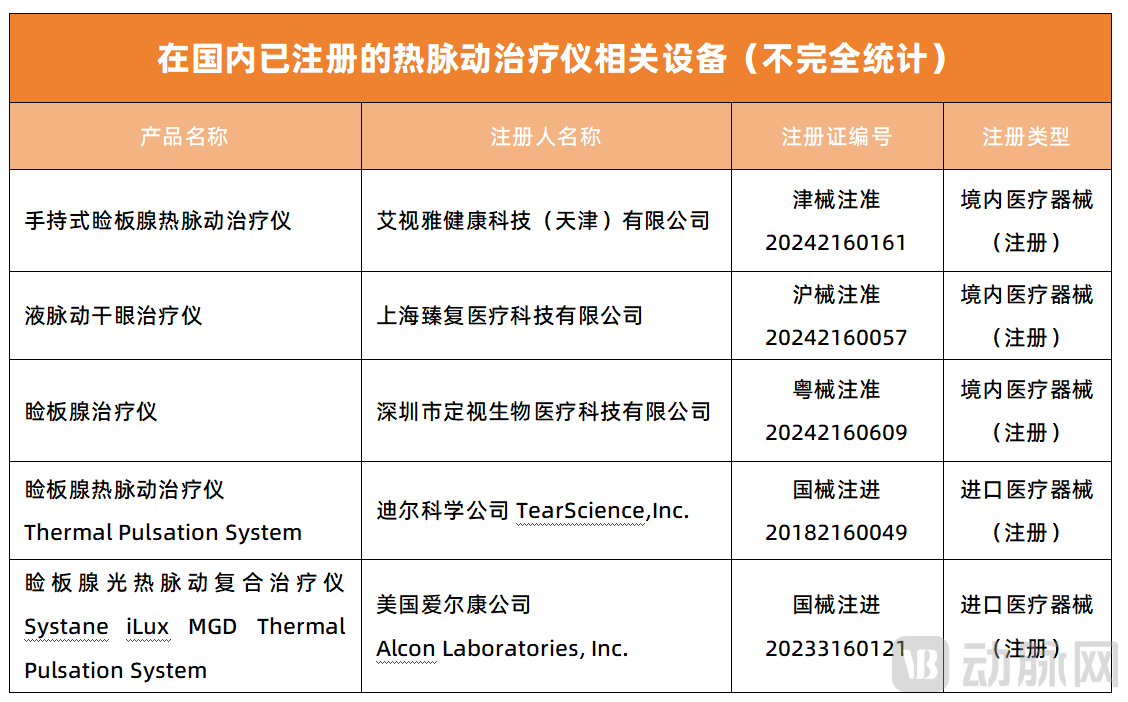
(Source: NMPA official website, chart by VCBeat)
Chinese innovative enterprises are also making efforts in this direction. In the first half of this year, Tearmaestro Liquid Pulsation Dry Eye Treatment Instrument and DisionEyemore Meibomian Gland Treatment Instrument, launched by Zhenfu Medical and DisionTech respectively, successively obtained the NMPA Class II medical registration certificate.
According to official information, the Tearmaestro Liquid Pulsation Dry Eye Treatment Device abandons the expensive electromagnetic temperature control technology used in foreign products. By combining liquid heating with artificial intelligence temperature control technology, it achieves precise control of the treatment head temperature while reducing the cost of a single treatment to only 1/10 of that of similar foreign products.
The DisionEyemore meibomian gland treatment device, developed by DisionTech, employs an "electric heating" method combined with advanced thermal pulsation technology and a high-precision visualization system. During the treatment process, it heats both the upper and lower meibomian glands to an optimal therapeutic temperature of 40-42.5°C, effectively softening meibum. Subsequently, the doctor precisely controls the pressure using a rolling wheel to compress and extract the meibomian glands, facilitating the smooth discharge of liquefied meibum.
At the same time, another domestically produced innovative enterprise, Xianwei Medical, expects its dry eye treatment device to receive Class II certification in the fourth quarter of 2024; Aishiyah will also launch desktop and handheld meibomian gland thermal pulsation treatment devices in the near future.
It is not difficult to find that, surrounding the treatment devices for dry eye syndrome, China's innovative enterprises are rapidly catching up, continuously making breakthroughs in instruments such as intense pulsed light therapy devices and thermal pulsation therapy devices.
It is also important to note that intense pulsed light and thermal pulsation devices, two types of dry eye treatment equipment, are not direct competitors and may be used together in clinical settings.
Drug Therapy: Artificial Tears Remain the Hottest "Blockbuster," New Treatments Are Also Emerging
From a global perspective, the attention of biopharmaceutical companies to the dry eye syndrome field originated in the 1990s. At that time, the approval and market launch of Santen Pharmaceutical’s Sante AL Eye Drops in Japan quickly drove the development of the dry eye syndrome market with its high sales volume, establishing dry eye syndrome as an independent subfield within ophthalmology.
As the number of players increases, the drug treatment for dry eye syndrome has become more comprehensive, now including multiple therapies such as anti-inflammatory treatments (glucocorticoids, non-steroidal anti-inflammatory drugs, immunosuppressants), antibacterial drug treatments, and treatments that lubricate the ocular surface and promote its repair (artificial tears).
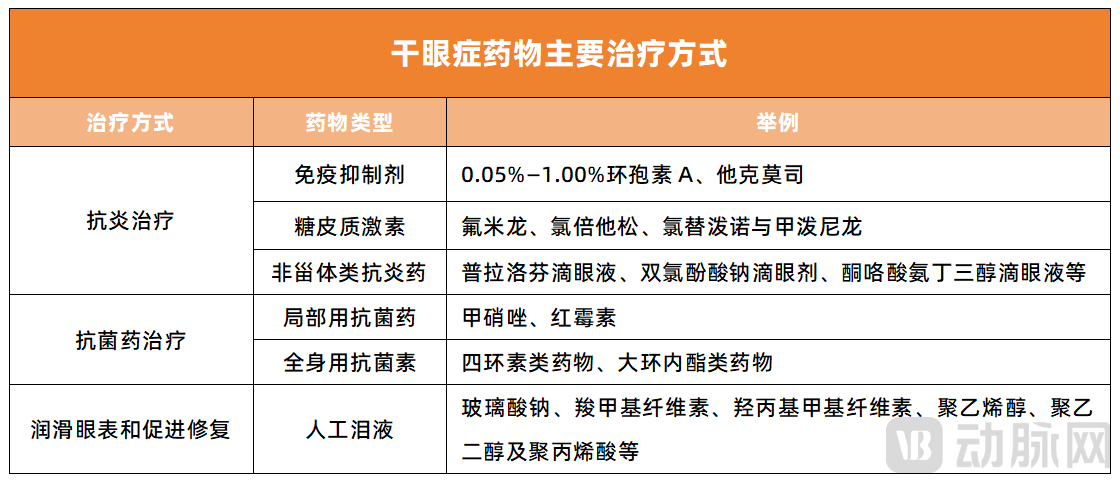
(Classification reference: Chinese Journal of Ophthalmology, VCBeat mapping)
Globally,The main treatment for dry eye syndrome is cyclosporine eye drops.Cyclosporine belongs to the class of immunosuppressants as an anti-inflammatory therapeutic agent. In 2003, Allergan's cyclosporine product Restasis was launched, marking it as the world's first drug for treating moderate to severe aqueous tear-deficient dry eye disease.
In the field of cyclosporine, domestic innovative companies have been closely following. Xingqi Eye's 0.05% cyclosporine eye drops (Zirun) were approved for marketing in 2020; Zhaokewei Ophthalmology's 0.05% cyclosporine A ophthalmic gel, developed using a novel hydrogel carrier, is currently preparing for application work; Hengrui Medicine's SHR8028 eye drops' marketing application has been accepted by NMPA...
In China,As an important drug choice for treating dry eye syndrome, artificial tears are still the popular "blockbuster" today.——The main components of artificial tears are water, electrolytes, and buffering agents, which can lubricate the ocular surface and supplement the lack of natural tears. In this product category, ophthalmic giants such as Alcon/Novartis and Bausch + Lomb have gathered. They optimize the composition and formulation of artificial tears to introduce the next generation of products.
In China, the main artificial tears available in the market include sodium hyaluronate, hyaluronic acid, and recombinant bovine basic fibroblast growth factor ophthalmic preparations, among which sodium hyaluronate ophthalmic preparations are currently the largest-selling dry eye drops in the hospital market. In this field, companies such as Xingputai Bio and Zhongshan Wahan Pharmaceutical, both China-based enterprises, have made their presence known.
In addition to the aforementioned treatment options, innovative companies in China are developing some new therapies for dry eye syndrome.In June this year, IVIEW Therapeutics announced that the clinical trial of its Class 1 innovative drug IVW-1001 for the treatment of dry eye disease has been initiated in the United States, with the first subject dosed. According to the IVIEW Therapeutics press release, IVW-1001 is a novel TRPM8 cold receptor agonist designed to treat the signs and symptoms of dry eye disease.
Bokang Vision Cloud, which is in the process of IPO, also mentioned in its prospectus that CBT-006 and CBT-009 under its portfolio are expected to be the world's first-in-class drugs for treating dry eye syndrome associated with meibomian gland dysfunction.
Shengyuan Pharmaceuticals, headquartered in Guangdong, focuses on tear biomarkers (Biomarker) as a key area, centering around the molecular mechanisms of diseases and concentrating on developing innovative eye medications and precise ophthalmic Biomarker detection products. Among these, the dry eye drug SY-201, developed based on a novel mechanism, has completed Phase II clinical trials in the United States.
To understand, in the past few years, ophthalmic drugs for dry eye syndrome in clinical practice have far from met clinical needs. Therefore, accelerating innovation in the ophthalmic drug industry and bringing more new drugs with better efficacy that fill the market demand for dry eye treatment to market is the key focus for industry development moving forward, as well as the opportunity at hand.
Currently, an increasing number of people are recognizing the importance of preventing and treating dry eye syndrome. According to Meituan data, dry eye treatment ranks as the fastest-growing medical service demand on the platform, with search volumes for keywords like "dry eye treatment" increasing by 166% year-on-year.
But at the same time,The increase in demand also makes the pain points in the dry eye syndrome market more apparent.. For example, with the increasing number of dry eye patients, the demand for specialized treatment is growing.The construction of dry eye clinics becomes more important.
Against this backdrop, specialized dry eye centers have been established in the ophthalmology departments of major hospitals across China, such as Beijing Tongren Hospital, Zhongshan Ophthalmic Center in Guangzhou, Wuhan Union Hospital, and the Second Affiliated Hospital of Zhejiang University.
From the layout of dry eye clinics in multiple hospitals, there are generally facilities such as a comprehensive dry eye analysis room, a dry eye atomization and fumigation room, an intense pulsed light therapy room, and a meibomian gland massage room, equipped with various devices for dry eye diagnosis and treatment.
However, for patients, the need to repeatedly visit the hospital for unblocking the meibomian glands makes it difficult for many to persevere. Therefore,If it is possible to use miniaturized home instruments at home, it is also a research and development direction.
In response to this issue, the industry has already begun to take action. For example, Zhenfu Medical plans to promote its dry eye treatment device to more non-medical settings, making treatment more convenient and affordable for a larger number of dry eye patients.
At the same time,Patients' sensitivity to prices is bringing opportunities for the localization of some equipment.Taking the treatment with a thermal pulsation device as an example, the cost for a single treatment at a hospital is generally around 10,000 yuan, causing many patients to exclaim, "We can't afford it." Therefore, Ma Weimin, founder of Xianwei Medical, stated in a media interview that their dry eye treatment device aims to "reduce the cost per treatment to one-third of similar imported products."
Policies are also driving this trend. In October 2021, the Ministry of Finance and the Ministry of Industry and Information Technology issued relevant policies explicitly stipulating the proportion requirements for government institutions to purchase domestically produced medical devices and instruments in China. Among them, all 137 types of medical devices, including dry eye detectors, are required to be 100% domestically produced.
Overall, there are still tremendous opportunities for innovation and market growth in the dry eye syndrome sector.
"Big fish swim in big waters." The domestically innovative companies that continue to deeply explore the field of dry eye syndrome are bound to welcome their own highlight moments together with the rapid development of the industry.
Note: In this article, unless otherwise specified, when multiple companies are mentioned in a sentence, they are listed in alphabetical order based on their abbreviations.
References:
1. "Dry Eye | Dry Eye Clinical Examination and Diagnostic Equipment (I)" —— iVision Talk
2. "360 Million Dry Eye Patients: There's More to Do Than 'Buying Tears with Money'" — 36Kr