Disclaimer: Due to limited expertise, errors are inevitable, and some information may not be the most up-to-date. Comments pointing out any issues are welcome. This article is only an introduction to medical and health-related drugs, not a recommendation of treatment plans (if involved); it does not constitute any investment advice.
According to the announcement on the CDE official website, the IND application for "KSD-101 Injection" submitted by Zhongshan Hengsai Biotechnology Co., Ltd. ("Hengsai Bio" for short) has been accepted.KSD-101 Injection is a dendritic cell (DC) vaccine developed by Hengsai Biotech, derived from autologous monocytes loaded with EB virus-associated tumor composite antigens, intended for the treatment of EBV-positive hematological malignancies.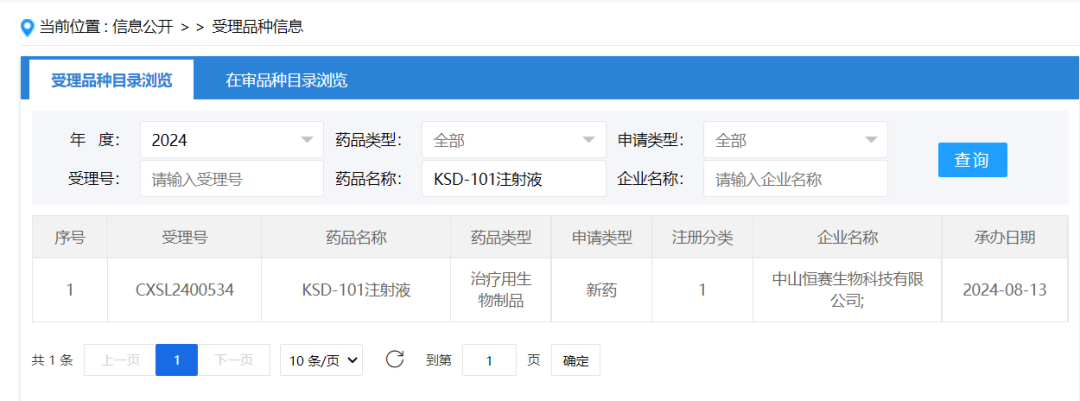
KSD-101 from Hengsai Bio is an autologous DC vaccine derived from human monocytes loaded with EB virus-associated tumor-like composite antigens. Monocytes are induced to transform into dendritic cells through cytokines, loaded with tumor-like composite antigens, and further induced to mature dendritic cells to prepare the DC vaccine, which serves as a therapeutic cancer vaccine. After subcutaneous injection, it activates cytotoxic T lymphocytes (EBV-specific CTL) in the human body, thereby enabling effective recognition and killing of tumor cells.In March 2024, Hengsai Biotech announced that its lead pipeline KSD-101 received Investigational New Drug (IND) approval from the U.S. Food and Drug Administration (FDA), becoming China's first original dendritic cell (DC) vaccine candidate to obtain FDA IND clearance.In June 2024, at the 29th Annual Meeting of the European Hematology Association (EHA), the results of the Phase I exploratory trial of KSD-101 in treating EBV-related hematological tumors showed good safety and efficacy, and it effectively activated the immune system.In terms of efficacy, among the 5 evaluable patients, both the objective response rate (ORR) and complete response rate (CRR) reached 100%. After the injection of the KSD-101 vaccine, significant changes were observed in the levels and proportions of various lymphocytes and immune cells in peripheral blood, indicating the potent efficacy of the KSD-101 vaccine in eliciting anti-tumor immune responses: following KSD-101 vaccination, the peak proportion of EBV-specific CTLs in peripheral blood significantly increased (baseline average 0.30% vs. 12-week treatment average 2.47%); the peak numbers of immune cells also rose, such as B cells (average increase of 27.51-fold), NK cells (average increase of 1.68-fold), and CD8+ T cells (average increase of 2.38-fold), while the proportion of immunosuppressive regulatory T cells (Tregs) significantly decreased (average reduction of 53.05%). The results demonstrate that after KSD-101 vaccination, the numbers of various immune cells in the body changed significantly, enhancing anti-tumor immune responses. This trend is highly consistent with its clinical efficacy.In terms of safety, no dose-limiting toxicity (DLT) or maximum tolerated dose (MTD) was observed in all patients. The vaccine was well-tolerated, and the toxicities related to KSD-101 experienced by patients included fever (grade 1-2), injection site reactions (grade 1), lymphadenopathy (grade 1), and increased lymphocyte count (grade 1).The safety and efficacy of KSD-101 have been preliminarily validated in clinical IIT studies, and after receiving U.S. IND approval, it has once again been accepted for review in China, marking that its therapeutic effects will be further validated in larger-scale clinical trials.2. Hengsai Biotech Official WeChat