

Process and Quality Research Characteristics of UCAR-T Therapy in the Context of Autoimmune Cell Therapy: Insights from Jianxin Yuanli and BangYao Bio

BRL Medicine
Cell and Gene Therapy Drug Developer

Recently, the research成果 of the new generation of allogeneic universal CAR-T therapy (TyU19) for treating autoimmune diseases, developed through a collaboration between BRL Medicine, East China Normal University, and Shanghai Changzheng Hospital, was published in Cell under the title “Allogeneic CD19-targeted CAR-T therapy in patients with severe myositis and systemic sclerosis”. This marks the first international report of successful treatment of autoimmune diseases using allogeneic universal CAR-T therapy.Demonstrated the significant potential and advantages of Universal CAR-T (UCAR-T) in the autoimmune field.
Article Reveals TyU19 Successfully Treated 3 Cases of Refractory Autoimmune Diseases in Clinical Trials, Including 1 Case of Immune-Mediated Necrotizing Myopathy (IMNM) and 2 Cases of Systemic Sclerosis (SSc). After receiving TyU19 cell therapy, these patients did not exhibit any symptoms of fever or cytokine storm. The patients' Total Improvement Score (TIS) rapidly increased from a baseline of 72.5 to 100 and remained at this level during the follow-up period. Imaging and pathological results also showed that muscle inflammation in the patients had been significantly alleviated.[1]。
Currently, multiple autologous CAR-T cell products have been launched globally for the treatment of hematological tumors. Besides cancer, several autologous cell therapy products have also entered the field of autoimmune indications. For example, JW Therapeutics' Relma-cel has entered Phase II clinical trials for the treatment of moderate to severe refractory systemic lupus erythematosus. In the UCAR-T pipeline, in addition to China's BRL Medicine, Atara Biotherapeutics' CD19 UCAR-T product ATA3219 and Sana Biotechnology's CD19 UCAR-T product SC291, both from foreign companies, have entered clinical stages.
Compared with autologous CAR-T cells,UCAR-T has the advantages of low cost, off-the-shelf availability, and mass production.But at the same timeUCAR-T also has disadvantages such as high technical barriers, complex processes, and significant safety challenges., so, in practiceThe production process of UCAR-T still faces many challenges.
Zhejiang Jian Xin Yuan Li Pharmaceuticals Co., Ltd. possesses multiple technological innovation platforms and mature quality research experience, capable of providing efficient, rapid, low-cost, and safe UCAR-T cell process solutions to support clinical and commercialization needs.The following will elaborate on the key processes and quality research characteristics of UCAR-T therapy, with case studies shared for illustration.
Zhejiang Jian Xin Yuan Li Pharmaceuticals Co., Ltd. is based onViral Transduction、InnoEPore™ Non-Viral TransductionAndInnoEditor™ Gene EditingThree major technology platforms have developed matureUCAR-T Cell Preparation Platform。
Key Process
High-quality lentiviral vectors purified through proprietary packaging were used for CAR transduction and optimization of transduction parameters. Utilize the electroporation platform for multi-gene knockout and parameter optimization;
CD3+ cells were depleted by magnetic bead sorting;
Evaluate the IFN-γ factor release level of UCAR-T cells.
We transduced T cells using preliminary optimized lentiviral transduction parameters (such as MOI, transfection density, etc.). Between D3 and D13, the proportion of CAR+ cells remained consistently stable at 50%-60% (Figure 1). Meanwhile, the vector copy number detected on D13 was less than 5 copies per cell.
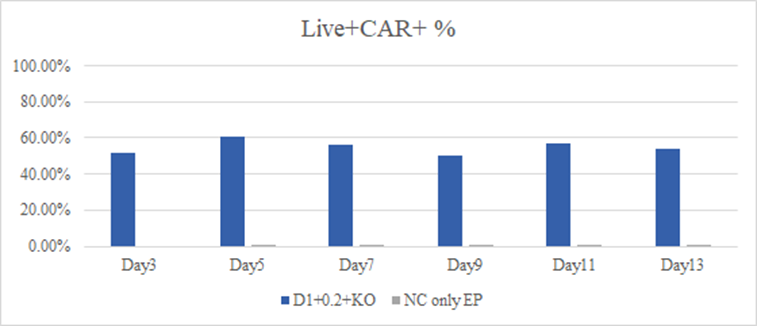
Figure 1. Expression of CD19 CAR after lentiviral transduction in T cells
We utilized preliminarily optimized gene knockout parameters (such as electroporation parameters, RNP dosage, etc.) to simultaneously knock out two genes in T cells. The flow cytometry results for the proportion of CD3-B2M- cells from D5 to D13 remained consistently above 85%.
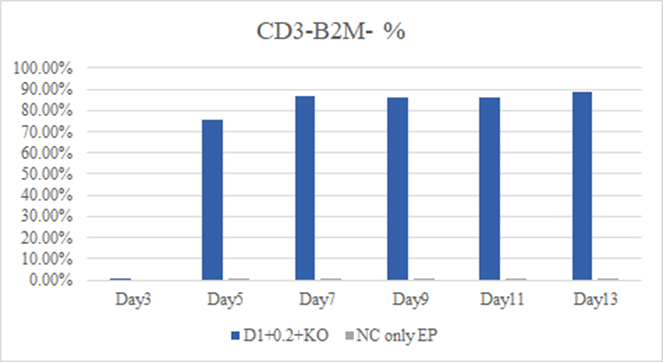
Figure 2. T-cell TCR, BM2 double gene knockout
After harvesting the cultured cells and performing CD3 magnetic bead negative selection, the proportion of CD3- cells increased from 94.44% before sorting to 99.98% after sorting, and the proportion of CD3-B2M- cells increased from 88.4% before sorting to 94.0% after sorting (Figure 3).
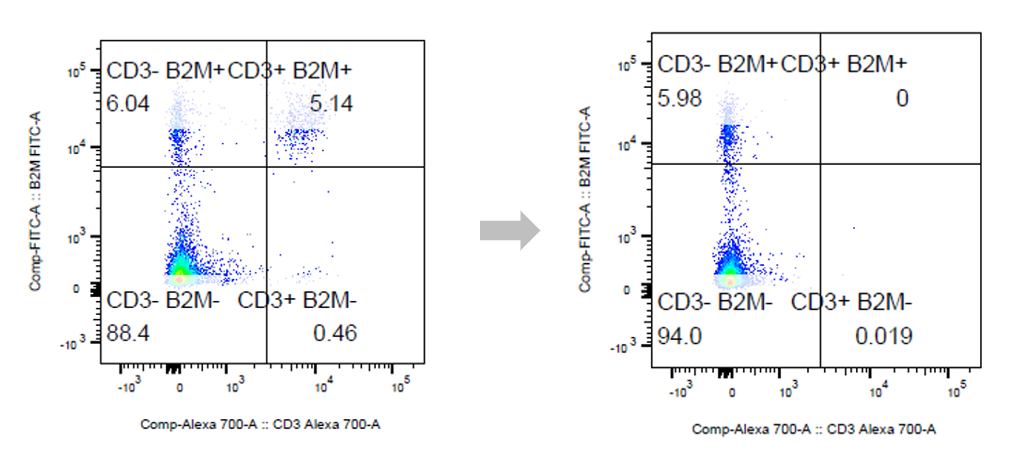
Figure 3. CD3+ T cell flow cytometry data after negative selection removal
Data on the level of IFN-γ factor release after 24 hours of co-incubation between UCAR-T cells and K562-CD19 target cells. The data shows that, under an effector-to-target ratio of 1:1, the detected value of IFN-γ can reach above 13,000 pg/ml (Figure 4).
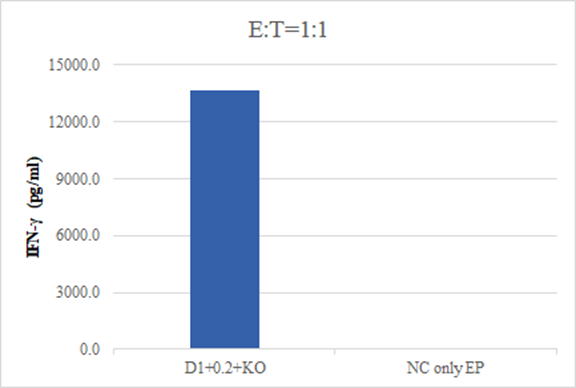
Figure 4. IFN-γ release after co-culture of UCAR-T cells and K562-CD19 target cells
To ensure the quality and safety of UCAR-T cell products and improve the success rate and applicability of UCAR-T therapy, we need to conduct quality research on UCAR-T.
Key Considerations
It is necessary to ensure that the selected cell quality meets the standards. High-quality cells can improve the success rate and cost-effectiveness of producing UCAR-T cells. It is essential to ensure a reliable source of cells, meet the required cell quality standards, and strictly monitor and control the cell production process.
2. Standardization of Electroporation Process
Develop universal process flows and standards, and implement quality control at every stage of electroporation. For instance, when producing UCAR-T cells, it is crucial to strictly control the operation steps and conditions of electroporation to prevent errors and quality issues.
3. Establishment of Quality Control
The research on UCAR-T requires the establishment of appropriate quality control mechanisms to carry out quality control at multiple stages, including the acquisition, cultivation, and evaluation of UCAR-T cells, ensuring that each step meets the required quality standards and reducing the defect rate.
4. Safety Assessment
Evaluate and monitor the safety of UCAR-T cells to ensure their safety and efficacy in treatment. For instance, in the research on the electroporation process quality of UCAR-T, effectively addressing safety concerns will help improve the success rate and applicability of UCAR-T therapy.
5. Other Key Considerations
Unlike autologous CAR-T targeted at specific cancers, the research on UCAR-T needs to consider more about the universality and repeatability of the treatment.
Zhejiang Jian Xin Yuan Li Pharmaceuticals Co., Ltd.'s InnoEPore™ Non-Viral Electroporation Platform provides an efficient, rapid, low-cost, and safe gene-engineered T-cell process solution, supporting the clinical and commercial needs of the cell therapy field. It advances the translation of various electroporation-based cell therapy pipelines with efficient, compliant, and proven process expertise.
Why InnoEPore™ ?
Large-scale flow continuous electroporation platform can transfect up to 1×10 cells in a single run.10Cells can achieve smooth scaling and significantly reduce costs. With high cell viability and recovery rate, the expression of T cell CAR can reach 90%, and the preparation cycle is short.
By using closed-loop tubing consumables, the risk of cell contamination during the electroporation process is minimized; the installation and operation of the tubing consumables are simple, offering good batch-to-batch reproducibility.
Key equipment and consumables are all domestically produced, significantly reducing production costs while ensuring stable supply.
Reference
1. Wang X, Wu X, Tan B et.al Allogeneic CD19-targeted CAR-T therapy in patients with severe myositis and systemic sclerosis. Cell. 2024 Jul 9:S0092-8674(24)00701-3. doi: 10.1016/j.cell.2024.06.027. Epub ahead of print. PMID: 39013470.
2. Huang Y, Hu KJ, Hu YX, Huang H. [Universal chimeric antigen receptor T cells therapy: current status and future perspectives]. Zhonghua Xue Ye Xue Za Zhi. 2021 Sep 14;42(9):782-786. Chinese. doi: 10.3760/cma.j.issn.0253-2727.2021.09.015. PMID: 34753238; PMCID: PMC8607041.
3. Moretti A, Ponzo M, Nicolette CA, Tcherepanova IY, Biondi A, Magnani CF. The Past, Present, and Future of Non-Viral CAR T Cells. Front Immunol. 2022 Jun 9;13:867013. doi: 10.3389/fimmu.2022.867013. PMID: 35757746; PMCID: PMC9218214.
4. Kim TK, Eberwine JH. Mammalian cell transfection: the present and the future. Anal Bioanal Chem. 2010 Aug;397(8):3173-8. doi: 10.1007/s00216-010-3821-6. Epub 2010 Jun 13. PMID: 20549496; PMCID: PMC2911531.
5. Lambricht L, Lopes A, Kos S, Sersa G, Préat V, Vandermeulen G. Clinical potential of electroporation for gene therapy and DNA vaccine delivery. Expert Opin Drug Deliv. 2016;13(2):295-310. doi: 10.1517/17425247.2016.1121990. Epub 2015 Dec 19. Erratum in: Expert Opin Drug Deliv. 2016;13(5):769. PMID: 26578324.
6. Sun W, Jiang Z, Jiang W, Yang R. Universal chimeric antigen receptor T cell therapy - The future of cell therapy: A review providing clinical evidence. Cancer Treat Res Commun. 2022;33:100638. doi: 10.1016/j.ctarc.2022.100638. Epub 2022 Sep 22. PMID: 36184307.

If you have any business needs, please reply 【Business Consultation】 in the background.
We will contact you as soon as possible!
✔Background Reply[Cell]
Download the "Jian Xin Yuan Li Cell Therapy CDMO Technical Service Manual"
✔Reply in the background【Plasmid】
Download the "Zhejiang Jian Xin Yuan Li Pharmaceuticals Co., Ltd. Plasmid DNA CDMO Technical Service Manual"
✔Reply in the background[Virus]
Download the "Zhejiang Jian Xin Yuan Li Pharmaceuticals Co., Ltd. Viral Vector CDMO Technical Service Manual"
More resources can be found on the [Zhejiang Jian Xin Yuan Li Pharmaceuticals Co., Ltd.] WeChat Official Account.
Menu Bar - About Us - Resource Download
Welcome to view
▶The Rising Star of Advanced Therapies —— Extracellular Vesicles
Zhejiang Jian Xin Yuan Li Pharmaceuticals Co., Ltd. is a CDMO enterprise focused on Advanced Therapy Medicinal Products (ATMP), dedicated to providing high-quality, end-to-end solutions for plasmids, RNA, LNP, exosomes, viral vectors, and cell therapy. Our state-of-the-art facilities comply with cGMP standards set by the FDA, EMA, and NMPA, and we implement strict policies and measures to protect client intellectual property. The management team possesses extensive industry experience, having successfully led multiple innovative drugs from development to commercialization in the United States, Europe, and China. With deep expertise and experience in process development and manufacturing, Zhejiang Jian Xin Yuan Li Pharmaceuticals Co., Ltd. is committed to accelerating the development and commercialization of innovative drugs worldwide and is your trusted partner.