Since the approval of the first CAR-T in 2017, the research and development of global cancer immunocyte therapies have remained highly active, leading to the emergence of multiple subfields including NK/CAR-NK, TIL, TCR-T, and CAR-M. Recently, Adaptimmune's announcement of Afami-cel gaining FDA approval in the United States has further pushed TCR-T cell therapy into the spotlight.Currently, there are about 17 companies in China布局TCR-T cell therapy, and most of them have entered the clinical research stage. Among them, companies within中关村生命科学园Huaxia YingtaiSeveral autologous/universal cell therapy product pipelines have been developed, with the potential to submit the first product's NDA for market approval by 2027.Estimated reading time: 5 minutesHuaxia Yingtai(Beijing)Biotechnology Co., Ltd., led by the globally renowned immunologist Professor Lin Xin, was founded based on the cutting-edge STAR-T platform and Capa technology developed by Professor Lin Xin at Tsinghua University and Changping Laboratory. Targeting current challenges in immune cell therapy, the company develops revolutionary T-cell drugs that are accessible to patients. Since its establishment in 2018, Huaxia Yingtai has secured 420 million yuan in equity financing and received support from multiple government projects. It is recognized as a specialized and innovative enterprise in Beijing and a key enterprise in Beijing's Medical and Health Collaborative Innovation Action Plan.
Differentiated Innovation STAR-T Technology
Combining the Advantages of CAR-T and TCR-T
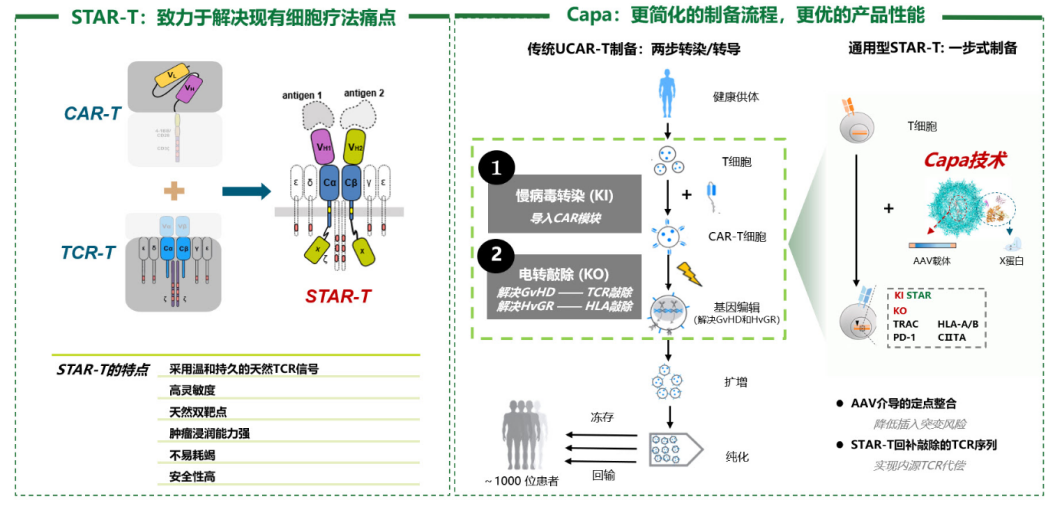
T cells, the most important immune cells in the human body. Currently, the highly popular cell therapies CAR-T and TCR-T both involve engineered modifications of T cells. Between the two, the antigen receptor of CAR-T directly targets tumor surface antigens, with high affinity and specificity. However, CAR-T cells commonly exhibit self-activation without antigen stimulation, leading to premature exhaustion and significant toxic side effects. On the other hand, while TCR-T has higher sensitivity and better signal transduction capabilities, its binding ability is relatively weaker.How to combine CAR-T with TCR-T to form a cellular therapy that lies between the two is the original intention behind the development of the STAR-T platform. In May 2019, Huaxia Yingtai(Beijing)Biotechnology Co., Ltd. launched the STAR-T clinical research; in 2021, the new cellular therapy STAR-T technology was...Science Translational MedicinePublished on. The study shows that,SSTAR-T can effectively balance immune cytotoxicity and persistence, with no evidence of self-activation in the absence of antigen stimulation; meanwhile, STAR-T demonstrates significantly superior outcomes compared to CAR-T therapy in the treatment of solid tumors.。Specifically, it replaces the variable region of the TCR with the scFv region of an antibody used for antigen recognition and connects it to the constant region of the TCR, forming a unique antigen receptor-TCR. This structure retains the two single-chain monoclonal antibody fragments with high antigen-binding affinity found in CAR-T, while also incorporating the downstream constant structure responsible for signal transduction in TCR-T."Strong infiltration ability, high sensitivity, and the capability to create multi-target and multi-functional forms are the three major advantages of the STAR-T technology platform."".\" said Dr. Guohua Pan, CEO of Huaxia Yingtai (Beijing) Biotechnology Co., Ltd., in an interview.Another innovative platform of Huaxia Yingtai (Beijing) Biotechnology Co., Ltd. —— the Capa technology, newly developed by the Changping Laboratory, adopts a non-electroporation system. It features minimal cell damage, ease of industrial scale-up, and low cost. This technology can simplify the preparation process and produce universal STAR-T in one step. Combining the two innovative platforms can achieve a 1+1>2 effect.
Based on the Innovation Platform
Accelerate the Implementation of Pipeline Projects
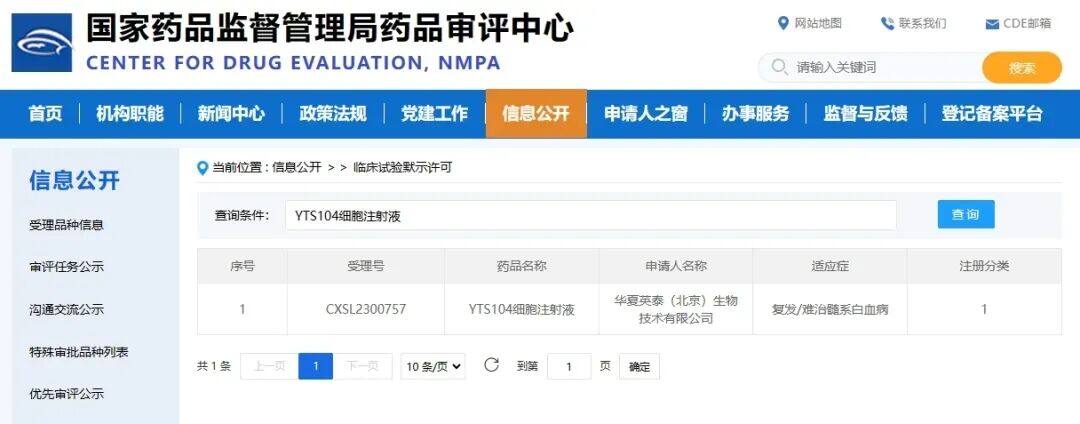
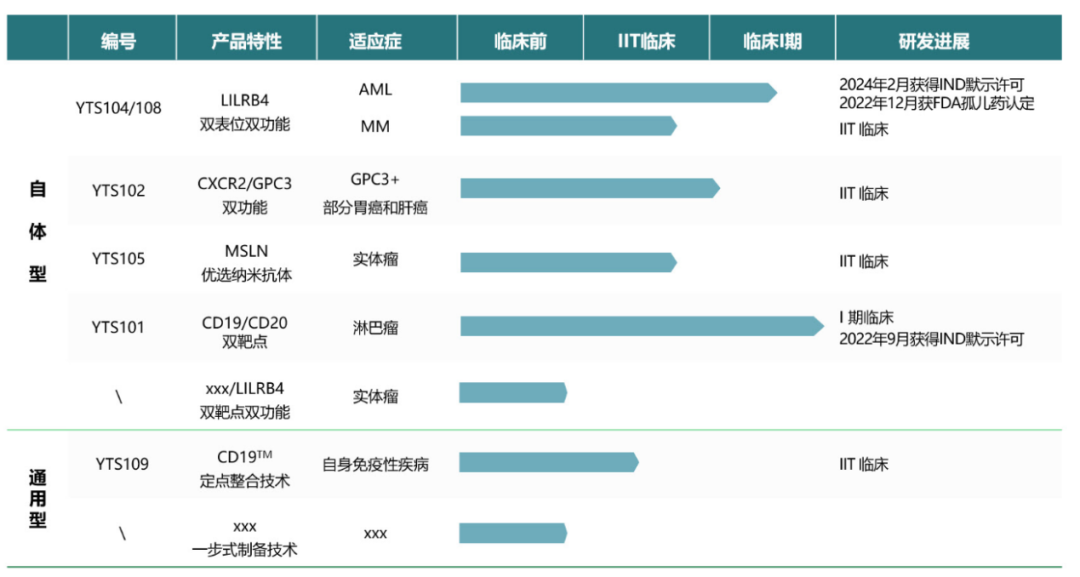
In addition to the unique STAR-T proprietary technology,Huaxia Yingtai is also developing universal products and focusing on overcoming solid tumors.Currently, Huaxia Yingtai has 5 autologous cell therapy product pipelines and 2 universal cell therapy product pipelines."Universal type is our ultimate goal, and we already have such a layout. We plan to fully utilize STAR-T technology to develop iPSC, thereby creating these products," said Dr. Pan Guohua in an interview. "Universal cell products can, to some extent, address cost and pricing issues; moreover, compared to autologous cell therapies, off-the-shelf cell products allow patients to have a better treatment experience and higher quality of life."In terms of clinical trials for hematological malignancies and solid tumors,Huaxia Yingtai has now obtained 2 Chinese IND clinical approvals and 1 FDA orphan drug designation.Among them, the company's first product, CD19/CD20 STAR-T Cell Injection, was approved in September 2022 to conduct Phase I clinical research in China for the treatment of relapsed/refractory B-cell non-Hodgkin lymphoma (B-NHL). Another independently developed candidate product, LILRB4 STAR-T (pipeline code: YTS104), intended for the treatment of acute myeloid leukemia (AML), received "Orphan Drug" designation from the U.S. FDA in December 2022 and was approved for IND to initiate Phase I clinical research in China in January 2024.It is reported that Huaxia Yingtai (Beijing) Biotechnology Co., Ltd. will push for the market launch of 1-2 cell therapy drugs based on STAR-T development before 2027.The "2020 Global Cancer Burden Report" pointed out that China's population is less than 1/5 of the global population, yet cancer deaths in China account for nearly 1/3 of global cancer deaths. Compared with traditional chemotherapy and radiotherapy, cellular immunotherapy can target tumor cells more precisely. STCR-T, which combines the antigen-specific recognition and high affinity of CAR-T with signaling transduction capabilities similar to natural TCR, is expected to become a new powerful tool to conquer solid tumors.