Zhangjiang-Based Cellular Therapy Firm C-Bridge Biosciences Gains Favor from Global Pharma Giants

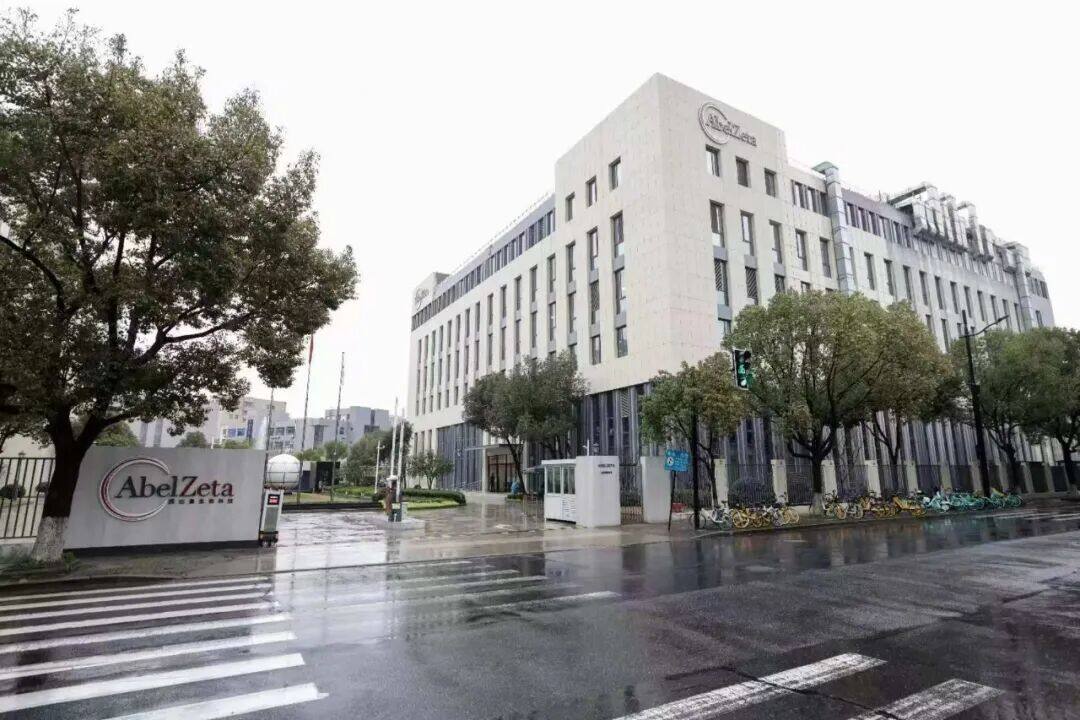
AbelZeta
Developer of Immune Cell and Stem Cell Therapy Products

Reaches a global exclusive cooperation agreement in the field of hematological oncology with Johnson & Johnson; enters into a global exclusive collaboration with Janssen Pharmaceuticals, a subsidiary of Johnson & Johnson, for the joint development and commercialization of next-generation CAR-T cell therapy products for lymphoma; signs a co-development agreement in the field of solid tumors with AstraZeneca... In recent years, Cellular Biomedicine Group (Shanghai) Ltd (hereinafter referred to as "CBMG"), a cell therapy company based in Zhangjiang, has frequently achieved multiple international collaborations in the cell therapy sector. What makes CBMG favored by international pharmaceutical giants? Let's find out ↓
Before taking the helm at Cellular Biomedicine Group (Shanghai) Ltd, Liu Bizuo worked at Microsoft Corporation in the United States for nearly 20 years, primarily overseeing Microsoft's investment strategy and corporate strategic planning in China. He also served as a senior executive responsible for investment and finance-related management at companies such as Alibaba.
"Whether it's Microsoft or Alibaba, they have both taught me one thing:A person must have a broad vision and格局 when doing things."Liu Bizo said. From leading Cellular Biomedicine Group's Nasdaq IPO, advancing the progress of immune cell therapy and stem cell therapy, to completing the privatization deal and officially returning from the US stock market, and then completing a $120 million Series A financing round, under Liu Bizo’s leadership, Cellular Biomedicine Group has hit every critical point in the industry’s development."
✎In 2014, Liu Bizuo, with rich experience in finance and capital market operations, enabled Cellular Biomedicine Group (Shanghai) Ltd to become the first Chinese cell therapy stock on NASDAQ. While gaining recognition from the international capital market, this also gave Cellular Biomedicine Group a more international perspective and greater compliance with international standards for its future layout and development.
✎In 2015, with keen industry insight and precise judgment, Liu Bizuo expanded Cellular Biomedicine Group's strategic focus from a "stem cell technology platform" to a "tumor immunotherapy cell treatment technology platform," setting sights on the then-unheated CAR-T track.
CAR-T, as a personalized treatment solution, is prepared using the patient's own immune cells. From testing to modification, cultivation, and expansion, it cannot release large quantities per batch like chemical drugs. To maintain product safety and quality stability between different batches, the key lies in having a complete production process and comprehensive quality management throughout.
Others in drug development prioritize technology first, followed by clinical trials, and consider production only as the final step. However, when Liu Bizuo formulated the company's CAR-T development strategy, his vision was broader:In addition to the technology itself, he also saw the industrial chain and decided to simultaneously improve the standardization and industrialization of production processes.
To this end, Cellular Biomedicine Group (Shanghai) Ltd. has established a GMP production facility that meets the standards of the U.S. Food and Drug Administration (FDA) and China's national standards, with 12 independent production lines. It is one of the few cell therapy technology development companies in China to receive international SGS certification and comply with the ISO9001 quality management system, owning more than 70 related patents and over a thousand standard operating procedures (SOPs).
In order to build a larger-scale GMP production workshop, Liu Bizu established Cellular Biomedicine Group's global headquarters and R&D production center in Zhangjiang, accelerating the development and industrialization of CAR-T cell therapy drugs with global influence.
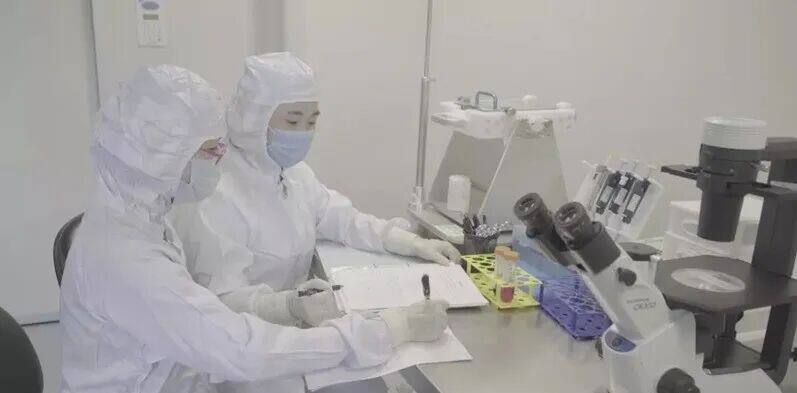
In 2017, Cellular Biomedicine Group (Shanghai) Ltd collaborated with GE to establish the "Cell Therapy Joint Laboratory" and jointly opened the "Joint Cell Therapy Technology Innovation and Application Center" with Thermo Fisher Scientific to improve the production process of cell therapies. Cellular Biomedicine Group took the lead in launching the CAR-T cell industrialized automation system in China, creating a diversified cell therapy biopharmaceutical R&D platform.
In April this year, the second phase of the CBMG CAR-T commercial production base commenced construction. After the expansion, the total area of its GMP production facilities will exceed 20,000 square meters, to support the commercial production of CBMG's future products and meet the rapidly growing market demand for CAR-T therapies.
Advanced technology platforms give Cellular Biomedicine Group (Shanghai) Ltd the confidence to "walk on two legs" — a cell therapy technology platform that simultaneously covers cellular immunotherapy and stem cell therapy, allowing the company to build a rich product pipeline.
Currently, Cellular Biomedicine Group has more than ten products under development, covering the fields of hematological tumors, autoimmune diseases, and solid tumors. Among them, three CAR-T therapies for hematological tumors—C-CAR039 (CD19/CD20 dual-target CAR-T), C-CAR066 (CD20 CAR-T), C-CAR088 (BCMA CAR-T)—and one TIL therapy for solid tumors, C-TIL051, are progressing rapidly.
In the field of stem cell therapy, AlloJoin, an allogeneic human adipose-derived mesenchymal progenitor cell injection developed by Cellular Biomedicine Group (Shanghai) Ltd, is the first innovative stem cell drug in China to be self-developed and granted tacit approval by the CDE to directly enter Phase II clinical trials. In April this year, Cellular Biomedicine Group initiated the Phase III clinical trial of AlloJoin, marking it as the first stem cell drug for knee osteoarthritis in China to enter Phase III clinical trials, with the potential to fill the gap in the treatment of knee osteoarthritis using stem cell products in China.
In June this year, at the 2024 American Society of Clinical Oncology Annual Meeting, Cellular Biomedicine Group (Shanghai) Ltd. presented the clinical data of C-CAR031 for the treatment of advanced liver cancer. The data reflects preliminary safety and efficacy results obtained through the first-in-human IIT (Investigator-Initiated Trial). C-CAR031 has demonstrated controllable safety and encouraging anti-tumor activity in heavily pretreated patients with advanced hepatocellular carcinoma (HCC), potentially paving a new way for the treatment of hepatocellular carcinoma.
"The Ten-Year, Ten-Billion-Dollar Rule" is a consensus in the biopharmaceutical industry, referring to the fact that developing a new drug in this sector takes at least ten years and costs ten billion US dollars. The cell industry abroad started earlier than in China. In this context, collaborating with foreign large enterprises and drawing on advanced technical experience is a pathway for rapid business growth.
"When you have a mission, you will find that all around you are friends to collaborate with, rather than competitors."Liu Bizuo admitted.
The two strategic cooperation agreements with GE and Thermo Fisher have strengthened Cellular Biomedicine Group (Shanghai) Ltd's autonomous production capabilities, laying the foundation for its cell therapy product development to rapidly and effectively transition from the laboratory research stage into clinical trials, drug applications, market launch, and industrial-scale production.
Based on advanced production technology systems, Cellular Biomedicine Group (Shanghai) Ltd has been authorized by the international pharmaceutical giant Novartis to be responsible for the production and supply of its globally first-to-market CAR-T cell therapy in China. The production, quality control-related technologies, processes, and systems of Novartis products have also been implemented at Cellular Biomedicine Group.
Following the collaboration with Novartis, Cellular Biomedicine Group (Shanghai) Ltd also signed a patent licensing agreement with the National Cancer Institute (NCI), which operates under the U.S. Department of Health and Human Services’ National Institutes of Health. Under the agreement, NCI granted Cellular Biomedicine Group a non-exclusive, sub-licensable, global license for the research, development, manufacturing, and commercialization of next-generation neoantigen-reactive tumor-infiltrating lymphocyte (TIL) therapies to treat various types of cancer.Cellular Biomedicine Group (Shanghai) Ltd has also become the first Chinese company authorized by the NCI.
With its strong R&D and industrialization capabilities, Cellular Biomedicine Group (Shanghai) Ltd has received an increasing number of collaboration "olive branches" from international giants.

In 2023, Cellular Biomedicine Group (CBMG) successively reached cooperation agreements with global pharmaceutical companies such as Johnson & Johnson and AstraZeneca. Among these, CBMG entered into a collaboration with Janssen Pharmaceuticals, a subsidiary of Johnson & Johnson, to jointly develop and commercialize the next-generation novel CAR-T cell therapy product targeting CD19/CD20 for the treatment of non-Hodgkin lymphoma. Based on this collaboration, CBMG received an upfront payment of $245 million and will be eligible for multiple milestone payments upon achieving certain predetermined clinical development, regulatory submission, commercialization, and sales milestones. After commercialization, CBMG will also receive sales royalties from Janssen’s net sales.
In addition to actively introducing advanced international experience, Cellular Biomedicine Group (Shanghai) Ltd also strengthens cooperation with relevant institutions and units in China, continuously developing a series of cell therapies with independent intellectual property rights.
"The era when large pharmaceutical companies dominated is over, and life sciences driven by 'genes and cells' have made drug research and development more decentralized," said Liu Bizo. He emphasized that research institutions, enterprises, and hospitals must collaborate closely to jointly promote the development of the industry, ultimately benefiting patients.
Source: Pudong Release