

Qilu Pharmaceutical Secures Approval for Dapagliflozin Tablets as Competition Heats Up in China's $1B SGLT2 Inhibitor Market

Qilu Pharmaceutical
Specialty Formulations and Active Pharmaceutical Ingredients (API) Developer
The diabetes field, as a massive market in the chronic disease sector, is undoubtedly dominated by China's local giants."Arena".
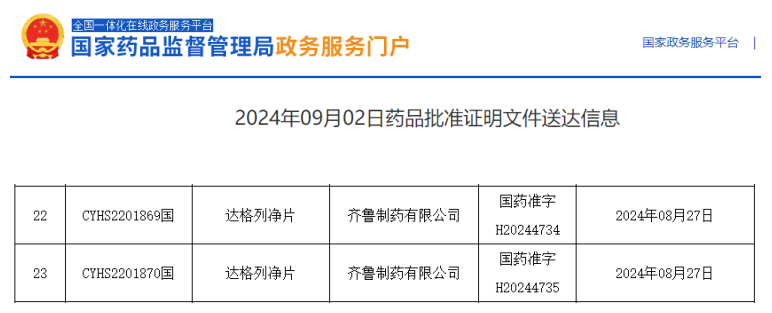
Recently, the official website of the National Medical Products Administration showed that the dapagliflozin tablets produced by Qilu Pharmaceutical Co., Ltd. have been approved for production as a Category 4 generic drug, which has drawn extensive attention in the pharmaceutical industry.

Dapagliflozin Tablets, as the world's first approved SGLT-2 (sodium-glucose co-transporter-2) inhibitor, were originally developed by Bristol-Myers Squibb, and later, the global sales rights were acquired by AstraZeneca. Since its initial approval in Europe in 2012, the drug has gained widespread acclaim for its unique glucose-lowering mechanism and excellent therapeutic effects. In 2017, Dapagliflozin Tablets officially entered the Chinese market, becoming the first SGLT-2 inhibitor in China, bringing new hope to diabetes patients.
Currently, the number of people with diabetes worldwide continues to surge, posing a significant challenge in the field of public health. In China, the number of diabetes patients has exceeded 100 million, with type 2 diabetes being the predominant form. Faced with this severe situation, traditional hypoglycemic drugs can no longer meet the growing market demand. Therefore, the emergence of more innovative, efficient, and safe hypoglycemic drugs has become particularly urgent. Dapagliflozin tablets, as the "star variety" of SGLT-2 inhibitor class oral hypoglycemic drugs, have rapidly grown into a blockbuster drug since their launch.
Notably, several pharmaceutical companies, including Zhengda Tianqing, Betta, Hansoh, and Shiyao, have actively entered the dapagliflozin tablet market. With the launch of more high-quality generic drugs, diabetes patients will have access to better and more affordable treatment options. At the same time, this also indicates that market competition will intensify further.
In recent years, the field of diabetes treatment has witnessed significant innovation, among which SGLT-2 inhibitors have increasingly become an important option for treating diabetes due to their unique glucose-lowering mechanism and insulin-independent characteristics.
Dapagliflozin Tablets belong to the class of oral hypoglycemic agents known as sodium-glucose cotransporter 2 (SGLT2) inhibitors. SGLT-2 inhibitors reduce glucose reabsorption in the kidneys and promote urinary glucose excretion by inhibiting the SGLT-2 protein in the proximal tubules of the kidney, effectively lowering blood glucose levels. These drugs not only have a significant hypoglycemic effect with a low risk of hypoglycemia but also provide additional cardiovascular and renal protective benefits.
As one of the representative drugs of SGLT-2 inhibitors, dapagliflozin tablets are mainly used to treat adult patients with type 2 diabetes. They have also demonstrated unique value in the treatment of adult patients with heart failure and chronic kidney disease. Clinical studies have confirmed that, whether used as monotherapy or in combination with other hypoglycemic drugs such as metformin, dapagliflozin tablets can effectively control blood glucose, reduce body weight, and have a low risk of hypoglycemia. In addition, it has been proven to be beneficial for patients with chronic kidney disease, able to slow the progression of renal failure and reduce the risk of cardiovascular and renal death.
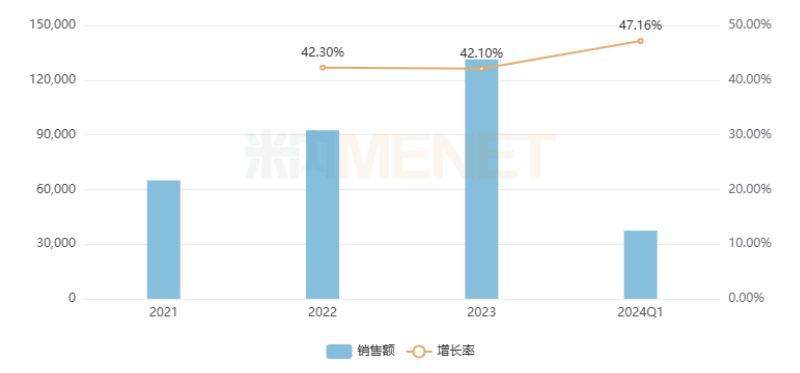
Data from MiNe Network shows that the sales scale of Dapagliflozin Tablets in China's three major terminals and six major markets in 2023 has broken through the 5 billion yuan mark, becoming the leader in the oral diabetes chemical drug market. This achievement not only verifies the widespread clinical application of Dapagliflozin and the high recognition from patients, but also highlights its market position in the field of diabetes treatment.

Qilu Pharmaceutical's recent successful approval of the generic drug Dapagliflozin Tablets not only aims to enhance drug accessibility and reduce patient medication costs through generic drug consistency evaluation, but also reflects its deep expertise and forward-looking layout in the field of diabetes treatment.
Globally, the SGLT-2 inhibitor market is large and growing rapidly. According to the EvaluatePharma database, global sales of SGLT-2 inhibitor-related products reached $7.681 billion in 2020. By 2021, the sales of just two drugs, empagliflozin and dapagliflozin, exceeded $8 billion. In the Chinese market, SGLT-2 inhibitors have also shown strong growth momentum. According to Faber's full-channel data, the total sales of SGLT-2 class drugs in China's medical institutions reached nearly 6.2 billion yuan in 2022, a year-on-year increase of 59.1%. Among them, dapagliflozin accounted for 82.6% of the market share with sales of nearly 5.1 billion yuan.
Faced with such a huge market, many global pharmaceutical giants have successively entered the SGLT-2 inhibitor field. In the Chinese market, in addition to imported original research drugs, local enterprises are also actively involved. For instance, Hengrui Medicine's self-developed Henggeliejin Tablets have been approved for marketing, joining the ranks of market competition.
Taking AstraZeneca's dapagliflozin as an example, since entering the Chinese market in 2017, it has rapidly taken a dominant market position due to its significant blood sugar-lowering effects and additional cardiovascular protective benefits. Clinical studies have shown that monotherapy with dapagliflozin can reduce HbA1c (glycated hemoglobin) by 0.37% to 1.16%, with notable decreases also observed in fasting blood glucose and postprandial blood glucose levels.
At the same time, dapagliflozin can significantly reduce blood pressure, lose weight, decrease urine protein excretion, etc., and has a positive effect on the cardiovascular and kidney health of diabetic patients. In addition, research in the field of kidney disease treatment also shows that SGLT-2 inhibitors can significantly increase the hemoglobin level of patients and improve anemia, providing new treatment options for kidney disease patients.
Qilu's exploration in the diabetes field dates back many years. Currently, the company has a range of oral hypoglycemic drugs, including SGLT-2 inhibitors such as dapagliflozin and empagliflozin, as well as metformin, DPP-4 inhibitors, and other types of blood glucose-lowering medications. These products collectively form a comprehensive product portfolio that addresses different patient needs and meets various stages of treatment.
Among them, Metformin Hydrochloride Tablets, as a fundamental medication for diabetes treatment, have become the preferred choice for many patients due to their excellent hypoglycemic effects and safety. Saxagliptin Tablets and Linagliptin Tablets, as representative drugs of DPP-4 inhibitors, not only demonstrate significant hypoglycemic effects but also offer advantages such as a low risk of hypoglycemia and a neutral impact on body weight. The introduction of compound formulations like Linagliptin Metformin Tablets further enhances treatment efficacy through multi-mechanism synergy while reducing the medication burden on patients.
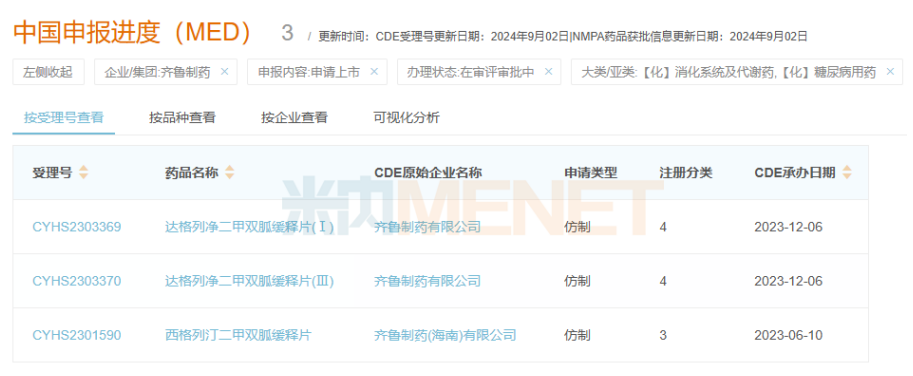
As of now, Qilu Pharmaceutical has obtained production licenses for 15 products in the diabetes chemical drug field. Additionally, three more products—Dapagliflozin Metformin Sustained-Release Tablets (Ⅰ), Dapagliflozin Metformin Sustained-Release Tablets (Ⅲ), and Sitagliptin Metformin Sustained-Release Tablets—are under review for production approval.
Industry experts indicate that dapagliflozin, as a representative of novel hypoglycemic agents, with its unique glucose-lowering mechanism and broad clinical application prospects, will provide more personalized and comprehensive treatment options for patients with diabetes. Meanwhile, Qilu Pharmaceutical's active strategic layout and achievements in the hypoglycemic drug field are also remarkable. With a rich product pipeline, precise market positioning, and strong competitive advantages, the company continues to lead innovation trends in the diabetes treatment sector, making significant contributions to improving diabetes management worldwide.
With the opening of the pharmaceuticals market and the reform of the drug approval system, domestic pharmaceutical companies have been entering the generic drugs market in droves. Among them, Dapagliflozin Tablets have become a key product that many enterprises are competing to develop. According to a search by reporters from the New Media Center of the Pharmaceutical Economy Newspaper, multiple companies in China, such as Lu'antai, Hansoh, Zhengdatianqing, Shuanglu, Fuyuan, Shiyao, and Sishu Pharmaceuticals, already possess production licenses for Dapagliflozin Tablets.
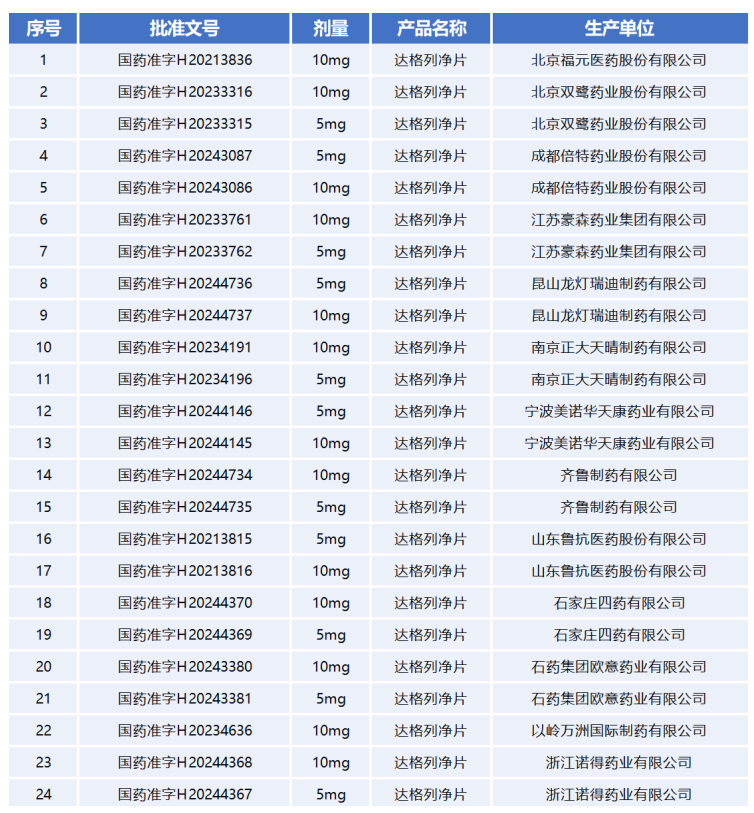
Manufacturers Approved for Dapagliflozin Tablets
In addition, several companies including Huadong Medicine, Jiudian Pharmaceutical, Chenxin Pharmaceutical, Beijing Weilin Hengchang Pharmaceutical, Shijiazhuang No. 4 Pharmaceutical, Zhejiang Huahai, Zhejiang Nuode, Ningbo Merro Tiankang, and Kunshan Longdeng Ruide have completed BE clinical trials and submitted Class 4 generic applications, further intensifying the market competition.
As generic drugs have been approved and entered into centralized procurement in large numbers, market competition has become increasingly fierce. In early 2021, with the advancement of China's national drug centralized procurement policy, empagliflozin and canagliflozin were included in the centralized procurement list. Considering the procurement situation of other similar drugs, dapagliflozin is also considered one of the targets for centralized procurement.
Although dapagliflozin tablets have not yet been included in the national bulk procurement in China, the approval for production of Sinopharm's Category 4 chemical drug dapagliflozin tablets in 2023 suggests that dapagliflozin could become the third SGLT-2 inhibitor to enter bulk procurement after empagliflozin and canagliflozin.
It is worth mentioning that dapagliflozin tablets have been included in the Class B directory of the 2019 Medical Insurance Catalog, with medical insurance prices of 4.36 yuan for the 10mg specification and 2.56 yuan for the 5mg specification, reducing the medication burden for patients. Against this backdrop, the sales of dapagliflozin have also achieved rapid growth, with sales in the Chinese market exceeding 1.9 billion yuan in 2021 and reaching 2.9 billion yuan in 2022.
Facing the increasingly fierce "internal competition" in the single-drug hypoglycemic market, some companies have assessed the situation and begun to actively expand into the field of combination hypoglycemic drugs. Among them, Dapagliflozin Metformin, an oral combination hypoglycemic drug, has gained prominence in the diabetes treatment field and taken on a pivotal role due to its dual mechanism of action that combines the SGLT-2 inhibitor dapagliflozin with the classic hypoglycemic drug metformin.
In recent years, the market for oral compound hypoglycemic drugs in China has shown strong growth momentum. According to data from Menet, the scale of the compound hypoglycemic drug market rapidly increased from 800 million yuan in 2019 to over 2.2 billion yuan in 2021, with growth rates as high as 58% and 68% from 2020 to 2021, indicating significant market potential. In this market, Dapagliflozin Metformin is undoubtedly a shining star, led by AstraZeneca's original drug Andas® while multiple domestic companies actively follow, striving to secure the first generic position in the generic drug market.
Notably, AstraZeneca submitted a Class 5.1 import listing application for Dapagliflozin Metformin Sustained-Release Tablets in February 2022 and successfully obtained approval in June 2023. On November 22 of the same year, AstraZeneca officially announced the product's market launch in China. This move has undoubtedly attracted significant attention from numerous domestic companies. Several enterprises, including Shanghai Xuantai, Zhengda Tianqing, Beijing Fuyuan, Zhejiang Huahai, Qilu Pharmaceutical, Nanjing Fangsheng, Shijiazhuang Siyao, and Beijing Weilin Hengchang, have already filed for production to seize the first generic drug approval. Among them, Qilu Pharmaceutical has submitted its listing application, which has been accepted by the CDE, while Zhengda Tianqing and Shanghai Xuantai Pharmaceutical have also applied for marketing authorization.
Although the dapagliflozin metformin sustained-release tablets have not yet entered the bulk procurement program, its specification (Ⅰ) (5mg/500mg) successfully entered the latest Class B directory of the national medical insurance negotiation last year through the national negotiation. The competitive advantages of these Chinese companies lie in cost control, localized production, and the expansion of sales channels. After passing the consistency evaluation for generic drugs, these products are equivalent to the original drugs in terms of quality and efficacy but are more affordable, with the potential to quickly capture market share.
Industry insiders pointed out that generic drugs passing the consistency evaluation can not only ensure the same efficacy as the original research drugs but also significantly reduce the economic burden on patients. This is not only a test of the innovation capabilities and service levels of pharmaceutical companies but also a key factor in promoting the healthy development of the entire pharmaceutical industry. It is expected that in the coming years, the competition in the generic drug market for dapagliflozin and its compound formulations will become more intense, which will also bring more choices and benefits to diabetes patients.
Editor: Mingyao


www.yyjjb.com.cn
Insight into Industry Trends
"Pharmaceutical Economy News"
Academic Official Account
Focusing on the Frontiers of Oncology Academia

Terminal Official Account