

B7-H3-Targeted Universal CAR-Vδ1 T Cells Demonstrate Potent and Broad-Spectrum Anti-Solid Tumor Activity in Preclinical Studies

PersonGen
Developer of Tumor Cell Immunotherapy Technologies and Products
Disclaimer: Due to limited expertise, errors are inevitable, and some information may not be the most up-to-date. Comments pointing out any issues are welcome. This article is only an introduction to medical and health-related drugs, not a recommendation of treatment plans (if involved); it does not constitute any investment advice.
On September 11, 2024, Bo Sheng Ji Medicine Science and Technology (Suzhou) Co., LTD ("Bo Sheng Ji"), a national high-tech enterprise focusing on the research and industrialization of breakthrough cell therapy drugs, announced that the preclinical research results of a new generation of universal off-the-shelf B7-H3-CAR-γδT cell therapy for various solid tumors, conducted in collaboration with the Tang Zhongying Medical Research Institute of Soochow University and the Beijing University Cancer Hospital, were published online in the well-known international oncology academic journal Cancer Research on September 6, 2024. The title of the paper is "B7-H3-Targeted CAR-Vδ1T Cells Exhibit Potent Broad-Spectrum Activity Against Solid Tumors", Dr. Jiang Licui and Dr. You Fengtao are the co-first authors of the paper, and Dr. Yang Lin, founder & chairman of Bo sheng ji medicine science and technology (suzhou) co., LTD, is the corresponding author of the paper."
CAR-T cell therapy, which has achieved tremendous success in the clinical treatment of hematological malignancies, has shown less-than-ideal efficacy in the clinical treatment of solid tumors due to the complexity of solid tumors, such as the tumor immunosuppressive microenvironment, CAR-T cell homing obstacles, and tumor antigen heterogeneity. For the treatment of solid tumors, as drugs like ADCs and immune checkpoint inhibitors continue to make breakthroughs in solid tumor therapy, more types of cellular medicines have emerged, including CAR-NK, TCR-T, TIL, and other drug modalities.
01
Bo Sheng Ji Medicine Science and Technology (Suzhou) Co., LTD has established an advanced manufacturing process for the commercial-scale production of UCAR-Vδ1T cells under cGMP conditions.
The proportion of γδT cells in the peripheral blood of healthy donors is relatively low, accounting for only about 1% to 5% of the total T lymphocytes in the periphery. Among them, Vδ2T cells are the largest subgroup of γδT cells, accounting for more than 80% of the total γδT cells in peripheral blood, and are also the most studied subgroup of γδT cells. In contrast, the proportion of Vδ1T cells in peripheral blood is very low, accounting for less than 1% of the total T cells. They are mainly present in the thymus and mucosal epithelial tissues, such as skin, intestines, spleen, and liver. This makes the large-scale preparation of Vδ1T cells in vitro face significant challenges. However, Bo Sheng Ji Medicine Science and Technology (Suzhou) Co., LTD began developing UCAR-Vδ1T products as early as 2018. After six years of efforts, they have successfully established a unique manufacturing process for the commercial large-scale production of Vδ1T cells under cGMP conditions, overcoming the challenges of lentiviral transfection and cryopreservation processes for UCAR-Vδ1T cells.
02
In multiple subcutaneous and orthotopic mouse xenograft tumor models, a single intravenous administration of UCAR-Vδ1T cells can achieve complete tumor regression.
To broadly evaluate the ability of UCAR-Vδ1T cells to combat solid tumors in preclinical animal models, multiple subcutaneous and orthotopic tumor models, including neuroblastoma, lung cancer, pancreatic cancer, colorectal cancer, and breast cancer, were used. After a single intravenous infusion of UCAR-Vδ1T cells, the tumors in most mice were completely eliminated.The average complete tumor clearance rate can reach over 80%, with lung cancer and breast cancer models achieving 100% tumor clearance efficacy., showing promising clinical application potential.
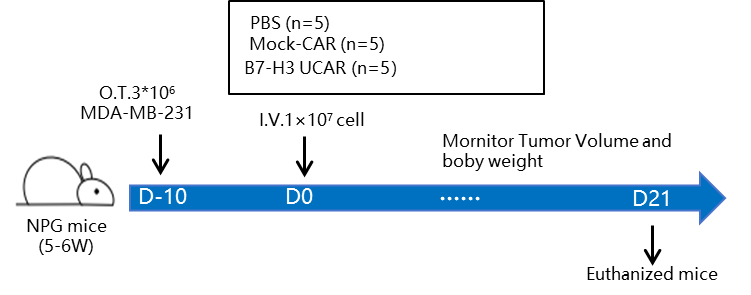
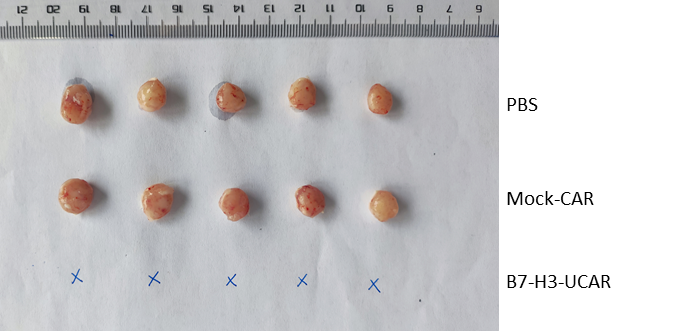
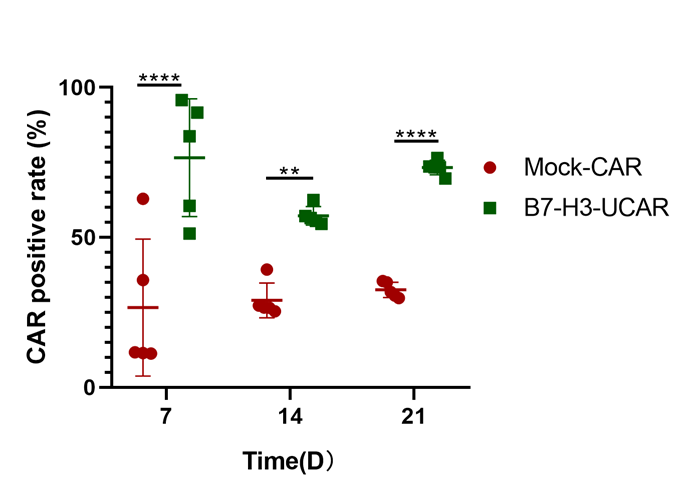
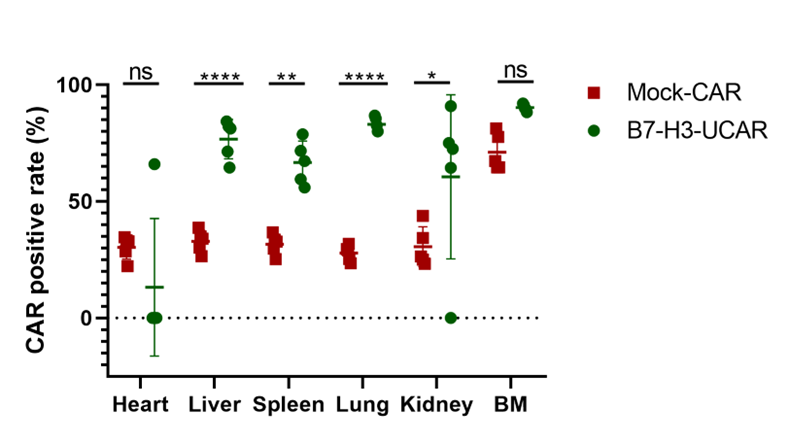
B7-H3-UCAR-Vδ1 T cells achieved 100% rapid tumor clearance with a single intravenous administration in an orthotopic breast cancer model, demonstrating excellent PK data.
03
UCAR-Vδ1T Cells Exhibit Strong Tumor Homing Ability and Good Safety
In this published research, the UCAR-Vδ1T cells demonstrated excellent infiltration ability in mouse tumor tissues, significant homing to various organs, and no pathological damage to normal tissues. This infiltration and homing capability to tumors and solid organs is undoubtedly a core advantage in treating solid tumors.
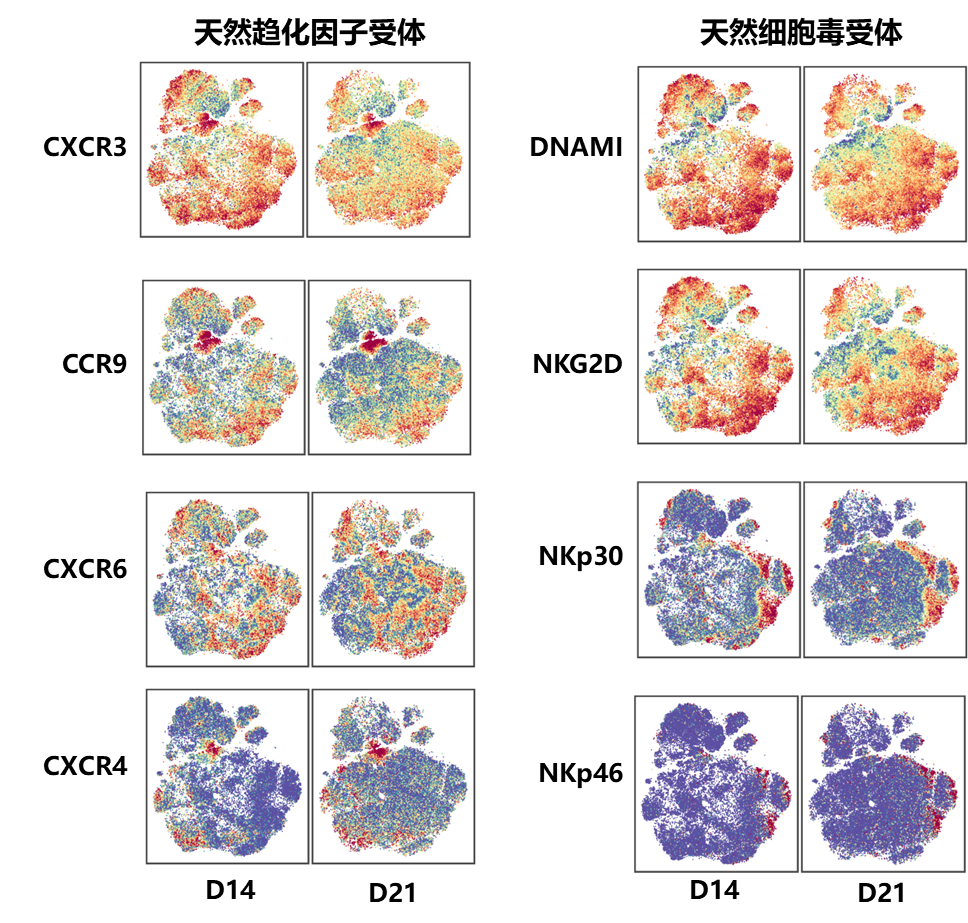
B7-H3-UCAR-Vδ1 T cells, with high expression of various chemokine receptors and natural cytotoxicity receptors, demonstrate potential for tumor homing and overcoming tumor antigen heterogeneity.
Source of the article: Bo sheng ji medicine science and technology (suzhou) co., LTD